
Success in the chemicals and materials industry comes from understanding the markets and continuing to develop. We guide our clients with demand forecasting, supplier analysis, product insights, market trend evaluation, compliance tracking, and lifecycle costing to make better decisions. Combined with customer insights, product development support, and market entry strategies, we help understand regulations, improve sustainability, and capture new growth opportunities.
HOW WE HELP OUR CLIENTS IN THIS SECTOR
Developing Strategic Partnerships for Future Growth
Successful growth in the chemicals and materials industry increasingly depends on building meaningful partnerships and adapting to changing market conditions. We help businesses discover collaboration opportunities with suppliers, start-ups, and research institutions while tracking important technology, sustainability, and market developments. The result is stronger product innovation, greater operational efficiency, and a more competitive position for long-term success.
- Finding the right strategic partners to support innovation, strengthen capabilities, and create lasting business value.
- Assessing whether joint ventures can open new markets while improving access to technologies and industry expertise.
- Exploring partnerships with companies across technology, healthcare, and energy to unlock fresh opportunities for growth.
- Providing insights into merger and acquisition opportunities that help businesses expand their offerings and build a stronger market presence.
Strengthening Competitive Positioning in the Agar Resin Market
Identifying High-Potential Product Forms and Growth MarketsWith growing demand for bio-derived ingredients across cosmetic and pharmaceutical applications, selecting the right product form and target markets has become an important task for the client’s strategy. We segmented the agar resin market by product form and identified powder-grade agar resin as the strongest entry opportunity, seeing its superior solubility and longer shelf life. Demand mapping and customer choices analysis further point to the United States and Germany as priority launch markets, helping the client to build a strong position in high-value, regulation-driven regions.
Building a Stronger Go-to-Market Strategy Through Supply OptimizationSuccess in the agar resin market depends on how we position the product and choose the right supply strategy. We identified unmet customer needs and other undiscovered opportunities across the value chain through innovation scouting, while regional intelligence revealed promising OEM partnerships across Europe. AI-supported benchmarking and cost analysis also identified Indonesia as the ideal sourcing location, allowing the client to maintain regulatory compliance, improve production efficiency, and prepare for growing regional demand.
Regulatory and Compliance Tracking
Regulatory expectations across the chemicals and materials sector are constantly evolving and making the continuous monitoring of them an essential part of business planning. Through our analysis, we track each and every development in environmental legislation, safety protocols, and chemical usage guidelines, helping companies remain aligned with requirements such as REACH, OSHA, and other environmental regulations. With these insights, businesses can respond more effectively to the rules while maintaining operations as they were.
- Helping companies identify potential regulatory risk and implement strategies to mitigate risks. Keeping businesses updated on health and safety requirements that affect the manufacturing and handling of chemicals and materials.
- Following changes in trade regulations and tariffs to understand their influence on international business operations.
- Monitoring certification requirements to ensure products meet industry expectations and maintain specific compliance.
- Helping organizations recognize potential compliance risks early while developing practical approaches to manage them effectively.
Regulatory Intelligence for CO₂ Production Facilities
Supporting Multi-Site Compliance and Expansion PlanningOur client wanted to increase their solid carbon dioxide production across multiple locations by laying the right regulatory foundation. We created their required framework based on OSHA safety standards, EPA emissions regulations, and hazardous materials handling requirements, and introduced a detailed compliance matrix to make sure the consistency across facilities in the United States and Europe remains the same. Regional permitting requirements, timelines, and costs were also verified, helping with more informed capital planning and smoother construction execution.
Operational Integration and Risk ManagementTo make the multi-site rollout successful, we had to adapt day-to-day operations quickly to work under the changing environmental conditions. We worked closely with environmental consultants and other important parties to implement an emissions mitigation strategy aligned with carbon capture and storage (CCS) requirements, including the compliance checkpoints into routine operations from the outset. This early focus on approvals and risk planning helped prepare for construction readiness while supporting consistent adherence to all rules across facilities in North America and Europe.
Preparedness to regulate the Calcium Borate Facilities
Designing Compliance Strategies for Long-Term Investment SuccessAs part of our plans to secure a new calcium borate manufacturing facility for long-term growth, we had to ensure all regulations were in place. Our work began with a detailed assessment of environmental conditions, mineral waste management practices, and occupational safety requirements across multiple jurisdictions, followed by translating EU REACH and U.S. EPA directives into practical operating standards for the facility. To strengthen investment planning, we modeled various important scenarios and their financial impacts, enabling early refinement of procurement strategies while protecting project timelines and future returns.
Certification Strategy and Compliance MonitoringAfter all this, strengthening the regulatory credibility became an important part of preparing the facility for long-term operations. Working alongside third-party certification bodies, we helped the client obtain pre-certification for ISO 9001 and ISO 14001, making the regulatory approvals easier and stakeholder discussions proceed more efficiently. Continuous monitoring capabilities were also made a part of the operational dashboard, making it easier to detect compliance issues early and minimize financial or reputational risks.
Innovation Tracking
As technology continues to define the chemicals and materials industry, identifying the right innovation opportunities has become very important for sustainable growth. We analyze the coming-of-age technologies, product development trends, and market shifts to help businesses refine product formulations and know about the new growth avenues. This enables companies to strengthen their innovation pipeline, improve their products, and enter new markets with greater confidence.
- A closer look at competitor innovation strategies helps businesses recognize emerging trends and strengthen product differentiation.
- The latest developments in sustainable materials and eco-friendly production are tracked to support long-term innovation goals.
- Advances in chemical technologies and materials science are assessed to identify practical opportunities for adopting next-generation solutions.
- Collaborative research across industry, academia, and start-ups is analyzed to reveal new ideas that can shape future product development.
Innovation Intelligence in Industrial Coatings
Monitoring Emerging Resin Technologies for Future GrowthTo sustain and perform at a high level, we have to keep working towards reshaping the coatings industry and identifying the right innovation opportunities. Our overview tracked innovations in the field of resin technologies and application methods, highlighting the growing demand for low-VOC water-borne polyurethanes and nano-enhanced epoxy coatings in automotive and infrastructure projects. Competitive market across North America and Europe also provided direction for R&D priorities, supporting the development of environmentally responsible formulations that matched evolving market needs.
Identifying Growth Opportunities Through Innovation and Regional InsightsFuture growth opportunities came forward in the areas where evolving technology trends met with changing regional demand patterns. Through detailed patent reviews and technology scouting, we discovered new opportunities for corrosion-resistant coating solutions designed for offshore oil and gas applications. At the same time, we learned that powder coating adoption across Asia Pacific had major insights into production costs, scalability, and regulatory readiness, allowing the client to refine its innovation roadmap and accelerate the launch of high-performance, compliance-ready products.
Innovation Strategy for Calcium Borate Operations
Process Innovation and Technology EvaluationFuture-ready manufacturing depended on adopting technologies that could improve efficiency without compromising sustainability goals. As the client explored the development of a new calcium borate facility, we looked into the new production innovations and identified solvent-free extraction and closed-loop boron recovery systems as promising solutions to lower energy consumption and reduce process waste. To support long-term investment decisions, pilot-stage technologies from research centers in Japan and the United States were further assessed for industrial scalability and suitability across Asia-Pacific markets.
Sourcing Innovation and Roadmap IntegrationChanging raw material prices and sourcing practices were having an impact on the procurement strategies across the chemicals industry. To help the client respond proactively, we analyzed the global pricing trends alongside other innovative models, such as dual-site procurement and recycled mineral sourcing. The resulting insights formed a structured roadmap that supported investment planning, informed licensing conversations, and helped the major players make design decisions.
Lifecycle & Circular Economy
Creating long-term value today goes beyond product performance; it also depends on how efficiently resources are used throughout a product's lifecycle. Our research examines each stage, from sourcing raw materials to disposal and reuse, and identifies opportunities for recycling, waste reduction, and material recovery. We further help them explore bio-based chemicals, closed-loop manufacturing, and chemical upcycling to build more sustainable products and operations aligned with circular economy principles.
- Every stage of a product's lifecycle is assessed to uncover opportunities to reduce waste, improve efficiency, and lower environmental impact.
- As circular economy principles gain momentum, we help businesses understand how these practices are reshaping the chemicals and materials sector.
- Insights into product design strategies support the development of solutions that are easier to recycle and have a reduced environmental impact after use.
- Ongoing tracking of regulatory developments helps companies stay aligned with policies driving circular and sustainable manufacturing.
Circular Strategy for Bio-Based Chemical Platforms
Lifecycle Evaluation and Sustainability BenchmarkingEach producer working on the Bio-Based Chemical Platforms has started shifting towards circular manufacturing, which has increased the need for chemical producers to understand the environmental impact at every stage of their work. To support the client’s expansion into bio-based platform chemicals, we also overlooked their key molecules, including bio-succinic acid and bio-3-hydroxypropionic acid, and identified products with the strongest sustainability and commercial potential. Our lifecycle review across Europe and North America studied the carbon intensity, water consumption, and by-product recovery, while regional partnerships with bio-refineries and logistics providers provided a better way to reverse logistics systems that promoted greater resource efficiency.
Feedstock Evaluation and Circular Dashboard DesignThe client was developing and designing its circular manufacturing strategy, so we focused on improving resource efficiency. We explored closed-loop processing approaches to convert fermentation residues into higher-value products, such as bioplastics and specialty intermediates, making resource discovery easier for them. These findings were synthesized into a circular economy dashboard that compared alternative feedstock pathways, helping them put the low-impact technologies and supporting an ESG-driven market-entry strategy on priority and aligned with changing policy incentives.
Sustainability Strategy for VSF Operations
Resource Circularity and Process OptimizationCreating a more resource-efficient production model was important for the client to expand their viscose staple fiber manufacturing. To support this transition, we developed a circular economy plan focused on reducing waste and maximizing material recovery throughout the production process. Our plan was to dissolve pulp suppliers in South America and Southeast Asia, while making the chemical recovery technologies for carbon disulfide and sodium hydroxide, which have proven approaches for lowering emissions and reducing chemical waste by more than 30%. We also overviewed the availability of zero liquid discharge systems to support site selection in highly managed markets such as the European Union, helping the client to establish a resilient manufacturing strategy in alignment with the circular economy principles and evolving environmental expectations.
Post-Production Integration and Value RecoveryTrue circularity begins when products are designed with their next lifecycle already in mind. With this in mind, we worked to make collaborations with textile recyclers and blended fiber manufacturers to improve our post-use material recovery, while creating take-back models that could be embedded into day-to-day operations. These insights improved the traceability, influenced facility design and supplier partnerships, and enhanced effluent management, allowing the client to develop a VSF manufacturing operation that delivers lasting environmental value alongside operational efficiency.
Market Insights
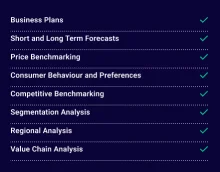
Our goal is to become your trusted partner across industries, aspiring for an in-depth market perspective, helping you succeed through the dynamic market terrain.
Consumer Insights
Analyzing the trends, behaviours, and client preferences for detailed marketing programs.
Competitive Benchmarking
Providing a thorough examination of the competitive landscape for a deeper evaluation of strengths and recognition of opportunities.
Major Performance Indicators
These indicators ensure industry standards are met and demonstrate the value we provide to our clients.
Insightful Analysis for Strategic Guided Choices
Stay upgraded and grab opportunities by strategic insights
Stay informed and aware for a Market Leverage
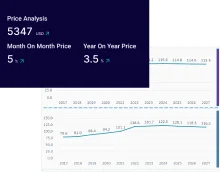
Analyze pricing patterns with comprehensive trend analyses.
Analyse trade data for supply chain insights.
Leverage cost reports for smart savings
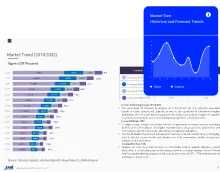
Elevate supply chain with collaboration
We are happy to help you navigate through the services we offer and solve your queries.
Contact us
