
Business and financial growth depend on the ability to respond to changing trends and technological developments. We combine Market Sizing, Competitive Analysis, Investment Insights, and Risk Planning to help organizations make better decisions. Our expertise in Supply Chain and Technology Tracking provides more clarity on the opportunities. With these, we support clients in banking, investments, and global trade to improve their competitive position.
HOW WE HELP OUR CLIENTS IN THIS SECTOR
Economic and Industry Trends
Market movements and economic changes often define business performance even before it becomes visible in day-to-day operations. By working over these macroeconomic indicators and industry developments, we help our clients identify emerging opportunities, anticipate potential risks, and make smart decisions that strengthen long-term business plans.
- Understanding changing market trends and economic conditions to uncover new business opportunities.
- Anticipating market developments and evaluating their possible impact on financial outcomes.
- Exploring industry growth areas that can help businesses remain competitive over time.
- Assessing the influence of global events, trade regulations, and geopolitical changes on strategic decision-making
Shaping a Targeted Expansion Strategy for a Private Banking Client
Market Assessment Across Key U.S. RegionsThe client wanted to focus on the high-net-worth individuals (HNWIs), and to help in their endeavor, we worked over to understand the regional market potential within the U.S. private banking landscape. We developed a multi-regional market-sizing approach that combined broad economic parties with local wealth-migration insights to measure historical trends and identify future growth opportunities.
We had to understand where demand was strongest and look beyond the customer segments to regional economic and financial trends. We evaluated demand for wealth management, investment advisory, and tax planning services among HNWIs and UHNWIs, then analyzed economic performance alongside financial behavior to identify high-potential markets across the Mideast, Great Lakes, and Far West.
Building Smarter Market Entry Strategies Through Competitive InsightsUnderstanding how leading private banking firms operate in different regions helped improve the client's market-entry approach. We focused on certain organizations, including JPMorgan Chase and Goldman Sachs, and looked at their working service models, asset concentration, and client engagement strategies, and the proprietary heat map that showed changing customer needs influenced by tax and interest rate changes. These findings helped inform region-specific plans, with specific service portfolios designed for high-potential markets such as the Southeast and New England.
Building a Scalable Strategy for the U.S. Real-Time Payments Market
Mapping Regional Demand and Future Market GrowthA clear understanding of regional payment activity was essential as the client planned its expansion into the U.S. real-time payments market. We analyzed transaction demand across P2P, B2P, and B2B segments and developed a forecasting model using regulatory trends, bank and fintech adoption, and the rollout of FedNow as key growth indicators. By combining transaction velocity with pricing sensitivity analysis, we identified regions with the strongest adoption potential, including the Southeast and the Great Lakes.
Market Intelligence for Effective Go-to-Market PlanningEach region and its customer demands called for an approach carefully prioritized to make the market entry within the RTP landscape. We examined the value chain to understand integration points, onboarding experiences, and monetization models, and then benchmarked leading providers on platform capabilities such as API interoperability and fraud prevention. These findings, combined with conjoint analysis, helped identify the most promising regional opportunities, including payroll automation in the Plains and vendor settlement optimization across the Southwest.
Investment Analysis and Risk Assessment
Successful investment strategies depend on recognizing the new opportunities and understanding the risks that could affect future performance. We provide data-driven investment analysis with which businesses are able to understand the market conditions, make informed decisions, and maximize returns with greater confidence
- Exploring market opportunities through detailed research while helping businesses better understand investment risks.
- Providing a clearer view of economic shifts and evolving market trends to support strategic planning.
- Analysing the influence of political and economic factors on changing market conditions.
- Bringing together qualitative and quantitative findings to predict future market trends and enable informed investment choices.
What are the Investment Opportunities Across the United States Fintech Market
Sector Prioritization and Risk Resilience AnalysisDifferent fintech sectors offered varying levels of growth and resilience, underscoring the importance of understanding the market for long-term investment planning. We assessed digital payments, cryptocurrency, digital lending, and insurtech using a comprehensive screening framework supported by real-time funding trend analysis to identify promising venture-backed businesses. Our assessment also measured each segment's exposure to regulatory developments, cybersecurity risks, and changing capital flows, enabling the client to focus on stronger long-term opportunities.
Evaluating Regional Growth Potential and Expansion ReadinessWe had to understand the fintech adoption landscape and where it was strongest to provide clear direction for the client's expansion strategy across the United States. We compared digital adoption levels and infrastructure across regions such as the Great Lakes, the Rocky Mountains, and the Far West, enabling the market to achieve strong customer engagement and high digital maturity. Alongside this, we also worked to assess the leadership strength and innovation capabilities of founders and management teams at leading fintech companies to evaluate long-term execution potential. Predictive analytics helped estimate the scalability of B2B payment gateways and embedded finance platforms. These findings helped the client to put the high-growth regions on priority, such as the Southeast and Mideast, where demand for API-driven platforms and advanced credit underwriting solutions continues to rise.
Identifying Investment Opportunities in the U.S. General Insurance Market
Market Competition and Risk Evaluation Across Key SegmentsLong-term investment decisions depended on understanding which insurance segments gave the strongest balance between growth potential and risk exposure. By working on factors such as property, health, and auto insurance markets, and by analyzing claims activity, regulatory requirements, and the competitive landscape, we are assessing the influence of insurtech developments and the evolving value chain. Benchmarking major insurers such as State Farm and Geico provided additional insight into operational resilience and brand-driven advantages that could shape investment outcomes.
Prioritizing Investment Through Regional Risk AssessmentGeographic risk had to be evaluated to assess investment stability and make clear decisions. We reviewed climate changes and demographic patterns across the Plains, Mideast, and New England to know the areas where catastrophe claims and policyholder churn could have a greater impact on our investments. Together with the client's actuarial team, we built a loss ratio sensitivity model and looked at the performance under different economic conditions. These insights helped direct investment towards regions with favorable regulations and more balanced risk profiles.
Regulatory and Legal Compliance
Regulatory changes have the power to influence everything in the business operations to long-term investment planning, making timely insights increasingly important. By managing these developments in government policies, financial regulations, and tax legislation, we help organizations stay on the path, minimize legal challenges, and respond effectively to an evolving regulatory landscape while maintaining business continuity.
- Understanding financial regulations that help businesses meet legal responsibilities and avoid unnecessary compliance risks.
- Recognizing key legal requirements that strengthen compliance with industry regulations and standards.
- Enabling businesses to manage global compliance more effectively while adapting to international regulatory frameworks.
- Evaluating how financial laws affect investment behavior, market activity, and evolving industry trends.
Creating a Stronger Growth Strategy for the United States Insurance Brokerage Market
Reviewing Regulatory Requirements and Industry StandardsWe had worked to expand our client's business in adherence to the U.S. insurance brokerage market and analyzed the legal requirements governing the distribution of life, property, and health insurance and conducted a detailed compliance review, enabling the client to navigate industry regulations more effectively and supporting future growth.
We managed the rules and other obligations across multiple states, which required a clearer understanding of the changing requirements. We built an intelligence dashboard that combined licensing rules, disclosure obligations, and conflict-of-interest regulations for both traditional brokers and digital aggregators, while our regional insights highlighted areas such as the Mideast, Southeast, and Great Lakes, where digital regulation efforts were accelerating alongside tighter commission regulations.
Understanding Risk Exposure Through Regulatory and Legal TrendsLooking beyond the requirements helped us understand the operational challenges, thereby further simplifying our entry into the insurance brokerage market. We explored enforcement activity and litigation patterns across major U.S. regions, identifying major business risks while looking over the established players such as Aon and Marsh, as they refined their processes to respond effectively to multi-jurisdictional regulations.
As the regulatory reforms continued to change, anticipating their operational impact became an important part of the client's long-term planning. Our scenario-based model followed these measures, such as federal data privacy mandates, which could influence cross-state brokerage operations, helping the client to improve their overall planning and adapt distribution strategies in New England and the Far West, where regulatory oversight is steadily increasing.
Strengthening Growth Plans with Regulatory Insights Across the U.S. Payment Market
Reviewing Compliance Requirements and Regulatory RisksWe knew that a successful entry strategy depended on understanding how the regulations shape different payment services across the United States. We also assessed the legal framework covering digital wallets, contactless payments, and peer-to-peer transfers, helping the client identify their priorities and prepare for growth across multiple payment segments.
The Different payment models had their different requirements, making the one-size-fits-all approach ineffective. By reviewing federal and state regulations, including the Electronic Fund Transfer Act and emerging data privacy requirements, we identified transaction-specific risks and mapped regional priorities across e-commerce-led markets in the Northwest and retail-driven regions such as the Southwest.
Balancing Regulatory Requirements with Expansion CostsEach market presented a different combination of licensing obligations, enforcement expectations, and particular costs, hence making the state-by-state approach important. By studying the money transmission laws alongside KYC and AML enforcement trends, we developed a jurisdictional compliance cost matrix that quantified the impact of non-compliance and enabled the client to sequence regional expansion with greater confidence.
Digital Transformation and Technology Adoption
Technology is making waves in the future of financial services, making early adoption an important step in business growth. We provide insights into technological advancements such as blockchain, artificial intelligence (AI), robo-advisors, and digital payment solutions, providing our clients with an easy way to work on their operations, refine their offerings, and respond more effectively to evolving customer expectations.
- Keeping businesses informed about the technology trends reshaping the financial services industry.
- Understanding how quickly new innovations are being adopted while recognizing barriers that may affect wider implementation.
- Tracking the rapid growth of FinTech solutions and identifying opportunities emerging from this evolving ecosystem.
- Analyzing how digital technologies are redefining customer interactions and influencing the future direction of the industry.
Building Digital Capabilities for Global Insurance Expansion
Measuring Technology Readiness Across Key MarketsUnderstanding how digital adoption differed across regions helped shape a more focused expansion strategy for the client. We assessed technology maturity across Europe, North and Latin America, Asia Pacific, Middle East, and Africa while using a proprietary scoring model to evaluate AI in underwriting, blockchain for claims automation, and big data applications in customer profiling. We then benchmarked direct digital sales and bancassurance channels across the United States, India, and Germany by reviewing customer acquisition, retention, and conversion performance.
Connecting Operational Efficiency with Smarter Market ExpansionSuccessful technology rollouts depended as much on regional digital maturity as on operational capability. By working on these policy lifecycle data, we measured the value created through automated servicing and predictive claims management, looking at where technology-led offerings could achieve the strongest results. This informed a region-specific rollout strategy, with advanced platforms targeted at digitally mature markets such as the United Kingdom and Japan, and mobile-first models designed for emerging economies like Nigeria and Brazil, where customer behavior and infrastructure called for a different approach.
Accelerating Digital Distribution for Mutual Fund Growth
Understanding Investor Behavior and Regional Digital ReadinessAs digital investment platforms continued to reshape the mutual fund industry, recognizing changing investor behavior became central to the client's growth strategy. We analyzed the impact of innovations such as robo-advisors, digital advisory platforms, and direct-to-investor channels, while using transaction-level data to identify investor segments most responsive to algorithm-driven portfolio solutions. A regional comparison across the Mideast, Southeast, and Far West further highlighted the differences in digital adoption and traditional advisor networks, helping work on the markets best suited for digital-first product launches.
Building a Stronger Digital Distribution StrategyStanding out in a competitive investment market required more than simply offering digital access; it demanded a platform built around investor needs. We compared leading brokerage platforms on usability, personalization, and pricing, as well as adoption trends and projected fund flows, to make our distribution plan. Educational modules introduced helped improve engagement and reduced churn, while regional customer behavior and other requirements guided technology investments that supported stronger investor loyalty.
Market Insights
Our goal is to become your trusted partner across industries, aspiring for an in-depth market perspective, helping you succeed through the dynamic market terrain.
Consumer Insights
Analyzing the trends, behaviours, and client preferences for detailed marketing programs.
Competitive Benchmarking
Providing a thorough examination of the competitive landscape for a deeper evaluation of strengths and recognition of opportunities.
Major Performance Indicators
These indicators ensure industry standards are met and demonstrate the value we provide to our clients.
Insightful Analysis for Strategic Guided Choices
Stay upgraded and grab opportunities by strategic insights
Stay informed and aware for a Market Leverage
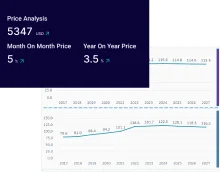
Analyze pricing patterns with comprehensive trend analyses.
Analyse trade data for supply chain insights.

Leverage cost reports for smart savings
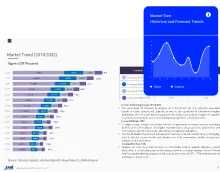
Elevate supply chain with collaboration
We are happy to help you navigate through the services we offer and solve your queries.
Contact us
