Consumer Insights
Uncover trends and behaviors shaping consumer choices today
Procurement Insights
Optimize your sourcing strategy with key market data
Industry Stats
Stay ahead with the latest trends and market analysis.
The Australia mammography market covers the digital mammography systems, tomosynthesis units, contrast-enhanced mammography platforms, service contracts, reading software and accessories used to image the breast for screening and diagnosis. These systems use low-dose X-rays to detect cancers early, and are installed in BreastScreen clinics, private radiology practices and hospital breast units.
In 2025, the market is valued at AUD 140.00 million and is forecast to grow at a CAGR of 6.80%, reaching AUD 270.30 million by 2035. Growth is driven by the national screening reform agenda, replacement of ageing fleets with three-dimensional units, and artificial intelligence tools that help radiologists read more images.
Compound Annual Growth Rate
6.8%
Value in AUD million
2026-2035
The Australia mammography market is entering a technology transition. Most screening still relies on two-dimensional digital units, but governments have now committed to assess and then introduce tomosynthesis and artificial intelligence reading nationally, which will reshape what clinics buy over the next decade.
Three forces are shaping the market: a national framework that moves screening from age-based invitations towards risk tiers, density notification and annual screening for some women; replacement demand from public and private fleets; and radiologist workforce pressure that favours software able to support double reading.
In April 2025 the BreastScreen Australia Review recommended a plan for tomosynthesis as the primary modality, in July 2026 BreastScreen SA began a randomised artificial intelligence trial, and in August 2026 governments endorsed the Strategic Framework for the program.
The market is moving from two-dimensional digital fleets sold on price towards tomosynthesis, contrast-enhanced imaging and software-assisted reading sold on workflow and detection value. Mammography systems still lead because every clinic must buy or replace hardware, while software and artificial intelligence and tomosynthesis advance fastest as governments plan national implementation. New South Wales remains the largest base, and Queensland grows quickest from a smaller one. A national framework, density notification and risk-based screening underpin a durable multi-year outlook in which procurement follows policy decisions and radiologist capacity rather than a short equipment cycle.
| Metric | Value |
| Market Size 2025 | AUD 140.00 million |
| Projected Market Size 2035 | AUD 270.30 million |
| CAGR 2026 to 2035 | 6.80% |
| Fastest-Growing Technology | Digital Breast Tomosynthesis: 9.2% CAGR |
| Fastest-Growing Component | Software and AI: 12.1% CAGR |
| Largest Revenue Segment 2025 | Mammography Systems |
| Dominant Region | New South Wales |
| Highest CAGR by Region | Queensland: 7.5% |
| Modelled cost of screening reform over the decade, August 2026 | Up to AUD 2 billion |
Policy Now Sets Purchasing Direction
Revenue is set to rise from AUD 140.00 million in 2025 to AUD 270.30 million in 2035 at a 6.8% CAGR, as the national framework turns technology choices into funded programs.
Software and Tomosynthesis Lead Growth
Mammography systems remain the largest component, but software and artificial intelligence grow at an estimated 12.1% CAGR and tomosynthesis at 9.2% through 2035, as trials in New South Wales and South Australia move towards routine use.
Reform Milestones Shape Demand
The August 2026 framework sets staged actions that influence timing of equipment replacement and software licensing across public and private services.
| Report Summary | Unit | Value |
| Base Year | AUD million | 2025 |
| Historical Period | AUD million | 2019 to 2025 |
| Forecast Period | AUD million | 2026 to 2035 |
| Market Size 2025 | AUD million | 140.00 |
| Market Size 2035 | AUD million | 270.30 |
| CAGR 2026 to 2035 | Percentage | 6.80 % |
| CAGR by Technology: Digital Breast Tomosynthesis | Percentage | 9.2 % |
| CAGR by Component: Software and AI | Percentage | 12.1 % |
| CAGR by End User: BreastScreen Services | Percentage | 7.9 % |
| CAGR by Region: Queensland | Percentage | 7.5 % |
| Biennial Participation Target, BreastScreen Australia Review April 2025 | Percentage | 70 |
| Modelled Reform Cost, August 2026 | AUD Billion | 2 |
| Market Share by Region 2025 | New South Wales | Dominant Share |
Policy reform, fleet replacement and reading software shape demand. Software and tomosynthesis advance fastest while conventional digital systems remain the installed base across screening services and private clinics.
The Australia mammography market is being reshaped by risk-based screening reform, early artificial intelligence adoption in state programs, density reporting and a national push towards tomosynthesis.
October 2026 - BreastScreen NSW Advances AI-Supported Reading
August 2026 - Governments Endorse BreastScreen Australia Strategic Framework
July 2026 - BreastScreen SA Launches Randomised AI Trial
April 2025 - Review Recommends Tomosynthesis Plan and AI Governance
Policy is moving from review to staged delivery, with density reporting and artificial intelligence reading already live in one state and tomosynthesis assessment now a stated national priority.
Recent developments, presented from the most recent, show the Australia mammography market moving from ownership change and provider results into new product launches that supply the next equipment cycle.
October 2026 - Jardine Matheson Completes I-MED Acquisition
August 2026 - Sonic Healthcare and Integral Diagnostics Report Results
April 2026 - Blackstone and TPG Complete Hologic Take-Private
November 2025 - GE HealthCare Unveils Pristina Recon DL
Ownership changes, provider results and new reconstruction software show capital and technology flowing into breast imaging, giving buyers more advanced options as national tomosynthesis planning begins.
The Expert Market Research’s report on the Australia Mammography Market offers a detailed analysis of the market based on the following segments.
Market Breakup by Technology
Full-Field Digital Mammography leads because the BreastScreen fleet and most private rooms still use two-dimensional units, and the April 2025 review described tomosynthesis adoption as constrained by reading time and training. Digital Breast Tomosynthesis grows fastest at an estimated 9.2% CAGR, as the August 2026 framework schedules feasibility assessment and later national implementation. Contrast-Enhanced Mammography is smaller but rising, with Siemens Healthineers announcing ClearCEM reconstruction in November 2025 and the Victorian MyScreen contrast imaging pilot announced in August 2026. Others cover breast ultrasound-linked and stereotactic biopsy systems.
Market Breakup by Component
Mammography Systems lead because every clinic must buy or replace hardware, and ownership changes such as Jardine Matheson's October 2026 completion of I-MED support renewal budgets. Software and AI grows fastest at an estimated 12.1% CAGR after BreastScreen SA's July 2026 randomised trial and BreastScreen NSW's AI-supported reading. Service and Maintenance grows steadily as installed three-dimensional units need contracts, while Accessories and Consumables follow screening volumes, which the Queensland target of 60% participation by 2032 should lift.
Market Breakup by End User
Private Radiology Clinics lead through large groups such as Sonic Healthcare, which reported Australian radiology revenue of AUD 1,037 million in August 2026, and Integral Diagnostics with 142 sites. BreastScreen Services grow fastest at an estimated 7.9% CAGR, as the framework schedules artificial intelligence and tomosynthesis for national use and the Townsville mobile van adds capacity. Hospitals and Public Breast Clinics expand with diagnostic and symptomatic demand, while Others cover mobile providers, research centres and academic trials.
Market Breakup by Region
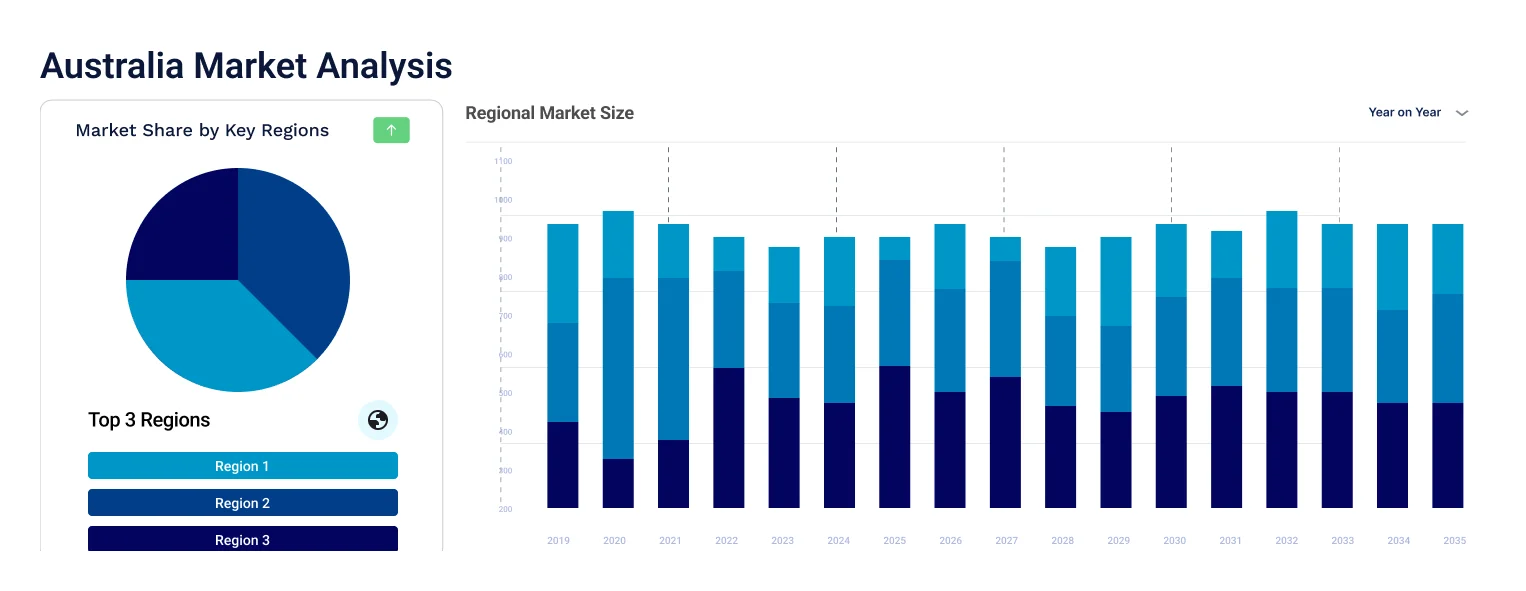
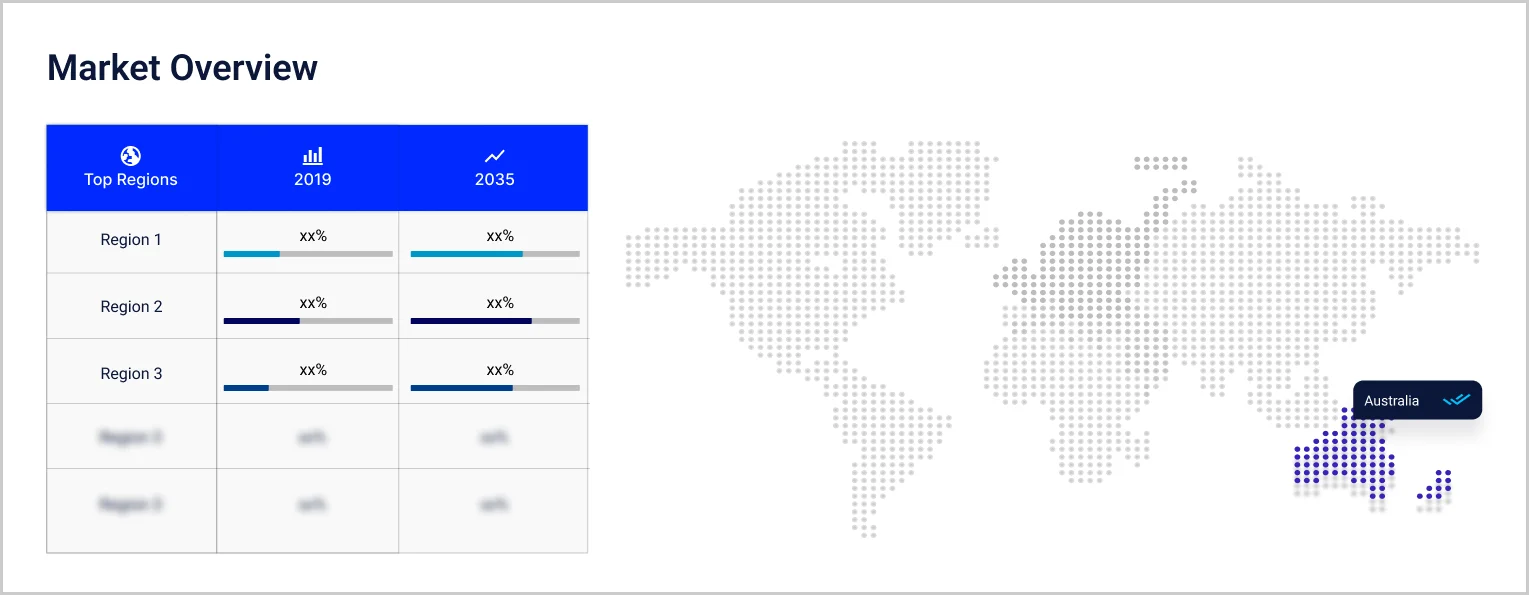
New South Wales dominates through its large population, BreastScreen NSW's AI-supported reading and density results reported in October 2026, and I-MED and Sonic Healthcare networks, and grows at an estimated 6.5% CAGR. Queensland is fastest at an estimated 7.5%, helped by a participation target of 60% by 2032 and a new Townsville van announced in January 2025. Victoria grows at 6.7% with its MyScreen contrast pilot, Western Australia at 7.0%, and South Australia at 6.4% after its July 2026 AI trial. Others, grouping Tasmania, the Australian Capital Territory and the Northern Territory, grows at 6.3%.
| CAGR 2026 to 2035, Market by Region | Growth Rate |
| New South Wales | 6.5 % |
| Victoria | 6.7 % |
| Queensland | 7.5 % |
| Western Australia | 7.0 % |
| South Australia | 6.4 % |
| Others (incl. Tasmania, Australian Capital Territory and Northern Territory) | 6.3 % |
Competition combines global equipment makers, large private radiology groups that buy in volume and software specialists. Entry barriers include therapeutic goods registration, local service engineering, integration with screening information systems and the tender relationships that anchor multi-year supply to state programs.
Hologic
Hologic, headquartered in Marlborough, Massachusetts, develops breast imaging systems including three-dimensional mammography and the Genius AI Detection software, and supplies Australian screening and private practices. On 7 April 2026 funds managed by Blackstone and TPG completed its take-private, with Joe Almeida becoming chief executive. Contingent value rights of up to US$3 per share depend on Breast Health revenue goals, so mammography is central to its owners' return.
GE HealthCare
GE HealthCare, headquartered in Chicago, Illinois, supplies the Pristina mammography range to Australian hospitals and imaging groups. On 25 November 2025 it announced FDA authorisation of Pristina Recon DL, a deep learning reconstruction upgrade for the Pristina Via platform. The company reported radiologists preferred its image quality in 99.1% of reviews against prior reconstruction, and said the platform offers zero-click acquisition and 99% uptime.
Siemens Healthineers
Siemens Healthineers, headquartered in Erlangen, Germany, sells the Mammomat B.brilliant tomosynthesis platform through its Australian subsidiary. At RSNA on 30 November 2025 it announced ClearCEM reconstruction for contrast-enhanced mammography, plus contrast-guided biopsy support with targeting accuracy of plus or minus 1 millimetre. The company says the upgrades reduce the need to switch modalities, though ClearCEM was pending United States clearance at announcement.
I-MED Radiology Network
I-MED Radiology Network is an Australian imaging group, headquartered in Sydney, operating 215 clinics across Australia and New Zealand. On 20 February 2026 it announced the acquisition of Radiology Group, adding clinics in Greater Western Sydney and the Hunter, with PET and MRI expansion planned. Jardine Matheson completed its acquisition of I-MED on 1 October 2026, giving the network a new owner for equipment renewal.
Other players operating in the Australia mammography market include Fujifilm, Sonic Healthcare, Integral Diagnostics, Lumus Imaging, and Volpara Health, alongside regional distributors, service engineering firms and artificial intelligence developers supporting BreastScreen services and private clinics across Australia.
Competition rests on image quality, software capability, service reach and tender relationships rather than price alone. Global makers supply hardware while large radiology groups concentrate buying power.


Upto 15% Off
AUD
$2749 $2499
$3849 $3499
$4949 $4499
$6049 $5499


*While we strive to always give you current and accurate information, the numbers depicted on the website are indicative and may differ from the actual numbers in the main report. At Expert Market Research, we aim to bring you the latest insights and trends in the market. Using our analyses and forecasts, stakeholders can understand the market dynamics, navigate challenges, and capitalize on opportunities to make data-driven strategic decisions.*
The Australia mammography market is valued at AUD 140.00 million in 2025, supported by national screening reform, fleet replacement with three-dimensional units and growing use of artificial intelligence reading, with New South Wales as the largest base.
The market is forecast to reach AUD 270.30 million by 2035, growing at a CAGR of 6.80 % over the 2026 to 2035 period, driven by tomosynthesis adoption, software and artificial intelligence tools and participation targets that lift screening volumes.
Software and AI records the highest CAGR at an estimated 12.1% through 2035, as BreastScreen NSW and BreastScreen SA test artificial intelligence reading and the national framework plans wider implementation.
New South Wales dominates, supported by the largest population and BreastScreen NSW's AI-supported reading. Queensland is the fastest-growing region at an estimated 7.5% CAGR, helped by its 60% participation target and new mobile capacity.
Key players include Hologic, GE HealthCare, Siemens Healthineers, I-MED Radiology Network, Fujifilm, Sonic Healthcare, Integral Diagnostics, Lumus Imaging, and Volpara Health.
Tomosynthesis builds a three-dimensional view of the breast from multiple low-dose images, helping radiologists see past overlapping tissue. The April 2025 review recommended a plan for it as the primary screening modality.
Governments endorsed a Strategic Framework in August 2026 that introduces density notification, pilots for women aged 45 to 49, two risk tiers and staged national use of artificial intelligence and tomosynthesis.
Explore our key highlights of the report and gain a concise overview of key findings, trends, and actionable insights that will empower your strategic decisions.
| REPORT FEATURES | DETAILS |
| Base Year | 2025 |
| Historical Period | 2019-2025 |
| Forecast Period | 2026-2035 |
| Scope of the Report |
Historical and Forecast Trends, Industry Drivers and Constraints, Historical and Forecast Market Analysis by Segment:
|
| Breakup by Technology |
|
| Breakup by Component |
|
| Breakup by End User |
|
| Breakup by Region |
|
| Market Dynamics |
|
| Competitive Landscape |
|
| Companies Covered |
|
Datasheet
AUD 2,749
AUD 2,499
tax inclusive*
Single User License
AUD 3,849
AUD 3,499
tax inclusive*
Five User License
AUD 4,949
AUD 4,499
tax inclusive*
Corporate License
AUD 6,049
AUD 5,499
tax inclusive*
*Please note that the prices mentioned below are starting prices for each bundle type. Kindly contact our team for further details.*
Flash Bundle
Small Business Bundle
Growth Bundle
Enterprise Bundle
*Please note that the prices mentioned below are starting prices for each bundle type. Kindly contact our team for further details.*
Flash Bundle
Number of Reports: 3
20%
tax inclusive*
Small Business Bundle
Number of Reports: 5
25%
tax inclusive*
Growth Bundle
Number of Reports: 8
30%
tax inclusive*
Enterprise Bundle
Number of Reports: 10
35%
tax inclusive*
How To Order

Select License Type
Choose the right license for your needs and access rights.

Click on ‘Buy Now’
Add the report to your cart with one click and proceed to register.

Select Mode of Payment
Choose a payment option for a secure checkout. You will be redirected accordingly.
Strategic Solutions for Informed Decision-Making
Stay upgraded and grab opportunities by strategic insights
Stay informed and aware for a Market Leverage
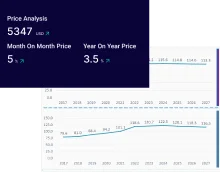
Analyze pricing patterns with comprehensive trend analyses.
Analyse trade data for supply chain insights.
Leverage cost reports for smart savings
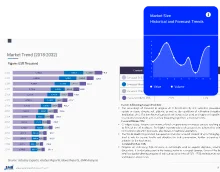
Elevate supply chain with collaboration
Contact Us for Further Information
Our specialized analysts will be available to answer all the pre-purchase and post-purchase queries regarding the report.
Our specialized analysts will be available to answer all the pre-purchase and post-purchase queries regarding the report.
Staying one step ahead of the market landscape with our in-depth research methods, integrating advanced analytics to drive precise and tangible outcomes.
Our expert analyst team offers a significant advantage over competitors, with extensive market insights into the latest trends, putting you strategically ahead.
We deliver a simplified yet extensive report, comprising in-depth industry insights and analytics tailored to your industry requirements.
We are happy to help you navigate through the services we offer and solve your queries.
Contact us