Consumer Insights
Uncover trends and behaviors shaping consumer choices today
Procurement Insights
Optimize your sourcing strategy with key market data
Industry Stats
Stay ahead with the latest trends and market analysis.
The Australia anti caking market covers the food-grade and technical agents added to salt, seasonings, milk powders, beverage mixes, supplements and other dry products to keep particles free-flowing and stop lumping in humid storage and transport. Silicon dioxide, calcium silicate, phosphates, stearates, ferrocyanides and plant-based carriers each coat or absorb moisture so powders pour, dose and dissolve consistently.
In 2025, the market is valued at AUD 140.00 million and is forecast to grow at a CAGR of 5.40%, reaching AUD 236.88 million by 2035. Growth is driven by lower-sodium reformulation, powdered nutrition and beverage formats, export-oriented dairy processing and steady salt refining, within the permissions of the Food Standards Code.
Compound Annual Growth Rate
5.4%
Value in AUD million
2026-2035
The Australia anti caking market is small by value but critical to the quality of nearly every dry ingredient made or imported here. Demand follows salt, seasoning, dairy powder and nutrition output, while hot, humid summers and long export supply chains make flow control a daily plant concern.
Three forces shape the market: salt-reduction programmes that change how seasonings are blended; growth in powdered nutrition, beverage and supplement formats; and consolidation among dairy processors and ingredient groups that concentrates purchasing and raises technical service expectations.
In June 2026 the USDA forecast Australian milk output to rise 1.4%, in August 2026 the Healthy Food Partnership endorsed revised reformulation targets and Bega Cheese reported higher earnings, and in September 2026 FSANZ approved new infant formula nutritive substances.
The market is moving from commodity flow agents sold on price towards application-matched solutions that support lower-sodium blends, clean-label declarations and consistent powder handling. Silicon dioxide and salt and seasoning uses lead because they are embedded in established blending and refining routes, while plant-based agents, beverage and nutritional powders and pharmaceutical and supplement uses advance fastest as formulators seek simpler labels. Victoria remains the largest base through its dairy and food manufacturing cluster, and Queensland grows quickest from a smaller base. Reformulation policy, dairy restructuring and export demand support a steady, multi-year outlook rather than a cyclical spike.
| Metric | Value |
| Market Size 2025 | AUD 140.00 million |
| Projected Market Size 2035 | AUD 236.88 million |
| CAGR 2026 to 2035 | 5.40% |
| Fastest-Growing Type | Natural and Plant-Based Agents: 7.4% CAGR |
| Fastest-Growing Application | Beverage and Nutritional Powders: 6.9% CAGR |
| Largest Revenue Segment 2025 | Silicon Dioxide |
| Dominant Region | Victoria |
| Highest CAGR by Region | Queensland: 6.1% |
| USDA forecast Australian milk production 2026 | 8.6 million tonnes, up 1.4% |
Reformulation Keeps Flow Agents Essential
Revenue is set to rise from AUD 140.00 million in 2025 to AUD 236.88 million in 2035 at a 5.4% CAGR, as lower-sodium blends and powdered formats demand reliable flow control.
Plant-Based Agents and Beverage Powders Lead Growth
Silicon dioxide remains the largest type, but natural and plant-based agents grow at an estimated 7.4% CAGR and beverage and nutritional powders at 6.9% through 2035, driven by clean-label and nutrition demand.
Victoria and Queensland Set the Pace
Victoria's dairy and food cluster anchors demand, while Queensland's salt refining and growing manufacturing base give it the fastest regional growth.
| Report Summary | Unit | Value |
| Base Year | AUD million | 2025 |
| Historical Period | AUD million | 2019 to 2025 |
| Forecast Period | AUD million | 2026 to 2035 |
| Market Size 2025 | AUD million | 140.00 |
| Market Size 2035 | AUD million | 236.88 |
| CAGR 2026 to 2035 | Percentage | 5.40 % |
| CAGR by Type: Natural and Plant-Based Agents | Percentage | 7.4 % |
| CAGR by Application: Beverage and Nutritional Powders | Percentage | 6.9 % |
| CAGR by End Use: Pharmaceuticals and Supplements | Percentage | 6.5 % |
| CAGR by Region: Queensland | Percentage | 6.1 % |
| Forecast Australian Milk Production 2026 | Million Tonnes | 8.6 |
| Forecast Australian Cheese Production 2026 | Thousand Tonnes | 435 |
| Market Share by Region 2025 | Victoria | Dominant Share |
Salt reduction, powdered nutrition and clean-label reformulation underpin demand. Silicon dioxide leads, while plant-based agents and beverage powders advance fastest across the major food manufacturing states.
The Australia anti caking market is being reshaped by sodium reformulation, new infant formula permissions, ingredient distributor showcases and consolidation among global ingredient suppliers.
September 2026 - FSANZ Approves New Infant Formula Nutritive Substances
August 2026 - Healthy Food Partnership Endorses Revised Reformulation Targets
July 2026 - Brenntag Showcases Nutrition Portfolio at Foodpro
June 2026 - Ingredion Offers to Acquire Tate & Lyle
Regulatory attention is shifting from additive approvals towards sodium targets and powdered nutrition, while ingredient groups consolidate, pushing suppliers towards cleaner labels and flow solutions suited to lower salt.
Recent developments, presented from the most recent, show the Australia anti caking market tied to dairy restructuring, salt producer earnings and a recovering milk supply.
August 2026 - Bega Cheese Reports Higher Full-Year Earnings
August 2026 - CK Life Sciences Reports Steady Salt Volumes
June 2026 - USDA Forecasts Australian Milk Recovery
September 2025 - Fonterra Australian Sale Raises Victorian Plant Concerns
Dairy restructuring, steady salt volumes under cost pressure and firm ingredient earnings show demand holding up, with buyers asking suppliers for secure supply and closer technical support.
The Expert Market Research’s report on the Australia Anti Caking Market offers a detailed analysis of the market based on the following segments.
Market Breakup by Type
Silicon Dioxide leads because it is the default flow agent for seasonings, powdered beverages and milk powders, and Brenntag's July 2026 Foodpro concepts centred on dry blends. Natural and Plant-Based Agents grow fastest at an estimated 7.4% CAGR, as the Healthy Food Partnership's August 2026 target revision pushes simpler labels. Calcium Silicate suits fat-rich and sticky powders. Phosphates and Stearates serve supplements, tablets and bakery mixes, where infant formula permissions in September 2026 add formulation work. Ferrocyanides remain tied to salt refining, with Cheetham Salt reporting steady volumes in August 2026.
Market Breakup by Application
Salt and Seasonings lead because refiners such as Cheetham Salt supply food, retail and export customers from six solar fields and four refineries. Beverage and Nutritional Powders grow fastest at an estimated 6.9% CAGR, helped by protein, electrolyte and infant formula formats and the FSANZ approvals of September 2026. Dairy Powders benefit from the USDA forecast of milk output rising to 8.6 million tonnes in 2026, though whole milk powder exports may fall 20%. Bakery and Confectionery Mixes grow steadily with cake and dessert premixes. Others cover sugar, starch and stock powders.
Market Breakup by End Use
Food Manufacturing leads because processors such as Bega Cheese, which reported revenue of AUD 3,774.6 million in August 2026, buy flow agents in volume. Pharmaceuticals and Supplements grow fastest at an estimated 6.5% CAGR, as Brenntag's July 2026 portfolio of collagen and protein products shows. Foodservice and Retail Packing relies on free-pouring salt and seasonings in shakers and sachets. Animal Nutrition uses flow agents in feed premixes and salt licks sold by Cheetham Salt. Industrial Salt and Chemicals draws on export-grade output from Dampier Salt, which prioritised cyclone safety in February 2025.
Market Breakup by Region
Victoria dominates, hosting the dairy plants at Cobden, Stanhope, Darnum and Bayswater whose ownership is changing under the Fonterra sale reported in September 2025, and grows at an estimated 5.0% CAGR. Queensland is fastest at an estimated 6.1%, helped by Cheetham Salt's Bajool refinery and expanding food manufacturing. Western Australia grows at 5.8% on Dampier Salt's Pilbara output, New South Wales at 5.3% as a distribution and seasoning hub, and South Australia at 5.2% around the Price refinery. Others, grouping Tasmania, the ACT and the Northern Territory, grows at 4.9%.
| CAGR 2026 to 2035, Market by Region | Growth Rate |
| Victoria | 5.0 % |
| New South Wales | 5.3 % |
| Queensland | 6.1 % |
| Western Australia | 5.8 % |
| South Australia | 5.2 % |
| Others (incl. Tasmania, Australian Capital Territory and Northern Territory) | 4.9 % |
Competition combines salt producers, global chemical distributors and dairy and food processors that influence specifications. Entry barriers include food-grade certification, compliance with the Food Standards Code, local stock holding and the application laboratories needed to match agents to each powder.
Cheetham Salt
Cheetham Salt is a subsidiary of CK Life Sciences and Australia's largest solar salt producer, operating six solar fields and four refineries across South Australia, Queensland and Victoria with capacity of 800,000 tonnes a year. Its refineries at Price and Bajool serve food manufacturing, retail, export and animal feed customers. CK Life Sciences' interim results of 11 August 2026 said volume and revenue stayed steady while costs and weather reduced profit.
Dampier Salt
Dampier Salt is a Perth-based joint venture owned 68% by Rio Tinto, 22% by Marubeni and 10% by Sojitz, harvesting salt at Dampier and Port Hedland from 53 ponds across 20,000 hectares. Its salt carries Halal, Kosher and ISO9001 certification, and it exports to Asian customers. On 13 February 2025 Rio Tinto said it was prioritising safety as Tropical Cyclone Zelia approached the Pilbara coast, affecting Dampier port operations.
Brenntag
Brenntag is headquartered in Essen, Germany, with more than 17,300 employees and about 600 sites in over 70 countries, and distributes food and nutrition ingredients in Australia and New Zealand. It exhibited at Foodpro in Melbourne from 26 to 29 July 2026, presenting its Better by Choice portfolio alongside FrieslandCampina Ingredients, Genu-In and Syensqo. Christine Giuliano leads Brenntag Nutrition in the region.
Bega Cheese
Bega Cheese is an ASX-listed Australian dairy and food company headquartered in Bega, New South Wales, with processing operations across Victoria and New South Wales. On 20 August 2026 it reported revenue of AUD 3,774.6 million, statutory EBITDA of AUD 202.3 million and normalised EBITDA guidance of AUD 240 to 245 million for the following year, targeting more than AUD 310 million by 2031.
Other players operating in the Australia anti caking market include IMCD, Univar Solutions, Kerry Group, Tate & Lyle, and Evonik, alongside salt refiners, spice and seasoning blenders, dairy powder processors and ingredient importers supplying flow agents across Australia.
Competition turns on technical service, supply security and regulatory compliance more than price, favouring distributors and producers that pair broad portfolios with local stock and application laboratories.


Upto 15% Off
AUD
$2749 $2499
$3849 $3499
$4949 $4499
$6049 $5499


*While we strive to always give you current and accurate information, the numbers depicted on the website are indicative and may differ from the actual numbers in the main report. At Expert Market Research, we aim to bring you the latest insights and trends in the market. Using our analyses and forecasts, stakeholders can understand the market dynamics, navigate challenges, and capitalize on opportunities to make data-driven strategic decisions.*
The Australia anti caking market is valued at AUD 140.00 million in 2025, supported by lower-sodium reformulation, powdered nutrition formats, dairy ingredient demand and steady salt refining, with Victoria as the largest base.
The market is forecast to reach AUD 236.88 million by 2035, growing at a CAGR of 5.40 % over the 2026 to 2035 period, driven by clean-label reformulation, growth in beverage and nutritional powders and the need for reliable flow control in humid supply chains.
Natural and Plant-Based Agents record the highest CAGR at an estimated 7.4% through 2035, as formulators seek simpler labels and the Healthy Food Partnership revised reformulation targets in August 2026.
Victoria dominates, supported by its dairy powder and food manufacturing cluster. Queensland is the fastest-growing region at an estimated 6.1% CAGR, helped by Cheetham Salt's Bajool refinery.
Key players include Cheetham Salt, Dampier Salt, Brenntag, Bega Cheese, IMCD, Univar Solutions, Kerry Group, Tate & Lyle, and Evonik.
It is a food additive or technical aid that absorbs moisture or coats particles so powders and granules stay free-flowing. Common examples include silicon dioxide, calcium silicate, phosphates, stearates and ferrocyanides in salt.
Food Standards Australia New Zealand sets permitted additives in the Food Standards Code. Its 1 September 2026 notification circular gazetted Amendment No. 252 and accepted new processing aid applications, with no new food additive approvals.
Explore our key highlights of the report and gain a concise overview of key findings, trends, and actionable insights that will empower your strategic decisions.
| REPORT FEATURES | DETAILS |
| Base Year | 2025 |
| Historical Period | 2019-2025 |
| Forecast Period | 2026-2035 |
| Scope of the Report |
Historical and Forecast Trends, Industry Drivers and Constraints, Historical and Forecast Market Analysis by Segment:
|
| Breakup by Type |
|
| Breakup by Application |
|
| Breakup by End Use |
|
| Breakup by Region |
|
| Market Dynamics |
|
| Competitive Landscape |
|
| Companies Covered |
|
Datasheet
AUD 2,749
AUD 2,499
tax inclusive*
Single User License
AUD 3,849
AUD 3,499
tax inclusive*
Five User License
AUD 4,949
AUD 4,499
tax inclusive*
Corporate License
AUD 6,049
AUD 5,499
tax inclusive*
*Please note that the prices mentioned below are starting prices for each bundle type. Kindly contact our team for further details.*
Flash Bundle
Small Business Bundle
Growth Bundle
Enterprise Bundle
*Please note that the prices mentioned below are starting prices for each bundle type. Kindly contact our team for further details.*
Flash Bundle
Number of Reports: 3
20%
tax inclusive*
Small Business Bundle
Number of Reports: 5
25%
tax inclusive*
Growth Bundle
Number of Reports: 8
30%
tax inclusive*
Enterprise Bundle
Number of Reports: 10
35%
tax inclusive*
How To Order

Select License Type
Choose the right license for your needs and access rights.

Click on ‘Buy Now’
Add the report to your cart with one click and proceed to register.

Select Mode of Payment
Choose a payment option for a secure checkout. You will be redirected accordingly.
Strategic Solutions for Informed Decision-Making
Stay upgraded and grab opportunities by strategic insights
Stay informed and aware for a Market Leverage
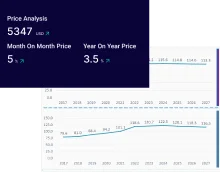
Analyze pricing patterns with comprehensive trend analyses.
Analyse trade data for supply chain insights.
Leverage cost reports for smart savings
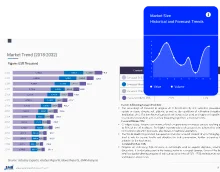
Elevate supply chain with collaboration
Contact Us for Further Information
Our specialized analysts will be available to answer all the pre-purchase and post-purchase queries regarding the report.
Our specialized analysts will be available to answer all the pre-purchase and post-purchase queries regarding the report.
Staying one step ahead of the market landscape with our in-depth research methods, integrating advanced analytics to drive precise and tangible outcomes.
Our expert analyst team offers a significant advantage over competitors, with extensive market insights into the latest trends, putting you strategically ahead.
We deliver a simplified yet extensive report, comprising in-depth industry insights and analytics tailored to your industry requirements.
We are happy to help you navigate through the services we offer and solve your queries.
Contact us