Consumer Insights
Uncover trends and behaviors shaping consumer choices today
Procurement Insights
Optimize your sourcing strategy with key market data
Industry Stats
Stay ahead with the latest trends and market analysis.
The Australia neurology devices market covers implantable and external medical devices used to treat, monitor and diagnose disorders of the brain, spine and nerves. It includes neurostimulation systems for chronic pain and movement disorders, neurointerventional tools for stroke and aneurysm, neuromonitoring and EEG equipment, and neurosurgical and cerebrospinal fluid management products sold to hospitals and clinics.
In 2025, the market is valued at AUD 320.00 million in 2025 and is forecast to grow at a (CAGR) of 7.40%, reaching AUD 653.42 million by 2035. Growth is supported by an ageing population, a stroke every 11 minutes nationally, wider access to thrombectomy, and a local pipeline of homegrown neurotechnology from Saluda Medical, Epiminder, EMVision and Synchron.
Compound Annual Growth Rate
7.4%
Value in AUD million
2026-2035
The Australia neurology devices market is moving from an import-led, hospital-centred model towards one where local innovators compete directly with global device makers. Sensing-based stimulators, implantable brain monitors and portable stroke scanners are entering the market in parallel with proven implants.
Three forces are shaping demand: an ageing population, with more than 440,000 stroke survivors living in the community; faster adoption of closed-loop and rechargeable stimulation for pain and Parkinson's disease; and public funding that targets earlier stroke diagnosis through mobile stroke units and golden hour research.
In December 2025 both Saluda Medical and Epiminder listed on the Australian Securities Exchange, and in November 2025 Synchron closed a USD 200 million round. In January 2026 Boston Scientific agreed to acquire Penumbra for an enterprise value of USD 14.5 billion.
The market is moving from mechanical, open-loop devices towards sensing, rechargeable and remotely programmable systems that adjust therapy to the patient. Neurostimulation leads in value because spinal cord and deep brain stimulation are heavily implant-driven, while neurointerventional devices advance fastest as thrombectomy reaches more regional patients. Movement disorders and public hospitals gain share as adaptive deep brain stimulation and state stroke programs widen access. New South Wales remains the largest region, and Queensland grows quickest on population inflow and expanding neurosurgical capacity. Local listings, portable scanners and brain-computer interface trials point to a durable shift in product mix and in the role of Australian innovators, rather than a short-lived procedural uplift.
| Metric | Value |
| Market Size 2025 | AUD 320.00 million |
| Projected Market Size 2035 | AUD 653.42 million |
| CAGR 2026 to 2035 | 7.40% |
| Fastest-Growing Product Type | Neurointerventional Devices: 9.2% CAGR |
| Fastest-Growing Application | Movement Disorders: 9.7% CAGR |
| Largest Revenue Segment 2025 | Neurostimulation Devices |
| Dominant Region | New South Wales |
| Highest CAGR by Region | Queensland: 8.4% |
| Strokes in Australia | One every 11 minutes |
Ageing Population and Stroke Burden Anchor Demand
Revenue is on course to roughly double across the decade, from USD 320.00 million in 2025 to USD 653.42 million in 2035 at a 7.4% CAGR. More than 440,000 stroke survivors and a projected 72,000 strokes a year by 2050 keep device demand structurally high.
Neurointerventional and Adaptive Stimulation Lead Growth
Neurostimulation holds the largest share, but Neurointerventional Devices grow at an estimated 9.2% CAGR and Movement Disorders at an estimated 9.7% CAGR through 2035. The first adaptive deep brain stimulation patient in Australia, implanted in November 2025, signals wider uptake of sensing therapy.
Capital and Consolidation Reshape the Supplier Base
Local innovators are raising capital while global groups consolidate neurovascular portfolios, which widens choice for hospitals and sharpens competition on evidence and reimbursement.
| Report Summary | Unit | Value |
| Base Year | AUD million | 2025 |
| Historical Period | AUD million | 2019 to 2025 |
| Forecast Period | AUD million | 2026 to 2035 |
| Market Size 2025 | AUD million | 320.00 |
| Market Size 2035 | AUD million | 653.42 |
| CAGR 2026 to 2035 | Percentage | 7.40 % |
| CAGR by Product Type: Neurointerventional Devices | Percentage | 9.2 % |
| CAGR by Application: Movement Disorders | Percentage | 9.7 % |
| CAGR by End User: Public Hospitals | Percentage | 8.6 % |
| CAGR by Region: Queensland | Percentage | 8.4 % |
| Stroke Survivors Living in the Community | Thousand People | 440 |
| Synchron Series D Funding, November 2025 | Million USD | 200 |
| Market Share by Region 2025 | New South Wales | Dominant Share |
Demand is shifting towards sensing stimulation, thrombectomy and portable diagnostics as the population ages and stroke care expands. New South Wales leads, and Queensland grows fastest.
The Australia neurology devices market is being reshaped by portable stroke imaging, closed-loop stimulation, adaptive deep brain stimulation and rechargeable implants.
September 2026 - EMVision Completes First In-Field Study of Its Stroke Scanner in Melbourne
January 2026 - Saluda Medical Gains CE Certification for EVA Sensing Technology
November 2025 - St Vincent's Hospital Implants Australia's First Adaptive Deep Brain Stimulator
June 2025 - St Andrew's War Memorial Hospital Implants Abbott's Liberta RC Stimulator
Sensing stimulation, remote programming and portable stroke imaging are the main structural forces, while reimbursement timing and clinical evidence requirements remain the main risk to adoption speed.
Recent developments, presented from the most recent, show epilepsy monitoring progress, neurovascular consolidation, brain-computer interface funding and new regulatory clearance for thrombectomy tools.
July 2026 - Epiminder Reaches 50 Enrolments in Its DETECT Epilepsy Monitoring Study
January 2026 - Boston Scientific Agrees to Acquire Penumbra for USD 14.5 Billion
November 2025 - Synchron Raises USD 200 Million to Advance Its Stentrode Brain-Computer Interface
April 2025 - Route 92 Medical Receives TGA Approval for Neurovascular Portfolio
Epilepsy monitoring milestones, large neurovascular acquisitions, brain-computer interface funding and new regulatory clearances show suppliers positioning for closed-loop therapy and stroke intervention throughout the forecast period.
The Expert Market Research’s report on the Australia Neurology Devices Market offers a detailed analysis of the market based on the following segments.
Market Breakup by Product Type
Neurostimulation Devices lead on value, in our estimate, growing at an estimated 7.8% CAGR through 2035 as Abbott's rechargeable Liberta RC, implanted in Brisbane in June 2025, and Saluda's EVA sensing, certified in January 2026, widen the range. Neurointerventional Devices grow fastest at an estimated 9.2%, aided by Route 92 Medical's TGA approval of April 2025. Neuromonitoring and EEG Devices grow at 6.8%, with Epiminder's Minder reaching 50 DETECT enrolments in July 2026. Neurosurgical and CSF Management Devices grow at 5.2% on steady shunt and cranial procedures.
Market Breakup by Application
Chronic Pain leads in value, in our estimate, growing at 7.0% as spinal cord stimulation is Saluda's core indication. Stroke and Cerebrovascular Disorders grow at 8.1%, supported by EMVision's September 2026 field study with the Melbourne Mobile Stroke Unit. Movement Disorders grow fastest at an estimated 9.7% CAGR through 2035, after Australia's first adaptive deep brain stimulation in November 2025. Epilepsy grows at 9.1% as implantable monitoring matures. Others include traumatic brain injury and sleep-related disorders, growing at 5.4%.
Market Breakup by End User
Private Hospitals lead, in our estimate, because elective implants such as St Andrew's Brisbane Liberta RC procedure of June 2025 are concentrated there, and they grow at 7.2%. Public Hospitals grow fastest at an estimated 8.6% CAGR through 2035, as state stroke services adopt mobile units and thrombectomy. Specialist Neurology and Neurosurgery Clinics grow at 7.6% on outpatient monitoring and programming. Research and Academic Institutes grow at 6.4%, supported by trials such as Synchron's Stentrode, which has been placed in 10 patients across United States and Australian studies.
Market Breakup by Region
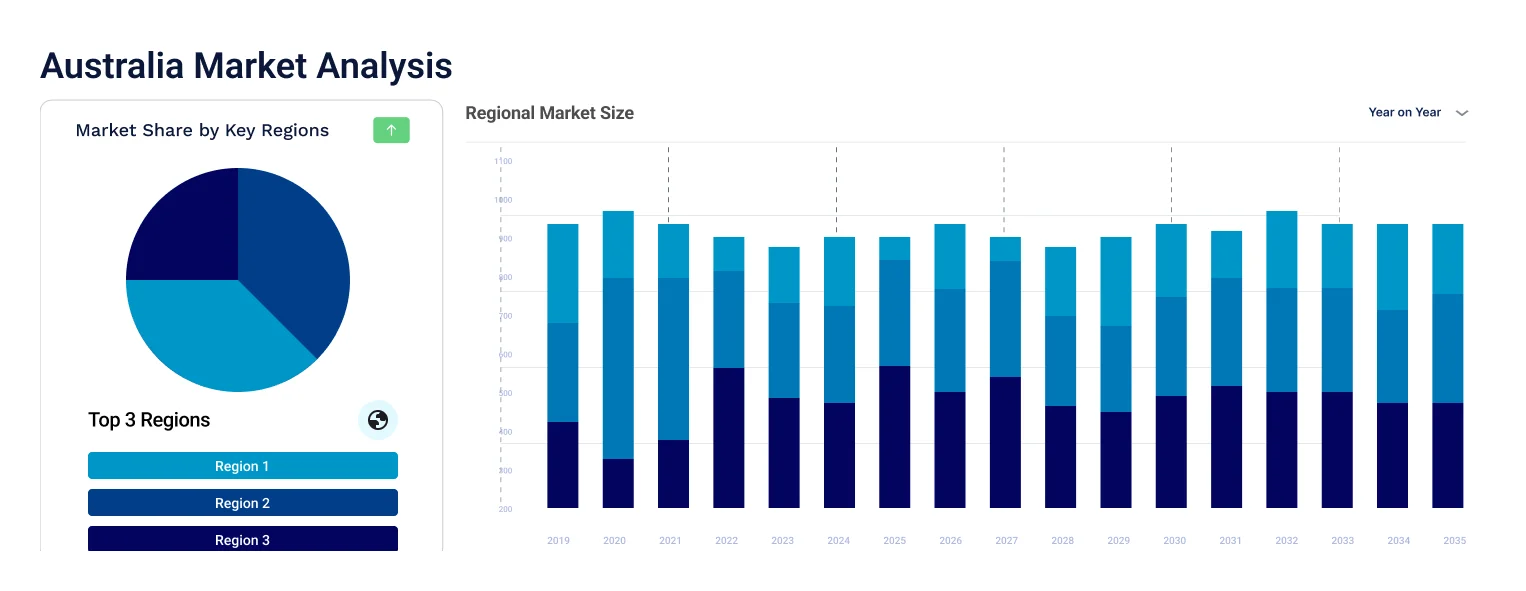
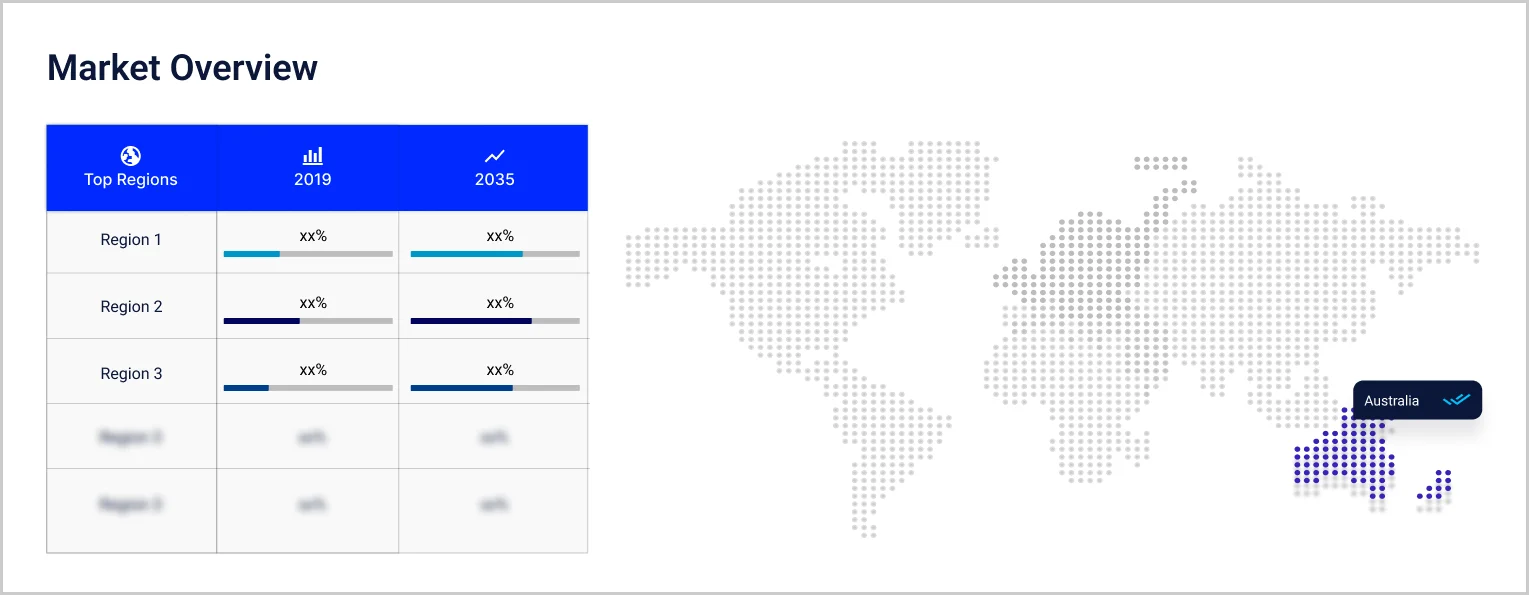
New South Wales dominates, in our estimate, because it hosts the largest hospital network, and it grows at an estimated 7.0% CAGR through 2035 from a large, mature base. Victoria grows at 7.3%, anchored by Epiminder and the Melbourne Mobile Stroke Unit. Queensland is the fastest-growing region at an estimated 8.4%, as Brisbane centres adopt new stimulators. Western Australia grows at 7.9%, hosting the March 2025 neuroradiology meeting. Others, covering the remaining states and territories, are grouped because each is a small volume market, and grow at 6.9%.
| CAGR 2026 to 2035, Market by Region | Growth Rate |
| New South Wales | 7.0 % |
| Victoria | 7.3 % |
| Queensland | 8.4 % |
| Western Australia | 7.9 % |
| Others (incl. South Australia, Tasmania, the Australian Capital Territory and the Northern Territory) | 6.9 % |
Competition combines global device groups with Australian innovators. Entry barriers include clinical evidence, Therapeutic Goods Administration listing, private insurer reimbursement on the prostheses list, surgeon training and hospital relationships across public and private systems.
Medtronic
Medtronic, headquartered in Dublin, Ireland, supplies deep brain stimulation, spinal cord stimulation and neurovascular products to Australian hospitals through its Australasian operations. On 24 February 2025 the company announced United States approval for its BrainSense Adaptive deep brain stimulation system, the first of its kind for Parkinson's disease. Australia's first adaptive implant followed in November 2025, reflecting the technology's move into local practice.
Abbott
Abbott, headquartered in Abbott Park, Illinois, sells neuromodulation systems for chronic pain and movement disorders in Australia. In June 2025 St Andrew's War Memorial Hospital in Brisbane became the first Australian hospital to implant its Liberta RC rechargeable deep brain stimulator, performed by Professor Peter Silburn and Dr Terry Coyne. The system supports remote programming through NeuroSphere Digital Care, reducing clinic visits.
Saluda Medical
Saluda Medical is an Australian neurostimulation company developing the Evoke closed-loop spinal cord stimulation system, which reads evoked neural responses in real time. It listed on the Australian Securities Exchange on 5 December 2025, raising A$230.8 million at A$2.65 per share. On 8 January 2026 its EVA sensing technology received CE certification, recognised in Australia, with limited release in Europe and Australia planned for early 2026.
Epiminder
Epiminder, based in Melbourne, develops the Minder implantable continuous EEG monitoring system for people with epilepsy. It completed a A$125 million listing in December 2025 and announced the first United States implant in January 2026. On 16 July 2026 it reported 50 enrolments in its DETECT study, with cash of A$75.8 million at 30 June 2026 and commercial sales targeted for early 2028.
Other players operating in the Australia neurology devices market include Boston Scientific, Penumbra, Synchron, EMVision, and Stryker, alongside regional distributors, specialist importers, local software developers and contract manufacturers supplying neurostimulation, neurointerventional and monitoring products to public hospitals, private hospitals and clinics across Australia.
Competition rests on clinical evidence, regulatory listing, reimbursement and surgeon relationships rather than price alone, while acquisitions and local listings could reshape positions among established and emerging suppliers.


Upto 15% Off
AUD
$2749 $2499
$3849 $3499
$4949 $4499
$6049 $5499


*While we strive to always give you current and accurate information, the numbers depicted on the website are indicative and may differ from the actual numbers in the main report. At Expert Market Research, we aim to bring you the latest insights and trends in the market. Using our analyses and forecasts, stakeholders can understand the market dynamics, navigate challenges, and capitalize on opportunities to make data-driven strategic decisions.*
The Australia neurology devices market is valued at AUD 320.00 million in 2025, supported by an ageing population, rising stroke intervention, wider adoption of sensing neurostimulation and strong local innovation, with New South Wales as the largest region.
The market is forecast to reach AUD 653.42 million by 2035, growing at a CAGR of 7.40 % over the 2026 to 2035 period, driven by thrombectomy access, adaptive and rechargeable stimulation, implantable monitoring trials and public funding for earlier stroke diagnosis.
Neurointerventional Devices record the highest CAGR at an estimated 9.2% through 2035, as thrombectomy access widens and new reperfusion tools gain Therapeutic Goods Administration approval.
New South Wales dominates, supported by the largest hospital network and a strong cluster of neurotechnology companies. Queensland is the fastest-growing region at an estimated 8.4% CAGR, helped by population inflow and new implant centres.
Key players include Medtronic, Abbott, Saluda Medical, Epiminder, Boston Scientific, Penumbra, Synchron, EMVision, and Stryker.
Adaptive deep brain stimulation senses abnormal brain signals and adjusts output in real time instead of stimulating continuously. St Vincent's Hospital implanted Australia's first adaptive system for Parkinson's disease in November 2025.
The Stentrode is Synchron's endovascular brain-computer interface, delivered through blood vessels. In November 2025 Synchron raised USD 200 million to accelerate pivotal trials after placing the device in 10 patients in United States and Australian studies.
Explore our key highlights of the report and gain a concise overview of key findings, trends, and actionable insights that will empower your strategic decisions.
| REPORT FEATURES | DETAILS |
| Base Year | 2025 |
| Historical Period | 2019-2025 |
| Forecast Period | 2026-2035 |
| Scope of the Report |
Historical and Forecast Trends, Industry Drivers and Constraints, Historical and Forecast Market Analysis by Segment:
|
| Breakup by Product Type |
|
| Breakup by Application |
|
| Breakup by End User |
|
| Breakup by Region |
|
| Market Dynamics |
|
| Competitive Landscape |
|
| Companies Covered |
|
Datasheet
AUD 2,749
AUD 2,499
tax inclusive*
Single User License
AUD 3,849
AUD 3,499
tax inclusive*
Five User License
AUD 4,949
AUD 4,499
tax inclusive*
Corporate License
AUD 6,049
AUD 5,499
tax inclusive*
*Please note that the prices mentioned below are starting prices for each bundle type. Kindly contact our team for further details.*
Flash Bundle
Small Business Bundle
Growth Bundle
Enterprise Bundle
*Please note that the prices mentioned below are starting prices for each bundle type. Kindly contact our team for further details.*
Flash Bundle
Number of Reports: 3
20%
tax inclusive*
Small Business Bundle
Number of Reports: 5
25%
tax inclusive*
Growth Bundle
Number of Reports: 8
30%
tax inclusive*
Enterprise Bundle
Number of Reports: 10
35%
tax inclusive*
How To Order

Select License Type
Choose the right license for your needs and access rights.

Click on ‘Buy Now’
Add the report to your cart with one click and proceed to register.

Select Mode of Payment
Choose a payment option for a secure checkout. You will be redirected accordingly.
Strategic Solutions for Informed Decision-Making
Stay upgraded and grab opportunities by strategic insights
Stay informed and aware for a Market Leverage
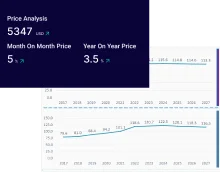
Analyze pricing patterns with comprehensive trend analyses.
Analyse trade data for supply chain insights.
Leverage cost reports for smart savings
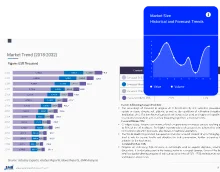
Elevate supply chain with collaboration
Contact Us for Further Information
Our specialized analysts will be available to answer all the pre-purchase and post-purchase queries regarding the report.
Our specialized analysts will be available to answer all the pre-purchase and post-purchase queries regarding the report.
Staying one step ahead of the market landscape with our in-depth research methods, integrating advanced analytics to drive precise and tangible outcomes.
Our expert analyst team offers a significant advantage over competitors, with extensive market insights into the latest trends, putting you strategically ahead.
We deliver a simplified yet extensive report, comprising in-depth industry insights and analytics tailored to your industry requirements.
We are happy to help you navigate through the services we offer and solve your queries.
Contact us