Consumer Insights
Uncover trends and behaviors shaping consumer choices today
Procurement Insights
Optimize your sourcing strategy with key market data
Industry Stats
Stay ahead with the latest trends and market analysis.
The Australia high voltage direct current (HVDC) transmission systems market covers the converter stations, submarine and underground direct current cables, and control and protection equipment used to move bulk electricity over long distances and between separate power grids. HVDC transmits large volumes of power with lower losses than alternating current and enables controlled transfer between regions that are not synchronously connected.
In 2025, the market is valued at AUD 592.60 million and is forecast to grow at a CAGR of 11.70%, reaching AUD 1791.82 million by 2035. Growth is driven by the roughly AUD 5 billion Marinus Link interconnector between Tasmania and Victoria, the Integrated System Plan, and the accelerating retirement of coal generation.
Compound Annual Growth Rate
11.7%
Value in AUD million
2026-2035
The Australia HVDC transmission systems market is at a structural turning point. Alternating current has historically dominated the National Electricity Market, but the retirement of coal generation and the concentration of new wind and solar in remote renewable energy zones have made direct current links commercially essential.
Three forces are shaping the market: the delivery of Marinus Link, the first new HVDC interconnector across Bass Strait in two decades; the Integrated System Plan, which requires about 10,000 km of new transmission; and the shift toward voltage source converter technology.
In August 2025, Marinus Link reached its final investment decision, followed in September 2025 by financial close with up to AUD 3.8 billion in Clean Energy Finance Corporation loans. The Integrated System Plan estimates actionable transmission projects will save consumers a further AUD 18.5 billion.
The Australia HVDC transmission systems market is transitioning from planning into full construction, and its value scales steadily across the forecast period as the national interconnection pipeline is delivered. Converter stations remain the largest revenue contributor, reflecting their capital intensity within every direct current link, while voltage source converter systems and New South Wales set the fastest pace of growth. Committed projects such as Marinus Link, the Integrated System Plan build-out, and the expansion of renewable energy zone transmission underpin a durable, multi-year demand outlook rather than a cyclical uplift.
| Metric | Value |
| Market Size 2025 | AUD 592.60 million |
| Projected Market Size 2035 | AUD 1791.82 million |
| CAGR 2026 to 2035 | 11.70% |
| Fastest-Growing Technology | Voltage Source Converter (VSC): 13.5% CAGR |
| Fastest-Growing Component | Converter Stations: 12.9% CAGR |
| Largest Revenue Segment 2025 | Converter Stations |
| Dominant State | Victoria |
| Highest CAGR by State | New South Wales: 13.2% |
| Marinus Link Total Investment | Approximately AUD 5 billion |
| Flagship Works Contract (TasVic Greenlink) | AUD 994 million |
Grid Decarbonisation Anchors Long-Term Growth
Grid decarbonisation is the structural anchor behind the market's expansion, with revenue on course to almost triple across the decade to 2035 at an 11.7% CAGR. As centralised coal generation retires and dispersed renewables scale, efficient long-distance transfer becomes essential, and the Integrated System Plan has translated this logic into a funded pipeline with multi-year revenue visibility.
Voltage Source Converters Lead New Deployments
Converter stations are the highest value component, and voltage source converter systems record the fastest growth at an estimated 13.5% CAGR through 2035. VSC systems can restart a collapsed grid and hold voltage in inverter-dominated networks. Marinus Link adopts HVDC Light VSC technology supplied by Hitachi Energy, setting a reference standard.
Marinus Link Financial Close Signals Acceleration
Marinus Link secured full funding for its first 750 MW stage in September 2025, backed by up to AUD 3.8 billion in Clean Energy Finance Corporation loans. Key delivery contracts are now in place, with major works ramping through 2026 for energisation by 2030.
| Report Summary | Unit | Value |
| Base Year | AUD million | 2025 |
| Historical Period | AUD million | 2019 to 2025 |
| Forecast Period | AUD million | 2026 to 2035 |
| Market Size 2025 | AUD million | 592.60 |
| Market Size 2035 | AUD million | 1791.82 |
| CAGR 2026 2035 | Percentage | 11.70 % |
| CAGR by Technology: VSC | Percentage | 13.5 % |
| CAGR by Component: Converter Stations | Percentage | 12.9 % |
| CAGR by State: New South Wales | Percentage | 13.2 % |
| CAGR by State: Victoria | Percentage | 10.5 % |
| Marinus Link Stage 1 Capacity | MW | 750 |
| Marinus Link Total Capacity | MW | 1,500 |
| Market Share by Component 2025 | Converter Stations | Dominant Share |
The trajectory reflects a structural shift rather than cyclical demand. The retirement of coal generation and the concentration of new wind and solar in remote renewable energy zones have made long-distance direct current transfer essential, turning the Integrated System Plan's least cost pathway into a funded, multi-year construction pipeline with clear revenue visibility. Converter stations command the dominant share because they are the most capital-intensive element of every link, while voltage source converter technology and New South Wales grow fastest as black-start-capable designs and renewable energy zone rollouts anchor the next wave of interconnection. The expansion is therefore underpinned by committed projects such as Marinus Link and firm regulatory backing rather than speculative forecasts.
The Australia HVDC transmission systems market is being reshaped by a least cost transmission plan, the retirement of coal generation, and the technology shift toward voltage source converters.
June 2026- Integrated System Plan Drives HVDC Backbone Investment
The Integrated System Plan requires about 10,000 km of new transmission and AUD 16 billion of investment through the forecast period.
May 2026- Voltage Source Converter Technology Becomes the Default
New projects such as Marinus Link favour voltage source converters over line commutated converters.
August 2025- Renewable Energy Zones Drive Long Distance Transmission
Designated renewable energy zones in New South Wales, Victoria, and Queensland concentrate remote wind and solar.
June 2025- Subsea Interconnection and System Strength Investment Rise
Marinus Link adds 1,500 MW of Bass Strait HVDC capacity, anchoring submarine cable demand.
These trends point to a market whose growth is structurally locked in rather than cyclical. The Integrated System Plan converts decarbonisation policy into a funded HVDC pipeline, renewable energy zones create sustained long distance transfer demand, and the move to voltage source converters positions technology suppliers for repeat work. Together they make interregional and subsea HVDC central to Australia's grid transition through the forecast period.
Recent developments, presented from the most recent, show the Australia HVDC market moving from committed contracts into full construction.
December 2025- TasVic Greenlink Awarded AUD 994 Million Works Contract
Final major Stage 1 works contract awarded to TasVic Greenlink, a joint venture of DT Infrastructure and Samsung C&T Corporation.
November 2025- GE Vernova to Supply Synchronous Condensers to Transgrid
GE Vernova engaged by Transgrid to install synchronous condensers across five New South Wales sites.
September 2025- Marinus Link Reaches Financial Close
August 2025- Marinus Link Reaches Final Investment Decision
Final investment decision secured on 1 August 2025 with Commonwealth environmental approval.
The 2025 to 2026 developments mark a decisive shift from planning to delivery. The Marinus Link final investment decision and financial close de risked the flagship project across 2025, and the AUD 994 million TasVic Greenlink award moved it into full construction in 2026. Reinforced by complementary system strength investment such as the GE Vernova and Transgrid programme, this momentum validates the commercial case for further HVDC interconnection across the National Electricity Market.
The Expert Market Research’s report on the Australia High Voltage Direct Current (HVDC) Transmission Systems Market offers a detailed analysis of the market based on the following segments.
Market Breakup by Component
Converter Stations account for the largest share of the market because they are the most capital-intensive element of every direct current link, and in August 2026 bulk earthworks began at the Hazelwood converter station in Victoria ahead of the installation of Hitachi Energy's HVDC equipment. Transmission Medium (Cables) forms the second largest component, anchored by Prysmian's 345 km, 320 kV XLPE-insulated cable system for Marinus Link, whose project costs were settled when the Australian Energy Regulator issued its final decision on Project Marinus in February 2026. DC Lines cover the overhead and underground direct current conductors that connect converter terminals.
Market Breakup by Transmission Type
Submarine transmission holds the leading share, as Australia's operating and committed HVDC links cross Bass Strait, from the 370 km Basslink route to the 255 km undersea section of Marinus Link. Underground transmission is the fastest growing type, driven by the 90 km Marinus Link land cable through Gippsland, where TasVic Greenlink had early works under way at the Waratah Bay shore crossing by August 2026, and supported by existing underground links such as Murraylink between Victoria and South Australia. Overhead transmission plays a smaller role in the current national grid but carries long term upside through proposals such as the roughly 800 km HVDC overhead line planned from Powell Creek to Darwin under the Australia-Asia PowerLink.
Market Breakup by Technology
Voltage Source Converters (VSC) are the fastest growing technology at an estimated 13.5% CAGR through 2035 and the default choice for new Australian links, owing to their black start capability, independent voltage control in low system strength networks, and compatibility with inverter-based wind and solar. Marinus Link will use Hitachi Energy's HVDC Light VSC platform, building on the earlier Murraylink and Directlink VSC interconnectors. Line Commutated Converters (LCC) retain a significant installed base through Basslink, and in February 2026 the Australian Energy Regulator approved AUD 459.5 million in revenue for Basslink over 2026 to 2030 as the link moved to regulated status from 1 July 2026.
Market Breakup by Power Rating
Below 1000 MW systems account for the largest share, covering Directlink at 180 MW, Murraylink at 220 MW, Basslink at 500 MW, and the 750 MW first stage of Marinus Link. The 1001-2000 MW band is set to gain share as Marinus Link builds toward its full 1,500 MW capacity, and the Integrated System Plan released by the Australian Energy Market Operator in June 2026 describes the project as two 750 MW HVDC developments between the Burnie area in Tasmania and the Latrobe Valley in Victoria. Above 2000 MW systems remain a long-term opportunity linked to multi-gigawatt export concepts such as the Australia-Asia PowerLink in the Northern Territory.
Market Breakup by Application
Interconnecting Grids holds the leading share, since Australia's HVDC assets mainly link regions of the National Electricity Market, with Basslink and Marinus Link connecting Tasmania and Victoria, Murraylink tying Victoria to South Australia, and Directlink joining the New South Wales and Queensland networks. Bulk Power Transmission is the fastest growing application as renewable energy zones and large export projects need efficient long-distance transfer, a direction reaffirmed when the 2026 Integrated System Plan, published on 25 June 2026, confirmed renewables connected by transmission and firmed by storage as the least cost path to 2050.
Market Breakup by Region
| CAGR 2026 to 2035, Market by State | Growth Rate |
| New South Wales | 13.2 % |
| Victoria | 10.5 % |
| Queensland | Steady Growth |
| Western Australia | 11.9 % |
| Australian Capital Territory | Steady Growth |
| Others (incl. Tasmania) | Anchored by Marinus Link |
Victoria holds the largest share, anchored by the Hazelwood converter station and Gippsland land cable route of Marinus Link and by the Basslink terminal at Loy Yang. New South Wales records the fastest growth at an estimated 13.2 % CAGR, supported by renewable energy zone rollouts and system strength investment by Transgrid. Queensland contributes through the Directlink interconnector and a widening transmission pipeline, with the CopperString project classed as anticipated in the 2026 Integrated System Plan. Others include Tasmania, home to the Heybridge converter station, together with South Australia and the Northern Territory, where the Australia-Asia PowerLink carries long term upside.
The market is built around a small group of global technology providers and cable manufacturers working alongside Australian network operators and project companies. High capital intensity and specialised converter and subsea cable expertise create strong barriers to entry across the national interconnection pipeline.
Schneider Electric SE
Headquartered in Rueil-Malmaison, France, Schneider Electric SE is an energy management and automation company whose grid portfolio spans medium and low voltage switchgear, ring main units, on-load tap changers, protection relays, and the EcoStruxure Advanced Distribution Management System. In Australia it supports utilities with substation and network digitalisation, and in March 2026 it delivered a kiosk-based digital grid solution with ring main units and low voltage switchgear to ACT distributor Evoenergy, integrated with its EcoStruxure platform. Its equipment is designed and tested to IEC standards.
CBI Australia
Operating in Australia since 1959 through Heinemann Electric Pty Ltd, trading as CBI-electric Australia, and based in Victoria, CBI Australia designs and supplies low voltage electrical protection equipment. Its portfolio covers hydraulic-magnetic AC and DC circuit breakers for equipment, miniature and moulded case circuit breakers, residual current devices, distribution boards, and remote actuation units for DC circuits up to 300 A used in battery storage, rail, and solar systems. Its breakers carry VDE, CCC, and CE approvals, with UL-compliant variants, supporting auxiliary protection at converter and substation sites.
Toshiba International Corporation Pty. Ltd.
Based at Winston Hills in New South Wales and active in Australia for more than 45 years, Toshiba International Corporation Pty. Ltd. is the Oceania arm of Japan's Toshiba Group. It supplies transmission and distribution products, power electronics, turbine generators, transformer servicing, and battery energy storage systems to the energy, mining, and industrial sectors, drawing on the parent group's grid solutions and HVDC converter experience in Japan. Its local engineering and field service teams give it reach across utility and industrial customers nationwide.
NR Electric Co., Ltd.
Established in 1995 and headquartered in Nanjing, China, NR Electric Co., Ltd. is a subsidiary of NARI Technology and a specialist in power system protection and control. Its HVDC portfolio includes the PCS-8600 UHVDC converter valve system, PCS-9550 LCC-HVDC and PCS-9520 VSC-HVDC control and protection systems, PCS-8100 VSC-HVDC IGBT valves, and PCS-8300 high voltage DC circuit breakers. The company has delivered the Zhoushan five-terminal VSC-HVDC system and the ±500 kV Zhangbei DC grid, and its VSC-HVDC control and protection system is KEMA certified.
Other players operating in the Australia high voltage direct current (HVDC) transmission systems market include NKT A/S, Hitachi Energy Ltd., Siemens Energy AG, GE Vernova Inc., and Prysmian S.p.A., alongside specialist equipment suppliers, engineering contractors, and service providers supporting converter, cable, and protection packages.
Competition centres on converter technology, cable capability, and protection systems rather than price alone. Hitachi Energy, Siemens Energy, and GE Vernova lead on converter and grid stabilisation platforms, while Prysmian and NKT compete on high voltage submarine and land cable manufacturing and installation. NR Electric adds depth in HVDC control, protection, and DC circuit breakers, whereas Schneider Electric, Toshiba International Corporation, and CBI Australia strengthen the substation, switchgear, and low voltage protection layer. Long term contracts with project companies such as Marinus Link Pty Ltd push global suppliers to build local delivery teams in a pipeline defined by multi decade, capital intensive projects.


Upto 15% Off
AUD
$2749 $2499
$3849 $3499
$4949 $4499
$6049 $5499


*While we strive to always give you current and accurate information, the numbers depicted on the website are indicative and may differ from the actual numbers in the main report. At Expert Market Research, we aim to bring you the latest insights and trends in the market. Using our analyses and forecasts, stakeholders can understand the market dynamics, navigate challenges, and capitalize on opportunities to make data-driven strategic decisions.*
The Australia HVDC transmission systems market is valued at AUD 592.60 million in 2025, reflecting converter station, DC cable, and control system activity across the national interconnection pipeline anchored by the Marinus Link project between Tasmania and Victoria.
The market is forecast to reach AUD 1791.82 million by 2035, growing at a CAGR of 11.70 % over the 2026 to 2035 period, driven by Marinus Link, the Integrated System Plan transmission build out, and renewable energy zone integration.
Voltage source converter (VSC) technology records the highest CAGR at an estimated 13.5% through 2035, driven by its black start capability and ability to hold voltage in grids dominated by inverter-based wind and solar as coal generation retires.
Victoria holds the largest current share, anchored by the Hazelwood converter station and Gippsland land cable route of Marinus Link together with the Basslink terminal at Loy Yang. New South Wales records the fastest growth on renewable energy zone development and system strength investment.
Key players include Schneider Electric SE, CBI Australia, Toshiba International Corporation Pty. Ltd., NR Electric Co., Ltd., NKT A/S, Hitachi Energy Ltd., Siemens Energy AG, GE Vernova Inc., and Prysmian S.p.A.
Marinus Link is a 1,500 MW HVDC interconnector under construction between Tasmania and Victoria, using 320 kV HVDC Light voltage source converter technology across a 345 km route. It reached financial close in September 2025 and is targeted for energisation by 2030.
The Australian Energy Market Operator's Integrated System Plan sets a least cost pathway requiring about 10,000 km of new transmission and AUD 16 billion of investment, positioning HVDC interconnectors as backbones for moving renewable power between regions.
Explore our key highlights of the report and gain a concise overview of key findings, trends, and actionable insights that will empower your strategic decisions.
| REPORT FEATURES | DETAILS |
| Base Year | 2025 |
| Historical Period | 2019-2025 |
| Forecast Period | 2026-2035 |
| Scope of the Report |
Historical and Forecast Trends, Industry Drivers and Constraints, Historical and Forecast Market Analysis by Segment:
|
| Breakup by Component |
|
| Breakup by Transmission Type |
|
| Breakup by Technology |
|
| Breakup by Power Rating |
|
| Breakup by Application |
|
| Breakup by Region |
|
| Market Dynamics |
|
| Competitive Landscape |
|
| Companies Covered |
|
Datasheet
AUD 2,749
AUD 2,499
tax inclusive*
Single User License
AUD 3,849
AUD 3,499
tax inclusive*
Five User License
AUD 4,949
AUD 4,499
tax inclusive*
Corporate License
AUD 6,049
AUD 5,499
tax inclusive*
*Please note that the prices mentioned below are starting prices for each bundle type. Kindly contact our team for further details.*
Flash Bundle
Small Business Bundle
Growth Bundle
Enterprise Bundle
*Please note that the prices mentioned below are starting prices for each bundle type. Kindly contact our team for further details.*
Flash Bundle
Number of Reports: 3
20%
tax inclusive*
Small Business Bundle
Number of Reports: 5
25%
tax inclusive*
Growth Bundle
Number of Reports: 8
30%
tax inclusive*
Enterprise Bundle
Number of Reports: 10
35%
tax inclusive*
How To Order

Select License Type
Choose the right license for your needs and access rights.

Click on ‘Buy Now’
Add the report to your cart with one click and proceed to register.

Select Mode of Payment
Choose a payment option for a secure checkout. You will be redirected accordingly.
Strategic Solutions for Informed Decision-Making
Stay upgraded and grab opportunities by strategic insights
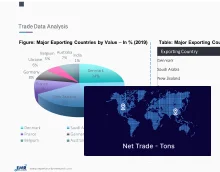
Stay informed and aware for a Market Leverage
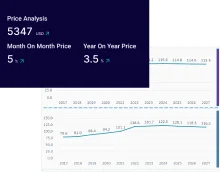
Analyze pricing patterns with comprehensive trend analyses.
Analyse trade data for supply chain insights.
Leverage cost reports for smart savings
Elevate supply chain with collaboration
Contact Us for Further Information
Our specialized analysts will be available to answer all the pre-purchase and post-purchase queries regarding the report.
Our specialized analysts will be available to answer all the pre-purchase and post-purchase queries regarding the report.
Staying one step ahead of the market landscape with our in-depth research methods, integrating advanced analytics to drive precise and tangible outcomes.
Our expert analyst team offers a significant advantage over competitors, with extensive market insights into the latest trends, putting you strategically ahead.
We deliver a simplified yet extensive report, comprising in-depth industry insights and analytics tailored to your industry requirements.
We are happy to help you navigate through the services we offer and solve your queries.
Contact us