Consumer Insights
Uncover trends and behaviors shaping consumer choices today
Procurement Insights
Optimize your sourcing strategy with key market data
Industry Stats
Stay ahead with the latest trends and market analysis.
The Australia endoscopy devices market covers flexible and rigid endoscopes, capsule systems, video processors, light sources, imaging software and the accessories and disposables used to look inside the gastrointestinal tract, urinary tract, airways and other body cavities for diagnosis and treatment. Australia is distinctive because a national bowel screening program feeds colonoscopies into public hospitals and a large private day surgery sector.
In 2025, the market is valued at AUD 520.00 million in 2025 and is forecast to grow at a (CAGR) of 6.50%, reaching AUD 976.11 million by 2035. Growth is driven by 236,421 bowel screening kits requested by people aged 45 to 49, a national participation rate of 42%, and the spread of single-use scopes and artificial intelligence polyp detection.
Compound Annual Growth Rate
6.5%
Value in AUD million
2026-2035
The Australia endoscopy devices market is expanding because screening, ageing and technology are pulling in the same direction. Colonoscopy still anchors demand, yet urology, bronchoscopy and ear, nose and throat procedures are adopting single-use scopes and software-assisted imaging faster than the established reusable base.
Three forces are shaping the market: a national bowel screening program that now invites people from age 45, with a positivity rate of 5.8% in the latest data; long follow-up waits, with a national median of 62 days for diagnostic assessment; and regulatory attention on software, as the Therapeutic Goods Administration made medical device software a 2026 compliance priority.
In February 2026 Medtronic received a CE Mark for its ColonPRO polyp sizing software, and in April 2026 Boston Scientific reported endoscopy sales of USD 736 million for the quarter. In August 2026 Pentax Medical extended its artificial intelligence colonoscopy partnership to Asia-Pacific.
The market is moving from purely reusable video scopes towards a mix of reusable platforms, single-use scopes for urology and airways, and software that helps endoscopists find and size polyps. Reusable endoscopes lead in value because hospitals keep large installed fleets, while single-use endoscopes advance fastest as infection control and reprocessing costs weigh on buyers. Gastrointestinal procedures lead by volume, and urology grows quickest. Private hospitals carry the largest share of procedures, and day surgery centres expand fastest as lists move out of public wards. New South Wales remains the largest region, and Queensland grows quickest on population inflow and early software adoption. Screening policy and regulatory clarity point to a durable shift in product mix.
| Metric | Value |
| Market Size 2025 | AUD 520.00 million |
| Projected Market Size 2035 | AUD 976.11 million |
| CAGR 2026 to 2035 | 6.50% |
| Fastest-Growing Product Type | Single-Use Endoscopes: 9.8% CAGR |
| Fastest-Growing Application | Urology: 7.6% CAGR |
| Largest Revenue Segment 2025 | Reusable Endoscopes |
| Dominant Region | New South Wales |
| Highest CAGR by Region | Queensland: 7.2% |
| Bowel screening participation, latest national data | 42% |
Screening Policy Keeps Procedure Volumes Rising
Revenue is on course to expand by about 88% across the decade, from USD 520.00 million in 2025 to USD 976.11 million in 2035 at a 6.5% CAGR. Free home test kits for ages 45 to 49 and a 5.8% positivity rate feed a pipeline of colonoscopies that public and private providers must absorb.
Single-Use and Urology Lead Growth
Reusable Endoscopes hold the largest share, but Single-Use Endoscopes grow at an estimated 9.8% CAGR and Urology at an estimated 7.6% CAGR through 2035. Ambu reported urology, ENT and gastroenterology scope growth of 21.0% in February 2026, and Boston Scientific reported endoscopy sales of USD 736 million in April 2026.
Software Regulation Shapes Artificial Intelligence Adoption
The Therapeutic Goods Administration treats artificial intelligence software with a clinical purpose as a regulated medical device, and in 2026 it named software one of its priority compliance areas.
| Report Summary | Unit | Value |
| Base Year | AUD million | 2025 |
| Historical Period | AUD million | 2019 to 2025 |
| Forecast Period | AUD million | 2026 to 2035 |
| Market Size 2025 | AUD million | 520.00 |
| Market Size 2035 | AUD million | 976.11 |
| CAGR 2026 to 2035 | Percentage | 6.50 % |
| CAGR by Product Type: Single-Use Endoscopes | Percentage | 9.8 % |
| CAGR by Application: Urology | Percentage | 7.6 % |
| CAGR by End User: Day Surgery and Endoscopy Centres | Percentage | 8.2 % |
| CAGR by Region: Queensland | Percentage | 7.2 % |
| Bowel Screening Participation | Percentage | 42.0 |
| Screening Kits Returned by Ages 45 to 49 | Percentage | 56.2 |
| Market Share by Region 2025 | New South Wales | Dominant Share |
Screening policy, ageing and software-assisted imaging lift procedure volumes and supplier investment, while single-use scopes gain share. The largest state leads, and the fastest growth sits in the north.
The Australia endoscopy devices market is being reshaped by software regulation, widening bowel screening, hospital adoption of polyp detection and pressure on colonoscopy waiting times.
July 2026 - Regulator Clarifies When Artificial Intelligence Software Counts as a Medical Device
June 2026 - Bowel Screening Data Show 42% Participation and Strong Uptake From Ages 45 to 49
May 2026 - Mater in Queensland Reports a Year of Artificial Intelligence Polyp Detection
August 2025 - Colonoscopy Wait Times Stay Well Beyond the Recommended 30 Days
Software regulation, wider bowel screening and hospital adoption of polyp detection are the main structural forces, while colonoscopy capacity and waiting times remain the main constraint on volume.
Recent developments, presented from the most recent, show artificial intelligence partnerships, quarterly endoscopy sales, new polyp sizing software and a next-generation imaging platform.
August 2026 - Pentax Medical Extends MAGENTIQ-COLO Partnership to Japan and Asia-Pacific
April 2026 - Boston Scientific Reports Endoscopy Sales of USD 736 Million for the Quarter
February 2026 - Medtronic Receives CE Mark for ColonPRO and a New GI Genius Module
October 2025 - Fujifilm Launches ELUXEO 8000 Endoscopic Imaging System
Artificial intelligence partnerships, polyp sizing software and new imaging platforms show suppliers competing on software and single-use ranges as hospitals refresh equipment through the forecast period.
The Expert Market Research’s report on the Australia Endoscopy Devices Market offers a detailed analysis of the market based on the following segments.
Market Breakup by Product Type
Reusable Endoscopes lead on value, in our estimate, because hospitals maintain large fleets of video colonoscopes, gastroscopes and cystoscopes. Single-Use Endoscopes grow fastest at an estimated 9.8% CAGR through 2035, with Ambu reporting 14.4% organic growth in Endoscopy Solutions on 4 February 2026 and Boston Scientific clearing a single-use ureteroscope in the first quarter of 2026. Capsule Endoscopes serve small bowel and screening-follow-up niches and grow steadily. Visualisation Systems and Accessories cover processors, light sources, software, forceps and snares, and benefit from Fujifilm's ELUXEO 8000 launch of October 2025 and Medtronic's ColonPRO software of February 2026.
Market Breakup by Application
Gastrointestinal Endoscopy leads in value, in our estimate, because screening follow-up drives colonoscopy and Mater in Queensland said in May 2026 that it has used polyp detection for over a year. Urology grows fastest at an estimated 7.6% CAGR through 2035, supported by single-use ureteroscopes and Boston Scientific's April 2026 results. Pulmonology grows steadily on bronchoscopy for lung nodule work and airway infection control. Others include ear, nose and throat, gynaecology and orthopaedic procedures, and the Therapeutic Goods Administration's July 2026 software guidance affects imaging tools used across all applications.
Market Breakup by End User
Private Hospitals lead, in our estimate, because most elective colonoscopies and gastroscopies are performed in the private system, and Mater in Queensland reported in May 2026 a year of software-assisted detection. Public Hospitals carry diagnostic follow-up for screening, where a national median wait of 62 days was reported in August 2025. Day Surgery and Endoscopy Centres grow fastest at an estimated 8.2% CAGR through 2035 as lists move out of wards. Specialist Clinics cover urology, ear, nose and throat and respiratory rooms that use compact and single-use scopes.
Market Breakup by Region
New South Wales dominates, in our estimate, as the most populous state with the largest hospital base, and it grows at an estimated 6.2% CAGR through 2035 from a large, mature base. Queensland is the fastest-growing region at an estimated 7.2%, on population inflow and early adoption such as Mater's polyp detection software reported in May 2026. Victoria grows at 6.4%, with the shortest national median colonoscopy wait of 54 days in August 2025. Western Australia grows at 6.9% on resource-region demand. Others, covering the remaining states and territories where the Northern Territory had the longest wait of 78 days, grow at 6.1%.
| CAGR 2026 to 2035, Market by Region | Growth Rate |
| New South Wales | 6.2 % |
| Victoria | 6.4 % |
| Queensland | 7.2 % |
| Western Australia | 6.9 % |
| Others (incl. South Australia, Tasmania, the Australian Capital Territory and the Northern Territory) | 6.1 % |
Competition combines Japanese imaging specialists, global medical technology groups, single-use pioneers and local software developers. Entry barriers include installed scope fleets, Therapeutic Goods Administration device inclusion, reprocessing compatibility, clinical evidence for software, and service networks spanning metropolitan and regional hospitals.
Olympus
Olympus, headquartered in Tokyo, Japan, supplies gastrointestinal, urology and respiratory endoscopes, video processors, and reprocessing equipment in Australia through Olympus Australia. In June 2025 the US Food and Drug Administration placed import alerts on 58 Olympus models, including ureterorenoscopes, bronchoscopes and laparoscopes, over quality system concerns at a Japanese site. Olympus said it was working to complete its regulatory commitments, which keeps service quality and recall management under close scrutiny.
Fujifilm
Fujifilm, headquartered in Tokyo, Japan, sells flexible gastrointestinal endoscopes, processors and its CAD EYE artificial intelligence polyp detection tool through its healthcare business. On 22 October 2025 Fujifilm Healthcare Americas launched the ELUXEO 8000 imaging system, a 4K processor and light source with a new Amber-Red Color Imaging mode, compatible with its 500 to 800 series scopes. Backward compatibility suits Australian hospitals upgrading imaging while keeping existing scope fleets.
Medtronic
Medtronic, headquartered in Galway, Ireland with operations in Minneapolis, supplies the GI Genius intelligent endoscopy module, the first artificial intelligence system cleared for polyp detection, plus accessories and capsule products. On 23 February 2026 it announced a CE Mark for a redesigned module and ColonPRO software, which estimates polyp size in real time with 85.8% accuracy in the METER study.
Boston Scientific
Boston Scientific, headquartered in Marlborough, Massachusetts, sells single-use endoscopes, biliary and urology scopes, stents, clips and hemostasis accessories used in gastroenterology and urology suites. Its first quarter 2026 results, announced on 22 April 2026, showed endoscopy sales of USD 736 million, up 9.4% on a reported basis, and FDA clearance of the LithoVue Elite single-use flexible ureteroscope. That product direction fits the faster growth in urology applications in Australian hospitals.
Other players operating in the Australia endoscopy devices market include Pentax Medical, Ambu, Karl Storz, Stryker, and Optiscan Imaging, alongside regional distributors, reprocessing and service specialists, software developers and accessory suppliers serving public hospitals, private hospitals, day surgery centres and specialist clinics across Australia.
Competition rests on installed scope fleets, regulatory inclusion, clinical evidence for software and service reach rather than price alone, while single-use entrants keep widening choice for buyers.


Upto 15% Off
AUD
$2749 $2499
$3849 $3499
$4949 $4499
$6049 $5499


*While we strive to always give you current and accurate information, the numbers depicted on the website are indicative and may differ from the actual numbers in the main report. At Expert Market Research, we aim to bring you the latest insights and trends in the market. Using our analyses and forecasts, stakeholders can understand the market dynamics, navigate challenges, and capitalize on opportunities to make data-driven strategic decisions.*
The Australia endoscopy devices market is valued at AUD 520.00 million in 2025, supported by a national bowel screening program that now invites people from age 45, ageing demographics, the spread of single-use scopes and software-assisted polyp detection, with New South Wales as the largest region.
The market is forecast to reach AUD 976.11 million by 2035, growing at a CAGR of 6.50 % over the 2026 to 2035 period, driven by rising colonoscopy follow-up volumes, hospital refresh of imaging platforms, regulatory clarity on software and growth in single-use urology and airway scopes.
Single-Use Endoscopes record the highest CAGR at an estimated 9.8% through 2035, as infection control, reprocessing costs and urology demand favour disposable scopes over reusable fleets.
New South Wales dominates, as the most populous state with the largest hospital base. Queensland is the fastest-growing region at an estimated 7.2% CAGR, helped by population inflow and early adoption of polyp detection software.
Key players include Olympus, Fujifilm, Medtronic, Boston Scientific, Pentax Medical, Ambu, Karl Storz, Stryker, and Optiscan Imaging.
Single-use endoscopy uses scopes supplied sterile and discarded after one procedure, removing reprocessing and cross-infection risk. Ambu reported 14.4% organic growth in its Endoscopy Solutions business in the quarter reported on 4 February 2026.
Software highlights suspicious polyps in real time and can estimate their size. Mater in Queensland said in May 2026 that its detection software had run for over a year, and the regulator treats such tools as medical devices.
Explore our key highlights of the report and gain a concise overview of key findings, trends, and actionable insights that will empower your strategic decisions.
| REPORT FEATURES | DETAILS |
| Base Year | 2025 |
| Historical Period | 2019-2025 |
| Forecast Period | 2026-2035 |
| Scope of the Report |
Historical and Forecast Trends, Industry Drivers and Constraints, Historical and Forecast Market Analysis by Segment:
|
| Breakup by Product Type |
|
| Breakup by Application |
|
| Breakup by End User |
|
| Breakup by Region |
|
| Market Dynamics |
|
| Competitive Landscape |
|
| Companies Covered |
|
Datasheet
AUD 2,749
AUD 2,499
tax inclusive*
Single User License
AUD 3,849
AUD 3,499
tax inclusive*
Five User License
AUD 4,949
AUD 4,499
tax inclusive*
Corporate License
AUD 6,049
AUD 5,499
tax inclusive*
*Please note that the prices mentioned below are starting prices for each bundle type. Kindly contact our team for further details.*
Flash Bundle
Small Business Bundle
Growth Bundle
Enterprise Bundle
*Please note that the prices mentioned below are starting prices for each bundle type. Kindly contact our team for further details.*
Flash Bundle
Number of Reports: 3
20%
tax inclusive*
Small Business Bundle
Number of Reports: 5
25%
tax inclusive*
Growth Bundle
Number of Reports: 8
30%
tax inclusive*
Enterprise Bundle
Number of Reports: 10
35%
tax inclusive*
How To Order

Select License Type
Choose the right license for your needs and access rights.

Click on ‘Buy Now’
Add the report to your cart with one click and proceed to register.

Select Mode of Payment
Choose a payment option for a secure checkout. You will be redirected accordingly.
Strategic Solutions for Informed Decision-Making
Stay upgraded and grab opportunities by strategic insights
Stay informed and aware for a Market Leverage
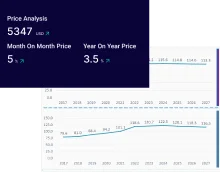
Analyze pricing patterns with comprehensive trend analyses.
Analyse trade data for supply chain insights.
Leverage cost reports for smart savings
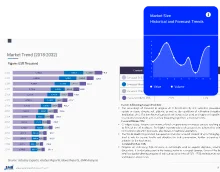
Elevate supply chain with collaboration
Contact Us for Further Information
Our specialized analysts will be available to answer all the pre-purchase and post-purchase queries regarding the report.
Our specialized analysts will be available to answer all the pre-purchase and post-purchase queries regarding the report.
Staying one step ahead of the market landscape with our in-depth research methods, integrating advanced analytics to drive precise and tangible outcomes.
Our expert analyst team offers a significant advantage over competitors, with extensive market insights into the latest trends, putting you strategically ahead.
We deliver a simplified yet extensive report, comprising in-depth industry insights and analytics tailored to your industry requirements.
We are happy to help you navigate through the services we offer and solve your queries.
Contact us