Consumer Insights
Uncover trends and behaviors shaping consumer choices today
Procurement Insights
Optimize your sourcing strategy with key market data
Industry Stats
Stay ahead with the latest trends and market analysis.
The Australia capability centres market covers the annual operating value of captive and parent-linked centres based in Australia that deliver technology, engineering, data, finance, customer and innovation work for a domestic or global parent. It includes global capability centres of foreign groups, shared services centres, technology and engineering hubs, and research and innovation centres, measured by staff cost, facilities and technology spend.
In 2025, the market is valued at AUD 5.80 billion in 2025 and is forecast to grow at a (CAGR) of 9.40%, reaching AUD 14.24 billion by 2035. Demand rests on an acute shortage of digital talent, the push to bring product and artificial intelligence work in-house, state government incentives to anchor technology teams, and a widening debate about how much work should stay onshore.
Compound Annual Growth Rate
9.4%
Value in AUD billion
2026-2035
The Australia capability centres market is a talent-led business in which enterprises place engineering, data and operations teams in a handful of cities and measure success by speed of delivery, retention and access to universities. Most centres are owned by the parent, which keeps intellectual property and control close.
Three forces shape the outlook: a national artificial intelligence strategy that rewards local capability, state governments that compete for headquarters and engineering roles, and a rebalancing between onshore centres and large offshore operations in India that is now a public and industrial relations issue.
In November 2025, Qantas announced an Adelaide innovation centre planned to employ about 420 technology staff. In February 2026, ITC Infotech opened an Asia-Pacific headquarters in Melbourne, and in July 2026 the Australian and Indian prime ministers reaffirmed their commitment to a broader economic agreement.
Growth is expected to stay well above wider technology employment as enterprises consolidate scattered teams into purpose-built centres and add artificial intelligence and data work. Technology and engineering hubs remain the largest centre type, while research and innovation centres advance fastest. Data, analytics and artificial intelligence leads by function, and transport, retail and consumer organisations expand quickest by industry. New South Wales is the largest region, with South Australia growing fastest from a smaller base. Skills supply, trade and mobility settings, and public attitudes to offshoring will decide which locations capture the next decade of capability investment.
| Metric | Value |
| Market Size 2025 | AUD 5.80 billion |
| Projected Market Size 2035 | AUD 14.24 billion |
| CAGR 2026 to 2035 | 9.40% |
| Fastest-Growing Centre Type | Research and Innovation Centres: 11.4% CAGR |
| Fastest-Growing Function | Data, Analytics and Artificial Intelligence: 12.1% CAGR |
| Largest Revenue Segment 2025 | Technology and Engineering Hubs |
| Dominant Region | New South Wales |
| Highest CAGR by Region | South Australia: 11.8% |
| Technology roles planned at the Qantas Adelaide centre | About 420 roles over three years |
Capability Spend Compounds Quickly
Operating value is on course to rise by about 146% across the decade, from AUD 5.80 billion in 2025 to AUD 14.24 billion in 2035 at a 9.4% CAGR. In-house product, data and artificial intelligence teams drive most of the increase.
Innovation and Data Work Lead
Research and innovation centres grow at an estimated 11.4% CAGR and data, analytics and artificial intelligence functions at an estimated 12.1% CAGR through 2035. Enterprises are moving from cost-led support towards product, research and analytics teams close to universities.
Location Strategy Becomes Political
Governments are courting regional headquarters and engineering teams, while unions and the public question offshoring. Organisations that show local hiring, university links and clear role definitions will be better placed as expectations rise.
| Report Summary | Unit | Value |
| Base Year | AUD billion | 2025 |
| Historical Period | AUD billion | 2019 to 2025 |
| Forecast Period | AUD billion | 2026 to 2035 |
| Market Size 2025 | AUD billion | 5.80 |
| Market Size 2035 | AUD billion | 14.24 |
| CAGR 2026 to 2035 | Percentage | 9.40 % |
| CAGR by Centre Type: Research and Innovation Centres | Percentage | 11.4 % |
| CAGR by Function: Data, Analytics and Artificial Intelligence | Percentage | 12.1 % |
| CAGR by Industry Vertical: Transport, Retail and Consumer Goods | Percentage | 10.8 % |
| CAGR by Region: South Australia | Percentage | 11.8 % |
| Technology Roles Planned at the Qantas Adelaide Centre | Number | 420 |
| Planned Hires at the ITC Infotech Melbourne Hub | Number | 150 |
| Market Share by Region 2025 | New South Wales | Dominant Share |
Digital talent shortages, state incentives and artificial intelligence ambitions support steady centre growth, while restructuring and offshoring debates restrain hiring. Technology hubs lead; innovation centres gain ground.
The Australia capability centres market is being reshaped by trade diplomacy with India, an artificial intelligence workforce shift, a national strategy for the technology sector and bank restructuring.
July 2026 - Leaders Reaffirm the India Economic Cooperation Agreement
March 2026 - Atlassian Cuts Jobs as It Shifts Towards Artificial Intelligence
December 2025 - Government Releases the National AI Plan
September 2025 - ANZ Announces a Large Restructure
Trade diplomacy, artificial intelligence strategy and bank restructuring pull the market in different directions. Governments want local engineering teams, but cost discipline pushes enterprises to rethink where work sits.
Recent developments, presented from the most recent, show the Australia capability centres market moving through restructuring, offshoring disputes, foreign arrivals and state-backed centre launches.
August 2026 - Telstra Reports Results After Restructuring
July 2026 - Union Disputes Commonwealth Bank Technology Cuts
February 2026 - ITC Infotech Opens Its Asia-Pacific Headquarters in Melbourne
November 2025 - Qantas Announces an Innovation Centre in Adelaide
Recent events show foreign groups and state-backed local centres opening while large employers restructure and unions challenge offshoring. Location choices are being scrutinised as closely as cost.
The Expert Market Research’s report on the Australia Capability Centres Market offers a detailed analysis of the market based on the following segments.
Market Breakup by Centre Type
Foreign-Parent Global Capability Centres include regional headquarters such as ITC Infotech's Melbourne hub, opened on 16 February 2026 with plans for about 150 hires. Shared Services and Operations Centres are under cost pressure, with ANZ announcing on 9 September 2025 that about 3,500 employees would leave by September 2026. Technology and Engineering Hubs are the largest segment, led by in-house teams such as the Qantas Adelaide centre announced on 18 November 2025. Research and Innovation Centres grow fastest at an estimated 11.4% CAGR, supported by Qantas funding at the Australian Institute for Machine Learning and the agricultural technology hub linked to Victorian universities.
Market Breakup by Function
Information Technology and Engineering is the largest function, as Commonwealth Bank's planned cut of 176 technology roles reported on 10 July 2026 shows how much work sits in engineering teams. Finance, Human Resources and Procurement tasks are consolidated into shared platforms, with ANZ ending about 1,000 managed services contracts after its September 2025 announcement. Data, Analytics and Artificial Intelligence grows fastest at an estimated 12.1% CAGR, shaped by the National AI Plan of 2 December 2025 and Atlassian's March 2026 shift towards artificial intelligence. Customer and Operations Support is the slowest-growing function.
Market Breakup by Industry Vertical
Banking, Financial Services and Insurance lead revenue through large in-house teams at Commonwealth Bank and ANZ, with the bank restructure of September 2025 and union dispute of July 2026 showing active reshaping. Technology, Media and Telecommunications follow, with Telstra reporting 1,200 role reductions in August 2026. Transport, Retail and Consumer Goods grow fastest at an estimated 10.8% CAGR, helped by the Qantas Adelaide centre and ITC Infotech's focus on retail and consumer goods clients. Healthcare and Life Sciences expand from a smaller base through research-linked teams. Others covers resources, energy and government.
Market Breakup by Region
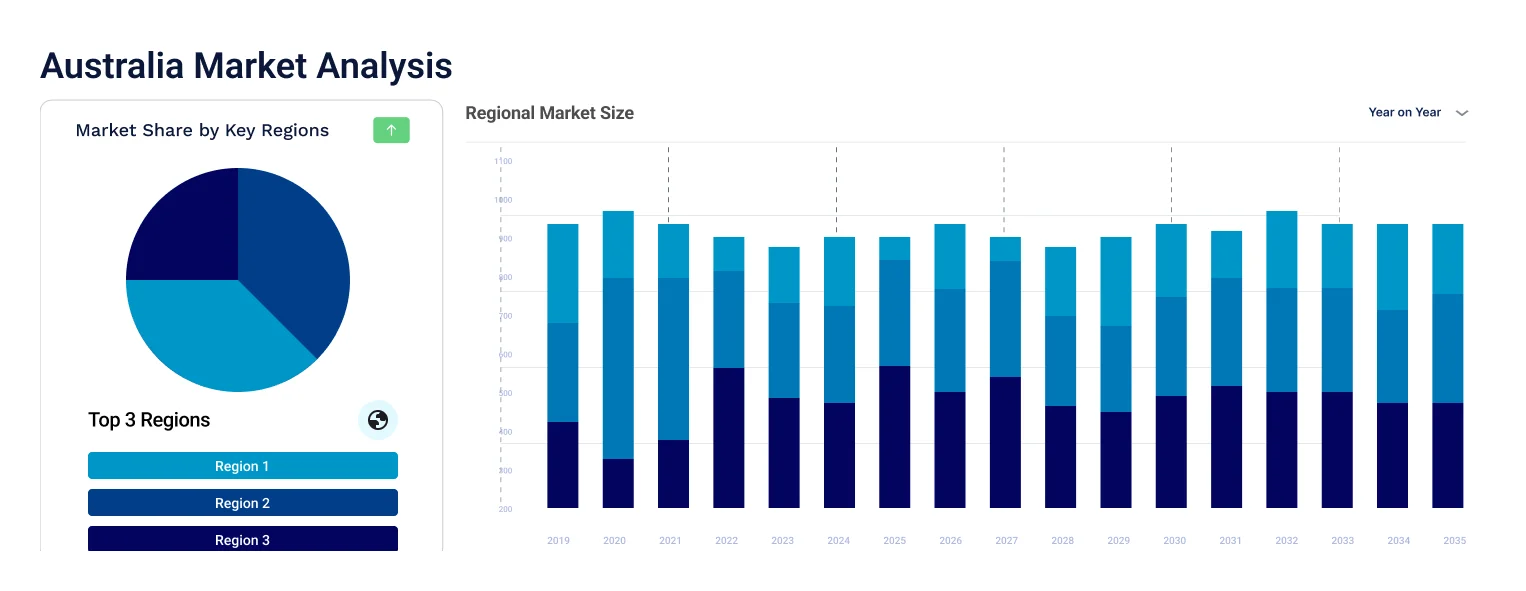
New South Wales dominates through Sydney's concentration of bank, telecommunications and software headquarters, growing at an estimated 8.9% CAGR through 2035. Victoria grows at 9.6%, helped by the ITC Infotech arrival in February 2026 and Telstra's Melbourne base. Queensland grows at 9.7% on population inflow and state incentives for technology teams. South Australia is the fastest-growing region at an estimated 11.8%, led by the Qantas centre announced in November 2025. Western Australia grows at 9.2% on resources technology demand. Others covers Tasmania, the Australian Capital Territory and the Northern Territory at 8.7%, where public sector and defence-linked centres dominate.
| CAGR 2026 to 2035, Market by Region | Growth Rate |
| New South Wales | 8.9 % |
| Victoria | 9.6 % |
| Queensland | 9.7 % |
| South Australia | 11.8 % |
| Western Australia | 9.2 % |
| Others (incl. Tasmania, the Australian Capital Territory and the Northern Territory) | 8.7 % |
Competition is between enterprises building their own centres, foreign groups arriving with regional headquarters, and offshore operations in India that absorb routine work. Barriers include digital talent supply, state incentives, university links and the sensitivity of data and regulatory obligations.
Qantas
Qantas, headquartered in Sydney, operates Australia's largest airline group and is building a technology product capability in-house. On 18 November 2025 it announced an Adelaide innovation centre for about 420 technology roles. On 31 March 2026 the South Australian Government said an initial team of 12 was working in temporary premises, with the centre due to open in mid-2026.
ITC Infotech
ITC Infotech, a technology services company owned by ITC Limited, is headquartered in Bengaluru and established an Asia-Pacific headquarters in Melbourne. The Melbourne digital and artificial intelligence engineering hub opened on 16 February 2026, with plans to hire about 150 people over three years and a focus on consumer goods, retail, agriculture and manufacturing.
Commonwealth Bank of Australia
Commonwealth Bank of Australia, headquartered in Sydney, runs the country's largest bank technology organisation, supported by a subsidiary in India. On 10 July 2026 Information Age reported a planned cut of 176 technology and engineering roles, which the bank said was separate from its India hiring. Its Indian subsidiary had grown to about 7,000 staff by mid-2025.
Telstra
Telstra, headquartered in Melbourne, is Australia's largest telecommunications company and operates large network, data and software teams. On 11 February 2026 reports said it removed 209 roles from its artificial intelligence and data joint venture. On 13 August 2026 it reported net profit after tax of AUD 2.4 billion and 1,200 role reductions across the business.
Other players operating in the Australia capability centres market include Australia and New Zealand Banking Group, Atlassian, Canva, Optus, and Westpac Banking Corporation, alongside universities, state government agencies, technology vendors and global groups with regional engineering teams across Australia.
Competition rests on talent supply, state incentives, university links and cost discipline rather than wages alone. Large enterprises build in-house while foreign groups arrive with regional hubs.


Upto 15% Off
AUD
$2749 $2499
$3849 $3499
$4949 $4499
$6049 $5499


*While we strive to always give you current and accurate information, the numbers depicted on the website are indicative and may differ from the actual numbers in the main report. At Expert Market Research, we aim to bring you the latest insights and trends in the market. Using our analyses and forecasts, stakeholders can understand the market dynamics, navigate challenges, and capitalize on opportunities to make data-driven strategic decisions.*
The Australia capability centers market is valued at AUD 5.80 billion in 2025, supported by digital talent shortages, state incentives and the push to bring product and artificial intelligence work in-house.
The market is forecast to reach AUD 14.24 billion by 2035, growing at a CAGR of 9.40 % over the 2026 to 2035 period, driven by state-backed centre launches, foreign regional headquarters and growth in data and artificial intelligence teams.
Research and Innovation Centres record the highest CAGR at an estimated 11.4% through 2035, supported by university partnerships such as the Qantas research funding and the ITC Infotech agricultural technology hub.
New South Wales dominates through Sydney's concentration of bank, telecommunications and software headquarters. South Australia is the fastest-growing region at an estimated 11.8% CAGR, led by the Qantas Adelaide centre.
Key players include Qantas, ITC Infotech, Commonwealth Bank of Australia, Telstra, Australia and New Zealand Banking Group, Atlassian, Canva, Optus, and Westpac Banking Corporation.
On 16 February 2026 ITC Infotech opened a digital and artificial intelligence engineering hub in Melbourne that also serves as its Asia-Pacific headquarters. It plans to hire about 150 people over three years.
Announced on 18 November 2025, it is a purpose-built centre for about 420 technology roles, including software engineers and data and artificial intelligence specialists. The South Australian Government said in March 2026 it was due to open in mid-2026.
Explore our key highlights of the report and gain a concise overview of key findings, trends, and actionable insights that will empower your strategic decisions.
| REPORT FEATURES | DETAILS |
| Base Year | 2025 |
| Historical Period | 2019-2025 |
| Forecast Period | 2026-2035 |
| Scope of the Report |
Historical and Forecast Trends, Industry Drivers and Constraints, Historical and Forecast Market Analysis by Segment:
|
| Breakup by Centre Type |
|
| Breakup by Function |
|
| Breakup by Industry Vertical |
|
| Breakup by Region |
|
| Market Dynamics |
|
| Competitive Landscape |
|
| Companies Covered |
|
Datasheet
AUD 2,749
AUD 2,499
tax inclusive*
Single User License
AUD 3,849
AUD 3,499
tax inclusive*
Five User License
AUD 4,949
AUD 4,499
tax inclusive*
Corporate License
AUD 6,049
AUD 5,499
tax inclusive*
*Please note that the prices mentioned below are starting prices for each bundle type. Kindly contact our team for further details.*
Flash Bundle
Small Business Bundle
Growth Bundle
Enterprise Bundle
*Please note that the prices mentioned below are starting prices for each bundle type. Kindly contact our team for further details.*
Flash Bundle
Number of Reports: 3
20%
tax inclusive*
Small Business Bundle
Number of Reports: 5
25%
tax inclusive*
Growth Bundle
Number of Reports: 8
30%
tax inclusive*
Enterprise Bundle
Number of Reports: 10
35%
tax inclusive*
How To Order

Select License Type
Choose the right license for your needs and access rights.

Click on ‘Buy Now’
Add the report to your cart with one click and proceed to register.

Select Mode of Payment
Choose a payment option for a secure checkout. You will be redirected accordingly.
Strategic Solutions for Informed Decision-Making
Stay upgraded and grab opportunities by strategic insights
Stay informed and aware for a Market Leverage
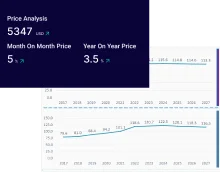
Analyze pricing patterns with comprehensive trend analyses.
Analyse trade data for supply chain insights.
Leverage cost reports for smart savings
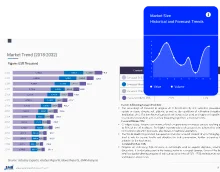
Elevate supply chain with collaboration
Contact Us for Further Information
Our specialized analysts will be available to answer all the pre-purchase and post-purchase queries regarding the report.
Our specialized analysts will be available to answer all the pre-purchase and post-purchase queries regarding the report.
Staying one step ahead of the market landscape with our in-depth research methods, integrating advanced analytics to drive precise and tangible outcomes.
Our expert analyst team offers a significant advantage over competitors, with extensive market insights into the latest trends, putting you strategically ahead.
We deliver a simplified yet extensive report, comprising in-depth industry insights and analytics tailored to your industry requirements.
We are happy to help you navigate through the services we offer and solve your queries.
Contact us