
The environment and sustainability sector is built around a single core idea, which is reducing human impact on the planet's resources so that future generations inherit something worth having. Our services, like Market Sizing and Forecasting, Competitive and Regulatory Analysis, ESG Insights, Technology and Innovation Tracking, Customer Analysis and Risk Assessment, are designed to support businesses operating at the heart of this transition.
HOW WE HELP OUR CLIENTS IN THIS SECTOR
Market Analysis
The current market landscape across the environment and sustainability sector is deconstructed to provide various businesses with a clear, grounded picture of where things stand. Growth potential, demand forecasts, and opportunities tied to eco-friendly products, renewable energy, and sustainable technologies are all factored into the analysis. The goal is to help businesses quantify market opportunities, understand their share potential, and identify the areas worth pursuing, so that every strategic decision is backed by reliable data.
- Market sizing and growth projections are provided to support data-driven decisions around financial investments, market entry, and expansion.
- Ongoing trends within the environment and sustainability sector, including the rise of renewable energy solutions, are identified and tracked as they develop.
- Investment trends across the industry are examined to help clients recognize and act on emerging opportunity areas before they become mainstream.
- The market is segmented with precision to give clients a clearer view of specific demand patterns, customer preferences, and the areas showing the strongest growth potential.
Gaining a Competitive Edge in Vietnam's Waste Management Market Through Strategic Segmentation
Stream-Specific Opportunity Mapping and Structure GapsA regional waste management service provider in Vietnam was supported through a segmented analysis across the municipal, medical, industrial, and e-waste sectors. The current disposal methods, including incineration, landfilling, and recycling, were evaluated to uncover the systemic inefficiencies in the urban waste collection, particularly across the densely populated regions.
Compliance gaps were found in the hazardous medical waste handling through the regulatory risk mapping. Field data collected across regions of Hanoi, Ho Chi Minh City, and Da Nang, highlighted the growing demand for integrated waste processing facilities. Geospatial clustering was eventually applied to focus on the areas that were underserved with a strong potential for public-private partnership initiatives.
Competitive Benchmarking and Investment PrioritisationTo support the client’s expansion goals, the operational models of regional players were benchmarked, and licensing requirements were also reviewed to strengthen the municipal contract bidding strategies. Cost-to-serve analytics across the service lines provided far greater clarity on the profitability levers at play, guiding the allocation of capital toward high-potential segments, such as the recycling technology and optimized transport networks.
The in-depth insights drawn from the research allowed the client to refine its service mix and sharpen the competition amongst proposals. The outcome was the successful addition of two government tenders, both directly aligned with the Vietnam’s broader circular economy goals.
Enhancing Global Procurement Strategy for Ferrous Scrap Recycling
Trade Flow Analysis and Sector-Specific Demand MappingA global metal recycling firm was supported in optimising its ferrous scrap sourcing strategy through a detailed analysis of the trade flows and pricing structures across the categories including heavy melting steel, cast iron, old car bodies, and pressing steel. End-use demand was mapped across sectors such as construction, shipbuilding, and automotive manufacturing, where volume surges tied to infrastructure stimulus in Asia Pacific and urban redevelopment activity in the Middle East were identified.
Historical trade data and forecast trend models were used to untapped margin potential in low-grade scrap categories, which are increasingly adopted in consumer appliance manufacturing.
Regulatory Impact Forecasting and Strategic RealignmentA regional policy assessment revealed the evolving import restrictions across the Southeast Asia, prompting the client to diversify the sourcing base and reduce the concentration risk. A multi-scenario prediction model was built to factor in the raw material substitution rates and project the steel production capacity expansions across key markets.
The in-depth insights guided the client in reorganizing its procurement across the regions like Europe and Latin America and eventually led to securing a long-term contract with the steelmakers in both India and Turkey, while the sourcing model was restructured to maintain optimal supply chain resilience amidst market volatility.
Company Profiling
Key players across the environmental and sustainability sectors are identified and profiled to give various businesses a holistic view of the market competition. Insights into sustainability practices, innovations, and financial performance are brought together to help companies refine their strategies, uncover growth opportunities, and strengthen their market position, while remaining aligned with broader environmental goals.
- Key players are profiled in detail, with a focus on their green initiatives and the innovative approaches being taken toward more eco-friendly business practices.
- Financial parameters are analysed across companies to assess profitability, growth potential, and the level of investment being directed toward sustainability initiatives.
- Companies are evaluated against sustainability metrics including carbon footprint, waste management practices, and overall energy efficiency performance.
- CSR efforts are profiled with attention to the environmental and social impact being generated, giving clients a clearer picture of how companies are measuring up beyond financial returns.
Building a Resilient ESG-Compliant Investment Portfolio
Multi-Parameter Company Profiling and BenchmarkingA global investment firm was supported in constructing an ESG-compliant portfolio through the profiling of mid to large-cap companies across the environmental and sustainability segment. The evaluation framework covered the parameters such as renewable energy integration, carbon emissions intensity, water footprint reduction, waste diversion rates, and governance transparency measured against both GRI and SASB standards.
Deep operational assessments were conducted for each firm, covering the year-over-year emissions analysis, the implementation of closed-loop waste systems, and the usage share of renewable energy. A benchmarking model was applied to score the performance against industry peers, bringing the innovation leaders in areas such as carbon capture, biodegradable materials, and green hydrogen to the forefront.
Risk Exposure Assessment and Strategic Capital ReallocationLong-term risk and policy alignment were evaluated through a review of the regulatory disclosures, compliance evaluations and executive interviews aligned with the frameworks including the EU Taxonomy and SEC climate rules. Sentiment analysis of stakeholder communications and media coverage was also conducted to surface public perception risks and potential reputational concerns.
A tiered risk-return mapping was developed from the intelligence gathered, guiding the client in divesting from underperforming assets and redirecting the capital toward sustainability leaders with a stronger growth potential. The result was a strategic fund restructuring that aligned with evolving the environmental regulations while building a greater portfolio resilience and preparedness for the global low-carbon transition.
Risk Analysis
Risks within the environmental segment are identified and investigated by examining the various market trends, prevailing customer trends, and the shifting regulatory environment. Across areas like the renewable energy, waste management, and eco-friendly products, businesses have the insights which are required to mitigate exposure, adapt to evolving compliance demands, and stay positioned for growth. Understanding the challenges ahead allows companies to protect their operations, strengthen their green initiatives, and hold their competitive edge in a market that rarely stands still.
- Risks tied to shifting market trends within the environmental sector are identified and assessed to keep businesses a step ahead of potential disruptions.
- Evolving environmental regulations and compliance requirements are tracked on an ongoing basis, with insights provided to help businesses manage and reduce their risk exposure.
- The long-term risks associated with changing consumer behaviour toward sustainability are examined, enabling businesses to anticipate and prepare for broader market shifts.
- The rise of ethical consumerism is assessed for the risks it presents to businesses that have yet to align with sustainability expectations, giving clients the foresight needed to course correct before it affects their market standing.
Anticipatory Risk Management in the Global Manufacturing Operations
Facility-Level Risk Mapping and Compliance AssessmentA multinational manufacturing client was supported in the analysis of environmental as well as regulatory risks across the regions of Southeast Asia and Latin America through detailed facility-level evaluations. Sustainability indicators, including energy intensity, GHG emissions per output unit, freshwater dependency, and harmful waste generation, were used to develop a dynamic risk matrix. Satellite-based climate projections were integrated alongside regional policy milestones to give the analysis greater depth and forward-looking relevance.
Each operational site was assessed for exposure to emerging regulations and climate sensitivities. A comparative evaluation was then conducted against frameworks such as national carbon pricing mechanisms, ISO 14001, and extended producer responsibility compulsions. This process brought the potential non-compliance penalties and reputational risks to the surface, particularly in the high-scrutiny jurisdictions.
Scenario Modeling and Strategic Mitigation PlanningThe cost of inaction was quantified through the proprietary scenario modeling, which simulated the financial outcomes of delayed adaptation across various factors such as regulatory fines, consumer backlash and intensified climate events. Upstream supply chain exposures were also traced, with the suppliers who carried the poor ESG scores flagged, particularly those operating in water-intensive and high-waste categories.
Based on the findings, a set of mitigation measures were proposed. These included alternative material sourcing, facility modified for considerably improved energy levels and localized disclosure strategies tailored to the regulatory expectations of the individual market.
E-waste Sustainability
Key opportunities within the e-waste recycling segment are uncovered through a close analysis of market dynamics, consumer attitudes, and the regulations that are continuing to take shape. Insights across recycling innovation, resource recovery, and sustainable electronics design are brought together to help businesses sharpen their recycling strategies, reduce environmental impact, and keep pace with evolving industry standards. Through research grounded in real market data, companies are better placed to improve operational efficiency, strengthen their sustainability practices, and establish themselves as credible leaders in the growing green economy.
- Insights into the latest technologies in e-waste recycling are provided, helping businesses evaluate and adopt innovative solutions suited to their operations.
- Global e-waste regulations are navigated with clarity, giving businesses the guidance needed to minimise operational risks as the compliance landscape shifts.
- The environmental impact of electronic products is evaluated across their full lifecycle, offering a more complete picture of where improvements can be made.
- Market analysis is conducted to forecast future trends in e-waste volumes, consumer behaviour, and regulatory developments, keeping businesses prepared for what lies ahead.
Strengthening Market Presence in E-Waste Contamination Testing
Understanding Demand and Evaluating Testing TechnologiesWe worked with a global environmental testing services provider to understand how demand for affordable e-waste contamination testing is evolving across North America and Western Europe. The assessment covered the major testing areas, including heavy metals, organic compounds, and microbial pollutants, helping identify underserved opportunities in soil and wastewater testing linked to various improper e-waste disposal practices. By studying the regulatory enforcement patterns together with landfill traceability data from the key industrial and urban locations, we identified regions likely to see a significant rise in testing requirements. We also compared the use of advanced technologies such as GC-MS and ICP-MS with conventional testing methods, highlighting differences in capability, service coverage, and turnaround time.
Competitive Analysis and Service Portfolio DevelopmentTo support the client’s expansion plans, we had conducted an in-depth review of the regional laboratories and the private testing providers. Their technology capabilities along with the service offerings and the pricing approaches were gradually benchmarked to understand the competitive landscape and identify the potential partnership opportunities. The findings also revealed the clear areas where the client could differentiate its services. Using these insights, we helped shape the portfolio of the specialized e-waste contamination testing packages and developed a focused engagement strategy for the government agencies and OEMs operating under the extended producer responsibility (EPR) requirements. This approach had enabled the client to expand the market reach and strengthen its presence in the regions where the regulatory oversight is increasing and the demand for sustainability-driven testing services continues to grow.
Integrating E-Waste Filtration into Water Treatment Solutions
Opportunity Assessment and Regional MappingThe feasibility of incorporating e-waste residue filtration into the existing biological and membrane-based setups across Southeast Asia was evaluated for an industrial water treatment solutions provider. Process and equipment-level segmentation was used to pinpoint regions where dense electronics manufacturing activity had led to heightened wastewater contamination, largely due to unregulated e-waste handling on the ground.
Countries like Vietnam, Thailand, and India were studied in detail, with disinfection and the sludge treatment adoption patterns examined across both the municipal and industrial settings. High-potential sites suited for the retrofit deployment were identified through this process.
Innovation Benchmarking and Strategic PositioningA review of the competitive landscape brought notable innovation gaps to the surface, particularly in multi-stage filtration technologies built to isolate the e-waste toxins such as lead, brominated flame retardants and cadmium. Leading providers were benchmarked against one another, and the areas where product differentiation could be achieved within ESG-sensitive procurement environments were clearly mapped out.
The findings pointed toward a clear direction for the client. Repositioning its wastewater systems as e-waste-compliant solutions was recommended, along with pursuing pilot programmes inside major electronics parks. Adapting the product roadmap to meet sustainability criteria set by state utilities and international electronics exporters was also advised, as these requirements are only expected to tighten in the years ahead.
Market Insights
Our goal is to become your trusted partner across industries, aspiring for an in-depth market perspective, helping you succeed through the dynamic market terrain.
Consumer Insights
Analyzing the trends, behaviours, and client preferences for detailed marketing programs.
Competitive Benchmarking
Providing a thorough examination of the competitive landscape for a deeper evaluation of strengths and recognition of opportunities.
Major Performance Indicators
These indicators ensure industry standards are met and demonstrate the value we provide to our clients.
Insightful Analysis for Strategic Guided Choices
Stay upgraded and grab opportunities by strategic insights
Stay informed and aware for a Market Leverage
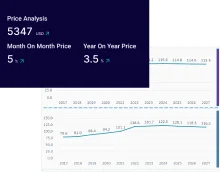
Analyze pricing patterns with comprehensive trend analyses.
Analyse trade data for supply chain insights.

Leverage cost reports for smart savings
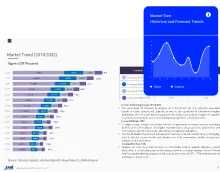
Elevate supply chain with collaboration
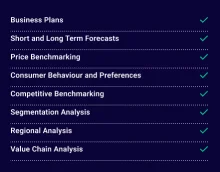
We are happy to help you navigate through the services we offer and solve your queries.
Contact us
