
With a rapidly growing population, agriculture and farming are becoming increasingly important sectors, making it essential for businesses to adapt to their changing demands and challenges. In this ever-evolving sector, we help our clients with crop yield forecasting, agri-tech trends, climate impact analysis, market strategy, competitor reviews, pest monitoring, and precision farming, improving their harvests and enabling more effective resource management.
HOW WE HELP OUR CLIENTS IN THIS SECTOR
Technology Planning
To help agricultural businesses improve productivity, work efficiently, and stay competitive, we support their long-term goals. We align our solutions with their goals, leveraging precision farming, IoT tools, agricultural robotics, automation, and data analytics to support their adoption of technologies that deliver meaningful improvements in their operations.
- To prepare for the future, the agriculture sector demands long-term technology plans.
- Integrating the new-age technologies with the help of assisted services.
- Develop customized technology roadmaps that align with each farm's size, location, and business goals.
- Help businesses invest in the right technologies to maximize returns and reduce unnecessary costs.
Innovating Farming with Agricultural Robotics
Increasing Production with Our New-Age TechnologiesAs productivity-driven markets such as the United States and parts of Europe increasingly seek ways to overcome labor shortages and improve efficiency, we helped our client explore advanced technologies, including driverless tractors and robotic harvesters. As part of their broader growth strategy in the agri-mechanization sector, these technologies emerged as key opportunities to modernize farming, support productivity, and drive long-term business growth.
With the demand for new-age technologies growing across agricultural operations, we worked towards enabling our clients with UAVs equipped with AI-powered imaging. By identifying their strengths in crop health monitoring, soil analysis, and precision spraying, we developed a technology to meet the needs of high-efficiency farms.
Diversifying Farm Profiles with Accelerated Use of RoboticsThe dairy-focused regions across Europe and Oceania are investing in technologies aiming to improve herd performance and farm productivity, so we helped our clients identify these opportunities firsthand for market entry. By assessing these regional farm opportunities and operational structures, milking robots and automated feeding were found to deliver more value than labour-saving tools.
We saw that smallholder farms require affordable, practical farming solutions; hence, we worked with our clients to create plans that align their product roadmaps with on-the-ground realities. Our analysis, across the markets of Southeast Asia and Latin America, showed that technologies like compact, solar-powered robots for weeding, seeding, and spraying were promising for long-term growth.
Making Precision Farming Smarter with Data
Helping Farms Grow with Smarter TechnologyTo improve forecasting accuracy and help farmers use resources more efficiently at the field level, we supported our client in moving beyond traditional product offerings toward more insight-driven platforms. This was made possible by recognizing the value of integrating sensing technologies across soil, crop, and environmental conditions, enabling smarter, more timely decision-making.
As demand for reliable automation increases across various agricultural sectors, we guided our client by providing flexible solutions for both row crops and specialty agriculture. This helped clients improve autonomous navigation, improve routing, and achieve accuracy in seeding in the field operations with GNSS/GPS-enabled systems.
Using Precision and Connectivity to Build Smarter FarmsThe agricultural industry saw a reduction in input costs, aligning with environmental standards. We worked with our client to support their product development approach by adopting Variable Rate Technology (VRT), helping with the accurate application of seeds, fertilizers, and crop protection agents, and helping create sustainable, long-term value.
To help our client move beyond being seen as an equipment manufacturer, we supported the development of a connected AgriTech ecosystem that delivered better value than before. By recommending cloud-based farm management platforms integrated with robotics and field sensors, they were able to leverage features such as remote monitoring, predictive analytics, and centralized farm control.
Ecosystem Insights
Every business aims to grow on its journey, and to do so, it looks for the right partnerships, collaborations, and acquisition opportunities that align with its unique objectives. Our insights support better decision-making, improve operational performance, and help businesses expand into new markets while building long-term resilience.
- Monitoring market changes and potential risks to inform more effective farming strategies.
- Supporting collaborations with technology and research partners to unlock new opportunities.
- Improving agricultural strategies through cross-industry partnerships.
- Encouraging knowledge sharing among industry experts for smarter decision-making.
Working Together to Drive the Growth of Indian Agriculture
Connecting the Right Partners to Create Regional ValueTo help our client better understand regional opportunities and address local market challenges, we worked closely with ecosystem partners, including AgriTech startups and government-supported extension services, to uncover emerging innovation trends. Building on these insights, we delivered a focused assessment of high-growth areas such as farming services, agri-inputs, and mechanized equipment to support their expansion into India's evolving agricultural market.
To increase the probability of sustained market success, we helped our client build a strategy that could succeed across different regions, with a plan that accounted for and focused on both large-scale growth and local market realities. By identifying regions with specific developments such as increasing mechanization in Punjab and Haryana and precision farming pilot programs in Maharashtra and Karnataka, we designed a strategy to help achieve their targeted growth.
Strengthening Supply Chains Through Agri-Tech InnovationCreating a more efficient agricultural supply chain meant first understanding where the biggest operational challenges existed across the country. Conversations with logistics firms, cold storage operators, and input distributors revealed valuable collaboration opportunities while drawing attention to important cold chain infrastructure gaps in Eastern and Northeastern India.
The wave of regional developments across the country, including the rise in dairy and honey production in Gujarat and Uttar Pradesh, has revealed opportunities to work on India's agricultural value chain. From these analyses, we worked with our client to develop a market approach that combined localized infrastructure investments, technology-enabled logistics, and partnerships with regional stakeholders to deliver more reliable farm-to-market solutions.
Creating Stronger Connections Across the Global Date Palm Value Chain
Using Consumer Trends to Guide Product DecisionsGrowing consumer preference for clean-label and organic products, particularly across health-conscious markets in North America and Europe, created strong opportunities for premium date varieties such as Medjool and Barhi. By engaging with regional distributors and specialty health food retailers, we helped our client understand these evolving trends and position their offerings to capture the rising demand.
Standing out in premium segments requires more than expanding product offerings; it also demands identifying what customers want. With our market insights into refined product strategy and co-branding initiatives with organic retailers, we helped the client improve visibility, strengthen market positioning, and build a stronger consumer connection.
Strengthening Distribution with Regional Ecosystem PlayersPlatforms selling packaged and value-added products, such as online applications and retail stores, emerged as new players in the game and were best spots to connect with our clients. To support their growth across the Middle East and Asia Pacific, we connected them with regional exporters and logistics partners to strengthen their distribution networks.
A client's expansion is successful when product quality is maintained throughout the export journey and strong relationships are built across the local supply chain. Working closely with industry stakeholders, we found opportunities to improve cold storage and handling processes, helping our clients to reduce losses, improve day-to-day operations, and enter new markets with greater confidence.
Supply Chain Optimization
To make operations smoother, reduce costs, and strengthen supply chain resilience, we help agriculture and farming businesses address the challenges that hamper their growth. Our analysis focuses on finding the inefficiencies, improving transportation routes and delivery timelines, and reducing waste to support sustainable, future-ready supply chain operations.
- Supporting the adoption of efficient inventory systems that reduce waste and improve inventory control.
- Identifying opportunities to simplify transportation and distribution for better logistics performance.
- Encouraging closer collaboration with suppliers to strengthen coordination and improve product availability.
- Providing market-driven insights that help businesses respond quickly to changing customer demand.
Building More Efficient Wheat Supply Chains for Sustainable Growth
Working Towards Regional Sourcing Functionality in the Wheat EcosystemTo reduce sourcing costs in the wheat value chain across North America, Europe, and Asia Pacific, we had to examine how procurement regulations varied across these markets. For that, we assessed regional costs, seasonal supply patterns, trade policies, and transportation challenges, identified overlooked export hubs in Eastern Europe, and helped our client reduce their dependence on high-cost suppliers in North America.
Rather than reacting to the market changes as they happened, we helped the client develop a sourcing strategy based on the future demand. Using insights from various harvest seasons and shipping schedules, we developed a practical framework that improved supply reliability, reduced uncertainty, and enabled more informed purchasing decisions for both feed-grade and food-grade wheat.
Creating Smarter Wheat Distribution Networks for Better PerformanceAs per our analysis several operational functions were found to be limiting the efficiency of the client's wheat distribution network across inland transport routes in Asia Pacific and storage infrastructure in Northern Europe. To understand where these challenges started originating, we examined the movement of wheat from farm collection centres through silos and millers to port terminals, creating a clearer picture of the logistics network.
Our client required a distribution channel that could respond quickly without losing visibility into the operations with customer demand becoming more unpredictable. Our insights from stakeholder discussions enabled us to design the hub-and-spoke model with digital track-and-trace tools to improve improve shipment visibility, reduce storage, and increase output across export routes.
Keeping Herbicide Supply Chains Reliable from Source to Farm
Finding Better Ways to Source Herbicide IngredientsReducing sourcing risks while improving cost efficiency became a key priority as our client looked to strengthen their herbicide procurement strategy. With the help of insights from our Global Herbicide Market analysis, we examined raw material movement across selective and non-selective herbicides, along with regional sourcing hubs for active ingredients in Asia Pacific, uncovering supply dependencies and opportunities for a more balanced sourcing approach.
We enabled our client to adopt a procurement strategy to improve their flexibility and prepare for future market trends. By looking into the nearshoring opportunities in Eastern Europe, improving supplier relationships in China and India, and raw material forecasts into planning, we helped build a stronger supply network with faster turnaround times and greater formulation consistency.
Improving Distribution Through Crop-Specific LogisticsFarmers in several emerging markets needed herbicide deliveries to arrive at the right time. By studying crop-specific demand patterns and the regional networks, we identified last-mile delivery issues in Latin America and Southeast Asia and worked with the client to develop a more practical, timely distribution model.
We conducted cross-functional workshops with logistics partners and regional agronomists to redesign the distribution model around key planting windows for pulses, grains, and vegetables. Using a data-driven approach and seasonal forecasts, we enabled the client to implement just-in-time delivery systems, improve demand predictability, and reduce inventory holding costs—boosting productivity and market responsiveness across high-growth regions.
Circular Economic Models
For farmers to achieve long-term agricultural growth, their strategy increasingly depends on practical ways to reduce waste and better use available resources. We help by embracing circular-economy principles and supporting initiatives that transform food waste into products like compost and animal feed, creating new revenue options while improving the environment as well.
- Identifying sustainable material alternatives that help businesses make better use of resources and reduce waste.
- Guiding agriculture companies through practical sustainability initiatives that benefit both operations and the environment.
- Using research and market insights to build more efficient and sustainable agricultural value chains.
- Discovering innovative ways to reduce waste by turning agricultural by-products into valuable resources.
Turning Agricultural By-Products into Business Opportunities
Creating Sustainable Value from Agri-WasteCreating greater value from agricultural waste became a key opportunity for the client as demand for cleaner energy solutions continued to grow. Drawing on our market insights, we evaluated the availability of solid and semi-solid agricultural residues across Asia Pacific and Latin America, helping identify scalable feedstock sources and pair them with the most suitable high-efficiency biogas and biofuel technologies.
The agricultural waste became more than an environmental responsibility when the client learned of its potential as an energy resource. By analyzing the financial impact of waste-to-energy systems, we showed how sales could generate additional revenue while reducing energy costs, and how partnerships with local waste collection services could improve their circular economy efforts without affecting their profit.
Powering Rural Communities with Cleaner Energy SolutionsChoosing where to expand was just as important as deciding how to expand. To help the client focus its efforts, we evaluated agricultural regions across Europe and North America using geospatial insights and policy comparisons, uncovering locations with attractive bioenergy incentives and easier access to carbon credit programs that could support a phased deployment strategy.
Our strategy to balance commercial growth with environmental progress was the most important outcome for our client. For that, we developed a plan that supported the use of agricultural waste for heat and electricity generation in off-grid farming regions, enabling greater energy independence, reducing Scope 1 emissions, and creating additional revenue opportunities through carbon offsetting.
Leveraging Circular Sustainable Agriculture for Improving Profits
Planning Strategies to Create Resource-Efficient InputFarmers were increasingly looking for crop protection solutions that delivered strong performance while supporting more sustainable farming practices. We helped the client respond to this shift by studying input efficiency across major crops in Europe and Asia Pacific, identifying circular opportunities, and expanding its regional portfolio with biopesticides and bio stimulants that reduced environmental impact without affecting yields.
The client needed solutions that met their requirements without affecting commercial aspects, as the sustainability goals became stricter. We came in and helped address the product lifecycle impacts and brought low-residue formulations, reducing carbon emissions, creating premium pricing opportunities, and supporting broader sustainability goals.
Bringing Circular Practices into Soil and Crop ManagementThe shift toward regenerative agriculture created new opportunities for seed and traits providers looking to better support sustainable farming practices. By studying conservation agriculture and organic farming across North and Latin America, we identified practical benchmarks for soil health, crop residue reuse, and water management that served as the foundation for the client's regional growth roadmap.
We reformed how the agricultural inputs supported soil health in the long term to develop regenerative farming solutions. To help our client, we integrated circular practices into crop rotation planning and cover crop strategies, enabling the client to reduce resource dependency, lower supply chain emissions, and build a scalable portfolio that strengthened both productivity and brand value.
Market Insights
Our goal is to become your trusted partner across industries, aspiring for an in-depth market perspective, helping you succeed through the dynamic market terrain.
Consumer Insights
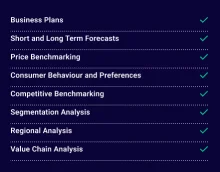
Analyzing the trends, behaviours, and client preferences for detailed marketing programs.
Competitive Benchmarking
Providing a thorough examination of the competitive landscape for a deeper evaluation of strengths and recognition of opportunities.
Major Performance Indicators
These indicators ensure industry standards are met and demonstrate the value we provide to our clients.
Insightful Analysis for Strategic Guided Choices
Stay upgraded and grab opportunities by strategic insights
Stay informed and aware for a Market Leverage
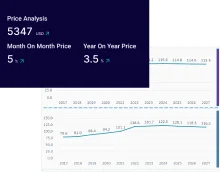
Analyze pricing patterns with comprehensive trend analyses.
Analyse trade data for supply chain insights.
Leverage cost reports for smart savings
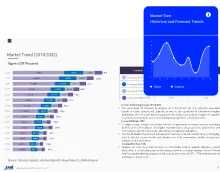
Elevate supply chain with collaboration
We are happy to help you navigate through the services we offer and solve your queries.
Contact us
