Consumer Insights
Uncover trends and behaviors shaping consumer choices today
Procurement Insights
Optimize your sourcing strategy with key market data
Industry Stats
Stay ahead with the latest trends and market analysis.
Ongoing reformulation pressure and efficiency targets are reshaping emulsifier selection as manufacturers seek systems that perform reliably under high-speed processing conditions. In February 2023, Palsgaard expanded its polyglycerol ester supply to Asia Pacific food manufacturers, targeting aerated bakery and whipped dessert formulations. The move followed rising local reformulation activity as emulsifier systems shift away from mono-diglycerides. Palsgaard positioned the portfolio around improved foam stability and heat tolerance, helping manufacturers shorten trials. This Australia polyglycerol market development has become critical because emulsifier performance now influences product line efficiency across high-speed production environments.
Further, suppliers are refining polymer chain length control to tune hydrophilic behavior. This helps brands balance moisture retention without greasy mouthfeel. Polyglycerol adoption is rising in sugar-reduced confectionery where crystallization control matters. In September 2025, Tropfen partnered with Cobert to launch two new additives to enhance microbial efficacy. Multinational ingredient firms are offering application labs to local customers, speeding up reformulation cycles. Buyers increasingly select suppliers based on technical response times, redefining the Australia polyglycerol market trends and dynamics.
Compound Annual Growth Rate
11.1%
Value in AUD million
2026-2035
|
Australia Polyglycerol Market Report Summary |
Description |
Value |
|
Base Year |
AUD million |
2025 |
|
Historical Period |
AUD million |
2019-2025 |
|
Forecast Period |
AUD million |
2026-2035 |
|
Market Size 2025 |
AUD million |
162.48 |
|
Market Size 2035 |
AUD million |
465.52 |
|
CAGR 2019-2025 |
Percentage |
XX% |
|
CAGR 2026-2035 |
Percentage |
11.10% |
|
CAGR 2026-2035 - Market by Region |
Australian Capital Territory |
12.4% |
|
CAGR 2026-2035 - Market by Region |
Western Australia |
11.9% |
|
CAGR 2026-2035 - Market by Product |
Polyglycerol-10 (PG-10) |
12.2% |
|
CAGR 2026-2035 - Market by Application |
Pharmaceutical |
11.8% |
|
2025 Market Share by Region |
New South Wales |
33.1% |
November 2025 – IOI Oleo Launches LipoGalen Polyglycerol Ester Excipients
IOI Oleo GmbH unveiled LipoGalen, its new brand of functional lipid-based excipients built on polyglycerol ester technology. Developed through extensive R&D, the range offers stable crystallization without polymorphism, supporting improved formulation reliability in pharmaceutical applications. This supports Australian drug and nutraceutical manufacturers seeking multifunctional excipients with improved solubilization and formulation stability.
June 2025 – Palsgaard Introduces Eco-Friendly Anti-Fouling Additive
Palsgaard presented a secure, eco-friendly anti-fouling additive for the polymerization of polypropylene and polyethylene. This Australia polyglycerol market development highlights broader polyglycerol chemistry innovation, reinforcing confidence in polyglycerol-based systems as process-safe, residue-reducing solutions relevant to the country’s specialty manufacturing environments.
April 2024 – Arxada Unveils Geomulse at In-Cosmetics 2024
Arxada unveiled Geomulse at In-Cosmetics 2024, a premier global trade show for personal care ingredients. Geomulse underscores rising use of polyglycerol-derived emulsifiers in personal care, accelerating Australian demand for PEG-free, high-performance emulsification systems in premium cosmetic formulations.
October 2023 – BASF SE Advances Lavergy Enzyme Technology
BASF enhanced its enzyme technology for detergents and cleaners by introducing a new generation of enzymes from its Lavergy portfolio. BASF’s enzyme upgrade signals parallel progress in bio-based processing, indirectly supporting Australia polyglycerol market growth through cleaner synthesis routes and efficiency-focused specialty chemical innovation.
Reformulation Demand in Industrial Bakery and Confectionery
Manufacturers are reformulating their product lines to reduce fat and sugar while keeping texture and volume. Suppliers like Palsgaard are expanding local application support and specialized polyglycerol ester blends to help formulators shorten trials and avoid texture failures. Polyglycerol systems have become attractive because they improve foam stability, control crystallization, and tolerate heat, which are all critical for automated bakery and confectionery lines where downtime and scrap are costly, reinforcing the Australia polyglycerol market value. For example, in May 2021, Palsgaard launched a new polyglycerol polyricinoleate (PGPR) product that offers chocolate manufacturers increased functionality and efficiency.
Technical Innovation with Tailored Chain-Length and Enzymatic Routes
Producers are refining polyglycerol chain length distributions and using enzymatic esterification to achieve precise hydrophile–lipophile balance. These changes reduce off-notes, improve biodegradability, and allow suppliers to tailor functionality for niche uses such as low-fat aerated creams and stable plant-based spreads. In September 2025, Australian biotech innovator, Samsara Eco opened its first enzymatic recycling plant, representing a significant milestone in the fight against plastic waste. Companies partnering with pilot plants and universities are translating enzyme-based synthesis into lower-temperature, solvent-free processes that cut impurity profiles and speed regulatory dossiers, propelling the Australia polyglycerol market growth.
Personal Care and Specialty Cosmetics Uptake
Polyglycerol esters are gaining traction in Australian cosmetics sector because they replace PEG derivatives and align with consumer demand for milder, biodegradable emulsifiers. Brands pursuing cleaner labels and export-ready formulations are switching to polyglycerol systems to ease market entry into regions with strict industrial chemical rules. For example, Evonik offers a polyglycerol-based emulsifier for the cosmetics industry, enhancing the stability and texture of creams and lotions. The beauty sector’s growth in the country is widening application volumes and encouraging cross-sector supply strategies from food-grade to cosmetic-grade production lines, accelerating growth of the Australia polyglycerol market.
Sustainability, Feedstock Traceability, and Government Alignment
Australia’s push for bio-based manufacturing and low-carbon supply chains is nudging ingredient buyers toward polyglycerol produced from renewable glycerol streams and certified feedstocks. Government and industry research programs into bio-based chemicals and biorefinery capability are improving feedstock availability and proving circular chemistry models for glycerol valorization. In October 2024, BASF’s Personal Care business expanded its portfolio of natural-based emulsifiers with the newly launched ingredient Emulgade Verde 10 OL, which includes Polyglyceryl-10 Oleate. Suppliers that can demonstrate low-impact polymerization routes, traceable glycerol sourcing, and lifecycle benefits are capturing procurement preference from environmentally focused food and personal-care brands, widening the Australia polyglycerol market scope.
Regulatory Clarity and Extended Uses Enabling Market Expansion
Regulatory moves to extend specific polyglycerol uses in sauces, toppings, and other applications are directly unlocking demand in the Australia polyglycerol market. When FSANZ updates permissions or publishes notifications, manufacturers accelerate trials and tendering. Ingredient companies are responding with NIP-ready technical documentation and application dossiers, reducing buyer risk. This regulatory clarity shortens time-to-market for reformulated SKUs and encourages larger contracts. Suppliers investing in compliance teams and local testing labs are winning B2B customers who need both speed and documented safety to support export and institutional procurement.
The EMR’s report titled “Australia Polyglycerol Market Report and Forecast 2026-2035” offers a detailed analysis of the market based on the following segments:
Market Breakup by Product
Key Insight: Product categorization as considered in the Australia polyglycerol market report reflects how manufacturers balance cost, performance, and formulation risk. PG-2 and PG-3 support mainstream processing needs. PG-4 and PG-6 offer flexibility for specialized food and cosmetic systems. PG-10 drives innovation where stability and clean positioning matter the most. Buyers select polymer length based on application stress and sensory goals, on the other hand, suppliers compete through customization and technical support. This layered structure allows suppliers to serve both volume-driven and premium-focused customers.
Market Breakup by Application
Key Insight: Food and beverage applications drive majority of the demand in the Australia polyglycerol market through reformulation and scale manufacturing. The personal care application accelerates growth through premium positioning. Pharmaceuticals adopt polyglycerol selectively where stability matters. Each segment values different supplier strengths, as some demand reliability while others seek innovation.
Market Breakup by Region
Key Insight: Western Australia accounts for a large share of Australia polyglycerol market revenue, while the Australian Capital Territory is driving growth through institutional procurement channels. New South Wales and Victoria support diversified manufacturing demand. Queensland delivers steady processing volumes. Suppliers tailor strategies by region as logistics, compliance, and buyer behavior differ. This regional diversity reduces risk and shapes how suppliers structure distribution, pricing, and customer engagement models.
By product, polyglycerol-3 leads the market due to balanced emulsification and processing tolerance
Polyglycerol-3 holds the dominant position in the market because it delivers balanced emulsification across food, cosmetic, and pharmaceutical uses. Australian food manufacturers rely on PG-3 for stable aeration and moisture control in bakery and confectionery products. It performs well under heat, which matters for automated production lines. Ingredient suppliers promote PG-3 as a reliable replacement for mono-diglycerides during reformulation. Its mid-range polymer length supports consistent texture. Buyers also prefer PG-3 due to predictable labeling and broad regulatory familiarity. Moreover, polyglycerol esters based on polyglycerol 2, 3, and 4 are classified under food additive number E475 or listed as GRAS standards, and are therefore safe for use in pharmaceutical formulations, creating new Australia polyglycerol market opportunities.
Polyglycerol-10 is quickly expanding its market share as brands pursue higher-performance emulsifier systems. Its longer polymer chain offers superior water binding and stability in complex formulations. Australian personal care manufacturers favor PG-10 for creams, lotions, and sensitive-skin products. It supports PEG-free positioning while maintaining smooth sensory profiles. Food companies also test PG-10 in low-fat spreads and specialty fillings. Suppliers position it as a premium ingredient with targeted functionality.
Food and beverage applications dominate the market driven by reformulation pressure and scale production
Food and beverage remain the dominant application areas due to continuous reformulation cycles. Australian manufacturers adjust recipes to reduce fat while keeping texture intact. Polyglycerol esters help stabilize foams, fillings, and emulsions under heat. Bakery and confectionery producers rely on them for product line efficiency and yield control. Ingredient suppliers tailor blends to suit high-speed processing, on the other hand, buyers prioritize reliability over novelty.
Personal care represents the fastest-growing application boosting the Australia polyglycerol market revenue as brands move away from PEG-based emulsifiers. Australian cosmetic brands adopt them to support clean-label positioning and export readiness. PG-based emulsifiers perform well in water-in-oil and anhydrous products. Suppliers emphasize polyglycerol’s sensory benefits and formulation flexibility in the cosmetics industry. Personal care adoption expands the market beyond traditional food applications.
|
CAGR 2026-2035 - Market by |
Region |
|
Australian Capital Territory |
12.4% |
|
Western Australia |
11.9% |
|
New South Wales |
XX% |
|
Victoria |
XX% |
|
Queensland |
XX% |
|
Others |
XX% |
Western Australia secures the leading position in the market due to processing infrastructure and export focus
Western Australia polyglycerol market’s dominance is sustained by its strong food processing and export-oriented manufacturing base. Ingredient importers and distributors benefit from port accessibility and logistics efficiency. Large-scale food producers operate in this region, supporting consistent polyglycerol demand. Western Australia often sets baseline demand patterns for the national market, and that dominance supports predictable ordering cycles.
The Australian Capital Territory is growing at an accelerated pace due to concentrated institutional demand. Foodservice suppliers, healthcare kitchens, and policy-aligned buyers influence procurement behavior. Emulsifier selection emphasizes compliance and functional reliability. Suppliers use this region as a controlled test market as it acts as an early adopter zone for compliant formulations.
The market is competitive and technically driven, led by global specialty chemical suppliers with strong application depth. Competition revolves around polymer chain control, emulsifier performance under heat, and regulatory readiness for food and personal care uses. Leading Australia polyglycerol market players are prioritizing high-purity grades that replace mono-diglycerides and PEG systems. Opportunities are emerging in premium bakery, plant-based spreads, and sensitive-skin cosmetics where formulation tolerance matters. Suppliers are expanding local technical support to shorten reformulation cycles for Australian manufacturers. Importers value suppliers who can deliver consistent quality with traceable feedstocks.
Another focus area is enzymatic and low-temperature synthesis routes that reduce impurities and improve biodegradability. Australia polyglycerol companies investing in compliance documentation gain advantage as export exposure rises. Growing demand from institutional foodservice and healthcare kitchens opens niche distribution channels. Performance reliability, co-development, and regulatory confidence now define competitive positioning across the market. Suppliers also see opportunity in tailored blends that combine multiple polyglycerol grades for specific stress profiles. Long-term contracts reward suppliers who invest early in customer process trials and stability testing programs.
BASF SE
BASF SE, established in 1865 and is headquartered in Ludwigshafen, Germany, supplies polyglycerol and derivative systems for food, cosmetics, and pharmaceutical applications. In Australia, BASF focuses on high-purity grades and technical service support. Its strength lies in polymer chemistry control and regulatory expertise. BASF works closely with large manufacturers to optimize emulsifier performance under processing stress.
Sakamoto Yakuhin Kogyo Co., Ltd.
Founded in 1947 and headquartered in Osaka, Japan, Sakamoto Yakuhin Kogyo Co., Ltd. specializes in polyglycerol esters for food and pharmaceutical use. In Australia, it serves customers requiring precise functional control in confectionery and bakery systems. Sakamoto emphasizes polymer consistency and heat tolerance. Strong documentation and formulation guidance help buyers manage regulatory risk and shorten validation timelines.
Oleon NV
Oleon NV was established in 1835 and is headquartered in Ertvelde, Belgium. The company focuses on bio-based oleochemicals, including polyglycerol systems. In Australia, Oleon targets customers prioritizing renewable feedstocks and sustainability credentials. Its polyglycerol grades support food and personal care emulsions. Oleon leverages traceable raw materials and low-impact processing to attract environmentally driven procurement teams and premium brand owners.
Spiga Nord S.p.A.
Spiga Nord S.p.A. was founded in 2007 and is headquartered in Italy. The company develops emulsifiers for bakery and confectionery. In Australia, Spiga Nord supplies polyglycerol-based systems for texture control and shelf-life improvement. Its strengths include application-specific blends and customer collaboration. The company works closely with industrial bakeries to optimize yield and product line efficiency.
Other key players in the market include Lonza Group Ltd., among others.
Explore the latest trends shaping the Australia polyglycerol market 2026-2035 with our in-depth report. Gain strategic insights, future forecasts, and key market developments that can help you stay competitive. Download your free sample report today and drive informed decisions in the market.


Upto 15% Off
AUD
$2749 $2499
$3849 $3499
$4949 $4499
$6049 $5499


*While we strive to always give you current and accurate information, the numbers depicted on the website are indicative and may differ from the actual numbers in the main report. At Expert Market Research, we aim to bring you the latest insights and trends in the market. Using our analyses and forecasts, stakeholders can understand the market dynamics, navigate challenges, and capitalize on opportunities to make data-driven strategic decisions.*
In 2025, the Australia polyglycerol market reached an approximate value of AUD 162.48 million.
The market is projected to grow at a CAGR of 11.10% between 2026 and 2035.
The key players in the market include BASF SE, Sakamoto Yakuhin Kogyo Co., Ltd., Oleon NV, Spiga Nord S.p.A., and Lonza Group Ltd., among others.
Suppliers are expanding application labs, refining polymer control, strengthening compliance support, developing tailored blends, and building long-term customer partnerships to improve retention and defend margins.
Maintaining raw material consistency, managing formulation costs, meeting regulatory expectations, supporting technical reformulation, and ensuring reliable supply under volatile global logistics conditions challenge polyglycerol suppliers operating in Australia.
Explore our key highlights of the report and gain a concise overview of key findings, trends, and actionable insights that will empower your strategic decisions.
| REPORT FEATURES | DETAILS |
| Base Year | 2025 |
| Historical Period | 2019-2025 |
| Forecast Period | 2026-2035 |
| Scope of the Report |
Historical and Forecast Trends, Industry Drivers and Constraints, Historical and Forecast Market Analysis by Segment:
|
| Breakup by Product |
|
| Breakup by Application |
|
| Breakup by Region |
|
| Market Dynamics |
|
| Competitive Landscape |
|
| Companies Covered |
|
Datasheet
AUD 2,749
AUD 2,499
tax inclusive*
Single User License
AUD 3,849
AUD 3,499
tax inclusive*
Five User License
AUD 4,949
AUD 4,499
tax inclusive*
Corporate License
AUD 6,049
AUD 5,499
tax inclusive*
*Please note that the prices mentioned below are starting prices for each bundle type. Kindly contact our team for further details.*
Flash Bundle
Small Business Bundle
Growth Bundle
Enterprise Bundle
*Please note that the prices mentioned below are starting prices for each bundle type. Kindly contact our team for further details.*
Flash Bundle
Number of Reports: 3
20%
tax inclusive*
Small Business Bundle
Number of Reports: 5
25%
tax inclusive*
Growth Bundle
Number of Reports: 8
30%
tax inclusive*
Enterprise Bundle
Number of Reports: 10
35%
tax inclusive*
How To Order

Select License Type
Choose the right license for your needs and access rights.

Click on ‘Buy Now’
Add the report to your cart with one click and proceed to register.

Select Mode of Payment
Choose a payment option for a secure checkout. You will be redirected accordingly.
Strategic Solutions for Informed Decision-Making
Stay upgraded and grab opportunities by strategic insights
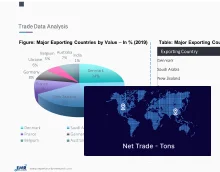
Stay informed and aware for a Market Leverage
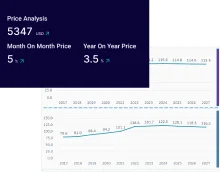
Analyze pricing patterns with comprehensive trend analyses.

Analyse trade data for supply chain insights.
Leverage cost reports for smart savings

Elevate supply chain with collaboration
Contact Us for Further Information
Our specialized analysts will be available to answer all the pre-purchase and post-purchase queries regarding the report.
Our specialized analysts will be available to answer all the pre-purchase and post-purchase queries regarding the report.
Staying one step ahead of the market landscape with our in-depth research methods, integrating advanced analytics to drive precise and tangible outcomes.
Our expert analyst team offers a significant advantage over competitors, with extensive market insights into the latest trends, putting you strategically ahead.
We deliver a simplified yet extensive report, comprising in-depth industry insights and analytics tailored to your industry requirements.
We are happy to help you navigate through the services we offer and solve your queries.
Contact us