Consumer Insights
Uncover trends and behaviors shaping consumer choices today
Procurement Insights
Optimize your sourcing strategy with key market data
Industry Stats
Stay ahead with the latest trends and market analysis.
The Australia neonatal and prenatal devices market covers ultrasound systems, fetal and maternal monitors, incubators, warmers, respiratory support equipment, newborn monitors and screening devices used to assess a pregnancy, support labour and care for babies from birth. Hospitals and clinics buy them as capital equipment and as recurring consumables, and every device needs registration on the Australian Register of Therapeutic Goods.
In 2025, the market is valued at AUD 480.00 million and is forecast to grow at a CAGR of 5.50%, reaching AUD 819.91 million by 2035. Growth is driven by 292,318 births registered in 2024, the 18% of babies admitted to special care or neonatal intensive care, and state-funded women's and children's hospital builds.
Compound Annual Growth Rate
5.5%
Value in AUD million
2026-2035
The Australia neonatal and prenatal devices market is moving from stand-alone bedside machines towards connected, AI-assisted and wearable systems. Scanning, labour monitoring and newborn respiratory care were once separate equipment purchases, whereas hospitals now plan them together inside large new women's and babies facilities.
Three forces shape demand: steady birth volumes of nearly 300,000 a year, state and territory investment in maternity and neonatal capacity, and a shift to less invasive care that keeps babies with their mothers.
In January 2026 the Children's Hospital Westmead completed a building with a neonatal intensive care unit, in April 2026 Victoria committed AUD 249 million to western Melbourne maternity services, and in June 2026 health ministers added two conditions to newborn bloodspot screening.
The market is shifting from standalone machines used on high-risk pregnancies towards connected monitoring, AI-guided scanning and gentler respiratory support for newborns. Prenatal ultrasound leads because nearly every pregnancy involves several scans, while fetal and maternal monitors advance fastest as wearable sensors and remote surveillance mature. Neonatal intensive care grows quickest among applications, and specialist clinics and imaging centres gain share among end users. New South Wales remains the largest state while Queensland grows fastest. Hospital builds, screening policy and local innovation point to durable multi-year demand rather than a cyclical uplift.
| Metric | Value |
| Market Size 2025 | AUD 480.00 million |
| Projected Market Size 2035 | AUD 819.91 million |
| CAGR 2026 to 2035 | 5.50% |
| Fastest-Growing Product Type | Fetal and Maternal Monitors: 7.2% CAGR |
| Fastest-Growing Application | Neonatal Intensive Care: 6.4% CAGR |
| Largest Revenue Segment 2025 | Prenatal Ultrasound Systems |
| Dominant State | New South Wales |
| Highest CAGR by State | Queensland: 6.3% |
| Babies admitted to special care or intensive care (2023) | 18% |
Birth Volumes and Hospital Builds Anchor Demand
Revenue is on course to rise by about 71% across the decade, from AUD 480.00 million in 2025 to AUD 819.91 million in 2035 at a 5.5% CAGR. Nearly 300,000 births a year and state-funded builds, from Westmead to Perth, turn clinical need into recurring equipment purchases.
Monitoring and Intensive Care Lead Growth
Prenatal Ultrasound Systems hold the largest revenue share, but Fetal and Maternal Monitors grow at an estimated 7.2% CAGR, Neonatal Intensive Care at 6.4% and Specialist Clinics and Imaging Centres at 6.8% through 2035. Wearable sensors and non-invasive respiratory tools drive the gains.
Oli Funds Wearable Maternal and Fetal Monitoring
Oli, an Australian medtech company, raised AUD 6.5 million in May 2026 and secured a further AUD 2 million in June 2026, moving a cordless sensor towards regulatory submission and local manufacture.
| Report Summary | Unit | Value |
| Base Year | AUD million | 2025 |
| Historical Period | AUD million | 2019 to 2025 |
| Forecast Period | AUD million | 2026 to 2035 |
| Market Size 2025 | AUD million | 480.00 |
| Market Size 2035 | AUD million | 819.91 |
| CAGR 2026 to 2035 | Percentage | 5.50 % |
| CAGR by Product Type: Fetal and Maternal Monitors | Percentage | 7.2 % |
| CAGR by Application: Neonatal Intensive Care | Percentage | 6.4 % |
| CAGR by End User: Specialist Clinics and Imaging Centres | Percentage | 6.8 % |
| CAGR by State: Queensland | Percentage | 6.3 % |
| Births Registered in Australia 2024 | Thousand Births | 292.3 |
| Federal Newborn Bloodspot Screening Investment 2022-23 to 2027-28 | AUD Million | 107.3 |
| Market Share by State 2025 | New South Wales | Dominant Share |
Steady births, high newborn intensive care use and large public hospital builds make this a structural market. Imaging leads, while monitoring, intensive care and Queensland grow fastest.
The Australia neonatal and prenatal devices market is being shaped by regional hospital expansion, wider newborn screening, state maternity budgets and new neonatal intensive care capacity.
August 2026 - Queensland Unveils Mackay Base Hospital Expansion Masterplan
June 2026 - Health Ministers Add Two Conditions to Newborn Bloodspot Screening
April 2026 - Victorian Budget Commits AUD 249 Million to Western Maternity Services
January 2026 - Children's Hospital Westmead Completes Stage 2 Building With Neonatal Unit
Regional hospital builds, wider screening and state maternity budgets are broadening where and how devices are bought. New neonatal intensive care capacity shows investment moving into equipment-heavy settings.
Recent developments, presented from the most recent, show the Australia neonatal and prenatal devices market moving from supplier results into local start-up funding and AI-assisted scanning.
July 2026 - Drägerwerk Reports Higher Medical Sales for the First Half
June 2026 - Oli Wins AUD 2 Million Industry Growth Program Funding
May 2026 - Fisher and Paykel Healthcare Reports Hospital Product Growth
February 2026 - GE HealthCare Adds Fetoly AI to Voluson Ultrasound Systems
Recent activity combines supplier growth, local manufacturing of a wearable and AI scanning aids. The mix shows global suppliers and Australian start-ups both targeting monitoring and imaging.
The Expert Market Research’s report on the Australia Neonatal and Prenatal Devices Market offers a detailed analysis of the market based on the following segments.
Market Breakup by Product Type
Prenatal Ultrasound Systems lead because most pregnancies involve several scans, and GE HealthCare unveiled Voluson Performance 18 and 16 in September 2025 before adding Fetoly AI in February 2026. Fetal and Maternal Monitors grow fastest at an estimated 7.2% CAGR through 2035, helped by Oli's AUD 6.5 million raise in May 2026. Neonatal Incubators and Warmers include the Dräger stationary infant incubator listed in Australia. Neonatal Respiratory Support Devices draw on Fisher and Paykel Healthcare CPAP and Ventora Medical's airway pressure monitor. Neonatal Monitoring and Screening Devices follow the July 2025 hearing framework. Others include phototherapy and resuscitation equipment.
Market Breakup by Application
Antenatal Screening and Diagnosis leads because nearly 300,000 births a year each involve scanning, and Victoria funded 1,500 extra sonography appointments in April 2026. Neonatal Intensive Care grows fastest at an estimated 6.4% CAGR through 2035, as 18% of babies needed special care or intensive care in 2023 and Children's Hospital Westmead opened a new unit building in January 2026. Labour and Delivery Monitoring is where Oli's wearable is in pivotal trials. Special Care and Postnatal Newborn Care gains from Victoria's AUD 8.1 million nurse program of June 2026. Others include newborn bloodspot screening, where MPS I and II were added in June 2026.
Market Breakup by End User
Public Hospitals lead because state governments fund the large builds, including Western Australia's AUD 1.8 billion Women and Babies Hospital and the AUD 659.1 million Westmead Stage 2 project completed in January 2026. Specialist Clinics and Imaging Centres grow fastest at an estimated 6.8% CAGR through 2035, as obstetric ultrasound and AI-guided scan tools such as Fetoly move to community practices. Private Hospitals buy across ultrasound and monitoring, and Epworth HealthCare hosted the Ventora Medical usability study reported in January 2026. Others include birth centres, such as the new Mackay Birth Centre announced in August 2026, and home care.
Market Breakup by Region
New South Wales dominates with 86,978 births registered in 2024 and the Westmead neonatal building completed in January 2026, and it grows at an estimated 5.3% CAGR through 2035. Queensland is fastest at an estimated 6.3%, with 58,986 births and the Mackay masterplan of August 2026. Victoria, at an estimated 5.6%, recorded 82,328 births and gained AUD 249 million in April 2026. Western Australia grows at 6.0% with a AUD 1.8 billion hospital planned, while South Australia, at 5.0%, awaits a new Women's and Children's Hospital due 2030-31. Others covers Tasmania, the ACT and the Northern Territory, growing at an estimated 5.4%.
| CAGR 2026 to 2035, Market by State | Growth Rate |
| New South Wales | 5.3 % |
| Victoria | 5.6 % |
| Queensland | 6.3 % |
| Western Australia | 6.0 % |
| South Australia | 5.0 % |
| Others (incl. Tasmania, ACT and Northern Territory) | 5.4 % |
Competition combines global imaging and critical care groups, respiratory specialists and Australian start-ups. Barriers include registration on the Australian Register of Therapeutic Goods, clinical validation, service networks and hospital tender relationships.
GE HealthCare
GE HealthCare, headquartered in Chicago, makes the Voluson women's health ultrasound range, patient monitoring and infant care equipment. Its local entity, GE Healthcare Australia Pty Ltd, is a sponsor on the Australian Register of Therapeutic Goods. In September 2025 it unveiled Voluson Performance 18 and 16 with SonoLyst automation at the ISUOG congress, and in February 2026 it announced Diagnoly Fetoly AI for fetal heart and brain scans.
Fisher and Paykel Healthcare
Fisher and Paykel Healthcare, headquartered in Auckland, New Zealand, makes infant respiratory products, including the Bubble CPAP system, Optiflow Junior 2 nasal cannula, Airvo 3 Junior and Neopuff T-Piece resuscitator. For the year to March 2026 it reported group operating revenue of NZD 2.31 billion, with hospital products up 18% to NZD 1.51 billion, and it is building a fifth building at its East Tamaki campus.
Drägerwerk
Drägerwerk, headquartered in Lübeck, Germany, makes incubators, infant warmers, ventilators and monitors for neonatal units. Draeger Australia Pty Ltd is the sponsor of an active Australian Register of Therapeutic Goods entry for a Class IIb stationary infant incubator. In July 2026 the group's preliminary figures put medical division net sales at about EUR 898 million for the first half, up from EUR 851.1 million a year earlier.
Oli
Oli is an Australian medtech company developing a cordless, body-worn sensor that tracks signals from mother and fetus and aims to assess up to 15 pregnancy and birth conditions, including fetal distress and postpartum haemorrhage. It raised AUD 6.5 million in a Series A3 round in May 2026. It is pursuing Therapeutic Goods Administration and United States FDA submissions and will manufacture in Sydney.
Other players operating in the Australia neonatal and prenatal devices market include Koninklijke Philips, Masimo, Mindray, Natus Medical, and Ventora Medical, alongside ultrasound suppliers, incubator and phototherapy makers, monitoring specialists and distributors serving public hospitals, private hospitals and imaging clinics across Australia.
Competition rests on registration, clinical evidence, service reach and tender relationships rather than price alone. Global groups anchor installed bases, while Australian start-ups compete in wearable monitoring.


Upto 15% Off
AUD
$2749 $2499
$3849 $3499
$4949 $4499
$6049 $5499


*While we strive to always give you current and accurate information, the numbers depicted on the website are indicative and may differ from the actual numbers in the main report. At Expert Market Research, we aim to bring you the latest insights and trends in the market. Using our analyses and forecasts, stakeholders can understand the market dynamics, navigate challenges, and capitalize on opportunities to make data-driven strategic decisions.*
The Australia neonatal and prenatal devices market is valued at AUD 480.00 million in 2025, supported by steady births, a high rate of newborn intensive care and state-funded maternity and neonatal capacity.
The market is forecast to reach AUD 819.91 million by 2035, growing at a CAGR of 5.50 % over the 2026 to 2035 period, driven by hospital builds, wearable fetal monitoring and AI-assisted ultrasound.
Fetal and Maternal Monitors record the highest CAGR at an estimated 7.2% through 2035, as wearable sensors such as Oli's move through trials and hospitals seek remote labour surveillance.
New South Wales dominates, supported by 86,978 births registered in 2024 and the new Westmead neonatal building. Queensland is the fastest-growing state at an estimated 6.3% CAGR, helped by the Mackay Base Hospital masterplan.
Key players include GE HealthCare, Fisher and Paykel Healthcare, Drägerwerk, Oli, Koninklijke Philips, Masimo, Mindray, Natus Medical, and Ventora Medical.
It is a screening blood test offered to newborns to detect rare conditions early. In June 2026 health ministers added mucopolysaccharidosis types 1 and 2, and the federal government is investing AUD 107.3 million from 2022-23 to 2027-28.
The July 2025 framework asks for a two-stage automated auditory brainstem response test, completed by 30 days of age for babies of at least 34 weeks, using equipment approved by the Therapeutic Goods Administration.
Explore our key highlights of the report and gain a concise overview of key findings, trends, and actionable insights that will empower your strategic decisions.
| REPORT FEATURES | DETAILS |
| Base Year | 2025 |
| Historical Period | 2019-2025 |
| Forecast Period | 2026-2035 |
| Scope of the Report |
Historical and Forecast Trends, Industry Drivers and Constraints, Historical and Forecast Market Analysis by Segment:
|
| Breakup by Product Type |
|
| Breakup by Application |
|
| Breakup by End User |
|
| Breakup by Region |
|
| Market Dynamics |
|
| Competitive Landscape |
|
| Companies Covered |
|
Datasheet
AUD 2,749
AUD 2,499
tax inclusive*
Single User License
AUD 3,849
AUD 3,499
tax inclusive*
Five User License
AUD 4,949
AUD 4,499
tax inclusive*
Corporate License
AUD 6,049
AUD 5,499
tax inclusive*
*Please note that the prices mentioned below are starting prices for each bundle type. Kindly contact our team for further details.*
Flash Bundle
Small Business Bundle
Growth Bundle
Enterprise Bundle
*Please note that the prices mentioned below are starting prices for each bundle type. Kindly contact our team for further details.*
Flash Bundle
Number of Reports: 3
20%
tax inclusive*
Small Business Bundle
Number of Reports: 5
25%
tax inclusive*
Growth Bundle
Number of Reports: 8
30%
tax inclusive*
Enterprise Bundle
Number of Reports: 10
35%
tax inclusive*
How To Order

Select License Type
Choose the right license for your needs and access rights.

Click on ‘Buy Now’
Add the report to your cart with one click and proceed to register.

Select Mode of Payment
Choose a payment option for a secure checkout. You will be redirected accordingly.
Strategic Solutions for Informed Decision-Making
Stay upgraded and grab opportunities by strategic insights
Stay informed and aware for a Market Leverage
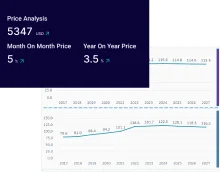
Analyze pricing patterns with comprehensive trend analyses.
Analyse trade data for supply chain insights.

Leverage cost reports for smart savings
Elevate supply chain with collaboration
Contact Us for Further Information
Our specialized analysts will be available to answer all the pre-purchase and post-purchase queries regarding the report.
Our specialized analysts will be available to answer all the pre-purchase and post-purchase queries regarding the report.
Staying one step ahead of the market landscape with our in-depth research methods, integrating advanced analytics to drive precise and tangible outcomes.
Our expert analyst team offers a significant advantage over competitors, with extensive market insights into the latest trends, putting you strategically ahead.
We deliver a simplified yet extensive report, comprising in-depth industry insights and analytics tailored to your industry requirements.
We are happy to help you navigate through the services we offer and solve your queries.
Contact us