Consumer Insights
Uncover trends and behaviors shaping consumer choices today
Procurement Insights
Optimize your sourcing strategy with key market data
Industry Stats
Stay ahead with the latest trends and market analysis.
The Australia drug delivery devices market covers the hardware that moves a medicine into the body: prefilled syringes, pen injectors, autoinjectors, wearable and needle-free injectors, inhalers and nebulisers, infusion pumps, transdermal patches and implantable systems. These devices set dose accuracy, ease of use and adherence, and they let patients treat themselves at home instead of attending a clinic.
In 2025, the market is valued at AUD 1050.00 million and is forecast to grow at a CAGR of 7.10%, reaching AUD 2084.89 million by 2035. Growth is driven by biologic and incretin therapies supplied in pens, steady respiratory demand, and a policy push towards home-based care.
Compound Annual Growth Rate
7.1%
Value in AUD million
2026-2035
The Australia drug delivery devices market is being reshaped by the move of high-value injectable therapies from hospital to home. Pens, autoinjectors and prefilled syringes now carry biologics and weight management medicines, while inhalers remain the everyday workhorse of respiratory care.
Three forces are shaping the market: subsidy decisions that determine which presentations reach patients, biosimilar competition that multiplies device formats, and a clinical shift towards less frequent dosing that rewards simple, reliable self-administration devices.
In December 2025, Celltrion received approval for ustekinumab biosimilar pre-filled pens. In April 2026, Eli Lilly said it would not list Mounjaro on the PBS for type 2 diabetes, and in July 2026 GSK registered a twice-yearly asthma biologic supplied in a pre-filled pen or syringe.
The market is shifting from commodity syringes and legacy inhalers towards prefilled, patient-operated systems that carry biologics and incretin therapies. Injectable devices lead on revenue and advance fastest, while inhalation devices remain the broad, stable base of everyday respiratory care. Autoimmune and inflammatory conditions are the fastest-growing therapeutic area, and home administration gains share against hospitals. Queensland grows quickest, with New South Wales the largest state. Subsidy settings, biosimilar launches and less frequent dosing underpin a durable, multi-year outlook.
| Metric | Value |
| Market Size 2025 | AUD 1050.00 million |
| Projected Market Size 2035 | AUD 2084.89 million |
| CAGR 2026 to 2035 | 7.10% |
| Fastest-Growing Product Type | Injectable Devices: 8.6% CAGR |
| Fastest-Growing Application | Autoimmune and Inflammatory Conditions: 9.2% CAGR |
| Largest Revenue Segment 2025 | Injectable Devices |
| Dominant Region | New South Wales |
| Highest CAGR by Region | Queensland: 7.8% |
| Australians living with severe asthma | Up to 200,000 |
Home Administration Anchors Long-Term Demand
Revenue is on course to expand by about 99% across the decade, from AUD 1,050.00 million in 2025 to AUD 2,084.89 million in 2035 at a 7.1% CAGR. Chronic therapies, recurring device refills and steady biosimilar launches make demand repeat-driven.
Injectables and Autoimmune Therapies Lead Growth
Inhalers remain widely used, but injectable devices grow at an estimated 8.6% CAGR and autoimmune and inflammatory conditions at an estimated 9.2% CAGR through 2035. Home and self-administration is expected to rise at 8.1% as therapies move out of hospitals.
Twice-Yearly Biologics Reshape Respiratory Devices
GSK announced the Australian registration of Exdensur in July 2026, and the PBAC recommended its Highly Specialised Drugs listing. Attention turns to how rare, high-value doses are supported by training and pen design.
| Report Summary | Unit | Value |
| Base Year | AUD million | 2025 |
| Historical Period | AUD million | 2019 to 2025 |
| Forecast Period | AUD million | 2026 to 2035 |
| Market Size 2025 | AUD million | 1050.00 |
| Market Size 2035 | AUD million | 2084.89 |
| CAGR 2026 to 2035 | Percentage | 7.10 % |
| CAGR by Product Type: Injectable Devices | Percentage | 8.6 % |
| CAGR by Application: Autoimmune and Inflammatory Conditions | Percentage | 9.2 % |
| CAGR by End User: Home and Self-Administration | Percentage | 8.1 % |
| CAGR by Region: Queensland | Percentage | 7.8 % |
| Australians with Severe Asthma, Up To | Thousand People | 200 |
| Australians Paying Privately for Weight Loss Medicines, Over | Thousand People | 400 |
| Market Share by Region 2025 | New South Wales | Dominant Share |
Subsidy decisions, biosimilar competition and a shift to home treatment shape the outlook. Injectable devices lead on revenue and growth, while inhalers hold the broad base of everyday respiratory care.
The Australia drug delivery devices market is being reshaped by subsidy decisions, new self-injection biologics and the gradual move of pen-based therapies into routine home care.
September 2026 - Wegovy Returns to the PBAC With a Revised Proposal
July 2026 - GSK Registers Exdensur for Severe Asthma
April 2026 - Lilly Declines PBS Listing of Mounjaro for Type 2 Diabetes
March 2026 - PBAC Recommends Yuflyma Prefilled Syringe as Adalimumab Biosimilar
Policy and product cycles now move together. Subsidy rulings, biosimilar listings and longer dosing intervals push care towards pens and syringes used at home, while pricing disputes can slow access.
Recent developments, presented from the most recent, show the Australia drug delivery devices market moving through regulatory milestones, supplier showcases and format transitions.
May 2026- AstraZeneca Seeks PBS Listing for Breztri Aerosphere in Severe Asthma
January 2026 - BD Previews Large-Volume and Wearable Injection Systems at Pharmapack
December 2025 - TGA Approves Celltrion Ustekinumab Biosimilar Pre-Filled Pens
June 2025 - Lilly Completes Mounjaro Move to the Multi-Dose KwikPen
Recent events show format transitions and regulatory steps more than capacity additions. Suppliers are retiring vials, adding pen presentations and showcasing wearable platforms, while subsidy decisions remain the gating step.
The Expert Market Research’s report on the Australia Drug Delivery Devices Market offers a detailed analysis of the market based on the following segments.
Market Breakup by Product Type
Injectable Devices lead revenue and grow fastest at an estimated 8.6% CAGR through 2035, as the TGA approved Celltrion's Steqeyma pens on 16 December 2025 and Eli Lilly completed its KwikPen transition in June 2025. Inhalation and Respiratory Devices cover inhalers, spacers and nebulisers, where AstraZeneca's Breztri Aerosphere reached consumer comment in May 2026. Infusion Pump Systems span hospital and ambulatory pumps, including the mylife CamAPS FX app that Ypsomed and CamDiab introduced in Australia in June 2025. Transdermal and Implantable Devices include patches and depot systems. Others covers needle-free devices and accessories.
Market Breakup by Application
Autoimmune and Inflammatory Conditions grow fastest at an estimated 9.2% CAGR, because the PBAC recommended Yuflyma's 20 mg syringe in March 2026 while adalimumab pens were already listed. Respiratory Diseases remain the broadest therapeutic base, and GSK's twice-yearly Exdensur was registered in July 2026. Diabetes, Obesity and Metabolic Disorders rely on pens, with Wegovy back before the PBAC in November 2026 after Lilly declined a type 2 diabetes listing in April 2026. Oncology and Pain Management use infusion and injectable devices in clinics. Others covers vaccines and hormone therapies.
Market Breakup by End User
Home and Self-Administration grows fastest at an estimated 8.1% CAGR, since GSK states Exdensur may be self-administered or given by a trained caregiver, and BD described growing patient self-administration at Pharmapack in January 2026. Hospitals remain a large buyer of syringes, infusion pumps and nebulisers, and supply pressure on Ventolin Nebules, which GSK reported to Asthma Australia in an April 2026 update, shows their dependence on reliable consumables. Clinics and Specialist Centres supervise first doses and training for biologics. Others includes aged care and community nursing services.
Market Breakup by Region
New South Wales dominates through the largest population and hospital network, growing at an estimated 6.8% CAGR through 2035. Victoria follows at 6.9%, and GSK Australia issued its July 2026 Exdensur announcement from its Abbotsford office, with media contacts in Melbourne and Sydney. Queensland is the fastest-growing state at an estimated 7.8%, ahead of Western Australia at 7.5%, as faster population growth lifts home therapy demand. South Australia grows at 6.6%. Others covers Tasmania, the ACT and the Northern Territory at 7.2%, where remote patients gain most from self-administered pens.
Read more about this report - REQUEST FREE SAMPLE COPY IN PDF
| CAGR 2026 to 2035, Market by Region | Growth Rate |
| New South Wales | 6.8 % |
| Victoria | 6.9 % |
| Queensland | 7.8 % |
| Western Australia | 7.5 % |
| South Australia | 6.6 % |
| Others (incl. Tasmania, the Australian Capital Territory and the Northern Territory) | 7.2 % |
Competition combines therapy owners that control device choice, device specialists that supply platforms and biosimilar sponsors that add formats. Entry barriers include TGA registration, PBS listing outcomes, combination-product validation and clinician training.
Novo Nordisk
Novo Nordisk, headquartered in Bagsværd, Denmark, supplies semaglutide pens in Australia through Novo Nordisk Pharmaceuticals Pty Limited. Its Wegovy pre-filled pens, in strengths from 0.25 mg to 2.4 mg, were recommended by the PBAC in November 2025 for adults with cardiovascular disease and obesity. A revised submission is set for the PBAC's November 2026 meeting, after the Health Minister committed to a listing in January 2026.
Eli Lilly
Eli Lilly, headquartered in Indianapolis, Indiana, markets tirzepatide as Mounjaro in Australia through Eli Lilly Australia. The company confirmed on 30 June 2025 that vials were exhausted after its move to the multi-dose KwikPen. On 28 April 2026 it said it would not list Mounjaro on the PBS for type 2 diabetes after four reimbursement submissions, leaving private prescriptions as the main access route.
GSK
GSK, headquartered in London, operates in Australia through GlaxoSmithKline Australia, whose registered office is in Abbotsford, Victoria. It announced on 28 July 2026 the TGA registration of Exdensur, a six-monthly biologic given by pre-filled pen or syringe. The PBAC recommended it on 8 July 2026. GSK also reported ongoing Ventolin Nebules supply constraints to Asthma Australia in an April 2026 update.
BD
BD, headquartered in Franklin Lakes, New Jersey, supplies prefillable syringes, disposable autoinjectors, pens and the Libertas wearable injector to drug sponsors worldwide, including those serving Australia. At Pharmapack in Paris on 21 and 22 January 2026 it highlighted biologics, GLP-1 therapies and large-volume subcutaneous delivery, and previewed dual-injection systems in development.
Other players operating in the Australia drug delivery devices market include AstraZeneca, Ypsomed, Celltrion, Amgen, and Terumo, alongside hospital suppliers, pharmacy wholesalers, specialist pump distributors and respiratory device makers supporting injectable, inhaled and infusion therapy across Australia.
Competition rests on therapy ownership, device usability, reliable supply and subsidy outcomes rather than price alone. Pharmaceutical sponsors control device choice, while specialists compete through platforms and partnerships.


Upto 15% Off
AUD
$2749 $2499
$3849 $3499
$4949 $4499
$6049 $5499


*While we strive to always give you current and accurate information, the numbers depicted on the website are indicative and may differ from the actual numbers in the main report. At Expert Market Research, we aim to bring you the latest insights and trends in the market. Using our analyses and forecasts, stakeholders can understand the market dynamics, navigate challenges, and capitalize on opportunities to make data-driven strategic decisions.*
The Australia drug delivery devices market is valued at AUD 1050.00 million in 2025, supported by biologic and incretin pens, steady respiratory demand and the shift to home-based administration.
The market is forecast to reach AUD 2084.89 million by 2035, growing at a CAGR of 7.10 % over the 2026 to 2035 period, driven by self-injection biologics, biosimilar pen launches and subsidy decisions that widen patient access.
Injectable Devices records the highest CAGR at an estimated 8.6% through 2035, as pens, autoinjectors and prefilled syringes carry more biologic and weight management therapies into home use.
New South Wales dominates through the largest population and hospital network. Queensland is the fastest-growing state at an estimated 7.8% CAGR, helped by population growth and rising home therapy use.
Key players include Novo Nordisk, Eli Lilly, GSK, BD, AstraZeneca, Ypsomed, Celltrion, Amgen, and Terumo.
It is a product that moves a medicine into the body in a controlled dose, such as a pen, autoinjector, inhaler, infusion pump or patch. Regulators treat many as combination products alongside the medicine.
It is the Australian Government program that subsidises prescription medicines, including many supplied in pens, syringes and inhalers. Listing decisions follow PBAC advice, so device presentations depend on subsidy outcomes.
It is the Australian Government program that subsidises prescription medicines, including many supplied in pens, syringes and inhalers. Listing decisions follow PBAC advice, so device presentations depend on subsidy outcomes.
Explore our key highlights of the report and gain a concise overview of key findings, trends, and actionable insights that will empower your strategic decisions.
| REPORT FEATURES | DETAILS |
| Base Year | 2025 |
| Historical Period | 2019-2025 |
| Forecast Period | 2026-2035 |
| Scope of the Report |
Historical and Forecast Trends, Industry Drivers and Constraints, Historical and Forecast Market Analysis by Segment:
|
| Breakup by Product Type |
|
| Breakup by Application |
|
| Breakup by End User |
|
| Breakup by Region |
|
| Market Dynamics |
|
| Competitive Landscape |
|
| Companies Covered |
|
Datasheet
AUD 2,749
AUD 2,499
tax inclusive*
Single User License
AUD 3,849
AUD 3,499
tax inclusive*
Five User License
AUD 4,949
AUD 4,499
tax inclusive*
Corporate License
AUD 6,049
AUD 5,499
tax inclusive*
*Please note that the prices mentioned below are starting prices for each bundle type. Kindly contact our team for further details.*
Flash Bundle
Small Business Bundle
Growth Bundle
Enterprise Bundle
*Please note that the prices mentioned below are starting prices for each bundle type. Kindly contact our team for further details.*
Flash Bundle
Number of Reports: 3
20%
tax inclusive*
Small Business Bundle
Number of Reports: 5
25%
tax inclusive*
Growth Bundle
Number of Reports: 8
30%
tax inclusive*
Enterprise Bundle
Number of Reports: 10
35%
tax inclusive*
How To Order

Select License Type
Choose the right license for your needs and access rights.

Click on ‘Buy Now’
Add the report to your cart with one click and proceed to register.

Select Mode of Payment
Choose a payment option for a secure checkout. You will be redirected accordingly.
Strategic Solutions for Informed Decision-Making
Stay upgraded and grab opportunities by strategic insights
Stay informed and aware for a Market Leverage
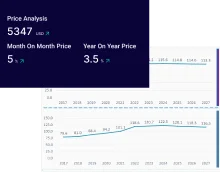
Analyze pricing patterns with comprehensive trend analyses.
Analyse trade data for supply chain insights.
Leverage cost reports for smart savings
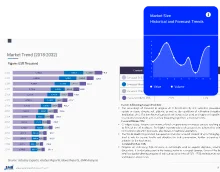
Elevate supply chain with collaboration

Contact Us for Further Information
Our specialized analysts will be available to answer all the pre-purchase and post-purchase queries regarding the report.
Our specialized analysts will be available to answer all the pre-purchase and post-purchase queries regarding the report.
Staying one step ahead of the market landscape with our in-depth research methods, integrating advanced analytics to drive precise and tangible outcomes.
Our expert analyst team offers a significant advantage over competitors, with extensive market insights into the latest trends, putting you strategically ahead.
We deliver a simplified yet extensive report, comprising in-depth industry insights and analytics tailored to your industry requirements.
We are happy to help you navigate through the services we offer and solve your queries.
Contact us