Consumer Insights
Uncover trends and behaviors shaping consumer choices today
Procurement Insights
Optimize your sourcing strategy with key market data
Industry Stats
Stay ahead with the latest trends and market analysis.
Compound Annual Growth Rate
4.3%
Value in AUD billion
2026-2035
Rapid population growth is one of the key drivers aiding the Australia self-storage market expansion. In January 2024, the Australian Bureau of Statistics reported that the Australian population attained a size of over 27 million 18 years before its determined time (2042) due to the increasing influx of migrants from foreign countries. The registered growth rate was 41% higher than the highest recorded growth rate (of 2009). This is expected to raise the demand for personal self-storage solutions as consumers seek private and secure means of storing essential valuables and furniture.
The adoption of self-storage solutions by SMEs is also expected to bolster the market growth. There are nearly 2,520,419 small-size businesses, which employ less than 20 people in Australia. These account for around 97.3% of all enterprises in Australia. Sole traders constitute a share of 60% of the overall size of small businesses, closely followed by micro businesses (27%), and the rest (9.2%). In 2020-21, family enterprises and small businesses contributed a share of 32.7% of Australia’s GDP (around $438 billion), while medium-scale enterprises accounted for a share of 21.2% at $283 billion. This is expected to drive the Australia self-storage market growth, as SMEs require self-storage solutions for managing resources, streamlining operations, and accommodating business growth.
| Australia Self-Storage Market Report Summary | Description | Value |
| Base Year | AUD billion | 2025 |
| Historical Period | AUD billion | 2019-2025 |
| Forecast Period | AUD billion | 2026-2035 |
| Market Size 2025 | AUD billion | 3.14 |
| Market Size 2035 | AUD billion | 4.78 |
| CAGR 2019-2025 | Percentage | XX% |
| CAGR 2026-2035 | Percentage | 4.30% |
| CAGR 2026-2035 - Market by Region | New South Wales | 4.9% |
| CAGR 2026-2035 - Market by Region | Victoria | 4.6% |
| CAGR 2026-2035 - Market by Unit Size | Large Storage Unit | 4.8% |
| CAGR 2026-2035 - Market by End Use | Business | 4.7% |
| 2025 Market Share by Region | Western Australia | 16.2% |
As per the Australia self-storage market analysis, nearly 9.4 million Australian households made an online purchase in 2023. This represented around 82% of the total number of domestic households. An average of 5.6 million households purchased items online, with rural (6.4%) and remote regions (5.7%) recording a significant year-on-year growth. The expansion of the e-commerce industry in Australia is expected to drive the demand for self-storage solutions over the forecast period.
Evolving economic conditions are playing a significant role in influencing the Australia self-storage market development. The demand-supply mismatch in the real estate industry has reduced the rental vacancy rate in Australia to the range of 0.5%-1.5%, which is significantly lower than the average rate of 3%. As per the Organisation of Economic Cooperation and Development, Australia’s housing supply level (420 per 100,000 individuals) is significantly lower than comparable nations such as the UK, USA, and Canada. Australians are now taking 11.4 years to save up for a new home loan deposit since median house prices have become 8.6x higher than the gross disposable incomes of households. The real estate industry of Australia is expected to be influenced by an intricate combination of socio-economic forces, such as rapid population growth and increasing government investments towards expanding the housing supply. However, the current market dynamics are creating a favourable environment for the Australia self-storage market expansion.
March 2024
StorHub Group, a leading operator of self-storage facilities in the Asia Pacific, announced its plan to invest $300 million towards the expansion of its market presence in Australia. Over the forecast period, it is expected to emerge as Australia’s fastest growing self-storage facility operator.
November 2021
Blackstone Real Estate, one of the leading real estate investment companies worldwide, completed the acquisition of Fort Knox Self Storage with the objective of increasing its footprint in Australia.
Shrinking landholding size for retail expansion
The country is expected to witness a substantial reduction in the area of mall space per person due to rapid population growth, which is expected to raise the premium for existing shopping centres. By 2032, the demand for additional retail space is expected to reach over 2.000 million square meters, half of which can be concentrated in major regional and super-regional centres. To sustain the increasing influx of consumers, these modern town squares are expected to boost their reliance on self-storage solutions for enhancing inventory management and catering to consumer requirements on time for various products.
Increasing consumer preference for home renovations
The Australia self-storage market value is expected to register a surge, driven by the increasing consumer preference for home renovations in recent times. In 2021, nearly 48% of all homeowners renovated their homes, which was a noticeable growth from 44% in 2020. The median renovation spend for homeowners also surged by 43% during 2021-22, reaching $30,000 from $21,000 in 2020. 49% of Australian households are further planning to renovate their homes. Mudrooms (17%) and wardrobes (16%) are some of the significant interior rooms that attract major investments from homeowners.
Technological advancements
The establishment of online websites has enabled multiple self-storage solution providers to easily attract new customers by expanding their reach and adopting novel technologies. By creating a new website, these companies have increased consumer knowledge of their services and quality checks, which has boosted the Australia self-storage market growth. Moreover, the adoption of smart software solutions has enabled self-storage companies to automate manual tasks such as accounting and billing for financial metrics, which has reduced the scope of human error and enhanced productivity. Besides, the adoption of data management software has enabled them to reduce the risk of data breaches, which is driving the market expansion.
The Australia self-storage market growth is driven by urbanisation, rising apartment living, and the trend of downsizing, particularly in major cities like Sydney and Melbourne. As residential spaces shrink, the demand for additional storage grows. Small businesses, especially in e-commerce, also contribute to market growth by using self-storage for inventory management. Additionally, lifestyle changes, such as relocation, decluttering, and temporary storage during renovations, boost the market. The market faces challenges like fluctuating economic conditions and high competition, which pressures operators to innovate with value-added services, such as climate-controlled units and enhanced security features, to remain competitive.
The Australia self-storage market faces several restraints that limit its growth potential. High property and construction costs in major urban areas, such as Sydney and Melbourne, make it challenging for operators to expand or build new facilities. Additionally, increased competition among self-storage providers can lead to price wars, reducing profitability. Economic fluctuations and uncertainties, such as housing market downturns, can also affect consumer demand for self-storage solutions. Furthermore, limited awareness of self-storage benefits in some regional areas and the challenge of offering innovative services at competitive prices further restrict the market growth.
“Australia self-storage Market Report and Forecast 2026-2035” offers a detailed analysis of the market based on the following segments:
Market Breakup by Unit Size
Market Breakup by End Use
Market Breakup by Region
By Unit Size Analysis
Larger storage unit is expected to grow at a CAGR of 4.8% between 2026 and 2035
Larger storage units are expected to constitute a major portion of the Australia self-storage market share. This can be attributed to the increasing consumer preference for home renovations. In 2021, 7/10 homeowners cited interior rooms as their topmost renovation priority. As per the market analysis, kitchens are the most popular interior rooms to be renovated whilst attracting the highest amount of expenditure at $20,000. This was closely followed by guest bedrooms (24%) and bathrooms (23%).
Small and mid-size storage units are expected to retain a significant portion of the market share, since they play a significantly important role in storing personal goods and seasonal items, such as unique furniture pieces and holiday decorations.
By End Use Analysis
Businesses are projected to grow at a CAGR of 4.7% during the forecast period of 2026-2035
Based on end use, the Australia self-storage market is segmented into business and personal. Over the forecast period, the business segment is expected to dominate the market development, due to the sustained growth of small and medium-size enterprises in Australia. Moreover, the personal segment is also expected to witness continuous growth, due to the evolving demographic conditions of Australia as well as changing financial situations of individuals.
The Australia self-storage market exhibits regional variations, driven by population density, urbanisation, and housing trends. Major urban centres such as Sydney, Melbourne, and Brisbane dominate the market due to high population density and limited residential space, prompting a higher demand for self-storage facilities. These cities also experience growth in apartment living, downsizing, and lifestyle changes, increasing the need for additional storage solutions among residents.
In contrast, regional areas such as Perth, Adelaide, and the Gold Coast are witnessing a growing demand for self-storage services, driven by economic growth, expanding housing markets, and increased business activity. These regions are becoming attractive for both residential and commercial self-storage as businesses seek additional storage space for inventory, and residents require extra room due to growing urban development.
| CAGR 2026-2035 - Market by | Region |
| New South Wales | 4.9% |
| Victoria | 4.6% |
| Queensland | XX% |
| Australian Capital Territory | XX% |
| Western Australia | XX% |
| Others | XX% |
In rural areas, while demand for self-storage is lower, it is increasing as farming businesses and rural industries utilise storage facilities for equipment, vehicles, and supplies. Moreover, with the rise of e-commerce, small businesses in regional areas are using self-storage for inventory management.
Market players are focused on product innovation, strategic alliances, and effective branding and marketing strategies to stay ahead of the competition. Companies in the market compete based on various factors such as product innovation, pricing, quality, brand reputation, distribution channels, and responsiveness to consumer trends like health consciousness and sustainability.
Janus International Australia Private Limited was founded in 1990s and is headquartered in Brisbane, Queensland. It is engaged in supplying premium self-storage solutions for different purposes across New Zealand and Australia.
Kennards Self Storage was founded in 1973 and is headquartered in Macquarie Park, New South Wales. It is a family-owned business that provides multi-location storage solutions to businesses while offering cellars, lockers, and personal custody boxes for individuals/households.
Storage Plus is headquartered in the United States (Brooklyn, New York). It offers premium storage accommodations for business, commercial, and personal purposes. It is also engaged in providing logistical services (such as moving and trucking).
Fort Knox Self Storage Pty, Ltd. is headquartered in Louisiana, USA. It provides a wide range of safe and affordable self-storage solutions for various commercial and personal needs.
Other key players in the Australia self-storage market report include Global Self Storage, among others.
June 2024
GIC, a Singapore-based investment company established a joint venture known as National Storage Ventures Fund with an investment of A$270 million in collaboration with National Storage REIT-Australia’s largest provider of self-storage solutions.
March 2024
Amidst increasing investor interest in self-storage sites, Kingsmede Partners listed three facilities located in Perth for sale. These assets formerly maintained an average occupancy rate of 85%, while fetching a gross annual income of around $2.4 million.


Upto 15% Off
AUD
$2749 $2499
$3849 $3499
$4949 $4499
$6049 $5499


*While we strive to always give you current and accurate information, the numbers depicted on the website are indicative and may differ from the actual numbers in the main report. At Expert Market Research, we aim to bring you the latest insights and trends in the market. Using our analyses and forecasts, stakeholders can understand the market dynamics, navigate challenges, and capitalize on opportunities to make data-driven strategic decisions.*
In 2025, the market reached an approximate value of AUD 3.14 billion.
The market is projected to grow at a CAGR of 4.30 between 2026 and 2035.
The market is estimated to witness healthy growth in the forecast period of 2026-2035 to reach a value of around AUD 4.78 billion by 2035.
The regional markets for the used cars include New South Wales, Victoria, Queensland, Australian Capital Territory, and Western Australia, others.
The different segments considered in the report are small storage unit, medium storage unit, and large storage unit.
The key market players are Janus International Group, Kennards Self Storage, Storage Plus, Fort Knox Self Storage Pty, Ltd., and Global Self Storage, among others.
Explore our key highlights of the report and gain a concise overview of key findings, trends, and actionable insights that will empower your strategic decisions.
| Report Features | Details |
| Base Year | 2025 |
| Historical Period | 2019-2025 |
| Forecast Period | 2026-2035 |
| Scope of the Report |
Historical and Forecast Trends, Industry Drivers and Constraints, Historical and Forecast Market Analysis by Segment:
|
| Breakup by Unit Size |
|
| Breakup by End Use |
|
| Breakup by Region |
|
| Market Dynamics |
|
| Price Analysis: |
|
| Competitive Landscape |
|
| Companies Covered |
|
Datasheet
AUD 2,749
AUD 2,499
tax inclusive*
Single User License
AUD 3,849
AUD 3,499
tax inclusive*
Five User License
AUD 4,949
AUD 4,499
tax inclusive*
Corporate License
AUD 6,049
AUD 5,499
tax inclusive*
*Please note that the prices mentioned below are starting prices for each bundle type. Kindly contact our team for further details.*
Flash Bundle
Small Business Bundle
Growth Bundle
Enterprise Bundle
*Please note that the prices mentioned below are starting prices for each bundle type. Kindly contact our team for further details.*
Flash Bundle
Number of Reports: 3
20%
tax inclusive*
Small Business Bundle
Number of Reports: 5
25%
tax inclusive*
Growth Bundle
Number of Reports: 8
30%
tax inclusive*
Enterprise Bundle
Number of Reports: 10
35%
tax inclusive*
How To Order

Select License Type
Choose the right license for your needs and access rights.

Click on ‘Buy Now’
Add the report to your cart with one click and proceed to register.

Select Mode of Payment
Choose a payment option for a secure checkout. You will be redirected accordingly.
Strategic Solutions for Informed Decision-Making
Stay upgraded and grab opportunities by strategic insights
Stay informed and aware for a Market Leverage
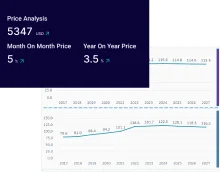
Analyze pricing patterns with comprehensive trend analyses.
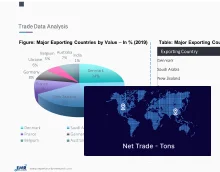
Analyse trade data for supply chain insights.
Leverage cost reports for smart savings
Elevate supply chain with collaboration
Contact Us for Further Information
Our specialized analysts will be available to answer all the pre-purchase and post-purchase queries regarding the report.
Our specialized analysts will be available to answer all the pre-purchase and post-purchase queries regarding the report.
Staying one step ahead of the market landscape with our in-depth research methods, integrating advanced analytics to drive precise and tangible outcomes.
Our expert analyst team offers a significant advantage over competitors, with extensive market insights into the latest trends, putting you strategically ahead.
We deliver a simplified yet extensive report, comprising in-depth industry insights and analytics tailored to your industry requirements.
We are happy to help you navigate through the services we offer and solve your queries.
Contact us