Consumer Insights
Uncover trends and behaviors shaping consumer choices today
Procurement Insights
Optimize your sourcing strategy with key market data
Industry Stats
Stay ahead with the latest trends and market analysis.
The Australia rail freight transport market covers revenue earned by operators that haul coal, grain, minerals, steel, vehicles and containers by train for third-party customers. It is measured in Australian dollars of haulage and linehaul revenue, and excludes track access charges, tonnage statistics and captive Pilbara iron ore railways run by the mining companies themselves.
In 2025, the market is valued at AUD 7200.00 million and is forecast to grow at a CAGR of 3.40%, reaching AUD 10058.61 million by 2035. Growth is driven by long-dated coal haulage contracts, interstate container services moving off the road network and public funding for track upgrades, passing loops and terminals.
Compound Annual Growth Rate
3.4%
Value in AUD million
2026-2035
The Australia rail freight transport market is a contract-led business in which a few large operators earn steady revenue from bulk haulage while competing for growth in interstate containers. Revenue and tonnage are different yardsticks here, and this report tracks revenue only.
Three forces are shaping the market: long-term coal recontracting that locks in bulk revenue, a push by operators into container and vehicle linehaul, and a federal decision to concentrate spending on upgrading the existing national network rather than completing a new line.
In May 2026 the Federal Budget consolidated Inland Rail at Parkes and returned AUD 4.4 billion in equity. In August 2026 Aurizon announced a 12-year haulage contract with BHP Mitsubishi Alliance, and in September 2026 it reported fast growth in containerised freight.
The market is moving from a coal-dominated haulage business towards a balanced mix of long-dated bulk contracts and faster-growing interstate container and vehicle services. Containerised and intermodal freight grows fastest, led by freight forwarders and scheduled network services. Queensland remains the largest region on the strength of coal, while Western Australia grows quickest as terminals and grain track are upgraded. Public funding for the existing network, private ownership changes and new terminals underpin a steady multi-year outlook.
| Metric | Value |
| Market Size 2025 | AUD 7200.00 million |
| Projected Market Size 2035 | AUD 10058.61 million |
| CAGR 2026 to 2035 | 3.40% |
| Fastest-Growing Commodity Type | Containerised and Intermodal Freight: 5.6% CAGR |
| Fastest-Growing Customer Type | Freight Forwarders and Logistics Providers: 5.1% CAGR |
| Largest Revenue Segment 2025 | Coal |
| Dominant Region | Queensland |
| Highest CAGR by Region | Western Australia: 4.1% |
| Maximum annual haulage in new BMA contract | Up to 37 million tonnes |
Contracted Bulk Revenue Anchors the Base
Revenue is on course to expand by about 40% across the decade, from AUD 7,200.00 million in 2025 to AUD 10,058.61 million in 2035 at a 3.4% CAGR. Take-or-pay coal and bulk contracts make demand repeat-driven rather than cyclical.
Containers and Forwarders Lead Growth
Coal grows slowly, but containerised and intermodal freight advances at an estimated 5.6% CAGR and freight forwarders at an estimated 5.1% CAGR through 2035. Scheduled network services are expected to rise at 4.7% as shippers shift interstate freight off the road.
Inland Rail Cutback Redirects Capital to Existing Track
The May 2026 Federal Budget stopped Inland Rail at Parkes and redirected funds to the existing network. Operators gain from signalling, passing loops and flood resilience on corridors they already use.
| Report Summary | Unit | Value |
| Base Year | AUD million | 2025 |
| Historical Period | AUD million | 2019 to 2025 |
| Forecast Period | AUD million | 2026 to 2035 |
| Market Size 2025 | AUD million | 7200.00 |
| Market Size 2035 | AUD million | 10058.61 |
| CAGR 2026 to 2035 | Percentage | 3.40 % |
| CAGR by Commodity Type: Containerised and Intermodal Freight | Percentage | 5.6 % |
| CAGR by Customer Type: Freight Forwarders and Logistics Providers | Percentage | 5.1 % |
| CAGR by Haulage Arrangement: Scheduled Network Services | Percentage | 4.7 % |
| CAGR by Region: Western Australia | Percentage | 4.1 % |
| Maximum Annual Haulage in New BMA Contract | Million Tonnes per Year | 37 |
| Melbourne Intermodal Terminal Full Development Capacity | Million TEU per Year | 1 |
| Market Share by Region 2025 | Queensland | Dominant Share |
Long-dated bulk contracts give the market a stable revenue base, while container services and terminal investment supply the growth. Public funding now favours the existing network over a new corridor.
The Australia rail freight transport market is being reshaped by container growth, longer trains, new terminals and a federal shift from building a new line to upgrading existing track.
September 2026 - Aurizon Reports Growth in Containerised Freight and Landbridging
August 2026 - Aurizon Secures Long-Term Coal Haulage With BHP Mitsubishi Alliance
May 2026 - Federal Budget Consolidates Inland Rail at Parkes
March 2026 - Pacific National Opens Kalgoorlie Freight Terminal
Growth is coming from containers, vehicles and landbridging rather than coal. Terminals, longer trains and federal money for existing corridors are all pointing the same way, towards network efficiency.
Recent developments, presented from the most recent, show ownership change, regulatory certainty and fleet and terminal investment supporting the Australia rail freight transport market.
August 2026 - Macquarie-Led Consortium Completes Qube Takeover
July 2026 - Central Queensland Coal Network Access Arrangements Begin
November 2025 - Aurizon and SCT Logistics Agree East Coast Rail Partnership
September 2025 - Pacific National Deploys First Class 94 Locomotive on Melbourne to Perth
Recent events combine a change of ownership, certainty on coal network access and investment in locomotives and partnerships. Operators are cooperating on corridors where terminals and track capacity are scarce.
The Expert Market Research’s report on the Australia Rail Freight Transport Market offers a detailed analysis of the market based on the following segments.
Market Breakup by Commodity Type
Coal leads revenue but grows slowly at an estimated 2.0% CAGR, with Aurizon's BHP Mitsubishi Alliance contract announced on 17 August 2026 locking in volumes from July 2028. Containerised and Intermodal Freight grows fastest at an estimated 5.6% CAGR, as Aurizon reported on 4 September 2026 that non-TGE customers grew over 175%. Grain and Agricultural Products grows at 3.8%, helped by Arc Infrastructure's Midland line upgrade in Western Australia. Iron Ore and Other Minerals, limited to third-party haulage, grows at 3.0%. General and Other Freight, including steel and vehicles, advances at 3.2%, supported by CEVA Logistics' September 2026 vehicle contract.
Market Breakup by Customer Type
Mining and Energy Producers lead revenue, anchored by BHP Mitsubishi Alliance and growing at an estimated 2.4% CAGR. Freight Forwarders and Logistics Providers grow fastest at an estimated 5.1% CAGR, since TGE alone is about 45% of Aurizon's national container volume. Agricultural Handlers and Traders grow at 3.7%, led by CBH Group, the sole customer on the Midland line that Arc Infrastructure is upgrading from mid-2026. Manufacturers, Retailers and Automotive Companies advance at 4.3%, with CEVA Logistics and NYK committing domestic vehicle and container volumes to rail in 2026.
Market Breakup by Haulage Arrangement
Take-or-Pay Contract Haulage leads, because Aurizon has recontracted more than 60 million tonnes of annual coal haulage since July 2025 and the arrangements grow at an estimated 2.9% CAGR. Scheduled Network Services grow fastest at an estimated 4.7% CAGR, as the Aurizon and SCT Logistics agreement of 11 November 2025 raised weekly east coast services from three to eight. Spot and Short-Term Haulage grows at 4.0%, helped by the Port of Melbourne rail shuttle incentive of AUD 100 per TEU proposed in December 2025. Others covers project and ad hoc haulage at 3.1%.
Market Breakup by Region
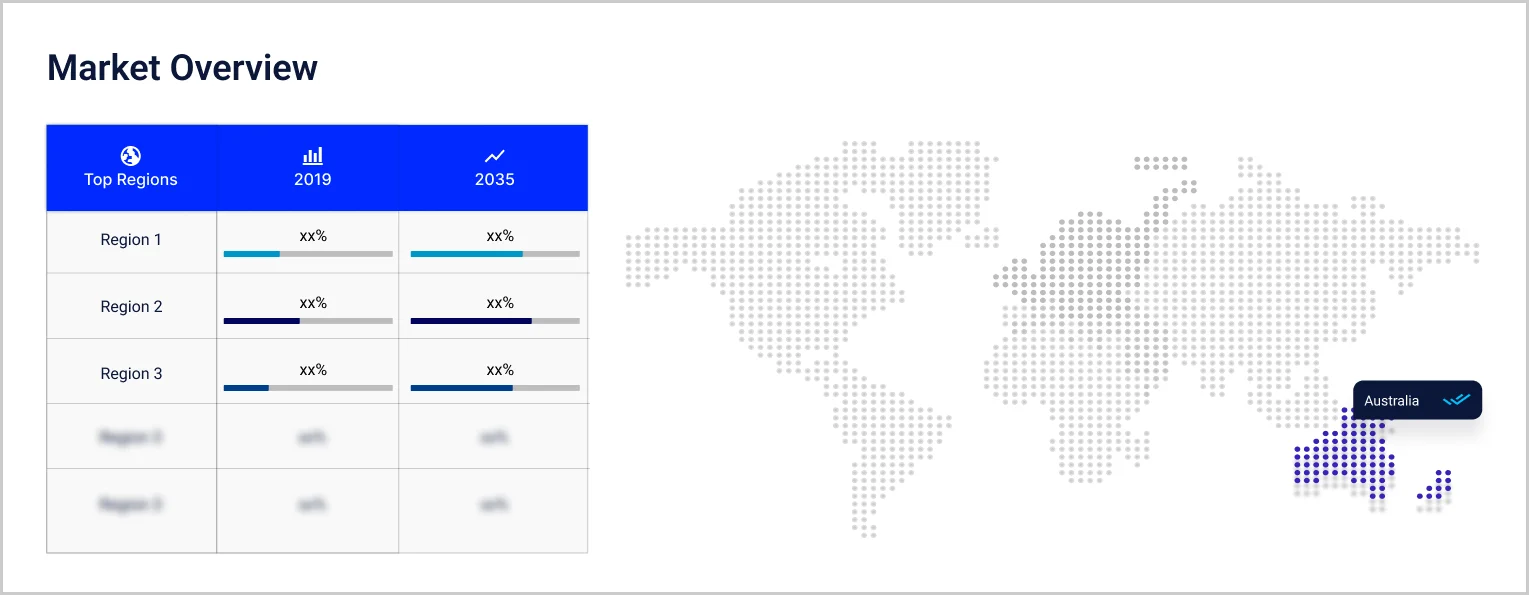
Queensland dominates through Central Queensland coal haulage, growing at an estimated 2.8% CAGR through 2035 as UT5+ access arrangements began on 1 July 2026. New South Wales grows at 3.5%, with Inland Rail now ending at Parkes under the May 2026 Federal Budget. Western Australia is fastest at an estimated 4.1%, helped by the Kewdale Terminal and the Kalgoorlie terminal opened in March 2026. Victoria grows at 3.8% as the Melbourne Intermodal Terminal began train operations in November 2025. South Australia grows at 3.4%. Others covers Tasmania, the Northern Territory and the ACT at 3.6%, including Aurizon's Darwin landbridging service.
| CAGR 2026 to 2035, Market by Region | Growth Rate |
| Queensland | 2.8 % |
| New South Wales | 3.5 % |
| Western Australia | 4.1 % |
| Victoria | 3.8 % |
| South Australia | 3.4 % |
| Others (incl. Tasmania, the Northern Territory and the Australian Capital Territory) | 3.6 % |
Competition combines vertically focused bulk haulers, interstate container operators and terminal owners. Entry barriers include rolling stock cost, access to the ARTC and state networks, take-or-pay customer relationships and terminal capacity.
Aurizon
Aurizon, headquartered in Brisbane, hauls coal, bulk commodities and containerised freight, and operates the Central Queensland Coal Network. It reported underlying revenue of AUD 4,194 million for the year to June 2026, announced a 12-year BHP Mitsubishi Alliance coal contract on 17 August 2026, and said on 4 September 2026 that its Containerised Freight business expects to break even in the current financial year.
Pacific National
Pacific National, headquartered in Sydney, runs coal, bulk, steel and intermodal freight services across the national network. It deployed its first Class 94 locomotive on the Melbourne to Perth corridor in September 2025 as part of an AUD 350 million low-emission traction investment, and it opened a new freight terminal at Kalgoorlie in March 2026 to support road-to-rail shift in Western Australia.
Qube Holdings
Qube Holdings, headquartered in Sydney, provides port, logistics and rail-linked intermodal services, including terminals that connect trains to ports and warehouses. A Macquarie Asset Management-led consortium implemented its takeover on 14 August 2026 at a headline AUD 5.20 per share, and Qube was removed from the ASX on 17 August 2026.
SCT Logistics
SCT Logistics, a privately owned company headquartered in Altona, Victoria, offers interstate rail and road linehaul between Melbourne, Sydney, Brisbane, Adelaide and Perth. It signed a three-year rail partnership with Aurizon on 11 November 2025 and uses its Bromelton terminal south of Brisbane. In March 2025 it expanded into Tasmania by acquiring CRE Solutions Logistics.
Other players operating in the Australia rail freight transport market include Genesee & Wyoming Australia, Watco Australia, TasRail, Southern Shorthaul Railroad, and Martinus Rail, alongside track managers, terminal operators and port rail shuttle partners supporting bulk and container movements across Australia.
Competition rests on contract tenure, terminal access, fleet efficiency and network reliability rather than price. Large operators hold the bulk base, while smaller firms compete through partnerships and niche corridors.


Upto 15% Off
AUD
$2749 $2499
$3849 $3499
$4949 $4499
$6049 $5499


*While we strive to always give you current and accurate information, the numbers depicted on the website are indicative and may differ from the actual numbers in the main report. At Expert Market Research, we aim to bring you the latest insights and trends in the market. Using our analyses and forecasts, stakeholders can understand the market dynamics, navigate challenges, and capitalize on opportunities to make data-driven strategic decisions.*
The Australia rail freight transport market is valued at AUD 7200.00 million in 2025, supported by long-dated coal contracts, interstate container growth and public funding for the existing freight network.
The market is forecast to reach AUD 10058.61 million by 2035, growing at a CAGR of 3.40 % over the 2026 to 2035 period, driven by take-or-pay bulk haulage, rising containerised freight and investment in terminals and track.
Containerised and Intermodal Freight records the highest CAGR at an estimated 5.6% through 2035, as interstate container, landbridging and vehicle services win share from road haulage.
Queensland dominates through Central Queensland coal haulage. Western Australia is the fastest-growing region at an estimated 4.1% CAGR, helped by the Kewdale and Kalgoorlie terminals and grain line upgrades.
Key players include Aurizon, Pacific National, Qube Holdings, SCT Logistics, Genesee & Wyoming Australia, Watco Australia, TasRail, Southern Shorthaul Railroad, and Martinus Rail.
Inland Rail is a federal freight line intended to link Melbourne and Brisbane. The May 2026 Federal Budget consolidated it at Parkes, with Beveridge to Parkes construction due for completion by the end of 2027.
It moves shipping containers, vehicles and consumer goods on trains between cities and ports. Operators such as Aurizon run double-stacked interstate trains up to 1.8 kilometres long between Perth, Adelaide, Melbourne, Sydney and Brisbane.
Explore our key highlights of the report and gain a concise overview of key findings, trends, and actionable insights that will empower your strategic decisions.
| REPORT FEATURES | DETAILS |
| Base Year | 2025 |
| Historical Period | 2019-2025 |
| Forecast Period | 2026-2035 |
| Scope of the Report |
Historical and Forecast Trends, Industry Drivers and Constraints, Historical and Forecast Market Analysis by Segment:
|
| Breakup by Commodity Type |
|
| Breakup by Customer Type |
|
| Breakup by Haulage Arrangement |
|
| Breakup by Region |
|
| Market Dynamics |
|
| Competitive Landscape |
|
| Companies Covered |
|
Datasheet
AUD 2,749
AUD 2,499
tax inclusive*
Single User License
AUD 3,849
AUD 3,499
tax inclusive*
Five User License
AUD 4,949
AUD 4,499
tax inclusive*
Corporate License
AUD 6,049
AUD 5,499
tax inclusive*
*Please note that the prices mentioned below are starting prices for each bundle type. Kindly contact our team for further details.*
Flash Bundle
Small Business Bundle
Growth Bundle
Enterprise Bundle
*Please note that the prices mentioned below are starting prices for each bundle type. Kindly contact our team for further details.*
Flash Bundle
Number of Reports: 3
20%
tax inclusive*
Small Business Bundle
Number of Reports: 5
25%
tax inclusive*
Growth Bundle
Number of Reports: 8
30%
tax inclusive*
Enterprise Bundle
Number of Reports: 10
35%
tax inclusive*
How To Order

Select License Type
Choose the right license for your needs and access rights.

Click on ‘Buy Now’
Add the report to your cart with one click and proceed to register.

Select Mode of Payment
Choose a payment option for a secure checkout. You will be redirected accordingly.
Strategic Solutions for Informed Decision-Making
Stay upgraded and grab opportunities by strategic insights
Stay informed and aware for a Market Leverage
Analyze pricing patterns with comprehensive trend analyses.
Analyse trade data for supply chain insights.
Leverage cost reports for smart savings
Elevate supply chain with collaboration
Contact Us for Further Information
Our specialized analysts will be available to answer all the pre-purchase and post-purchase queries regarding the report.
Our specialized analysts will be available to answer all the pre-purchase and post-purchase queries regarding the report.
Staying one step ahead of the market landscape with our in-depth research methods, integrating advanced analytics to drive precise and tangible outcomes.
Our expert analyst team offers a significant advantage over competitors, with extensive market insights into the latest trends, putting you strategically ahead.
We deliver a simplified yet extensive report, comprising in-depth industry insights and analytics tailored to your industry requirements.
We are happy to help you navigate through the services we offer and solve your queries.
Contact us