Consumer Insights
Uncover trends and behaviors shaping consumer choices today
Procurement Insights
Optimize your sourcing strategy with key market data
Industry Stats
Stay ahead with the latest trends and market analysis.
The Australia home fitness equipment market covers strength training equipment, accessories and cardiovascular machines bought for use in houses and apartments, including kettlebells, resistance bands, foam rollers, treadmills and exercise bikes, sold through physical retailers and online stores. Compared with gym memberships, home equipment costs more upfront but offers flexible access, privacy and no travel time, although it is limited by floor space and storage.
In 2025, the market is valued at AUD 253.73 million in 2025 and is forecast to grow at a CAGR of 2.50%, reaching AUD 324.80 million by 2035. Growth is driven by compact functional trainers such as the Gym Plus Icon launched in July 2026, connected cardio such as the Peloton Tread Vision priced at AUD 4,999, and steady participation, with 26.6% of adults aged 18 to 64 doing strength or toning exercise on two or more days a week in 2022.
Compound Annual Growth Rate
2.5%
Value in AUD million
2026-2035
The Australia home fitness equipment market is at an inflection point. Bulky treadmills and multi-station machines once defined the home gym, but compact functional trainers, connected cardio and Pilates equipment now compete for the same limited floor space as more Australians train in smaller homes.
Three forces are shaping the market: compact design, with Gym Plus launching the Icon trainer on a 1.54m by 1.24m footprint; connected cardio, as Peloton announced camera-equipped treadmills for Australia; and participation, with fitness and gym ranked second among adult activities.
In February 2025 Johnson Fitness and Wellness Australia opened a concept store inside Decathlon in Sydney, and in September 2025 Technogym machines were installed at the Australian Institute of Sport. In September 2026 Peloton announced the Tread Vision for Australia.
The market is moving from bulky single purpose machines towards compact, adjustable and connected equipment that fits apartments and shared living space. Strength training equipment holds the largest share as racks, benches and functional trainers anchor the home gym, while cardiovascular machines and accessories gain from connected coaching and recovery. Mid priced products lead, low priced products grow quickest as entry gear widens, and households hold the largest end use. Offline stores lead distribution, yet online grows fastest. New South Wales is the largest region and the Australia Capital Territory grows quickest. Steady participation points to durable rather than cyclical demand.
| Metric | Value |
| Market Size 2025 | AUD 253.73 million |
| Projected Market Size 2035 | AUD 324.80 million |
| CAGR 2026 to 2035 | 2.50% |
| Fastest-Growing Price Point | Low: 2.9% CAGR |
| Fastest-Growing Distribution Channel | Online: 7.6% CAGR |
| Largest Revenue Segment 2025 | Strength Training Equipment |
| Dominant Region | New South Wales |
| Highest CAGR by Region | Australia Capital Territory: 2.8% |
| Adults aged 18 to 64 doing strength or toning exercise twice a week or more (ABS, 2022) | 26.6% |
Participation and Compact Design Anchor Demand
Revenue is on course to expand by about 28% across the decade, from AUD 253.73 million in 2025 to AUD 324.80 million in 2035 at a 2.5% CAGR. Steady participation, with fitness and gym ranked second among adult activities in AusPlay data of November 2025, and compact equipment for smaller homes keep replacement and upgrade demand intact.
Online Channels and Entry Priced Products Lead Growth
Strength Training Equipment holds the largest share, but Online distribution grows at an estimated 7.6% CAGR and Low priced products at an estimated 2.9% CAGR through 2035, ahead of the overall market. Gym Plus paired online and trade ordering with click-and-collect in its July 2026 Icon launch.
Connected Treadmills Raise Premium Expectations
Peloton announced three treadmills on 22 September 2026, with the Tread Vision due in Australia on 2 October at AUD 4,999 and the camera-free Tread Flex expected in autumn 2027.
| Report Summary | Unit | Value |
| Base Year | AUD million | 2025 |
| Historical Period | AUD million | 2019 to 2025 |
| Forecast Period | AUD million | 2026 to 2035 |
| Market Size 2025 | AUD million | 253.73 |
| Market Size 2035 | AUD million | 324.80 |
| CAGR 2026 to 2035 | Percentage | 2.50 % |
| CAGR by Product Type: Cardiovascular Training Equipment | Percentage | 3.0 % |
| CAGR by Price Point: Low | Percentage | 2.9 % |
| CAGR by Distribution Channel: Online | Percentage | 7.6 % |
| CAGR by Region: Australia Capital Territory | Percentage | 2.8 % |
| Adults Doing Strength or Toning Exercise (ABS, 2022) | Percentage | 26.6 |
| Adults Aged 18 to 64 Meeting Activity Guidelines (ABS, 2022) | Percentage | 22.4 |
| Market Share by Region 2025 | New South Wales | Dominant Share |
The trajectory reflects a structural shift towards flexible training at home rather than cyclical demand. Compact floor space, connected coaching and steady participation keep households buying equipment for long term use. Strength training equipment leads on scale, while low priced products and online channels grow quickest and the Australia Capital Territory grows fastest among regions. Growth is underpinned by named product launches and official participation data rather than speculative forecasts.
The Australia home fitness equipment market is being reshaped by connected cardio, compact functional trainers, rising gym and Pilates participation, and elite sport technology.
September 2026 - Connected Treadmills With AI Coaching Reach Australian Homes
March 2026 - Compact Functional Trainers Target Space Constrained Homes
November 2025 - AusPlay Data Confirms Strong Gym and Pilates Participation
September 2025 - Biofeedback Machines Reach the Australian Institute of Sport
Connected treadmills, compact functional trainers, steady gym and Pilates participation and elite sport biofeedback show a market moving towards smarter, space efficient equipment. Growth is structurally supported rather than cyclical, with online channels and low priced entry products widening access. The market stays central to how Australian households train through the forecast period.
Recent developments, presented from the most recent, show Body Bike's sales milestone, the Gym Plus Icon launch, Technogym's record results and a Johnson Fitness and Wellness concept store.
September 2026 - Body Bike Reports More Than 8,000 Indoor Cycling Units Sold in Australia
July 2026 - Gym Plus Launches the Icon Compact Functional Trainer
March 2026 - Technogym Reports Record FY2025 Revenue Above EUR 1 Billion
February 2025 - Johnson Fitness and Wellness Australia Opens Concept Store Inside Decathlon
Body Bike's sales milestone, the Gym Plus Icon, Technogym's record results and the Decathlon concept store show suppliers shifting from broad ranges to space efficient, tested and connected products. Retail partnerships and direct online ordering both widen access. The momentum validates steady, if modest, demand for home fitness equipment.
The Expert Market Research’s report on the Australia Home Fitness Equipment Market offers a detailed analysis of the market based on the following segments.
Market Breakup by Product Type
Strength Training Equipment leads, in our estimate, because racks, benches, kettlebells and functional trainers form the core of a home gym, and Gym Plus launched its Icon trainer in July 2026. Cardiovascular Training Equipment grows fastest at an estimated 3.0% CAGR through 2035, helped by Peloton's September 2026 announcement of the Tread Vision for Australia and Body Bike's 8,000 units sold. Accessories such as resistance bands, foam rollers and jump ropes add low cost entry points.
Market Breakup by Price Point
Mid leads, in our estimate, because it balances durability and price for households buying racks, treadmills and bikes, and Johnson Fitness and Wellness Australia opened a Decathlon concept store in February 2025 to let shoppers test equipment. Low grows fastest at an estimated 2.9% CAGR through 2035, with Aussie Fitness Equipment offering AfterPay and Zip. Luxury is anchored by Peloton's Tread Vision at AUD 4,999, announced in September 2026. Others cover bundled garage gym packages and mixed tier sets.
Market Breakup by End Use
Households lead, in our estimate, because garages, spare rooms and backyards take full racks and treadmills, and Aussie Fitness Equipment ships home multi gyms Australia wide. Apartment grows faster, as the ABS reported on 2 November 2026 that apartment approvals rose 25.6% to 4,129 in September 2026, and compact equipment such as the Gym Plus Icon, launched in July 2026, fits small footprints. Others cover shared residential gyms and small home offices.
Market Breakup by Distribution Channel
Offline leads, in our estimate, because shoppers test treadmills, racks and bikes before buying, and Johnson Fitness and Wellness Australia opened a Decathlon concept store in Sydney in February 2025. Online grows fastest at an estimated 7.6% CAGR through 2035, as Gym Plus combines online and trade ordering with click-and-collect at Cranbourne West, described in its July 2026 launch release, and Aussie Fitness Equipment promises dispatch in under 48 hours.
Market Breakup by Region
New South Wales dominates, in our estimate, with the largest population at 8.67 million at March 2026 and the Decathlon concept store in Sydney, and grows at an estimated 2.5% CAGR through 2035. The Australia Capital Territory grows fastest at 2.8%, with Technogym machines installed at the Australian Institute of Sport in Canberra in September 2025. Western Australia grows at 2.7%, Queensland at 2.6% and Victoria at 2.3%, where Johnson Health Tech Australia is based in Dandenong South. Rest of Australia grows at 2.4%, covering South Australia, Tasmania and the Northern Territory.
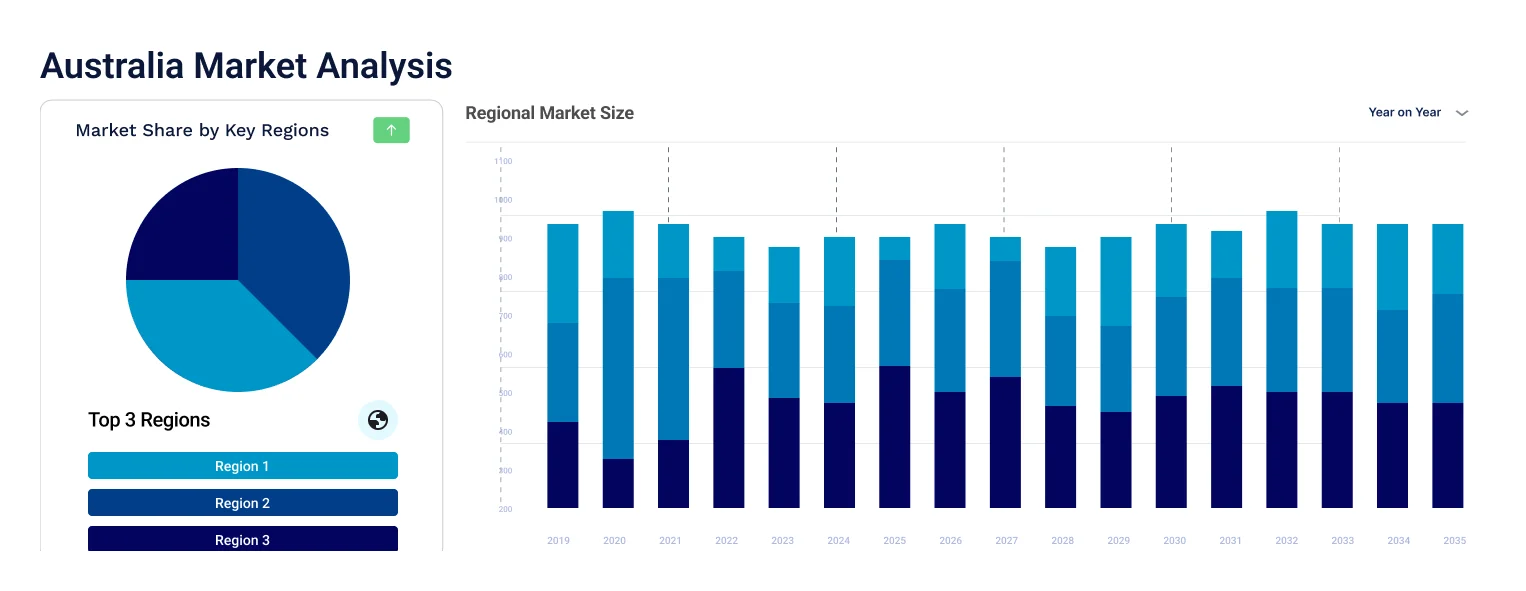
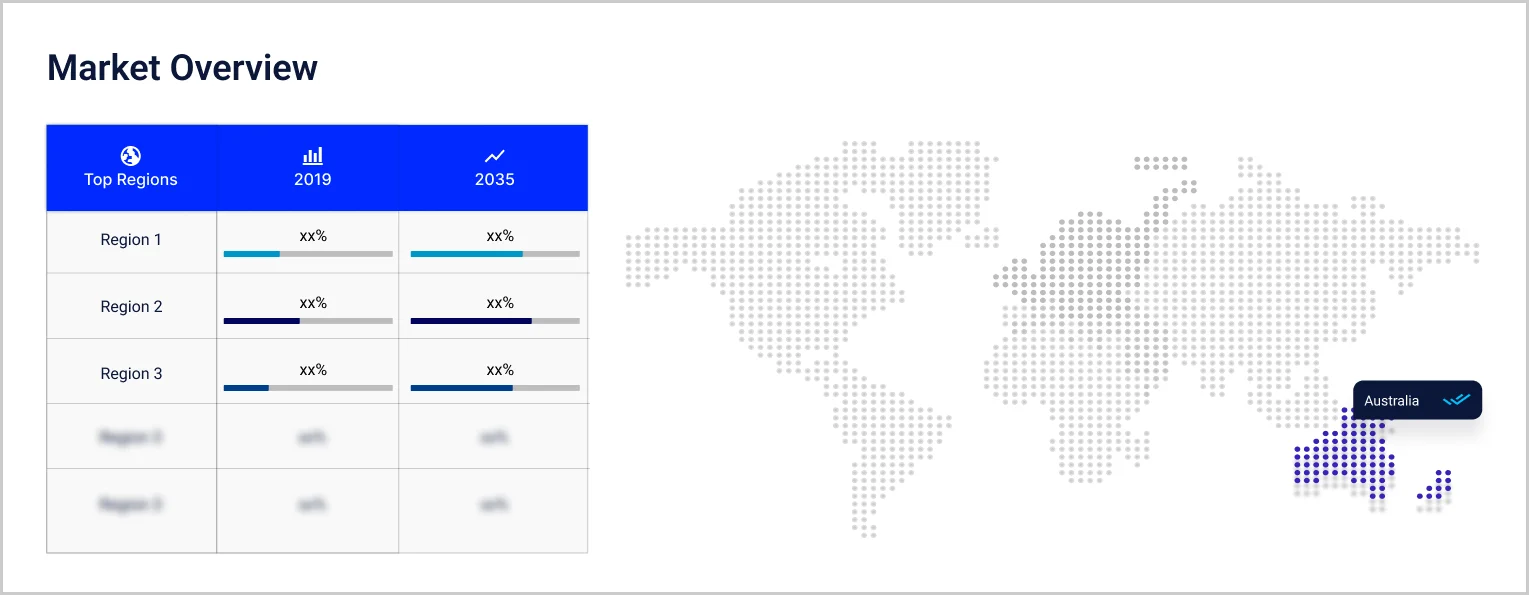
| CAGR 2026 to 2035, Market by Region | Growth Rate |
| New South Wales | 2.5 % |
| Victoria | 2.3 % |
| Queensland | 2.6 % |
| Australia Capital Territory | 2.8 % |
| Western Australia | 2.7 % |
| Others (Rest of Australia) | 2.4 % |
Competition combines global equipment makers, Australian importers and online specialists. Entry barriers include brand recognition, warranty and service networks, showroom access and the ability to deliver bulky machines to homes across a large country.
Johnson Health Tech Australia Pty Ltd
Johnson Health Tech Australia Pty Ltd is the Australian arm of Johnson Health Tech, founded in 1975 in Taichung, Taiwan, and has operated in Australia since 2009, with its headquarters in Dandenong South, Victoria. Its portfolio covers Matrix, Vision and Horizon fitness equipment for homes and commercial clubs. Johnson Fitness and Wellness Australia opened a concept store inside Decathlon on George Street, Sydney, in February 2025. Its differentiators are a multi-brand range, local sales and service teams and a showroom presence in mainstream sports retail.
Technogym Australia Pty Ltd
Technogym Australia Pty Ltd is the Australian arm of Technogym, founded in 1983 and headquartered in Cesena, Italy, which makes cardio, strength and functional training equipment with digital coaching. In September 2025 the Australian Institute of Sport installed Skillrun, Skillrow and Biostrength machines at its Canberra gym, and in March 2026 the group reported FY2025 revenue of EUR 1,019 million. Its differentiators are biofeedback and AI enabled machines, a premium design reputation and Olympic partnerships, including the Milano Cortina 2026 Games.
Monsta Pty Ltd
Monsta Pty Ltd is an Australian supplier named among the key participants in the Australia home fitness equipment market. Public information on its founding date, headquarters and product range could not be confirmed from the sources reviewed, so this profile is limited to its position in the supplier set alongside Johnson Health Tech Australia Pty Ltd, Technogym Australia Pty Ltd and Aussie Fitness Equipment Pty Ltd.
Aussie Fitness Equipment Pty Ltd
Aussie Fitness Equipment Pty Ltd is an Australian owned supplier based in Buderim on the Sunshine Coast, Queensland, supplying fitness equipment since 2005. Its range covers power racks, multi-functional trainers, benches, home multi gyms, barbells, cardio machines, gym flooring, boxing gear and recovery products, sold online and through a showroom and gym. The business was taken over by a new family team in 2025. Its differentiators are Australia wide dispatch in under 48 hours, a 14 day satisfaction guarantee and buy now pay later options.
Other players operating in the Australia home fitness equipment market include VERVE Fitness Pty Ltd., alongside online specialists, sports retailers and importers supplying racks, cardio machines and accessories across Australia.
Competition rests on range, service and the ability to deliver bulky equipment rather than price alone. Johnson Health Tech Australia Pty Ltd and Technogym Australia Pty Ltd compete through premium brands and testing space, Monsta Pty Ltd and Aussie Fitness Equipment Pty Ltd as Australian suppliers, and VERVE Fitness Pty Ltd., through online sales and commercial fit-outs. Technogym's EUR 1,019 million FY2025 revenue and the Gym Plus Icon launch in July 2026 show continued investment in new products.


Upto 15% Off
AUD
$2749 $2499
$3849 $3499
$4949 $4499
$6049 $5499


*While we strive to always give you current and accurate information, the numbers depicted on the website are indicative and may differ from the actual numbers in the main report. At Expert Market Research, we aim to bring you the latest insights and trends in the market. Using our analyses and forecasts, stakeholders can understand the market dynamics, navigate challenges, and capitalize on opportunities to make data-driven strategic decisions.*
The Australia home fitness equipment market is valued at AUD 253.73 million in 2025, supported by compact functional trainers, connected cardio and steady gym and Pilates participation, with New South Wales as the largest region.
The market is forecast to reach AUD 324.80 million by 2035, growing at a CAGR of 2.50 % over the 2026 to 2035 period, driven by compact functional trainers such as the Gym Plus Icon, connected cardio such as the Peloton Tread Vision and rising online ordering.
Online records the highest CAGR at an estimated 7.6% through 2035, as buyers compare bulky equipment on screen and suppliers such as Gym Plus offer click-and-collect, while Low priced products lead price points at an estimated 2.9%.
New South Wales dominates, as it has the largest population at 8.67 million and the Decathlon concept store in Sydney. The Australia Capital Territory is the fastest-growing region at an estimated 2.8% CAGR, followed by Western Australia at 2.7%.
Key players include Johnson Health Tech Australia Pty Ltd, Technogym Australia Pty Ltd, Monsta Pty Ltd, Aussie Fitness Equipment Pty Ltd, and VERVE Fitness Pty Ltd.
Body Bike reported on 9 September 2026 that it had sold more than 8,000 indoor cycling units in Australia. Its SMART+ Phantom cycle is made in Denmark and connects to an app that shows power, cadence and heart rate.
Peloton announced the Tread Vision on 22 September 2026 and listed it for Australia at AUD 4,999, with availability from 2 October. It adds a camera for form feedback, while the Tread Flex is expected in Australia in autumn 2027.
Explore our key highlights of the report and gain a concise overview of key findings, trends, and actionable insights that will empower your strategic decisions.
| Report Features | Details |
| Base Year | 2025 |
| Historical Period | 2019-2025 |
| Forecast Period | 2026-2035 |
| Scope of the Report |
Historical and Forecast Trends, Industry Drivers and Constraints, Historical and Forecast Market Analysis by Segment:
|
| Breakup by Product Type |
|
| Breakup by Price Point |
|
| Breakup by End Use |
|
| Breakup by Distribution Channel |
|
| Breakup by Region |
|
| Market Dynamics |
|
| Competitive Landscape |
|
| Companies Covered |
|
Datasheet
AUD 2,749
AUD 2,499
tax inclusive*
Single User License
AUD 3,849
AUD 3,499
tax inclusive*
Five User License
AUD 4,949
AUD 4,499
tax inclusive*
Corporate License
AUD 6,049
AUD 5,499
tax inclusive*
*Please note that the prices mentioned below are starting prices for each bundle type. Kindly contact our team for further details.*
Flash Bundle
Small Business Bundle
Growth Bundle
Enterprise Bundle
*Please note that the prices mentioned below are starting prices for each bundle type. Kindly contact our team for further details.*
Flash Bundle
Number of Reports: 3
20%
tax inclusive*
Small Business Bundle
Number of Reports: 5
25%
tax inclusive*
Growth Bundle
Number of Reports: 8
30%
tax inclusive*
Enterprise Bundle
Number of Reports: 10
35%
tax inclusive*
How To Order

Select License Type
Choose the right license for your needs and access rights.

Click on ‘Buy Now’
Add the report to your cart with one click and proceed to register.

Select Mode of Payment
Choose a payment option for a secure checkout. You will be redirected accordingly.
Strategic Solutions for Informed Decision-Making
Stay upgraded and grab opportunities by strategic insights
Stay informed and aware for a Market Leverage
Analyze pricing patterns with comprehensive trend analyses.

Analyse trade data for supply chain insights.
Leverage cost reports for smart savings
Elevate supply chain with collaboration
Contact Us for Further Information
Our specialized analysts will be available to answer all the pre-purchase and post-purchase queries regarding the report.
Our specialized analysts will be available to answer all the pre-purchase and post-purchase queries regarding the report.
Staying one step ahead of the market landscape with our in-depth research methods, integrating advanced analytics to drive precise and tangible outcomes.
Our expert analyst team offers a significant advantage over competitors, with extensive market insights into the latest trends, putting you strategically ahead.
We deliver a simplified yet extensive report, comprising in-depth industry insights and analytics tailored to your industry requirements.
We are happy to help you navigate through the services we offer and solve your queries.
Contact us