Consumer Insights
Uncover trends and behaviors shaping consumer choices today
Procurement Insights
Optimize your sourcing strategy with key market data
Industry Stats
Stay ahead with the latest trends and market analysis.
The Australia digital lending market covers loans originated, assessed and serviced mainly online, including personal and green loans, buy now pay later, automotive and equipment finance, and small and medium business lending. Borrowers are households and small businesses, served by digital banks, non-bank lenders, fintech platforms and major banks that fund loans through deposits, securitisation and partner programs.
In 2025, the market is valued at AUD 4.20 billion in 2025 and is forecast to grow at a CAGR of 9.80%, reaching AUD 10.70 billion by 2035. Growth is driven by faster online credit decisions, strong small business and personal loan demand, funding from securitisation markets, and new regulation that brings buy now pay later into the credit framework.
Compound Annual Growth Rate
9.8%
Value in AUD billion
2026-2035
The Australia digital lending market is expanding on the back of non-bank and digital-first lenders that win share with speed and specialisation. We estimate the market at AUD 4.20 billion of revenue in 2025, led by business lending, personal loans and instalment credit.
Lenders are growing quickly. Judo Bank lifted its loan book 18% to AUD 14.7 billion in the year to June 2026, and Plenti's loan portfolio reached AUD 3.1 billion at the end of March 2026, up 22% on a year earlier. Zip reported group transaction volume of AUD 16.7 billion for the year, though growth was far slower in Australia and New Zealand.
Credit quality and regulation now shape strategy. Judo's impairment expense rose 56% in its 2026 financial year, Zip's net bad debts rose to 1.77% of volume, and buy now pay later has been regulated as credit since June 2025. Lenders therefore compete on underwriting quality as well as speed.
Revenue is rising as digital and specialist lenders grow their loan books and securitisation funding stays open, while higher credit costs and regulation shape how quickly lenders can scale.
| Metric | Value |
| Market Size 2025 | AUD 4.20 billion |
| Projected Market Size 2035 | AUD 10.70 billion |
| CAGR 2026 to 2035 | 9.80% |
| Fastest-Growing Product Type | Personal Loans: 11.4% CAGR |
| Fastest-Growing Lender Type | Non-Bank Lenders: 11.5% CAGR |
| Largest Revenue Segment 2025 | SME and Business Lending |
| Dominant Region | New South Wales |
| Highest CAGR by Region | Queensland: 10.4% |
| Largest Digital Business Lender Loan Book, 2026 | AUD 14.7 billion |
Steady Growth Across Lender Types
Revenue is on course to rise more than two and a half times over the forecast period, from AUD 4.20 billion in 2025 to AUD 10.70 billion in 2035 at a 9.8% CAGR. Strong loan book growth at specialist lenders anchors the base, while credit costs temper margins.
Personal Loans and Non-Bank Lenders Lead Growth
SME and Business Lending holds the largest share, but Personal Loans grow at an estimated 11.4% CAGR and Non-Bank Lenders at an estimated 11.5%, as securitisation funding and faster online decisions help specialist lenders take share from larger banks.
Underwriting Quality Decides Winners
Rising impairments and new rules reward lenders with strong credit models and low-cost funding. Three practical priorities stand out for lenders:
| Report Summary | Unit | Value |
| Base Year | AUD billion | 2025 |
| Historical Period | AUD billion | 2019 to 2025 |
| Forecast Period | AUD billion | 2026 to 2035 |
| Market Size 2025 | AUD billion | 4.20 |
| Market Size 2035 | AUD billion | 10.70 |
| CAGR 2026 to 2035 | Percentage | 9.80 % |
| CAGR by Product Type: Personal Loans | Percentage | 11.4 % |
| CAGR by Lender Type: Non-Bank Lenders | Percentage | 11.5 % |
| CAGR by Borrower Segment: Small and Medium Businesses | Percentage | 10.6 % |
| CAGR by Region: Queensland | Percentage | 10.4 % |
| Judo Bank Loan Book Growth, FY26 | Percentage | 18 % |
| Zip Net Bad Debts as Share of Volume, FY26 | Percentage | 1.77 % |
| Market Share by Region 2025 | New South Wales | Dominant Share |
Specialist lender growth, securitisation funding and the Consumer Data Right support digital lending, while credit costs and regulation temper margins. New South Wales leads, and Queensland grows fastest.
The Australia digital lending market is being reshaped by credit quality pressure, regulator action on product design, regulated instalment credit and wider access to consumer data.
August 2026 - Credit Quality Becomes the Key Test for Lenders
January 2026 - Regulator Acts Against Credit Products Sold Without Target Market Determinations
June 2025 - Buy Now Pay Later Becomes Regulated Credit
March 2025 - Government Plans to Extend the Consumer Data Right to Non-Bank Lending
Rising credit costs, regulator scrutiny, licensing of instalment credit and wider data sharing are the main forces, while arrears and compliance costs remain the main constraints.
Recent developments, presented from the most recent, show strong full-year results at Judo Bank and Zip, a record loan portfolio at Plenti and an upgraded outlook at Zip.
August 2026 - Judo Bank Reports Loan Book Growth of 18% to AUD 14.7 Billion
August 2026 - Zip Reports Transaction Volume of AUD 16.7 Billion for 2026
April 2026 - Plenti Loan Portfolio Reaches AUD 3.1 Billion
April 2026 - Zip Raises Full-Year Earnings Outlook After Record Quarter
Record loan books at specialist lenders, strong funding market access and upgraded earnings outlooks show that growth is concentrated in digital and non-bank lenders, even as impairments rise.
The Expert Market Research’s report on the Australia Digital Lending Market offers a detailed analysis of the market based on the following segments.
Market Breakup by Product Type
SME and Business Lending leads on value, in our estimate, because deposit-funded lenders such as Judo Bank carry loan books of AUD 14.7 billion and earn higher margins per loan. Personal Loans grow fastest as securitisation-funded lenders such as Plenti take share, while Buy Now Pay Later grows more slowly in Australia, where Zip's regional volume rose only 6.2%.
Market Breakup by Lender Type
Digital Banks and Neobanks lead on value, in our estimate, because deposit funding supports large loan books at lower cost. Non-Bank Lenders grow fastest, helped by securitisation market access, while Fintech Platforms add instalment credit and Major Bank Programs such as NAB powered by Plenti extend reach.
Market Breakup by Borrower Segment
Small and Medium Businesses lead on value, in our estimate, as digital business lenders have built large loan books. Consumers contribute steady volume from personal, automotive and instalment credit, and the Consumer Data Right extension to non-bank lending supports faster, data-driven decisions in both segments.
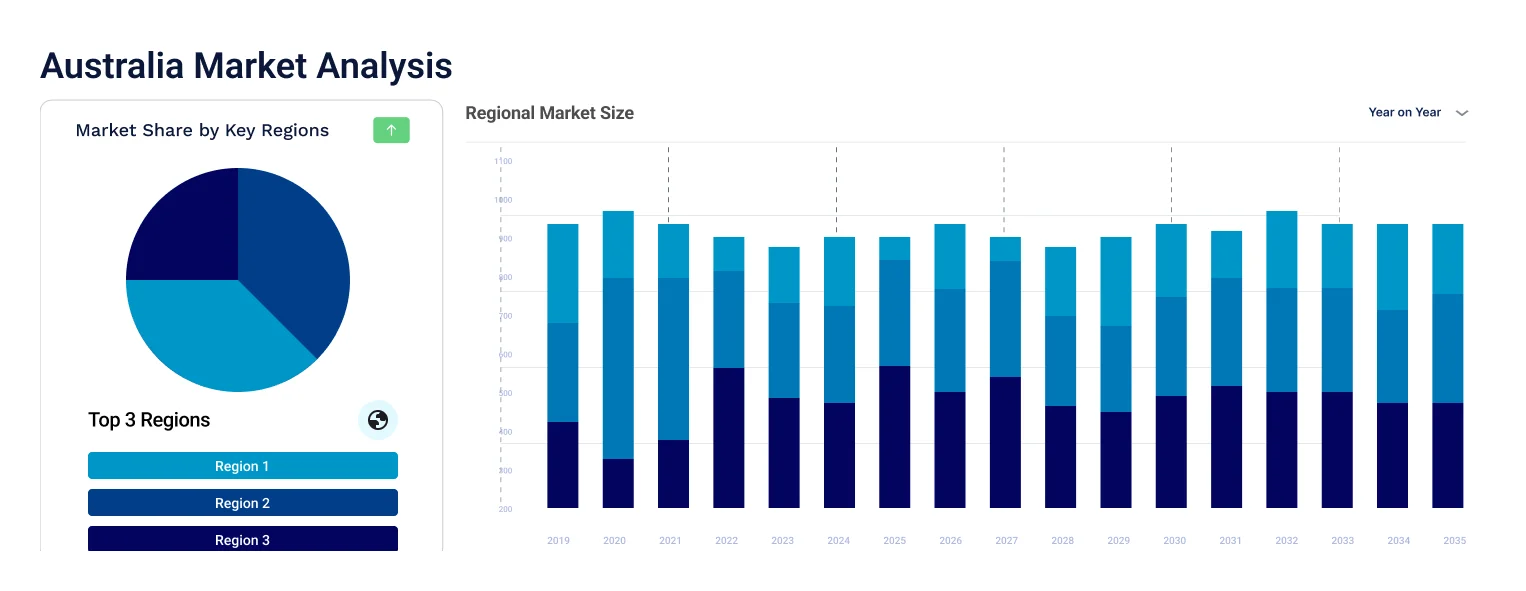
Market Breakup by Region
New South Wales dominates, in our estimate, as Sydney hosts the head offices of Zip and Plenti and has the largest borrower population. Queensland grows fastest as population growth and small business formation lift demand for personal and business credit. Victoria follows, supported by Melbourne-based Judo Bank and National Australia Bank, while Western Australia adds demand from resource-sector households and contractors.
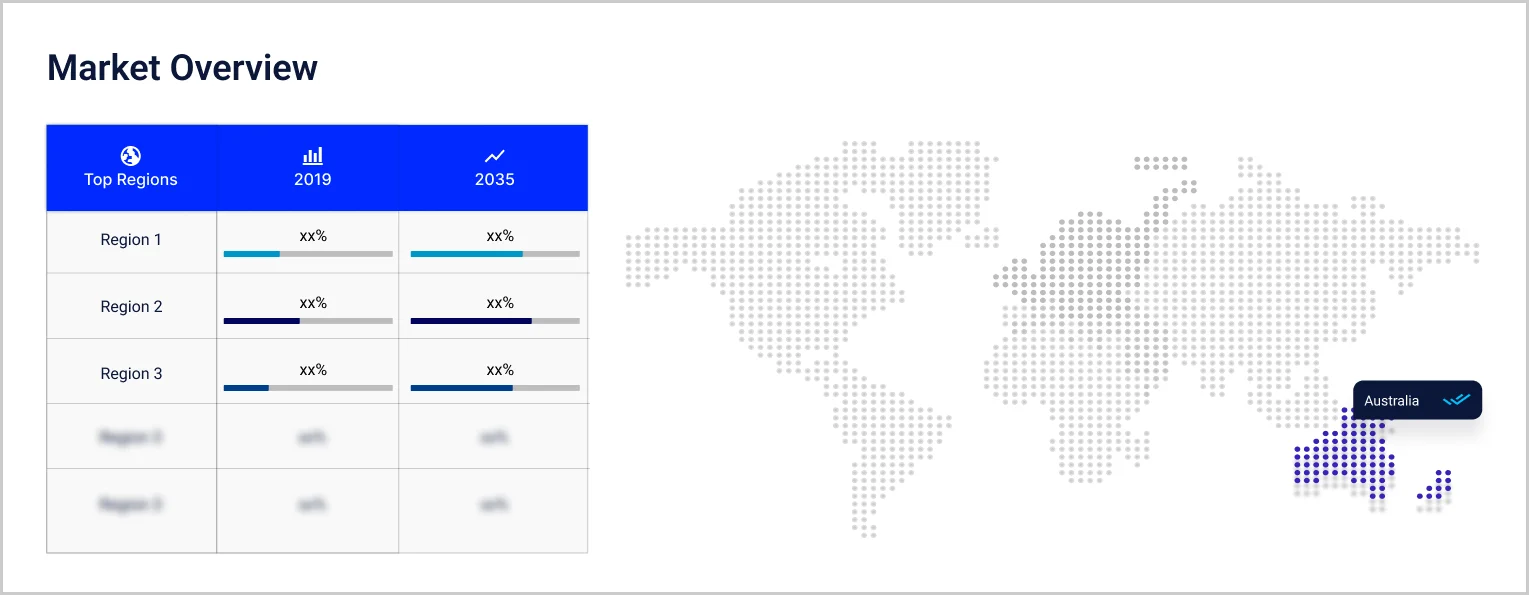
| CAGR 2026 to 2035, Market by Region | Growth Rate |
| New South Wales | 9.5 % |
| Victoria | 9.7 % |
| Queensland | 10.4 % |
| Western Australia | 9.9 % |
| Others (Rest of Australia) | 9.3 % |
Competition combines digital-first banks, non-bank lenders, instalment credit providers and major banks that partner with fintechs. Entry barriers include credit licences, funding access, underwriting data and the cost of meeting design and distribution obligations.
Zip Co
Zip Co, headquartered in Sydney, New South Wales, provides instalment credit to consumers and merchants in Australia, New Zealand and the United States. It reported 2026 financial year transaction volume of AUD 16.7 billion, with Australia and New Zealand volume of AUD 4 billion, and 6.52 million active customers. It announced its exit from New Zealand and guided to cash earnings of AUD 340 million for its 2027 financial year.
Judo Bank
Judo Bank, headquartered in Melbourne, Victoria, is a deposit-funded business bank that lends to small and medium enterprises. Its loan book grew 18% to AUD 14.7 billion in the year to June 2026, with profit before tax up 34% to AUD 168 million. A AUD 20 million provision increase followed three defaulted business loans in June 2026, but the bank guided to higher profit in its 2027 financial year.
Plenti Group
Plenti Group, headquartered in Sydney, New South Wales, is a non-bank lender of personal, green and automotive loans funded through asset-backed securities. Its loan portfolio reached AUD 3.1 billion at the end of March 2026, up 22% on a year earlier, with a weighted average credit score of 850. The NAB powered by Plenti portfolio reached AUD 121 million, which shows how a major bank can use its origination engine.
National Australia Bank
National Australia Bank, headquartered in Melbourne, Victoria, is one of the four major banks and partners with Plenti to offer personal loans under the NAB powered by Plenti program. That portfolio grew to AUD 121 million, up 34% on the previous quarter. The partnership shows how incumbents buy speed and specialisation from non-bank lenders while keeping customer relationships.
Other players operating in the Australia digital lending market include Afterpay, Humm Group, Latitude Financial, Wisr, Prospa and Moneytech, alongside regional consultancies, system integrators and cloud resellers that implement and support these platforms.
Competition rests on credit models, funding costs and distribution partnerships rather than approval speed alone, which favours scaled specialist lenders with access to securitisation markets and bank partners.


Upto 15% Off
AUD
$2749 $2499
$3849 $3499
$4949 $4499
$6049 $5499


*While we strive to always give you current and accurate information, the numbers depicted on the website are indicative and may differ from the actual numbers in the main report. At Expert Market Research, we aim to bring you the latest insights and trends in the market. Using our analyses and forecasts, stakeholders can understand the market dynamics, navigate challenges, and capitalize on opportunities to make data-driven strategic decisions.*
The Australia digital lending market is valued at AUD 4.20 billion in 2025, supported by strong loan book growth at digital and specialist lenders, access to securitisation funding and demand from small businesses and households, with New South Wales as the largest region.
The market is forecast to reach AUD 10.70 billion by 2035, growing at a CAGR of 9.80% from 2026 to 2035. Growth reflects specialist lender share gains and data-driven underwriting, offset by rising credit costs and regulation.
Non-Bank Lenders are expected to record the highest CAGR of the lender types, at an estimated 11.5%, as securitisation funding and partnerships with major banks support fast loan book growth.
New South Wales dominates, in our estimate, because Sydney hosts the head offices of Zip and Plenti and has the largest borrower population. Queensland records the highest regional growth.
Key players include Zip Co, Judo Bank, Plenti Group and National Australia Bank. Afterpay, Humm Group, Latitude Financial, Wisr, Prospa and Moneytech also compete for borrowers.
Buy now pay later products became regulated under the National Consumer Credit Protection Act in June 2025. Providers must hold an Australian credit licence and meet design and distribution obligations.
Judo Bank's impairment expense rose 56% to AUD 117.7 million in its 2026 financial year, and Zip's net bad debts rose to 1.77% of transaction volume. Lenders are tightening underwriting to protect margins.
Explore our key highlights of the report and gain a concise overview of key findings, trends, and actionable insights that will empower your strategic decisions.
| REPORT FEATURES | DETAILS |
| Base Year | 2025 |
| Historical Period | 2019-2025 |
| Forecast Period | 2026-2035 |
| Scope of the Report |
Historical and Forecast Trends, Industry Drivers and Constraints, Historical and Forecast Market Analysis by Segment:
|
| Breakup by Product Type |
|
| Breakup by Lender Type |
|
| Breakup by Borrower Segment |
|
| Breakup by Region |
|
| Market Dynamics |
|
| Competitive Landscape |
|
| Companies Covered |
|
Datasheet
AUD 2,749
AUD 2,499
tax inclusive*
Single User License
AUD 3,849
AUD 3,499
tax inclusive*
Five User License
AUD 4,949
AUD 4,499
tax inclusive*
Corporate License
AUD 6,049
AUD 5,499
tax inclusive*
*Please note that the prices mentioned below are starting prices for each bundle type. Kindly contact our team for further details.*
Flash Bundle
Small Business Bundle
Growth Bundle
Enterprise Bundle
*Please note that the prices mentioned below are starting prices for each bundle type. Kindly contact our team for further details.*
Flash Bundle
Number of Reports: 3
20%
tax inclusive*
Small Business Bundle
Number of Reports: 5
25%
tax inclusive*
Growth Bundle
Number of Reports: 8
30%
tax inclusive*
Enterprise Bundle
Number of Reports: 10
35%
tax inclusive*
How To Order

Select License Type
Choose the right license for your needs and access rights.

Click on ‘Buy Now’
Add the report to your cart with one click and proceed to register.

Select Mode of Payment
Choose a payment option for a secure checkout. You will be redirected accordingly.
Strategic Solutions for Informed Decision-Making
Stay upgraded and grab opportunities by strategic insights
Stay informed and aware for a Market Leverage
Analyze pricing patterns with comprehensive trend analyses.
Analyse trade data for supply chain insights.

Leverage cost reports for smart savings
Elevate supply chain with collaboration
Contact Us for Further Information
Our specialized analysts will be available to answer all the pre-purchase and post-purchase queries regarding the report.
Our specialized analysts will be available to answer all the pre-purchase and post-purchase queries regarding the report.
Staying one step ahead of the market landscape with our in-depth research methods, integrating advanced analytics to drive precise and tangible outcomes.
Our expert analyst team offers a significant advantage over competitors, with extensive market insights into the latest trends, putting you strategically ahead.
We deliver a simplified yet extensive report, comprising in-depth industry insights and analytics tailored to your industry requirements.
We are happy to help you navigate through the services we offer and solve your queries.
Contact us