Consumer Insights
Uncover trends and behaviors shaping consumer choices today
Procurement Insights
Optimize your sourcing strategy with key market data
Industry Stats
Stay ahead with the latest trends and market analysis.
Stringent documentation requirements by the Therapeutic Goods Administration for cosmeceutical positioning is compelling suppliers to maintain batch-level traceability and stability data. On the other hand, sustainability certifications are becoming an important factor for retailers when considering new suppliers, accelerating the Australia cosmetic oil market value. For instance, large-scale pharmacy chains are now demanding lifecycle transparency and verified source agreements before they agree to list any new facial oil lines, and this is gradually changing the criteria by which suppliers are selected.
Companies are using the Australian native ingredients as the export industry is significantly gaining traction. According to the Australia cosmetic oil market analysis, export of essential oils and resinoids and perfume materials increased to 146 AUD Million in February from 122 AUD Million in January 2024, which is a sign that there is stronger global demand for traceable plant extracts. In October 2024, Givaudan Active Beauty launched the vegan-based [N.A.S.] Vibrant Collection, five green-fractionated botanical extracts engineered for hybrid makeup with antioxidant benefits and good color stability. Suppliers are currently rebranding cosmetic oils as not only emollients, but also as functional active ingredients backed by origin data and lab validation.
Australian formulators are opting for high-performance botanical lipids like macadamia, kakadu plum seed, and hemp seed oils with standardized fatty acid profiles. Brands require clinical evidence, stability testing in high-UV environments, and microbiome-friendly claims. This Australia cosmetic oil market trend is compelling ingredient processors to make CO2 extraction, low, temperature refining, and oxidation control systems their new areas of investments. For example, in May 2025, Yaye announced the launch of a new face and body oil, formulated with native ingredients and designed to celebrate First Nations culture. The focus is now about skin barrier repair and anti-inflammatory efficacy that are not only measurable but also able to withstand regulatory and retailer scrutiny.
Compound Annual Growth Rate
6.6%
Value in AUD billion
2026-2035
|
Australia Cosmetic Oil Market Report Summary |
Description |
Value |
|
Base Year |
AUD billion |
2025 |
|
Historical Period |
AUD billion |
2019-2025 |
|
Forecast Period |
AUD billion |
2026-2035 |
|
Market Size 2025 |
AUD billion |
2.07 |
|
Market Size 2035 |
AUD billion |
3.92 |
|
CAGR 2019-2025 |
Percentage |
XX% |
|
CAGR 2026-2035 |
Percentage |
6.60% |
|
CAGR 2026-2035 - Market by Region |
Australian Capital Territory |
7.3% |
|
CAGR 2026-2035 - Market by Region |
Western Australia |
7.0% |
|
CAGR 2026-2035 - Market by Product |
Essential Oil |
7.4% |
|
CAGR 2026-2035 - Market by Application |
Lip Care |
7.1% |
|
2025 Market Share by Region |
New South Wales |
35.2% |
February 2026 – Scoop Whole Beauty Entered Dubai Retail Market
Australia’s non-toxic brand Scoop Whole Beauty launched in Dubai, expanding its clean botanical oil portfolio into Middle East premium retail channels. Therefore, other brands can also secure high-margin export partnerships in emerging luxury markets.
January 2026 – The Jojoba Company Introduced Customizable Booster Oils
The Jojoba Company unveiled mix-and-match active oil boosters, enabling consumers to personalize hydration and barrier-repair routines using concentrated jojoba-based formulations. Such customizable oil concentrates create Australia cosmetic oil market opportunities in modular skincare systems, allowing manufacturers to upsell targeted actives without overhauling base formulations.
June 2025 – Mukti Organics Launched Upcycled Tomato Seed Dry Oil
Mukti Organics released a lightweight dry body oil derived from upcycled tomato seeds, aligning sustainability claims with high-performance antioxidant positioning. Therefore, suppliers can create new revenue streams from food waste valorization while strengthening sustainability-driven procurement negotiations.
June 2025 – Kagome Australia Began Supplying Tomato Seed Oil
Kagome Australia commenced commercial supply of tomato seed oil to cosmetic manufacturers, transforming by-products into traceable, nutrient-rich cosmetic ingredients. Ingredient processors can also replicate this circular model by partnering with agribusiness firms to secure consistent botanical oil inputs, capitalizing on such Australia cosmetic oil market developments.
Native Botanical Commercialization and IP Positioning
Australian brands continue to aggressively commercialize indigenous oils such as emu apple seed, and wattle seed oil. Ingredient processors are seeking patents for extraction methods rather than the plant itself, to be able to defend the margins. Local growers are increasingly collaborating with biotech labs to stabilize high-linoleic profiles and produce serums for acne treatment, thereby propelling the Australia cosmetic oil market value. For example, Augustinus Bader, co-founded by Dua Lipa, launched in Australia in October 2025, introducing its premium regenerative skincare range powered by proprietary TFC technology for advanced skin renewal and barrier support.
Advanced Extraction and Shelf-Life Engineering
Manufacturers are adopting supercritical CO2 and ultrasonic extraction methods to retain tocopherols and polyphenols in cosmetic oils. Oxidative stability has a direct effect on brand reputation and the rate of retailer returns. Several processing plants in Victoria are upgrading their refining chambers to oxygen-reduced ones in order to extend the shelf life of products without using synthetic preservatives, redefining the Australia cosmetic oil market dynamics. Companies going after luxury dermatology brands are emphasizing peroxide value benchmarking as a selling feature. In March 2025, Hydrinity partnered with Device Consulting to introduce its hyaluronic acid-driven professional skincare, targeting dermatologists and plastic surgeons.
Clean Beauty Compliance and Export Readiness
Australian cosmetic oil suppliers that target export markets are adjusting their formulations not only to comply with European Union REACH and United States FDA cosmetic guidelines but also to secure export contracts. This trend in the Australia cosmetic oil market has led to an increase in the demand for oils that have been tested for allergens and pesticide residues. Besides, the updated Therapeutic Goods Administration guidance has made brands reconsider how they market facial oils that claim to have therapeutic benefits. Consequently, ingredient companies are setting up regulatory advisory teams internally. The documentation package prepared for the export of the product includes not only the safety data sheets but also the results of the microbial tests and heavy metal analysis. In September 2025, Clean Food Group’s fermentation-derived clean oil 25 secured regulatory approval for cosmetic use in the United Kingdom, Europe, and the United States.
Sustainable Farming and Carbon-Linked Branding
Farmers who grow macadamia and hemp for the extraction of cosmetic oils are now implementing regenerative practices to comply with the sustainability audits of the retailers. Cooperatives are starting to test for soil carbon levels and water usage efficiency in order to have stronger bargaining power in their B2B negotiations. With the help of government agricultural grants, oilseed farms have been able to upgrade their drip irrigation systems, stimulating the overall demand in the Australia cosmetic oil market. Brands that utilize these oils emphasize the low environmental impact of their procurement in presentations to international retailers. For example, in October 2024, THG Labs and Clean Food Group developed beauty and personal care products with planet-friendly oils made from food waste.
Private Label Expansion and Indie Brand Acceleration
Contract manufacturers in Australia are noticing a sharp influx of inquiries from indie clean beauty startups wanting the smallest possible minimum order quantities for facial oils and body serums. Flexible batch processing units and customizable carrier oil blends are becoming key competitive differentiators, accelerating the Australia cosmetic oil market expansion. Emerging brands going after Asia Pacific e-commerce platforms that can shorten the time-to-market. Major ingredient suppliers are backing up this trend by providing pre-stabilized oil bases which not only lowers the formulation risk for new entrants but also ensures the suppliers get the benefit of long-term supply contracts. For example, Australian brand About Time We Met offers a science-led, gender-neutral skincare range using Indian sandalwood oil and powder since November 2022.
The EMR’s report titled “Australia Cosmetic Oil Market Report and Forecast 2026-2035” offers a detailed analysis of the market based on the following segments:
Market Breakup by Product
Key Insight: Almond oil continues to be relevant in the Australia cosmetic oil market for sensitive-skin blends owing to its mild fatty acid composition. Olive oil is preferred in heritage-driven skincare formulations and professional massage oil blends due to its rich texture and traditional skin-conditioning properties. The main reason behind the predominance of coconut oil is the unlimited processing flexibility. The essential oils industry is thriving owing to its therapeutic positioning. Other categories that are loaded with linoleic and omega acids like hemp and macadamia are gaining rapid popularity. For example, Koru Pharma offers a new hemp-focused product line in Australia, blending cannabinoid-rich botanical oils for hydration.
Market Breakup by Application
Key Insight: The largest Australia cosmetic oil market segment continues to be skin care, and this is because facial oils are treated as treatment layers. The second largest category is hair care, driven by therapy oils and pre-wash scalp oils. The third is lip care, and this category is driven by light botanical oils with nourishing properties without a greasy feel. Other applications, including body serums and cuticle oils, are also expanding steadily. Across segments, purchasing decisions are shaped by absorption rate, oxidative stability, and validated performance claims.
Market Breakup by Region
Key Insight: As per the Australia cosmetic oil market report, New South Wales supports retail-driven demand and brand headquarters concentration, while Victoria drives formulation innovation. Queensland benefits from agricultural diversity and Australian Capital Territory contributes through regulatory alignment and niche brands. Western Australia leads the cosmetic oil demand growth with ingredient sourcing and processing strength. Regional competitiveness depends on supply chain control and manufacturing capability.
By type, coconut oil accounts for the dominant share of the market due to multifunctional stability
Coconut oil remains the dominant in the Australia cosmetic oil market because formulators value its oxidative stability and compatibility with both anhydrous and water-based systems. Major contract manufacturers prefer fractionated coconut oil for serums and scalp oils since it offers longer shelf life under high temperature storage. Local processors are refining low-odor cosmetic grades to suit fragrance-sensitive clean beauty brands. Several private label producers are blending coconut oil with native seed extracts to create hybrid barrier oils. Retailers appreciate its predictable viscosity as it simplifies formulation scale-up. In September 2025, Äio completed a one-ton production cycle of its sustainable alternative to tropical fats like palm and coconut oil and petroleum-based mineral oils.
Essential oils have become the most rapidly expanding segment across the Australia cosmetic oil market scope with brands emphasizing the healing benefits of facial oils and scalp treatments. Australian suppliers are investing in steam-distillation improvements to keep the volatile compounds and aromatic profiles consistent. Tea tree and eucalyptus derivatives continue to be in demand, however, companies are working on low-irritation versions for the sensitive skin product lines. Export-orientated brands are seeking allergen-reduced essential oil fractions to comply with the EU documentation requirements.
By application, skin care leads the market growth with barrier repair focus
Skin care remains the top application with brands in Australia branding facial oils as the main treatment steps. Firms are developing lipid blends that are absorbed by the skin, and which target the trans-epidermal water loss. Dermatology-centric brands require that barrier repair claims be supported by peroxide value testing and clinical studies. In hot and humid climates, lightweight, dry-touch oil textures perform better and gain faster acceptance. Brands are also prioritizing cold-processed oils to preserve delicate phytonutrients and maintain efficacy claims. In March 2025, Australia’s Vincent expanded into the United States with apple-based supplements and skincare, signaling global demand for fruit-active cosmetic innovations.
Hair care is also largely contributing to the Australia cosmetic oil market revenue as scalp health becomes central in product positioning. Brands are incorporating lightweight oils in pre-wash treatments and overnight scalp serums. Australian manufacturers are micro-filtering botanical oils to prevent residue build-up in fine hair types. Demand for non-greasy coconut and macadamia derivatives is increasing among salon brands. Export-driven hair oil formats are also rising across Asia-Pacific. Suppliers offering customized viscosity adjustments are winning B2B partnerships.
|
CAGR 2026-2035 - Market by |
Region |
|
Australian Capital Territory |
7.3% |
|
Western Australia |
7.0% |
|
New South Wales |
XX% |
|
Victoria |
XX% |
|
Queensland |
XX% |
|
Others |
XX% |
Western Australia clocks in the leading position of the market via ingredient sourcing strength
The Western Australia cosmetic oil market registers the dominant share due to proximity to native botanical cultivation and oilseed farming. Macadamia and emerging hemp processing facilities support cosmetic-grade extraction locally. Ingredient traceability is easier to verify when sourcing and refining occur within the same region. Export channels through Perth strengthen logistics efficiency for Asia-bound shipments. Several processors are upgrading cold-press systems to maintain premium fatty acid integrity. This region benefits from agricultural investment programs that encourage value-added processing rather than raw export. In March 2025, Native Extracts and Kagome Australia launched Red Velvet Oil for cosmetic use, tapping nutrient-rich tomato seed derivatives in advanced skincare formulations.
Victoria emerges to be the fastest-growing regional cosmetic oil market in Australia, driven by contract manufacturing density and R&D collaboration. Melbourne-based laboratories are focusing on oxidation control and advanced blending techniques for dermo-cosmetic oils. Indie brands rely on flexible production partners here to scale limited-edition releases. The region’s established logistics infrastructure supports domestic distribution quickly. Suppliers are integrating nitrogen-flushed storage tanks to enhance oil longevity.
The market is becoming increasingly technical and partnership-driven. Australia cosmetic oil market players are turning to native oils for their high-end product lines, all the while adhering to strict oxidation and allergen standards. Local processors are competing with international beauty brands by providing batch-level traceability and tailoring the fatty acid profiles. Contract manufacturers are gearing up for small-batch production to attract indie brands that are looking for exports.
Australia cosmetic oil companies are concentrating on high-stability blends, sustainable sourcing stories, and regulatory support packages. Microbiome-supportive oils and low-irritation essential fractions are areas that present potential opportunities for growth. Businesses that bring together sourcing, refining, and formulation advisory are attaining higher margins. Pure commodity trading is being replaced by value-added specialization.
L’Oreal Group
Founded in the year 1909 and is located at Paris, France, L’Oreal Group has been working with Australian botanical oils for its high-end skin and hair care product ranges. The company carries out sustainable sourcing audits and traceable ingredient mapping as its main focus. Its R&D laboratories conduct tests on lipid oxidation and the barrier function before they decide to use the oils in their dermo-cosmetic brands.
Unilever
Unilever was founded in 1930 and has its main office in London, United Kingdom. It is a mass and premium personal care brand that utilizes coconut and specialty oils in its products. The company is emphasizing oil supply chains that are responsibly sourced as well as procurement frameworks that are entirely transparent. The Australian branch of the company concentrates on scalable formulations that are not only cost-efficient but also in line with the company's sustainability commitments.
Coty Inc.
The company, Coty Inc. was established in 1904 and it is located at New York, United States. Coty Inc. uses botanical oils for making fragrance infused body oils and also their prestige skincare lines. The firm gives priority to the sensory performance of a product while at the same time ensuring the products comply with international cosmetics standards.
Shiseido Co. Ltd
Founded 1872, headquartered at Tokyo, Japan, and operating globally as a beauty and cosmetics company, Shiseido Co. Ltd has incorporated the results of its advanced research on lipids into its skincare technologies. The company has developed detailed research charts on oil oxidation and skin barrier repair, indicating it has launched oil-based serums backed by extensive in-house scientific testing.
Other key players in the market include Innisfree Cosmetics Pvt. Ltd, Kao Corporation, Imaginelle, and Escentials Of Australia, among others.
Explore the latest trends shaping the Australia cosmetic oil market 2026-2035 with our in-depth report. Gain strategic insights, future forecasts, and key market developments that can help you stay competitive. Download a free sample report or contact our team for customized consultation on Australia cosmetic oil market trends 2026.


Upto 15% Off
AUD
$2749 $2499
$3849 $3499
$4949 $4499
$6049 $5499


*While we strive to always give you current and accurate information, the numbers depicted on the website are indicative and may differ from the actual numbers in the main report. At Expert Market Research, we aim to bring you the latest insights and trends in the market. Using our analyses and forecasts, stakeholders can understand the market dynamics, navigate challenges, and capitalize on opportunities to make data-driven strategic decisions.*
In 2025, the Australia cosmetic oil market reached an approximate value of AUD 2.07 billion.
The market is projected to grow at a CAGR of 6.60% between 2026 and 2035.
The key players in the market include L’Oreal Group, Unilever, Coty Inc., Shiseido Co. Ltd, Innisfree Cosmetics Pvt. Ltd, Kao Corporation, Imaginelle, and Escentials Of Australia, among others.
Investing in traceable sourcing systems, upgrading extraction technology, forming export-ready documentation teams, developing microbiome-supportive blends, and strengthening partnerships with agile contract manufacturers are driving competitive positioning.
Maintaining oxidative stability in hot climates, meeting evolving export documentation standards, managing sustainable sourcing costs, and differentiating premium oils in a competitive clean beauty landscape remain persistent operational challenges.
Explore our key highlights of the report and gain a concise overview of key findings, trends, and actionable insights that will empower your strategic decisions.
| REPORT FEATURES | DETAILS |
| Base Year | 2025 |
| Historical Period | 2019-2025 |
| Forecast Period | 2026-2035 |
| Scope of the Report |
Historical and Forecast Trends, Industry Drivers and Constraints, Historical and Forecast Market Analysis by Segment:
|
| Breakup by Product |
|
| Breakup by Application |
|
| Breakup by Region |
|
| Market Dynamics |
|
| Competitive Landscape |
|
| Companies Covered |
|
Datasheet
AUD 2,749
AUD 2,499
tax inclusive*
Single User License
AUD 3,849
AUD 3,499
tax inclusive*
Five User License
AUD 4,949
AUD 4,499
tax inclusive*
Corporate License
AUD 6,049
AUD 5,499
tax inclusive*
*Please note that the prices mentioned below are starting prices for each bundle type. Kindly contact our team for further details.*
Flash Bundle
Small Business Bundle
Growth Bundle
Enterprise Bundle
*Please note that the prices mentioned below are starting prices for each bundle type. Kindly contact our team for further details.*
Flash Bundle
Number of Reports: 3
20%
tax inclusive*
Small Business Bundle
Number of Reports: 5
25%
tax inclusive*
Growth Bundle
Number of Reports: 8
30%
tax inclusive*
Enterprise Bundle
Number of Reports: 10
35%
tax inclusive*
How To Order

Select License Type
Choose the right license for your needs and access rights.

Click on ‘Buy Now’
Add the report to your cart with one click and proceed to register.

Select Mode of Payment
Choose a payment option for a secure checkout. You will be redirected accordingly.
Strategic Solutions for Informed Decision-Making
Stay upgraded and grab opportunities by strategic insights
Stay informed and aware for a Market Leverage

Analyze pricing patterns with comprehensive trend analyses.
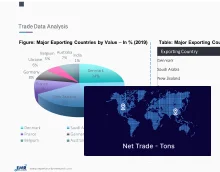
Analyse trade data for supply chain insights.

Leverage cost reports for smart savings

Elevate supply chain with collaboration

Contact Us for Further Information
Our specialized analysts will be available to answer all the pre-purchase and post-purchase queries regarding the report.
Our specialized analysts will be available to answer all the pre-purchase and post-purchase queries regarding the report.
Staying one step ahead of the market landscape with our in-depth research methods, integrating advanced analytics to drive precise and tangible outcomes.
Our expert analyst team offers a significant advantage over competitors, with extensive market insights into the latest trends, putting you strategically ahead.
We deliver a simplified yet extensive report, comprising in-depth industry insights and analytics tailored to your industry requirements.
We are happy to help you navigate through the services we offer and solve your queries.
Contact us