Consumer Insights
Uncover trends and behaviors shaping consumer choices today
Procurement Insights
Optimize your sourcing strategy with key market data
Industry Stats
Stay ahead with the latest trends and market analysis.
The Australia corporate training market covers structured learning that employers buy to build job skills in their workforce, including customer management, technical training and soft skills delivered on-site or off-site through classroom, blended, online and mobile formats. Providers include consultancies, sales and language specialists and learning platforms serving industries such as IT, banking, manufacturing and healthcare. Unlike formal schooling, spending is set by employers and tied to workplace performance.
In 2025, the market is valued at AUD 553.00 million in 2025 and is forecast to grow at a CAGR of 6.60%, reaching AUD 1047.85 million by 2035. Growth is driven by employers fully sponsoring training for 86% of trainees in 2024, AI skills gaps highlighted by a Hays survey in May 2026, and public skills funding such as the A$560 million NSW Free TAFE agreement of October 2026.
Compound Annual Growth Rate
6.6%
Value in AUD million
2026-2035
The Australia corporate training market is shifting from compliance-led courses towards skills programs tied to artificial intelligence, customer service and trade capability. Employers fund most work-related training, and providers increasingly combine classroom sessions with online and mobile delivery.
Three forces are shaping the market: employer funding, with 86% of trainees reporting fully employer-sponsored training in 2024; technology, as AI-driven learning tools reshape programs; and skills policy, including a A$560 million NSW Free TAFE agreement in October 2026.
In December 2025 the National Centre for Vocational Education Research reported that 57.0% of employers used accredited training, in February 2026 Commonwealth Bank launched a A$90 million skills program, and in September 2026 a national manufacturing workforce plan was published.
The market is moving from one-off courses towards continuous skills programs that employers fund and track. Technical training holds the largest share because trades, safety and digital skills are needed across industries, while customer management grows quickest as service roles stay in demand. On-site delivery gains where equipment and workplaces matter, and online methods widen reach. Victoria is the largest region and New South Wales grows fastest. Employer funding and public skills schemes support durable growth, even as budget scrutiny and reliance on informal learning remain constraints.
| Metric | Value |
| Market Size 2025 | AUD 553.00 million |
| Projected Market Size 2035 | AUD 1047.85 million |
| CAGR 2026 to 2035 | 6.60% |
| Fastest-Growing Training Service | Customer Management: 7.2% CAGR |
| Fastest-Growing Deployment | On-Site: 7.2% CAGR |
| Largest Revenue Segment 2025 | Technical Training |
| Dominant Region | Victoria |
| Highest CAGR by Region | New South Wales: 7.5% |
| Employers using accredited training (NCVER, 2025) | 57.0% |
Employer Funding and AI Skills Anchor Growth
Revenue is on course to nearly double across the decade, from AUD 5,530.00 million in 2025 to AUD 10,450.00 million in 2035 at a 6.6% CAGR. Employers fully sponsored training for 86% of trainees in 2024, and a May 2026 Hays survey found 78% of respondents without formal employer training.
Customer Management and On-Site Training Lead
Customer Management and On-Site delivery both grow at an estimated 7.2% CAGR through 2035. Commonwealth Bank committed A$90 million to a three-year skills program in February 2026, while Fortescue opened a Belmont training centre in June 2026.
Public Skills Funding Widens Provider Opportunities
State funding such as the A$560 million NSW Free TAFE agreement of October 2026 and Victoria's A$1 billion training investment announced in December 2025 expands skills supply, leaving room for specialist providers.
| Report Summary | Unit | Value |
| Base Year | AUD million | 2025 |
| Historical Period | AUD million | 2019 to 2025 |
| Forecast Period | AUD million | 2026 to 2035 |
| Market Size 2025 | AUD million | 553.00 |
| Market Size 2035 | AUD million | 1047.85 |
| CAGR 2026 to 2035 | Percentage | 6.60 % |
| CAGR by Training Services: Customer Management | Percentage | 7.2 % |
| CAGR by Deployment: On-Site | Percentage | 7.2 % |
| CAGR by Region: New South Wales | Percentage | 7.5 % |
| CAGR by Region: Queensland | Percentage | 6.8 % |
| Trainees With Fully Employer-Sponsored Training (2024) | Percentage | 86 |
| Employers Using Accredited Training (2025) | Percentage | 57.0 |
| Market Share by Region 2025 | Victoria | Dominant Share |
The trajectory reflects a structural shift rather than cyclical demand. Employers already fund most work-related training, and artificial intelligence, customer service and trade skills keep programs in steady demand. Technical training holds the largest share, customer management grows quickest among services, and on-site delivery gains where equipment matters. Public skills funding adds capacity, so growth rests on named programs and policy rather than speculative forecasts.
The Australia corporate training market is being reshaped by public skills funding, AI-driven learning tools, a wide AI training gap and employers mixing accredited and informal training.
October 2026 - Free TAFE Funding Expands Skills Supply for New South Wales Employers
August 2026 - AI-Driven Tools Begin Replacing Traditional Learning Programs
May 2026 - Wide AI Training Gap Drives Demand for Role-Based Upskilling
December 2025 - Employers Rely on Accredited, Unaccredited and Informal Training Together
Public skills funding, AI-driven learning tools, a wide AI training gap and mixed training habits show demand is structurally locked in rather than cyclical. Policy adds supply, technology changes delivery, and employer needs keep spending steady. Corporate training is central to workforce productivity across the forecast period.
Recent developments, presented from the most recent, show a national manufacturing workforce plan, a South Australian electric vehicle apprenticeship, Fortescue's training centre and Commonwealth Bank's skills program moving the market from planning to delivery.
September 2026 - Manufacturing Industry Skills Alliance Publishes National Workforce Plan
August 2026 - South Australia Launches State-First Electric Vehicle Trade Apprenticeship
June 2026 - Fortescue Opens Belmont Training Centre for Electricians and Electric Vehicle Skills
February 2026 - Commonwealth Bank Launches A$90 Million Future Workforce Program
From Commonwealth Bank's February 2026 program to the September 2026 manufacturing workforce plan, employers and governments are funding named training schemes. Fortescue's June 2026 centre and South Australia's August 2026 apprenticeship show sector-specific demand. The momentum validates sustained commercial demand for corporate training.
The Expert Market Research’s report on the Australia Corporate Training Market offers a detailed analysis of the market based on the following segments.
Market Breakup by Training Services
Technical Training leads, in our estimate, because Commonwealth Bank committed A$90 million to a three-year AI-focused skills program in February 2026. Customer Management grows fastest at an estimated 7.2% CAGR through 2035, as SEEK reported in November 2025 that customer service was the most in-demand skill in job advertisements. Soft Skills gain from leadership and relationship building, which the same analysis rated highly. Others cover compliance, safety and wellbeing courses.
Market Breakup by Deployment
On-Site leads, in our estimate, and grows fastest at an estimated 7.2% CAGR through 2035, because employers run trade and safety training at the workplace, as Fortescue showed when it opened its Belmont centre in June 2026. Off-Site delivery serves public and shared facilities, with the ACT's CIT Fee-Free Construction taster running seven weeks in July 2026 and the A$560 million NSW Free TAFE agreement of October 2026 adding capacity for employers that buy shared training.
Market Breakup by Mode of Learning
Online or Computer-Based Methods lead, in our estimate, as a Genius HRTech survey reported in August 2026 that 58% saw AI-driven tools significantly replacing learning programs. Blended Learning gains where online content meets hands-on sessions, as the APS Academy AI Foundations workshop at A$350 per attendee shows. Instructor-Led Classroom Only stays central for trades, with Fortescue running apprenticeships with TAFE in June 2026. Mobile and Social Learning suits frontline and shift-based staff who learn in short sessions, and Others cover simulation and coaching.
Market Breakup by Industry Vertical
BFSI leads, in our estimate, because Commonwealth Bank announced a A$90 million skills program in February 2026. IT and Telecom follows as Hays reported in May 2026 that 78% of respondents had no formal employer AI training. Automobile gains from South Australia's electric vehicle apprenticeship of August 2026, Manufacturing from the national workforce plan of September 2026, and Healthcare from 2,000 extra free nursing places in Queensland announced in December 2025. Others cover mining and retail.
Market Breakup by Region
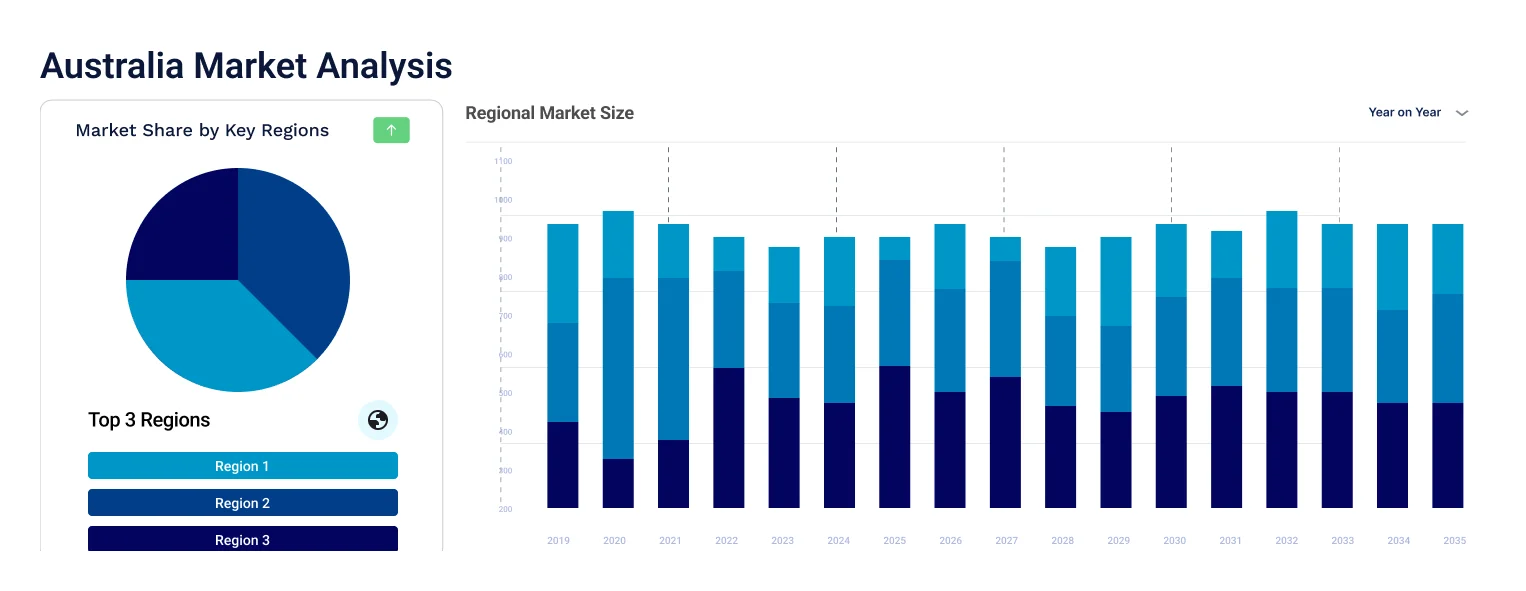
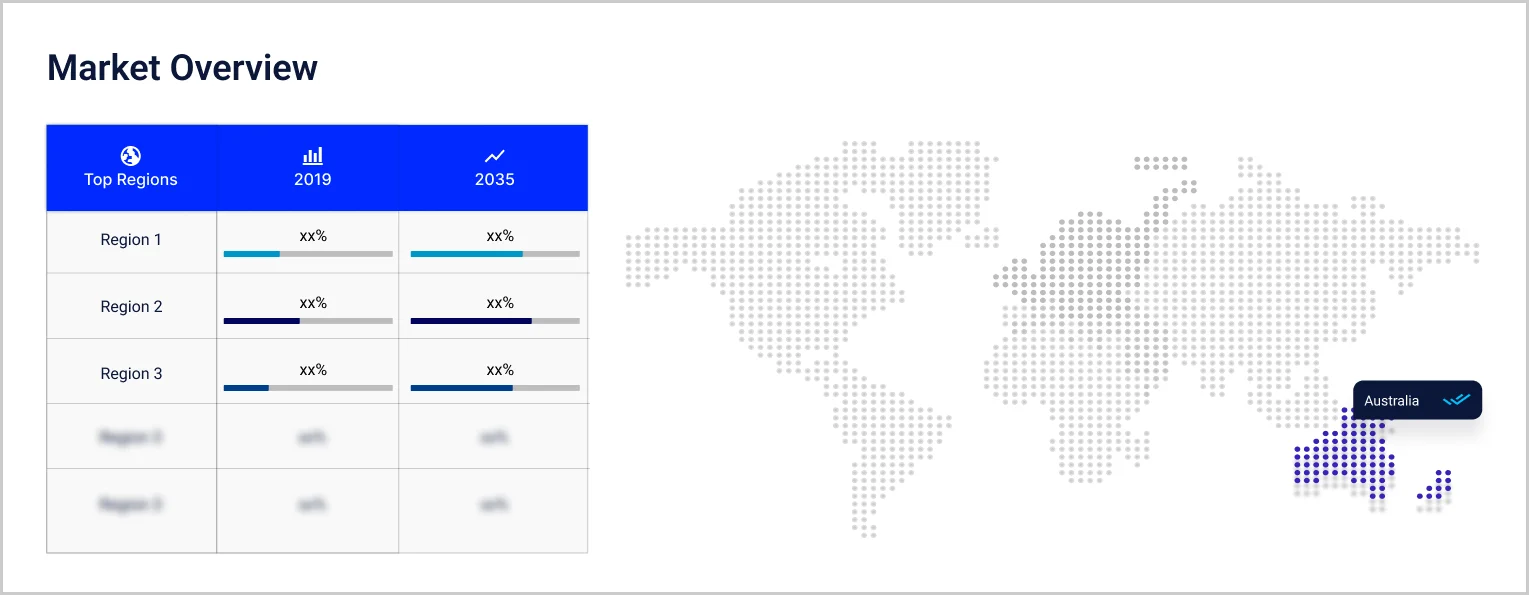
Victoria dominates, in our estimate, with a published 24.2% share, backed by a A$1 billion training investment announced in December 2025. New South Wales grows fastest at an estimated 7.5% CAGR through 2035, with a A$560 million Free TAFE agreement in October 2026. Queensland grows at 6.8%, helped by 2,000 extra nursing places from December 2025. Australia Capital Territory grows at 6.0%, Western Australia at 6.5% after Fortescue's June 2026 centre, and Rest of Australia at 5.3%, covering South Australia, Tasmania and the Northern Territory.
| CAGR 2026 to 2035, Market by Region | Growth Rate |
| New South Wales | 7.5 % |
| Victoria | 6.3 % |
| Queensland | 6.8 % |
| Australia Capital Territory | 6.0 % |
| Western Australia | 6.5 % |
| Others (Rest of Australia) | 5.3 % |
Competition combines consultancies, sales and language specialists, wellbeing platforms and public sector bodies. Entry barriers include facilitator credibility, client relationships, content quality, accreditation, and the ability to deliver on-site, online and blended programs.
The Dream Collective
The Dream Collective, also known as TDC Global, is a Sydney-based firm founded in 2012, with Sarah Liu as founder and managing director. Its portfolio covers business consulting, human resources services and corporate training, including leadership training for a digital growth consultancy over two years. As a small team it works closely with each client rather than running large catalogues. Its differentiators are consulting-led programs and a focus on leadership and workplace capability.
Sonder Australia Pty Ltd.
Sonder Australia Pty Ltd. is a workplace wellbeing company founded by Adam Jacobs and Chaz Heitner. Its platform provides round-the-clock support for mental health, physical health and safety, and its named clients include Woolworths, Commonwealth Bank and NRMA. Its offer sits alongside corporate training as employers pair wellbeing support with people skills. Its differentiators are a single platform spanning wellbeing and safety, and large-employer customers across retail, banking and insurance.
Language Trainers Corporation
Language Trainers Corporation operates in Australia as Language Trainers Australia from Brisbane, a business founded in 2004. Its portfolio covers one-on-one and small group language courses for business people, with tailored courses for organisations taught at the client's office or another chosen location by native-speaking teachers. Its Clutch profile lists corporate training and coaching, with focus on leadership coaching, customer service training and presentation skills. Its differentiators are tailored language delivery and a network of native-speaking teachers.
Sandler Training Pty Ltd.
Sandler Training Pty Ltd. operates from Level 28, 161 Castlereagh Street, Sydney, delivering the Sandler Selling System, which has a history of over five decades. Its solutions cover sales training, sales leadership training, customer success training, assessments, certification and coaching, delivered on-site and online with ongoing reinforcement after the initial program. Its Sydney centre carries a Sandler Top Training 2025 badge. Its differentiators are behaviour, attitude and technique methodology and sustained reinforcement of sales skills.
Other players operating in the Australia corporate training market include BSI Learning Institute Pty Ltd, ATC Work Smart, and Training Services Australia, alongside regional and niche providers supplying technical, soft skills and compliance training across Australia.
Competition rests on credibility, delivery format and follow-through rather than content alone. Sandler competes through sales methodology and reinforcement, Language Trainers through tailored language delivery, and Sonder through wellbeing and safety services. Employer demand for AI, customer service and technical skills in 2026 favours providers that can tailor programs and blend on-site and online delivery.


Upto 15% Off
AUD
$2749 $2499
$3849 $3499
$4949 $4499
$6049 $5499


*While we strive to always give you current and accurate information, the numbers depicted on the website are indicative and may differ from the actual numbers in the main report. At Expert Market Research, we aim to bring you the latest insights and trends in the market. Using our analyses and forecasts, stakeholders can understand the market dynamics, navigate challenges, and capitalize on opportunities to make data-driven strategic decisions.*
The Australia corporate training market is valued at AUD 553.00 million in 2025, supported by employer-funded training, AI upskilling demand and public skills funding, with Victoria as the largest region.
The market is forecast to reach AUD 1047.85 million by 2035, growing at a CAGR of 6.60 % over the 2026 to 2035 period, driven by employer-sponsored training, AI skills gaps and expanded public skills funding.
Customer Management records the highest CAGR at an estimated 7.2% through 2035, as employers prioritise customer service skills, while On-Site delivery also grows at an estimated 7.2%.
Victoria dominates with a published 24.2% share, supported by large state training investment. New South Wales is the fastest-growing region at an estimated 7.5% CAGR, followed by Queensland at 6.8%, while Rest of Australia grows at 5.3%.
Key players include The Dream Collective, Sonder Australia Pty Ltd., Language Trainers Corporation, Sandler Training Pty Ltd., BSI Learning Institute Pty Ltd, ATC Work Smart, Training Services Australia.
Employer investment in paid training time was at least A$3.7 billion in 2024, with 86 in every 100 trainees fully employer-sponsored, reported in July 2026, and Commonwealth Bank added a A$90 million program in February 2026.
Hays reported in May 2026 that 60% of respondents use AI regularly at work and 78% received no formal employer training, while a Genius HRTech survey in August 2026 found 58% saying AI tools had replaced learning programs.
Explore our key highlights of the report and gain a concise overview of key findings, trends, and actionable insights that will empower your strategic decisions.
| Report Features | Details |
| Base Year | 2025 |
| Historical Period | 2019-2025 |
| Forecast Period | 2026-2035 |
| Scope of the Report |
Historical and Forecast Trends, Industry Drivers and Constraints, Historical and Forecast Market Analysis by Segment:
|
| Breakup by Training Services |
|
| Breakup by Deployment |
|
| Breakup by Mode of Learning |
|
| Breakup by Industry Vertical |
|
| Breakup by Region |
|
| Market Dynamics |
|
| Competitive Landscape |
|
| Companies Covered |
|
Datasheet
AUD 2,749
AUD 2,499
tax inclusive*
Single User License
AUD 3,849
AUD 3,499
tax inclusive*
Five User License
AUD 4,949
AUD 4,499
tax inclusive*
Corporate License
AUD 6,049
AUD 5,499
tax inclusive*
*Please note that the prices mentioned below are starting prices for each bundle type. Kindly contact our team for further details.*
Flash Bundle
Small Business Bundle
Growth Bundle
Enterprise Bundle
*Please note that the prices mentioned below are starting prices for each bundle type. Kindly contact our team for further details.*
Flash Bundle
Number of Reports: 3
20%
tax inclusive*
Small Business Bundle
Number of Reports: 5
25%
tax inclusive*
Growth Bundle
Number of Reports: 8
30%
tax inclusive*
Enterprise Bundle
Number of Reports: 10
35%
tax inclusive*
How To Order

Select License Type
Choose the right license for your needs and access rights.

Click on ‘Buy Now’
Add the report to your cart with one click and proceed to register.

Select Mode of Payment
Choose a payment option for a secure checkout. You will be redirected accordingly.
Strategic Solutions for Informed Decision-Making
Stay upgraded and grab opportunities by strategic insights
Stay informed and aware for a Market Leverage
Analyze pricing patterns with comprehensive trend analyses.
Analyse trade data for supply chain insights.
Leverage cost reports for smart savings
Elevate supply chain with collaboration
Contact Us for Further Information
Our specialized analysts will be available to answer all the pre-purchase and post-purchase queries regarding the report.
Our specialized analysts will be available to answer all the pre-purchase and post-purchase queries regarding the report.
Staying one step ahead of the market landscape with our in-depth research methods, integrating advanced analytics to drive precise and tangible outcomes.
Our expert analyst team offers a significant advantage over competitors, with extensive market insights into the latest trends, putting you strategically ahead.
We deliver a simplified yet extensive report, comprising in-depth industry insights and analytics tailored to your industry requirements.
We are happy to help you navigate through the services we offer and solve your queries.
Contact us