Consumer Insights
Uncover trends and behaviors shaping consumer choices today
Procurement Insights
Optimize your sourcing strategy with key market data
Industry Stats
Stay ahead with the latest trends and market analysis.
The Australia and New Zealand diabetes devices market covers continuous glucose monitors, insulin pumps, blood glucose meters and test strips, and insulin pens, syringes and needles used by people living with type 1, type 2, gestational and other forms of diabetes. These devices let patients and clinicians measure glucose, deliver insulin precisely and reduce severe hypoglycaemia and hospital admissions.
In 2025, the market is valued at AUD 1480.00 million and is forecast to grow at a CAGR of 6.50%, reaching AUD 2778.16 million by 2035. Growth is driven by subsidised sensor access for roughly 130,000 Australians with type 1 diabetes, Pharmac funding of sensors and pumps from October 2024, and the shift towards automated insulin delivery.
Compound Annual Growth Rate
6.5%
Value in AUD million
2026-2035
The Australia and New Zealand diabetes devices market is moving from periodic finger-prick testing to continuous, connected and automated care. Meters and strips once defined device spending, but subsidised sensors and pumps now set the pace.
Three forces are shaping the market: the National Diabetes Services Scheme, which subsidised Dexcom G7 from 1 March 2025 and FreeStyle Libre 2 Plus from 1 April 2025; Pharmac funding of sensors and pumps for people with type 1 diabetes; and the pairing of fifteen-day sensors with automated insulin delivery.
In March 2026, MiniMed listed on Nasdaq at USD 20 a share. From 1 October 2026, FreeStyle Libre 3 Plus became a standalone sensor on the scheme, while Dexcom G6 left the product schedule on the same date.
The market is shifting from episodic testing towards continuous sensing, connected pumps and automated dosing. Continuous glucose monitors lead because subsidy schemes in both countries have made them the default for type 1 diabetes, and they also grow fastest as sensors move to fifteen-day wear. Type 2 diabetes and online supply advance quickly from smaller bases, while New Zealand outpaces the larger Australian base as Pharmac funding matures. Accuracy standards, pump transitions and supplier separations point to a durable, multi-year outlook.
| Metric | Value |
| Market Size 2025 | AUD 1480.00 million |
| Projected Market Size 2035 | AUD 2778.16 million |
| CAGR 2026 to 2035 | 6.50% |
| Fastest-Growing Product Type | Continuous Glucose Monitors: 9.2% CAGR |
| Fastest-Growing Distribution Channel | Online and Direct-to-Consumer: 8.4% CAGR |
| Largest Revenue Segment 2025 | Continuous Glucose Monitors |
| Dominant Country | Australia |
| Highest CAGR by Country | New Zealand: 7.5% |
| FreeStyle Libre 3 Plus sensor wear on the NDSS | 15 days |
Subsidy Schemes Anchor Long-Term Device Demand
Revenue is on course to expand by about 88% across the decade, from AUD 1,480.00 million in 2025 to AUD 2,778.16 million in 2035 at a 6.5% CAGR. Sensors and pumps are recurring purchases, and the national scheme and Pharmac convert clinical need into funded, repeat demand.
Continuous Monitoring and Direct Supply Lead Growth
Continuous glucose monitors hold the largest revenue share and grow at an estimated 9.2% CAGR through 2035, while online and direct-to-consumer supply advances at 8.4%. Fifteen-day sensors and Omnipod subscriptions show purchasing shifting away from meters and strips.
MiniMed Separation Reshapes Pump and Sensor Supply
MiniMed priced its Nasdaq offering in March 2026 and Medtronic opened an exchange offer in September 2026 to complete the separation. For ANZ patients, the change coincides with withdrawal of the Guardian standalone transmitter and New Zealand's end of MiniMed 770G consumable funding.
| Report Summary | Unit | Value |
| Base Year | AUD million | 2025 |
| Historical Period | AUD million | 2019 to 2025 |
| Forecast Period | AUD million | 2026 to 2035 |
| Market Size 2025 | AUD million | 1480.00 |
| Market Size 2035 | AUD million | 2778.16 |
| CAGR 2026 to 2035 | Percentage | 6.50 % |
| CAGR by Product Type: Continuous Glucose Monitors | Percentage | 9.2 % |
| CAGR by Diabetes Type: Type 2 Diabetes | Percentage | 7.1 % |
| CAGR by Distribution Channel: Online and Direct-to-Consumer | Percentage | 8.4 % |
| CAGR by Country: New Zealand | Percentage | 7.5 % |
| Federal Sensor Subsidy Commitment 2022-23 to 2025-26 | AUD Million | 682.3 |
| Pharmac Projected Sensor Users by June 2029 | People | 18,921 |
| Market Share by Country 2025 | Australia | Dominant Share |
Structural change, not cyclical demand, drives the trajectory. Funded sensors, automated insulin delivery and supplier restructuring are reshaping care, with Australia the larger base and New Zealand growing quickest.
The Australia and New Zealand diabetes devices market is being reshaped by wider subsidised sensor access, product withdrawals, new accuracy standards and pump-linked supply arrangements.
October 2026 - Abbott FreeStyle Libre 3 Plus Becomes a Standalone Sensor on the NDSS
July 2026 - Dexcom G6 Exits the NDSS Product Schedule After AMSL Diabetes Decision
April 2026 - Diabetes Societies Publish anzCGM Minimum Standards for Sensors
December 2025 - Libre 3 Plus Reaches mylife YpsoPump Users Through the NDSS
Growth is structural rather than cyclical. Funded access, tighter accuracy expectations and integrated pump and sensor pairings set the direction, while product withdrawals push users onto newer systems.
Recent developments, presented from the most recent, show the Australia and New Zealand diabetes devices market moving from corporate separations and supplier results into product exits and independent operation.
September 2026 - Medtronic Opens Exchange Offer to Complete MiniMed Separation
August 2026 - Insulet Reports Fast International Omnipod Growth in the June Quarter
June 2026 - Roche Ends Accu-Chek Insulin Pump Consumables on the NDSS
January 2026 - mylife Diabetes Care Completes Transition to an Independent Company
Corporate restructuring and product rationalisation take centre stage, as sensor and pump suppliers reposition around automated insulin delivery. The momentum validates the commercial case for connected systems.
The Expert Market Research’s report on the Australia And New Zealand Diabetes Devices Market offers a detailed analysis of the market based on the following segments.
Market Breakup by Product Type
Continuous Glucose Monitors lead and grow fastest at an estimated 9.2% CAGR through 2035, after the scheme added Dexcom G7 from 1 March 2025 and Pharmac funded FreeStyle Libre 2 Plus from 1 May 2025. Insulin Pumps gain from the Roche exit of 30 June 2026 and Pharmac's October 2026 end to MiniMed 770G consumables. Blood Glucose Meters and Strips weaken, as Rightest GS700 strips left the scheme on 1 August 2025. Insulin Pens, Syringes and Needles stay steady, with BD-brand products moving to Embecta in New Zealand from 1 July 2026. Others cover lancets and digital software.
Market Breakup by Diabetes Type
Type 1 Diabetes leads because subsidy applies to roughly 130,000 Australians with the condition, and Pharmac funded sensors and pumps for it from 1 October 2024. Type 2 Diabetes grows fastest at an estimated 7.1% CAGR through 2035, since about 300,000 Australians with the condition use insulin and the inquiry response of May 2026 noted wider sensor access. Gestational Diabetes advances with antenatal testing and self-monitoring. Others include type 3c diabetes, which Pharmac covers for FreeStyle Libre 2 Plus from 1 May 2025.
Market Breakup by Distribution Channel
Retail and Community Pharmacies lead because NDSS Access Points are typically community pharmacies, and New Zealand pharmacists dispense annual sensor allocations that Pharmac set in October 2025 at up to 28 FreeStyle Libre units and 40 Dexcom units. Online and Direct-to-Consumer supply grows fastest at an estimated 8.4% CAGR through 2035, supported by Omnipod subscriptions of AUD 185 a box with a subsidised pod co-payment of AUD 35.30. Hospital Pharmacies support pump starts and specialist training, while Others cover diabetes clinics and health fund pathways.
Market Breakup by Region
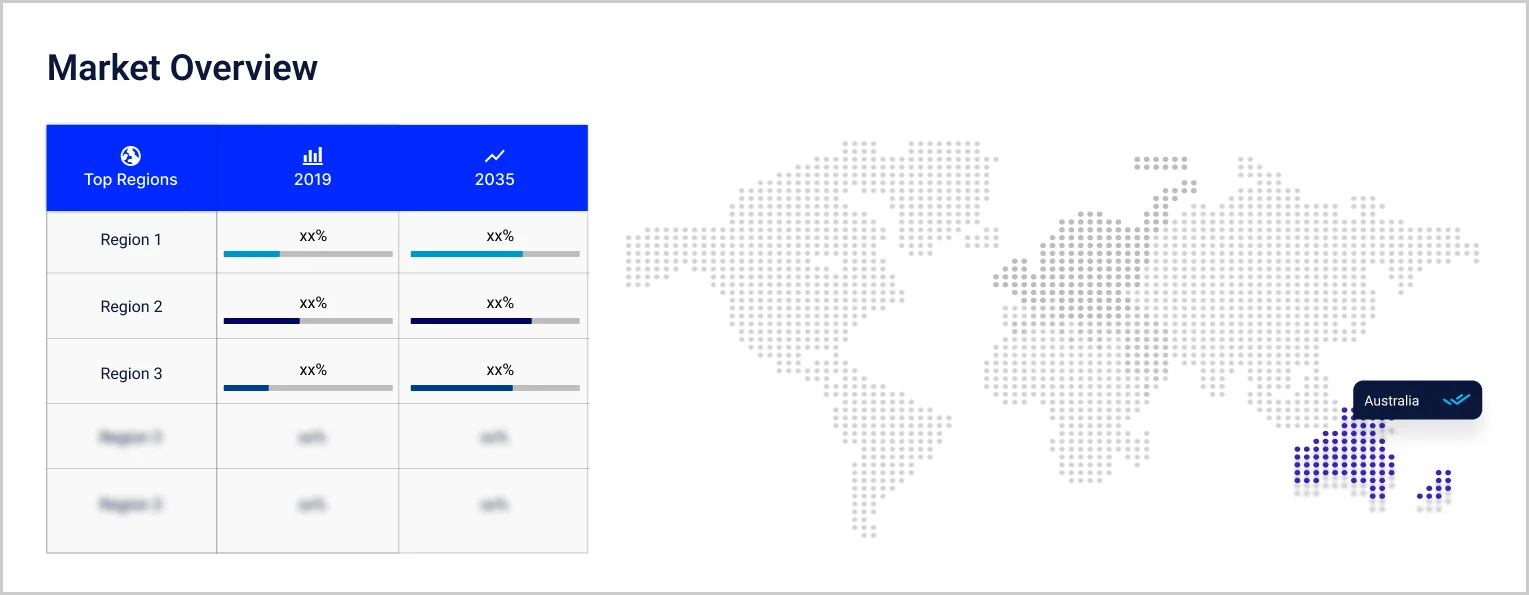
Australia dominates, supported by nearly 1.9 million people living with diabetes and the scheme's addition of Libre 3 Plus from 1 October 2026, and it grows at an estimated 6.4% CAGR through 2035. New Zealand is the fastest-growing country at an estimated 7.5%, as Pharmac funds Tandem t:slim X2 and YpsoPump pumps, plans for about 10,000 pump users, and projects 502,358 people with diabetes by 2044. Others covers Pacific Island markets and grows at an estimated 6.8% from a small base.
| CAGR 2026 to 2035, Market by Country | Growth Rate |
| Australia | 6.4 % |
| New Zealand | 7.5 % |
| Others (incl. Pacific Island markets) | 6.8 % |
Competition combines global sensor and pump groups, local distributors and legacy meter and consumables suppliers. Entry barriers include scheme listing, TGA and Medsafe compliance, pump and sensor interoperability, clinician training networks and pharmacy supply reliability.
Abbott
Abbott, headquartered in Abbott Park, Illinois, was founded in 1888 and makes the FreeStyle Libre family of glucose sensors. The Australian scheme added Libre 2 Plus from 1 April 2025, Libre 3 Plus for mylife YpsoPump users from 1 December 2025 and standalone Libre 3 Plus for all eligible Australians with type 1 diabetes from 1 October 2026. Pharmac has funded Libre 2 Plus since 1 May 2025 and caps FreeStyle Libre users at 28 units a year.
Dexcom
Dexcom, headquartered in San Diego, California, was founded in 1999 and serves Australia through AMSL Diabetes, a Dexcom company since 2021 that also distributes Tandem pumps. The scheme subsidised Dexcom G7 from 1 March 2025 at a co-payment of AUD 11.60 per sensor and removed G6 on 1 October 2026. Pharmac funds G6, G7 and ONE+ sensors. Dexcom reported on 30 July 2026 that international revenue grew 19% to USD 375 million, helped by expanded reimbursement.
Insulet
Insulet, headquartered in Acton, Massachusetts, makes the tubeless Omnipod system. It announced Omnipod 5 as commercially available in Australia in March 2025, with Dexcom G6 and G7 compatibility and FreeStyle Libre 2 Plus integration planned. The scheme subsidises pods with a general co-payment of AUD 35.30, while Omnipod subscribers pay AUD 185 a box. International Omnipod revenue rose 35.5% to USD 251.8 million in the June 2026 quarter.
MiniMed
MiniMed, headquartered in Northridge, California, makes the MiniMed 780G pump and Guardian and Simplera sensors, and listed on Nasdaq under the ticker MMED on 6 March 2026 after separating from Medtronic. In Australia the Guardian System (4) transmitter was discontinued for standalone use on 1 September 2026 and now serves only 780G users. In New Zealand, Pharmac ended MiniMed 770G consumable funding on 1 October 2026 after a 24-month transition for roughly 2,000 users.
Other players operating in the Australia and New Zealand diabetes devices market include Tandem Diabetes Care, mylife Diabetes Care, Roche Diabetes Care, Embecta, and Novo Nordisk, alongside specialist distributors, pharmacy chains and digital diabetes software providers supporting sensor, pump, meter and insulin delivery supply across Australia and New Zealand.
Competition rests on scheme listing, interoperability, clinician training and supply reliability rather than price. Leaders pair sensors with pumps, while the rest compete through pumps, consumables, meters and insulin delivery.


Upto 20% Off
AUD


*While we strive to always give you current and accurate information, the numbers depicted on the website are indicative and may differ from the actual numbers in the main report. At Expert Market Research, we aim to bring you the latest insights and trends in the market. Using our analyses and forecasts, stakeholders can understand the market dynamics, navigate challenges, and capitalize on opportunities to make data-driven strategic decisions.*
The Australia and New Zealand diabetes devices market is valued at AUD 1480.00 million in 2025, supported by subsidised sensor access, Pharmac funding and the spread of automated insulin delivery, with Australia as the larger base.
The market is forecast to reach AUD 2778.16 million by 2035, growing at a CAGR of 6.50 % over the 2026 to 2035 period, driven by wider funded sensor use, tubeless and connected pumps and the shift from meters to continuous monitoring.
Continuous Glucose Monitors records the highest CAGR at an estimated 9.2% through 2035, as subsidy schemes in both countries make sensors the default for type 1 diabetes and fifteen-day wear lowers the cost of use.
Australia dominates, supported by a large diabetes population and the national scheme's subsidised sensors and pump consumables. New Zealand is the fastest-growing country at an estimated 7.5% CAGR, as Pharmac funding for sensors and pumps matures.
Key players include Abbott, Dexcom, Insulet, MiniMed, Tandem Diabetes Care, mylife Diabetes Care, Roche Diabetes Care, Embecta, and Novo Nordisk.
It is a federal programme subsidising continuous glucose monitoring for Australians with type 1 diabetes through pharmacies. The government committed AUD 682.3 million over four years from 2022-23, and Libre 3 Plus joined as a standalone sensor on 1 October 2026.
From 1 October 2024 Pharmac funded continuous glucose monitors and insulin pumps, including Dexcom and FreeStyle Libre sensors and the Tandem t:slim X2 and YpsoPump pumps. It expected more than 18,000 sensor users after five years.
Explore our key highlights of the report and gain a concise overview of key findings, trends, and actionable insights that will empower your strategic decisions.
| REPORT FEATURES | DETAILS |
| Base Year | 2025 |
| Historical Period | 2019-2025 |
| Forecast Period | 2026-2035 |
| Scope of the Report |
Historical and Forecast Trends, Industry Drivers and Constraints, Historical and Forecast Market Analysis by Segment:
|
| Breakup by Product Type |
|
| Breakup by Diabetes Type |
|
| Breakup by Distribution Channel |
|
| Breakup by Region |
|
| Market Dynamics |
|
| Competitive Landscape |
|
| Companies Covered |
|
Datasheet
AUD 2,749
AUD 2,499
tax inclusive*
Single User License
AUD 3,849
AUD 3,499
tax inclusive*
Five User License
AUD 4,949
AUD 4,499
tax inclusive*
Corporate License
AUD 6,049
AUD 5,499
tax inclusive*
*Please note that the prices mentioned below are starting prices for each bundle type. Kindly contact our team for further details.*
Flash Bundle
Small Business Bundle
Growth Bundle
Enterprise Bundle
*Please note that the prices mentioned below are starting prices for each bundle type. Kindly contact our team for further details.*
Flash Bundle
Number of Reports: 3
20%
tax inclusive*
Small Business Bundle
Number of Reports: 5
25%
tax inclusive*
Growth Bundle
Number of Reports: 8
30%
tax inclusive*
Enterprise Bundle
Number of Reports: 10
35%
tax inclusive*
How To Order

Select License Type
Choose the right license for your needs and access rights.

Click on ‘Buy Now’
Add the report to your cart with one click and proceed to register.

Select Mode of Payment
Choose a payment option for a secure checkout. You will be redirected accordingly.
Strategic Solutions for Informed Decision-Making
Stay upgraded and grab opportunities by strategic insights
Stay informed and aware for a Market Leverage
Analyze pricing patterns with comprehensive trend analyses.
Analyse trade data for supply chain insights.
Leverage cost reports for smart savings
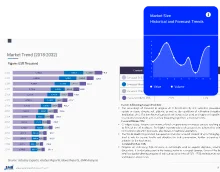
Elevate supply chain with collaboration
Contact Us for Further Information
Our specialized analysts will be available to answer all the pre-purchase and post-purchase queries regarding the report.
Our specialized analysts will be available to answer all the pre-purchase and post-purchase queries regarding the report.
Staying one step ahead of the market landscape with our in-depth research methods, integrating advanced analytics to drive precise and tangible outcomes.
Our expert analyst team offers a significant advantage over competitors, with extensive market insights into the latest trends, putting you strategically ahead.
We deliver a simplified yet extensive report, comprising in-depth industry insights and analytics tailored to your industry requirements.
We are happy to help you navigate through the services we offer and solve your queries.
Contact us