Consumer Insights
Uncover trends and behaviors shaping consumer choices today
Procurement Insights
Optimize your sourcing strategy with key market data
Industry Stats
Stay ahead with the latest trends and market analysis.
The Australia warehouse automation market covers the systems that automate the storage, picking, sortation and movement of goods inside distribution centres and warehouses, together with the software that orchestrates them. It spans automated storage and retrieval systems, conveyors and sortation, goods-to-person solutions, automated guided vehicles and autonomous mobile robots, and warehouse control and execution software, serving retail and e-commerce, grocery and food, third-party logistics and healthcare distribution.
In 2025, the market is valued at AUD 1650.00 million in 2025 and is forecast to grow at a CAGR of 13.00%, reaching AUD 5601.04 million by 2035. Growth is driven by rising industrial property costs, chronic labour shortages and the need for denser, faster and more accurate fulfilment.
Compound Annual Growth Rate
13%
Value in AUD million
2026-2035
The Australia warehouse automation market is growing as distributors face rising industrial real estate costs, persistent labour shortages and faster delivery expectations from consumers and business customers. We estimate the market at AUD 1,650.00 million in 2025, spanning automation hardware, software and services. Operators increasingly invest in density-boosting systems that do more within the same footprint rather than leasing or building additional space, as land and construction costs make expansion less viable in major logistics precincts.
Suppliers are deepening their local capability and bringing new systems to market. Dematic, part of KION and employing more than 850 staff across Australia and New Zealand, marked 60 years in the market and introduced its Multishuttle FD storage system to Australia in April 2026, while Swisslog showcased its WonderStore four-way pallet shuttle at CeMAT Australia 2026 in Melbourne. AutoStore reported more than 1,000 robots deployed across Australia and New Zealand, with installed systems on track to exceed 40.
Major projects are landing across sectors. In September 2026 Wurth Australia selected Dematic to automate two distribution sites, with warehouse control software coordinating picking across combined automated and manual workflows, and earlier deployments included automated guided vehicles for contract bottler Vinpac International in South Australia. Demand spans retail, grocery, healthcare and industrial distribution as operators seek denser storage, more consistent fulfilment and relief from labour-intensive manual handling.
Revenue is rising as retailers, grocers and logistics providers invest in dense, automated fulfilment to cope with cost and labour pressure, while capital cost, integration effort and fit-out timelines shape the pace. We expect growth to broaden from large flagship distribution centres toward mid-sized operators as modular systems and software-led automation spread over the forecast period, with robotics and software growing faster than fixed mechanical handling.
| Metric | Value |
| Market Size 2025 | AUD 1650.00 million |
| Projected Market Size 2035 | AUD 5601.04 million |
| CAGR 2026 to 2035 | 13.00% |
| Fastest-Growing Technology | AGVs and AMRs: 16.5% CAGR |
| Fastest-Growing End Use | Retail and E-commerce: 15.2% CAGR |
| Largest Revenue Segment 2025 | Hardware |
| Dominant Region | New South Wales |
| Highest CAGR by Region | Queensland: 14.1% |
| AutoStore Robots Deployed in ANZ | 1,000+ |
Property and Labour Pressures Anchor Demand
Demand rests on structural cost pressures rather than cyclical retail activity. Rising industrial property costs and warehouse labour shortages push operators toward automation to expand capacity within existing sites and maintain throughput with fewer people, giving the market a durable base through 2035 that holds up even when consumer demand softens.
Robotics and E-commerce Lead Growth
Hardware holds the largest share of spending today because mechanical storage and handling systems carry the most capital cost, but automated guided vehicles and autonomous mobile robots grow fastest at an estimated 16.5% CAGR and retail and e-commerce demand at an estimated 15.2%, as operators add flexible robotics to handle high and variable order volumes.
From Large Centres to Mid-Sized Operators
Value is broadening from flagship distribution centres toward smaller operators that previously saw automation as out of reach. Three priorities stand out:
| Report Summary | Unit | Value |
| Base Year | AUD million | 2025 |
| Historical Period | AUD million | 2019 to 2025 |
| Forecast Period | AUD million | 2026 to 2035 |
| Market Size 2025 | AUD million | 1650.00 |
| Market Size 2035 | AUD million | 5601.04 |
| CAGR 2026 to 2035 | Percentage | 13.00 % |
| CAGR by Technology: AGVs and AMRs | Percentage | 16.5 % |
| CAGR by End Use: Retail and E-commerce | Percentage | 15.2 % |
| CAGR by Component: Software | Percentage | 14.6 % |
| CAGR by Region: Queensland | Percentage | 14.1 % |
| AutoStore Robots Deployed in ANZ | Count | 1,000 |
| Dematic ANZ Staff | Count | 850 |
| Market Share by Region 2025 | New South Wales | Dominant Share |
Property costs, labour shortages and e-commerce growth support the market, while capital cost, integration effort and fit-out timelines keep adoption staged across operators.
The Australia warehouse automation market is being shaped by major project wins, new storage systems, supplier milestones and robot deployments, presented here from the most recent.
September 2026 - Wurth Australia Selects Dematic for Two-Site Automation
June 2026 - Swisslog Showcases WonderStore Shuttle at CeMAT Australia
April 2026 - Dematic Brings Multishuttle FD Storage System to Australia
January 2026 - AutoStore Passes 1,000 Robots Deployed in ANZ
Project wins, new storage systems and growing robot fleets are the main forces, while capital cost keeps adoption staged across operators rather than universal.
Recent developments, presented from the most recent, show new multi-site deployments, supplier milestones, major exhibitions and automated guided vehicle projects across the country.
September 2026 - Wurth Australia Commits to Two-Site Dematic Automation
July 2026 - Dematic Highlights Intelligent Automation at CeMAT Australia
May 2026 - Dematic Marks 60 Years in Australian Supply Chain Automation
February 2026 - Vinpac Automates South Australian Warehouse With AGVs
New deployments, supplier milestones and exhibitions show that growth depends on proven local capability and modular systems that scale with demand rather than one-off showcase projects. The breadth of sectors adopting automation, from grocery and healthcare to industrial distribution, points to a market moving from early adopters toward mainstream use across the supply chain.
The Expert Market Research’s report on the Australia Warehouse Automation Market offers a detailed analysis of the market based on the following segments.
Market Breakup by Component
Hardware leads on value, in our estimate, through shuttles, cranes, conveyors, sortation and robots that carry the most capital cost, while Software grows fastest as warehouse control and execution systems coordinate increasingly complex workflows, and Services cover design, integration, commissioning and support. Others includes safety, sensing and power components.
Market Breakup by Technology
Automated Storage and Retrieval leads on value, in our estimate, as shuttle and cube systems anchor high-density storage, while AGVs and AMRs grow fastest on flexibility and lower civil works, Conveyor and Sortation handle high-throughput parcel flows, and Goods-to-Person systems speed each-level picking. Others includes palletising and robotic picking arms.
Market Breakup by End Use
Retail and E-commerce lead on value, in our estimate, as high and variable order volumes drive the largest investments, and they also grow fastest on delivery expectations, while Grocery and Food automate temperature-controlled fulfilment, Third-Party Logistics scale shared automation across clients, and Healthcare automates distribution of supplies and pharmaceuticals. Others includes industrial and wholesale distribution.
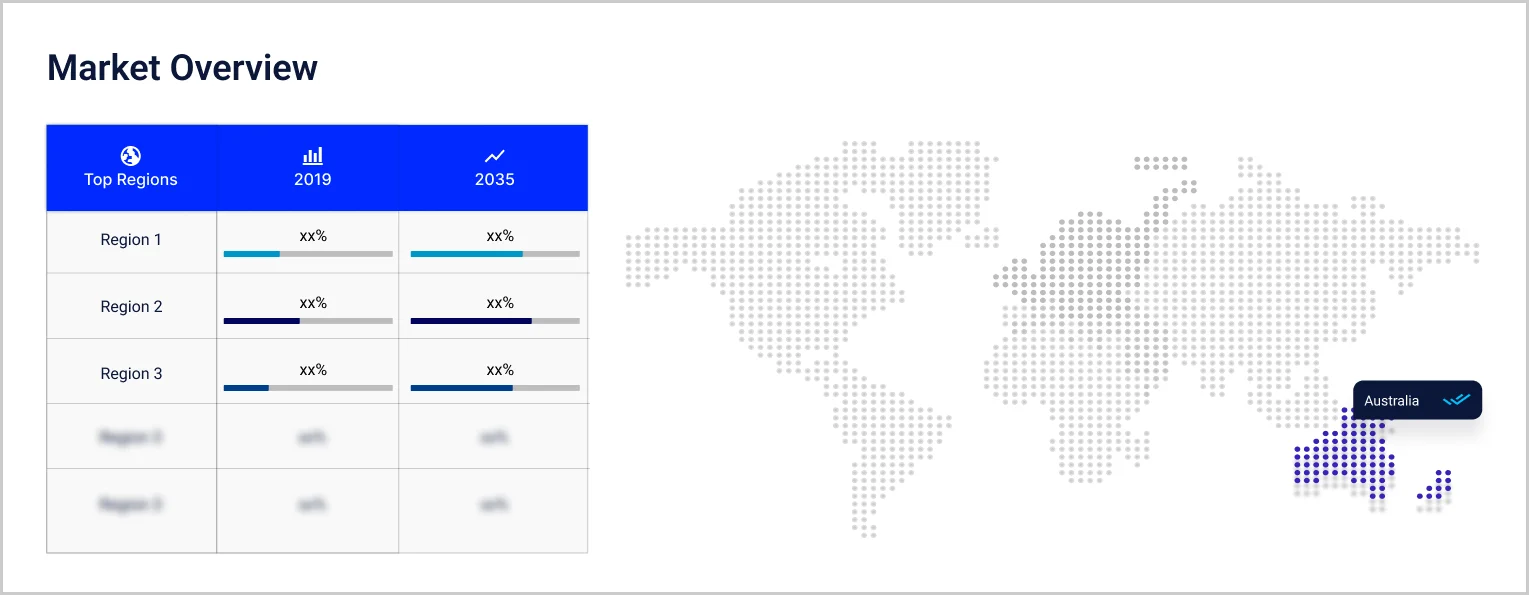
Market Breakup by Region
New South Wales dominates, in our estimate, as Sydney concentrates distribution centres and e-commerce fulfilment serving the country's largest consumer market. Queensland grows fastest on population-led retail and logistics expansion, while Victoria anchors grocery and third-party logistics. Others covers South Australia, Western Australia and the remaining states.
| CAGR 2026 to 2035 | Growth Rate |
| New South Wales | 13.1 % |
| Victoria | 12.8 % |
| Queensland | 14.1 % |
| Western Australia | 12.4 % |
| Others (Rest of Australia) | 11.9 % |
Competition combines global intralogistics suppliers and local engineering and integration teams. Entry barriers include systems integration capability, a large installed base, local manufacturing and service networks, and reference projects with major distributors that demonstrate reliable delivery at scale.
Swisslog
Swisslog, part of KUKA and founded in 1900 with headquarters in Switzerland, supplies scalable warehouse automation including automated storage, four-way shuttles such as WonderStore and autonomous mobile robots through its Australia and New Zealand operations. In June 2026 it showcased its WonderStore four-way pallet shuttle at CeMAT Australia, with local reference facilities that let operators evaluate systems first-hand.
Dematic
Dematic, part of KION and operating in Australia for 60 years with more than 850 staff across Australia and New Zealand, supplies goods-to-person, shuttle, conveyor, automated guided vehicle and robotic automation, supported by local manufacturing, engineering and warehouse control software. In April 2026 it brought its Multishuttle FD storage system to Australia, and in September 2026 it was selected by Wurth Australia for a two-site automation project.
AutoStore
AutoStore, headquartered in Nedre Vats, Norway and founded in 1996, provides cube-based storage automation with more than 1,000 robots deployed across Australia and New Zealand through local integrators, offering very high storage density in a compact footprint.
Kardex
Kardex, headquartered in Zurich, Switzerland and founded in 1873, supplies automated storage and retrieval systems such as vertical lift modules used by Australian industrial and distribution operators, including Pirtek, to improve density, accuracy and picking speed.
Other players operating in the Australia warehouse automation market include KUKA, Körber, Vanderlande, TGW, Knapp and Fortna, alongside local integrators and warehouse software providers that deliver and support these systems.
Competition rests on integration capability, installed base and local service rather than hardware alone, which favours suppliers with proven Australian delivery and lifecycle support.


Upto 15% Off
AUD
$2749 $2499
$3849 $3499
$4949 $4499
$6049 $5499


*While we strive to always give you current and accurate information, the numbers depicted on the website are indicative and may differ from the actual numbers in the main report. At Expert Market Research, we aim to bring you the latest insights and trends in the market. Using our analyses and forecasts, stakeholders can understand the market dynamics, navigate challenges, and capitalize on opportunities to make data-driven strategic decisions.*
The Australia warehouse automation market is valued at AUD 1650.00 million in 2025, in our estimate, across hardware, software and services.
The market is forecast to reach AUD 5601.04 million by 2035, growing at a CAGR of 13.00% from 2026 to 2035.
Automated guided vehicles and autonomous mobile robots are expected to record the highest CAGR, at an estimated 16.5%, as operators add flexible robotics.
New South Wales dominates, in our estimate, as Sydney concentrates distribution centres and e-commerce fulfilment.
Key players include Swisslog, Dematic, AutoStore, Kardex, KUKA, Körber, Vanderlande, TGW, Knapp and Fortna.
Rising industrial property costs, labour shortages and faster delivery expectations push operators toward denser, more automated fulfilment.
Retail and e-commerce, grocery and food, third-party logistics and healthcare distribution are the largest end uses, with e-commerce the dominant driver.
Explore our key highlights of the report and gain a concise overview of key findings, trends, and actionable insights that will empower your strategic decisions.
| REPORT FEATURES | DETAILS |
| Base Year | 2025 |
| Historical Period | 2019-2025 |
| Forecast Period | 2026-2035 |
| Scope of the Report |
Historical and Forecast Trends, Industry Drivers and Constraints, Historical and Forecast Market Analysis by Segment:
|
| Breakup by Component |
|
| Breakup by Technology |
|
| Breakup by End Use |
|
| Breakup by Region |
|
| Market Dynamics |
|
| Competitive Landscape |
|
| Companies Covered |
|
Datasheet
AUD 2,749
AUD 2,499
tax inclusive*
Single User License
AUD 3,849
AUD 3,499
tax inclusive*
Five User License
AUD 4,949
AUD 4,499
tax inclusive*
Corporate License
AUD 6,049
AUD 5,499
tax inclusive*
*Please note that the prices mentioned below are starting prices for each bundle type. Kindly contact our team for further details.*
Flash Bundle
Small Business Bundle
Growth Bundle
Enterprise Bundle
*Please note that the prices mentioned below are starting prices for each bundle type. Kindly contact our team for further details.*
Flash Bundle
Number of Reports: 3
20%
tax inclusive*
Small Business Bundle
Number of Reports: 5
25%
tax inclusive*
Growth Bundle
Number of Reports: 8
30%
tax inclusive*
Enterprise Bundle
Number of Reports: 10
35%
tax inclusive*
How To Order

Select License Type
Choose the right license for your needs and access rights.

Click on ‘Buy Now’
Add the report to your cart with one click and proceed to register.

Select Mode of Payment
Choose a payment option for a secure checkout. You will be redirected accordingly.
Strategic Solutions for Informed Decision-Making
Stay upgraded and grab opportunities by strategic insights
Stay informed and aware for a Market Leverage
Analyze pricing patterns with comprehensive trend analyses.
Analyse trade data for supply chain insights.
Leverage cost reports for smart savings
Elevate supply chain with collaboration
Contact Us for Further Information
Our specialized analysts will be available to answer all the pre-purchase and post-purchase queries regarding the report.
Our specialized analysts will be available to answer all the pre-purchase and post-purchase queries regarding the report.
Staying one step ahead of the market landscape with our in-depth research methods, integrating advanced analytics to drive precise and tangible outcomes.
Our expert analyst team offers a significant advantage over competitors, with extensive market insights into the latest trends, putting you strategically ahead.
We deliver a simplified yet extensive report, comprising in-depth industry insights and analytics tailored to your industry requirements.
We are happy to help you navigate through the services we offer and solve your queries.
Contact us