Consumer Insights
Uncover trends and behaviors shaping consumer choices today
Procurement Insights
Optimize your sourcing strategy with key market data
Industry Stats
Stay ahead with the latest trends and market analysis.
The Australia taxi market covers licensed taxis and app based ride-hailing services that carry passengers on demand across Australian cities and regions, using hatchback, sedan, SUV and van fleets powered by petrol, hybrid and electric engines. Compared with private car ownership, these services offer door to door convenience without parking costs, which supports steady use by commuters, tourists and airport travellers.
In 2025, the market is valued at AUD 9850.00 million in 2025 and is forecast to grow at a CAGR of 5.80%, reaching AUD 17309.83 million by 2035. Growth is driven by ride-hailing platforms such as Uber, which reported 3.9 billion global trips in the quarter to June 2026, stricter Victorian driver rules from 1 March 2026, and new products such as pay per kilometre rideshare insurance.
Compound Annual Growth Rate
5.8%
Value in AUD million
2026-2035
The Australia taxi market is at an inflection point. Street hailing and rank based taxis once defined point to point travel, but app based booking now leads, and regulators are tightening driver standards while platforms test insurance, teen accounts and driverless cars.
Three forces are shaping the market: platform competition, with Uber and DiDi widening products and partnerships; regulatory tightening, as Victoria and New South Wales act on driver accountability and algorithm safety; and fleet transition, as electric and hybrid vehicles gain ground.
In August 2025 Uber expanded teen accounts to four more jurisdictions, and in December 2025 New South Wales introduced an algorithm safety bill. In February 2026 Victoria announced new driver rules, and in September 2026 Vero, Uber and Cover Genius launched pay per kilometre insurance.
The market is moving from licensed street service towards connected, app based mobility in which booking, payment, insurance and safety checks sit inside one platform. Ride-Hailing holds the largest share because upfront pricing and wide coverage suit everyday urban trips. Electric vehicles grow fastest as platforms and drivers shift towards lower running costs, while SUV and van models serve groups and luggage. New South Wales remains the biggest region, while Western Australia grows quickest. Tighter regulation and new products point to durable demand rather than a short lived cycle.
| Metric | Value |
| Market Size 2025 | AUD 9850.00 million |
| Projected Market Size 2035 | AUD 17309.83 million |
| CAGR 2026 to 2035 | 5.80% |
| Fastest-Growing Service Type | Ride-Hailing: 6.5% CAGR |
| Fastest-Growing Propulsion Type | Electric: 11.8% CAGR |
| Largest Revenue Segment 2025 | Ride-Hailing |
| Dominant Region | New South Wales |
| Highest CAGR by Region | Western Australia: 6.6% |
| Vehicles in A2B taxi network under ComfortDelGro Australia (2024) | 9,000+ |
Ride-Hailing Platforms Anchor Long-Term Growth
Revenue is on course to grow by about 1.8 times across the decade, from AUD 9,850.00 million in 2025 to AUD 17,310.00 million in 2035 at a 5.8% CAGR. Platform scale, led by Uber, and new products such as pay per kilometre insurance in September 2026 keep trip volumes and driver supply steady.
Ride-Hailing and Electric Models Lead Growth
Ride-Hailing holds the largest share and grows at a 6.5% CAGR, while Electric grows at an estimated 11.8% CAGR through 2035 from a small base. Uber said in March 2026 that driverless cars could launch in Australia within two years.
Safety Rules Reshape Taxi and Rideshare Supply
Victoria announced on 17 February 2026 a two strikes rule, limits on provider branding and mandatory QR codes in taxis and rideshare vehicles. New South Wales introduced an algorithm safety bill in December 2025.
| Report Summary | Unit | Value |
| Base Year | AUD million | 2025 |
| Historical Period | AUD million | 2019 to 2025 |
| Forecast Period | AUD million | 2026 to 2035 |
| Market Size 2025 | AUD million | 9850.00 |
| Market Size 2035 | AUD million | 17309.83 |
| CAGR 2026 to 2035 | Percentage | 5.80 % |
| CAGR by Service Type: Ride-Hailing | Percentage | 6.5 % |
| CAGR by Vehicle Type: SUV and Van | Percentage | 6.9 % |
| CAGR by Propulsion Type: Electric | Percentage | 11.8 % |
| CAGR by Region: Western Australia | Percentage | 6.6 % |
| Uber Global Trips in Quarter to June 2026 | Billion | 3.9 |
| Uber Global Mobility Gross Bookings in Quarter to June 2026 | USD Billion | 29.0 |
| Market Share by Region 2025 | New South Wales | Dominant Share |
App based booking, tighter driver rules and new insurance products are shifting taxis from a licensed street service towards a regulated digital mobility network. Ride-hailing leads because upfront pricing and wide app coverage suit everyday urban trips, while electric vehicles grow fastest from a small base as platforms push towards cleaner fleets. New South Wales leads on scale and Western Australia grows quickest, while traditional taxi networks hold their place through airports, contracts and accessible transport. Growth rests on named regulation and platform launches rather than speculative forecasts.
The Australia taxi market is being reshaped by new insurance products for drivers, driverless car plans, stricter driver regulation and pressure on mass market taxi demand from ride-hailing.
September 2026 - Vero, Uber and Cover Genius Launch Pay Per Kilometre Rideshare Insurance
March 2026 - Uber Says Driverless Cars Could Reach Australian Roads Within Two Years
February 2026 - Victoria Announces Two Strikes Rule and Branding Limits for Drivers
August 2025 - ComfortDelGro Flags Ride-Hailing Pressure on Mass Market Taxi Demand
Insurance products, driverless plans, stricter rules and shifting demand show the market is evolving structurally rather than cyclically. Victorian driver rules and the pay per kilometre cover launched in September 2026 raise trust and lower friction for driver supply. Uber's driverless ambition and ComfortDelGro's view on ride-hailing pressure frame competition through the forecast period.
Recent developments, presented from the most recent, show Uber's quarterly growth, a DiDi event partnership, a New South Wales algorithm safety bill and an Uber teen account expansion.
August 2026 - Uber Reports Strong Mobility Growth in Second Quarter 2026
January 2026 - DiDi Becomes Official Rideshare Partner of the Australian Open
December 2025 - New South Wales Introduces Algorithm Safety Bill for Workers
August 2025 - Uber Expands Teen Accounts to Four More States and Territories
Uber's results of August 2026, DiDi's Australian Open partnership, the New South Wales algorithm bill and Uber's teen expansion show platforms scaling products while regulators raise expectations. Uber reported global mobility gross bookings growth of 22% in the quarter to June 2026, confirming strong demand for app based rides.
The Expert Market Research’s report on the Australia Taxi Market offers a detailed analysis of the market based on the following segments.
Market Breakup by Service Type
Ride-Hailing leads, in our estimate, because app based booking with upfront pricing now sits at the centre of urban trips, and it grows fastest at an estimated 6.5% CAGR through 2035. Uber said in March 2026 that driverless cars could launch in Australia within two years, while DiDi became official rideshare partner of the Australian Open in January 2026. Traditional Taxi remains important for ranks, airports, contracts and accessible transport, although ComfortDelGro said in August 2025 that mass market demand faces pressure from ride-hailing. Others include limousine, chauffeur and community transport services booked outside standard apps.
Market Breakup by Vehicle Type
Sedan leads, in our estimate, because most taxi and ride-hailing fleets use mid-size cars that balance running cost, comfort and boot space, and Victoria requires QR codes in every taxi and rideshare vehicle from 1 March 2026 regardless of body type. SUV and Van grows fastest at an estimated 6.9% CAGR through 2035, helped by the Comfort and UberXL options Uber added to teen accounts in August 2025 and by wheelchair-accessible vehicle driver training due later in 2026. Hatchback serves compact city trips with low running costs. Others include limousines and luxury cars used for chauffeur and special events.
Market Breakup by Propulsion Type
Internal Combustion Engine leads, in our estimate, because most drivers use privately owned petrol cars, and the pay per kilometre cover launched by Vero, Uber and Cover Genius in September 2026 is aimed at driver partners whose mileage varies. Electric grows fastest at an estimated 11.8% CAGR through 2035 from a small base, as Uber aims to run a zero-emissions platform in Australia by 2040. Hybrid sits between the two, as fuel savings attract drivers without charging constraints. Others include plug-in hybrids and gas conversions in older taxi fleets.
Market Breakup by Region
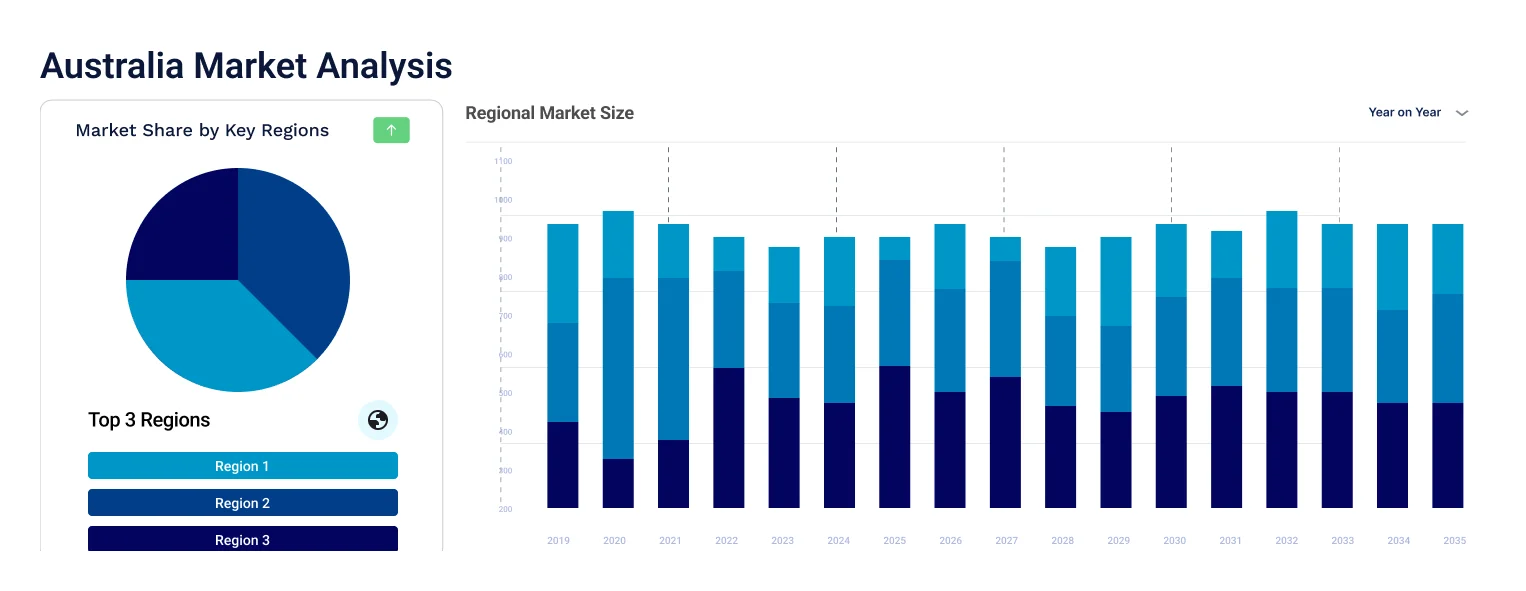
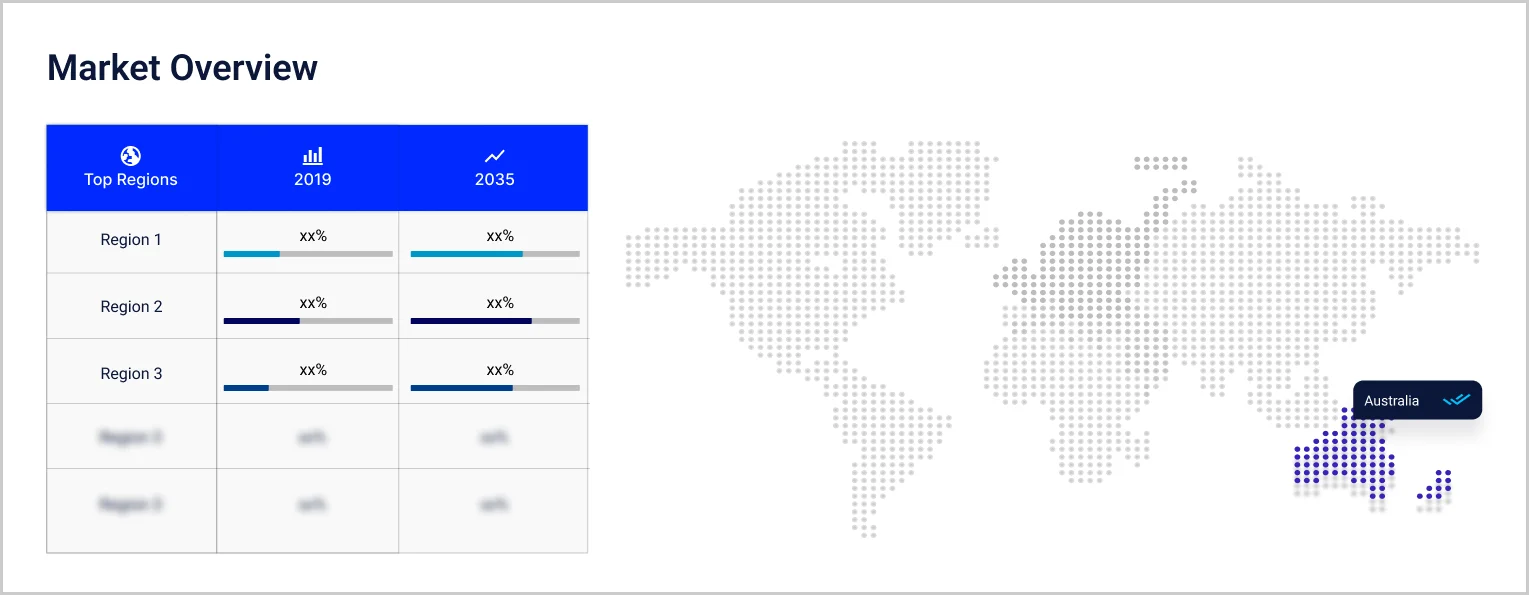
New South Wales dominates, in our estimate, because Sydney has the deepest pool of airport, corporate and event trips, and it grows at an estimated 5.4% CAGR through 2035. Its government introduced an algorithm safety bill in December 2025, with Uber drivers cited as an example. Western Australia is the fastest-growing listed region at 6.6% with a 16.2% share in 2025, followed by Victoria at 5.8%, where new driver rules took effect on 1 March 2026, and Queensland at 5.7%. Rest of Australia grows at 6.2%, with the Australian Capital Territory also at 6.2%, alongside South Australia, Tasmania and the Northern Territory.
| CAGR 2026 to 2035, Market by Region | Growth Rate |
| New South Wales | 5.4 % |
| Victoria | 5.8 % |
| Queensland | 5.7 % |
| Western Australia | 6.6 % |
| Others (Rest of Australia) | 6.2 % |
Competition combines global ride-hailing platforms, taxi networks and regional cooperatives. Entry barriers include driver supply, app reach, brand trust, accreditation and licensing rules, and the cost of meeting safety, insurance and accessibility standards.
Uber
Uber, headquartered in San Francisco, California, was founded in 2009 and runs a global platform for rides, food delivery and freight. In Australia it offers Uber X, Comfort, XL and other ride options, and in August 2025 it extended teen accounts for riders aged 13 to 17 to New South Wales, Victoria, the Northern Territory and Western Australia. In March 2026 it said driverless cars could launch within two years. Its differentiators are platform scale, upfront pricing, in-app safety tools and 208 million monthly active platform consumers worldwide in the June 2026 quarter.
DiDi
DiDi, headquartered in Beijing, China, was founded in 2012 and runs one of the largest ride-hailing platforms in the world, operating in Australia through DiDi Mobility Australia. Its service offers rides in major Australian cities with frequent rider promotions. In January 2026 it became official rideshare partner of the Australian Open, held at Melbourne Park from 18 January to 1 February 2026, with exclusive fan offers. Its differentiators are competitive pricing, promotional campaigns and event partnerships that build rider awareness against Uber.
13cabs
13cabs, a taxi booking network and app owned by A2B Australia, connects passengers with licensed taxis by phone and app across Australian cities. Its parent has operated since 1976 and joined ComfortDelGro in 2024. Victorian rules announced on 17 February 2026 stop drivers displaying a provider's branding unless genuinely affiliated, which bears directly on network brands such as 13cabs. Its differentiators are licensed driver supply, a long-standing consumer brand and corporate account customers served through the wider A2B group.
A2B Australia
A2B Australia, owned by Singapore-based ComfortDelGro since 2024, is an Australian taxi network and payments group whose brands include 13cabs, Silver Service, the MTI dispatch platform and Cabcharge payments. Its network sits within a ComfortDelGro Australia taxi network of more than 9,000 vehicles. ComfortDelGro reported on 13 August 2025 that group taxi and private hire operating profit rose 20.6% in the first half, including a full contribution from A2B. Its differentiators are network scale, payment technology and corporate and government accounts.
Other players operating in the Australia taxi market include Ola, Silver Service, Black & White Cabs, Yellow Cabs Queensland, and Premier Cabs, alongside regional taxi cooperatives, accessible transport providers and limousine operators supplying passengers, corporate accounts and government programmes across Australia.
Competition rests on app reach, driver supply, pricing transparency and regulatory compliance rather than fares alone. Uber leads on platform scale, DiDi competes through promotions and partnerships, and A2B Australia operates 13cabs and Silver Service within a ComfortDelGro network of more than 9,000 vehicles. Black & White Cabs, Yellow Cabs Queensland and Premier Cabs serve state and regional markets. Network brands increasingly depend on apps to widen demand while regulators ask for stronger driver accountability.


Upto 15% Off
AUD
$2749 $2499
$3849 $3499
$4949 $4499
$6049 $5499


*While we strive to always give you current and accurate information, the numbers depicted on the website are indicative and may differ from the actual numbers in the main report. At Expert Market Research, we aim to bring you the latest insights and trends in the market. Using our analyses and forecasts, stakeholders can understand the market dynamics, navigate challenges, and capitalize on opportunities to make data-driven strategic decisions.*
The Australia taxi market is valued at AUD 9850.00 million in 2025, supported by ride-hailing adoption, stricter driver rules and growing electric fleets, with New South Wales as the largest region.
The market is forecast to reach AUD 17309.83 million by 2035, growing at a CAGR of 5.80 % over the 2026 to 2035 period, driven by ride-hailing platforms led by Uber and DiDi, regulation that raises driver standards, and a gradual shift to electric and hybrid fleets.
Electric records the highest CAGR at an estimated 11.8% through 2035, as platform emission targets, charging partnerships and lower running costs encourage drivers to switch from petrol cars, although it starts from a small base.
New South Wales dominates, as Sydney has the largest pool of airport, corporate and event trips. Western Australia is the fastest-growing listed region at an estimated 6.6% CAGR with a 16.2% share in 2025, while the Australian Capital Territory is estimated at 6.2%.
Key players include Uber, DiDi, 13cabs, A2B Australia, Ola, Silver Service, Black & White Cabs, Yellow Cabs Queensland, and Premier Cabs.
On 17 February 2026 Victoria announced a two strikes rule for fare offences within 10 years, limits on displaying provider branding and mandatory QR codes in all taxis and rideshare vehicles, effective from 1 March 2026.
On 8 September 2026 Vero, Uber and Cover Genius announced a motor policy combining private and rideshare cover, priced by kilometres driven on Uber. Eligible driver partners apply directly through the Uber Driver app.
Explore our key highlights of the report and gain a concise overview of key findings, trends, and actionable insights that will empower your strategic decisions.
| Report Features | Details |
| Base Year | 2025 |
| Historical Period | 2019-2025 |
| Forecast Period | 2026-2035 |
| Scope of the Report |
Historical and Forecast Trends, Industry Drivers and Constraints, Historical and Forecast Market Analysis by Segment:
|
| Breakup by Service Type |
|
| Breakup by Vehicle Type |
|
| Breakup by Booking Type |
|
| Breakup by Region |
|
| Market Dynamics |
|
| Competitive Landscape |
|
| Companies Covered |
|
Datasheet
AUD 2,749
AUD 2,499
tax inclusive*
Single User License
AUD 3,849
AUD 3,499
tax inclusive*
Five User License
AUD 4,949
AUD 4,499
tax inclusive*
Corporate License
AUD 6,049
AUD 5,499
tax inclusive*
*Please note that the prices mentioned below are starting prices for each bundle type. Kindly contact our team for further details.*
Flash Bundle
Small Business Bundle
Growth Bundle
Enterprise Bundle
*Please note that the prices mentioned below are starting prices for each bundle type. Kindly contact our team for further details.*
Flash Bundle
Number of Reports: 3
20%
tax inclusive*
Small Business Bundle
Number of Reports: 5
25%
tax inclusive*
Growth Bundle
Number of Reports: 8
30%
tax inclusive*
Enterprise Bundle
Number of Reports: 10
35%
tax inclusive*
How To Order

Select License Type
Choose the right license for your needs and access rights.

Click on ‘Buy Now’
Add the report to your cart with one click and proceed to register.

Select Mode of Payment
Choose a payment option for a secure checkout. You will be redirected accordingly.
Strategic Solutions for Informed Decision-Making
Stay upgraded and grab opportunities by strategic insights
Stay informed and aware for a Market Leverage
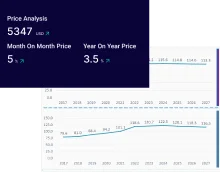
Analyze pricing patterns with comprehensive trend analyses.
Analyse trade data for supply chain insights.
Leverage cost reports for smart savings
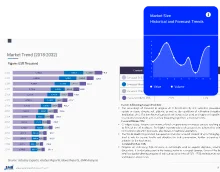
Elevate supply chain with collaboration
Contact Us for Further Information
Our specialized analysts will be available to answer all the pre-purchase and post-purchase queries regarding the report.
Our specialized analysts will be available to answer all the pre-purchase and post-purchase queries regarding the report.
Staying one step ahead of the market landscape with our in-depth research methods, integrating advanced analytics to drive precise and tangible outcomes.
Our expert analyst team offers a significant advantage over competitors, with extensive market insights into the latest trends, putting you strategically ahead.
We deliver a simplified yet extensive report, comprising in-depth industry insights and analytics tailored to your industry requirements.
We are happy to help you navigate through the services we offer and solve your queries.
Contact us