Consumer Insights
Uncover trends and behaviors shaping consumer choices today
Procurement Insights
Optimize your sourcing strategy with key market data
Industry Stats
Stay ahead with the latest trends and market analysis.
The Australia smart manufacturing market covers the connected technologies, software and services that digitise factory operations, including industrial IoT, artificial intelligence and analytics, digital twins and industrial robotics. It helps manufacturers lift productivity, quality, flexibility and sustainability in response to high labour costs, persistent skills shortages and the Future Made in Australia agenda, turning traditional factories into connected, data-driven smart factories that sense, analyse and adapt in real time.
In 2025, the market is valued at AUD 6200.00 million in 2025 and is forecast to grow at a CAGR of 13.50%, reaching AUD 21996.33 million by 2035. Growth is driven by the Future Made in Australia plan, acute labour and skills pressures and the national push to move factories to Industry 4.0.
Compound Annual Growth Rate
13.5%
Value in AUD million
2026-2035
The Australia smart manufacturing market is growing as manufacturers adopt Industry 4.0 technologies to offset high labour costs and chronic skills shortages while raising quality and flexibility. We estimate the market at AUD 6,200.00 million in 2025, spanning connected hardware, software and services. Smart factories are emerging across the country, in Melbourne's advanced manufacturing hubs, Brisbane's biomedical precincts and Adelaide's defence and space clusters, where firms compete on high-value, customised output rather than commodity scale. These clusters pool skills, research and supply chains, making it easier for nearby firms to adopt connected systems and share the cost of specialist capability.
Policy is a major driver of adoption. The government's AUD 22.7 billion Future Made in Australia plan, a AUD 1.7 billion Future Made in Australia Innovation Fund and the AUD 15 billion National Reconstruction Fund are channelling capital into advanced and digital manufacturing. By early 2026 the National Reconstruction Fund Corporation had made around 28 investments, including AUD 200 million in Macquarie Technology Group and AUD 75 million in Gilmour Space Technologies, signalling sustained public support for sovereign capability.
Industry conditions are improving alongside the policy push. The Australian Bureau of Statistics reported in June 2026 that manufacturing grew across all key measures for the first time in several years in 2024-25. Suppliers such as Bosch are investing locally in automation capability, and research bodies are building the Industry 4.0 skills, digital twin methods and analytics tools manufacturers need to scale smart factories beyond a handful of flagship sites.
Revenue is rising as manufacturers digitise operations with the support of federal programs and improving industry conditions, while skills gaps, the cost of change and legacy equipment temper the pace. We expect growth to broaden from flagship smart factories toward small and medium manufacturers over the forecast period, with software and analytics growing faster than hardware as firms move from connecting machines to extracting value from their data. Shared platforms and managed services are expected to widen access for smaller firms.
| Metric | Value |
| Market Size 2025 | AUD 6200.00 million |
| Projected Market Size 2035 | AUD 21996.33 million |
| CAGR 2026 to 2035 | 13.50% |
| Fastest-Growing Technology | AI and Analytics: 16.2% CAGR |
| Fastest-Growing Component | Software: 15.4% CAGR |
| Largest Revenue Segment 2025 | Hardware |
| Dominant Region | Victoria |
| Highest CAGR by Region | South Australia: 14.6% |
| Future Made in Australia Plan | AUD 22.7 billion |
Federal Programs Anchor the Transition
Demand is underpinned by public investment on a scale the sector has not seen before. The AUD 22.7 billion Future Made in Australia plan and the AUD 15 billion National Reconstruction Fund de-risk Industry 4.0 projects and give manufacturers the confidence to invest in connected systems through 2035, even where global conditions are uncertain and private capital is cautious.
Software and AI Lead Growth
Hardware holds the largest share of spending today because sensors, controllers and robots carry the most capital cost, but software grows fastest at an estimated 15.4% CAGR and artificial intelligence and analytics at an estimated 16.2%, as manufacturers move from simply connecting machines to extracting insight and automation from the data those machines generate.
From Flagships to the Mid-Market
Value is shifting from showcase smart factories toward smaller manufacturers that previously saw Industry 4.0 as out of reach. Three priorities stand out:
| Report Summary | Unit | Value |
| Base Year | AUD million | 2025 |
| Historical Period | AUD million | 2019 to 2025 |
| Forecast Period | AUD million | 2026 to 2035 |
| Market Size 2025 | AUD million | 6200.00 |
| Market Size 2035 | AUD million | 21996.33 |
| CAGR 2026 to 2035 | Percentage | 13.50 % |
| CAGR by Technology: AI and Analytics | Percentage | 16.2 % |
| CAGR by Component: Software | Percentage | 15.4 % |
| CAGR by Industry: Defence and Aerospace | Percentage | 15.0 % |
| CAGR by Region: South Australia | Percentage | 14.6 % |
| National Reconstruction Fund | AUD billion | 15 |
| NRF Investments by Early 2026 | Count | 28 |
| Market Share by Region 2025 | Victoria | Dominant Share |
Federal funding, acute labour pressures and improving industry conditions support the market, while skills gaps, the cost of change and legacy equipment keep adoption uneven across manufacturers in the near term.
The Australia smart manufacturing market is being shaped by federal funding, improving industry data, local supplier investment and new research capability, presented here from the most recent.
June 2026 - Manufacturing Grows Across All Key Measures in 2024-25
April 2026 - New ARC Research Hub Drives Digital Manufacturing
February 2026 - National Reconstruction Fund Reaches 28 Investments
January 2026 - Future Made in Australia Plan Scales Advanced Manufacturing
Federal funding, research capability and improving industry data are the main forces, while skills gaps and legacy equipment keep smart factory adoption concentrated in larger firms for now.
Recent developments, presented from the most recent, show policy calls from industry, a major supplier investment, workforce initiatives and new local technology launches.
August 2026 - Manufacturers Call for Policy Certainty on Future Made in Australia
June 2026 - Bosch Opens AUD 17 Million Manufacturing Automation Centre
May 2026 - APS Industrial Brings Siemens Next-Generation PLC to Australia
March 2026 - Workforce Programs Target Industry 4.0 Skills
Policy advocacy, supplier investment and skills programs show that growth depends on turning federal ambition into practical capability and skilled people on the factory floor.
The Expert Market Research’s report on the Australia Smart Manufacturing Market offers a detailed analysis of the market based on the following segments.
Market Breakup by Technology
Industrial IoT leads on value, in our estimate, as the connectivity and sensing layer every smart factory needs to capture data, while AI and Analytics grow fastest by turning that data into decisions and automation, Digital Twin supports design, simulation and optimisation, and Industrial Robotics automates physical tasks. Others covers edge computing, additive methods and augmented reality tools.
Market Breakup by Component
Hardware leads on value, in our estimate, through sensors, controllers, robots and edge devices, while Software grows fastest as analytics, platforms and digital twins spread, and Services cover integration, consulting and managed operations that help firms adopt and sustain the technology. Others includes connectivity and cybersecurity components.
Market Breakup by Industry
Food and Beverage lead on value, in our estimate, as the largest manufacturing sub-sector with strong automation and traceability needs, while Defence and Aerospace grow fastest on sovereign capability investment, Metals and Mining digitise processing and quality, and Automotive and Transport cover components and heavy vehicles. Others includes chemicals, pharmaceuticals and consumer goods.
Market Breakup by Region
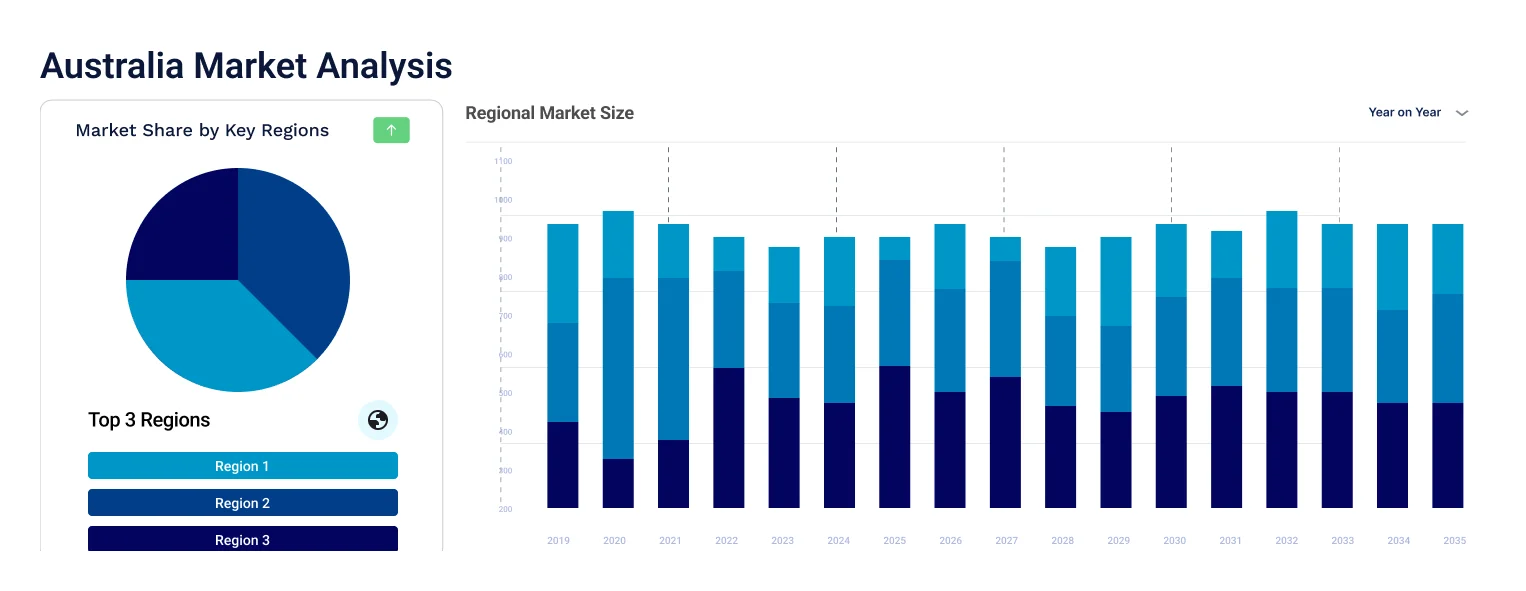
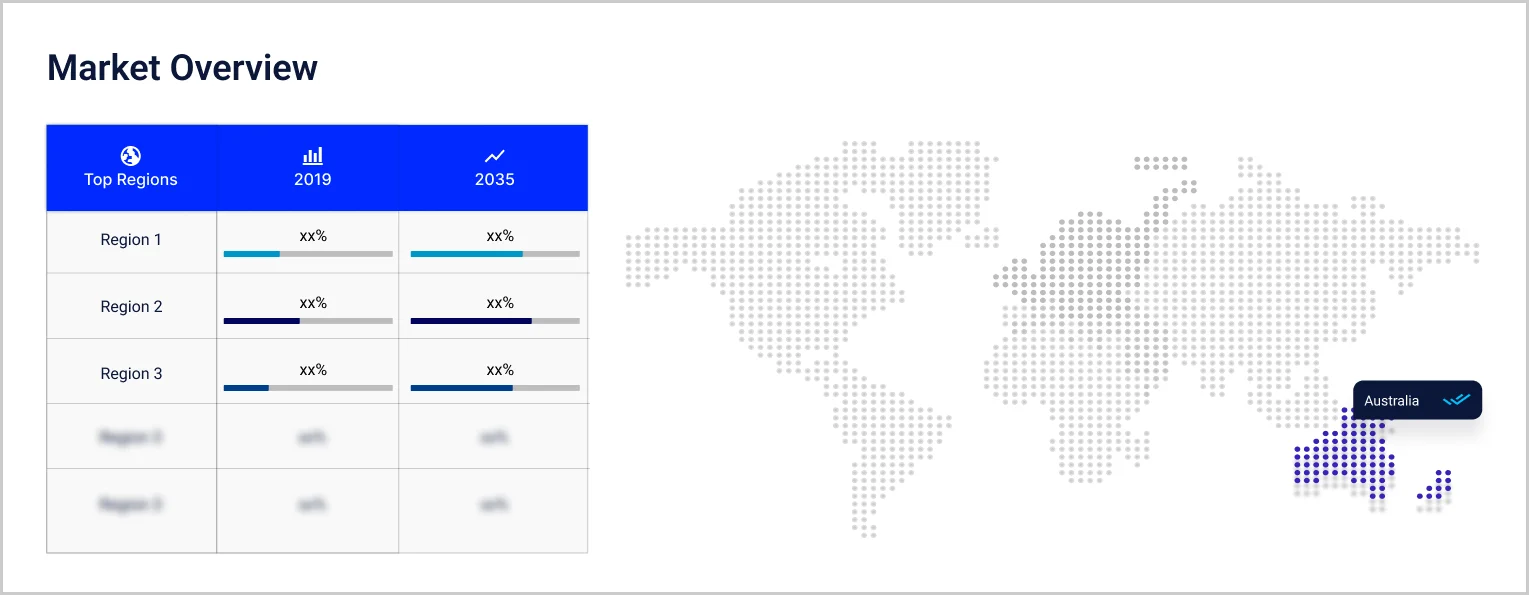
Victoria dominates, in our estimate, as Melbourne hosts advanced manufacturing hubs, research institutes and major supplier investment such as the Bosch automation centre. South Australia grows fastest on defence and space clusters in Adelaide, while New South Wales and Queensland anchor food, biomedical and industrial manufacturing. Others covers Western Australia and the remaining states.
| CAGR 2026 to 2035 | Growth Rate |
| Victoria | 13.8 % |
| New South Wales | 13.4 % |
| Queensland | 13.1 % |
| South Australia | 14.6 % |
| Others (Rest of Australia) | 12.5 % |
Competition combines global automation suppliers, local system integrators and software vendors that adapt and support the technology for Australian conditions. Entry barriers include engineering capability, a large installed base, integration expertise across IT and operational technology, and relationships with manufacturers and research bodies.
Bosch Australia
Bosch Australia, the local arm of Bosch founded in 1886, opened a AUD 17 million Manufacturing Automation Centre in Clayton, Victoria and supplies drives, controls, sensors and Industry 4.0 technology to Australian manufacturers, backed by local engineering and support.
Siemens
Siemens, headquartered in Munich, Germany and founded in 1847, supplies automation hardware, programmable logic controllers, digital twin and manufacturing software across Australia's factories, offering an integrated portfolio from the sensor to the enterprise.
Rockwell Automation
Rockwell Automation, headquartered in Milwaukee, United States and founded in 1903, provides industrial automation and digital transformation technology and works with Australian system integrators such as SAGE Automation to deliver smart manufacturing projects.
SAGE Group
SAGE Group, headquartered at Tonsley in Adelaide, South Australia and founded in 1994, is a leading independent Australian provider of industrial automation, control and smart manufacturing solutions, with deep capability in integrating connected systems. In February 2026 its SAGE Automation division launched a new global headquarters and advanced manufacturing facility at Tonsley in Adelaide.
Other players operating in the Australia smart manufacturing market include Schneider Electric, ABB, B&R, Honeywell, Emerson and Festo, alongside local system integrators and software firms that deliver and support Industry 4.0 projects.
Competition rests on engineering capability, installed base and integration expertise across IT and operational technology rather than product alone, which favours suppliers with strong local support.


Upto 15% Off
AUD
$2749 $2499
$3849 $3499
$4949 $4499
$6049 $5499


*While we strive to always give you current and accurate information, the numbers depicted on the website are indicative and may differ from the actual numbers in the main report. At Expert Market Research, we aim to bring you the latest insights and trends in the market. Using our analyses and forecasts, stakeholders can understand the market dynamics, navigate challenges, and capitalize on opportunities to make data-driven strategic decisions.*
The Australia smart manufacturing market is valued at AUD 6200.00 million in 2025, in our estimate, across connected hardware, software and services.
The market is forecast to reach AUD 21996.33 million by 2035, growing at a CAGR of 13.50% from 2026 to 2035.
Artificial intelligence and analytics are expected to record the highest CAGR, at an estimated 16.2%, as manufacturers extract value from machine data.
Victoria dominates, in our estimate, as Melbourne hosts advanced manufacturing hubs and major supplier investment.
Key players include Bosch Australia, Siemens, Rockwell Automation, SAGE Group, Schneider Electric, ABB, B&R, Honeywell, Emerson and Festo.
The AUD 22.7 billion plan, Innovation Fund and National Reconstruction Fund direct capital into advanced and digital manufacturing, lowering the cost of Industry 4.0 adoption.
High labour costs and skills shortages are pushing manufacturers toward connected automation, analytics and robotics to maintain output and competitiveness.
Explore our key highlights of the report and gain a concise overview of key findings, trends, and actionable insights that will empower your strategic decisions.
| REPORT FEATURES | DETAILS |
| Base Year | 2025 |
| Historical Period | 2019-2025 |
| Forecast Period | 2026-2035 |
| Scope of the Report |
Historical and Forecast Trends, Industry Drivers and Constraints, Historical and Forecast Market Analysis by Segment:
|
| Breakup by Technology |
|
| Breakup by Component |
|
| Breakup by Industry |
|
| Breakup by Region |
|
| Market Dynamics |
|
| Competitive Landscape |
|
| Companies Covered |
|
Datasheet
AUD 2,749
AUD 2,499
tax inclusive*
Single User License
AUD 3,849
AUD 3,499
tax inclusive*
Five User License
AUD 4,949
AUD 4,499
tax inclusive*
Corporate License
AUD 6,049
AUD 5,499
tax inclusive*
*Please note that the prices mentioned below are starting prices for each bundle type. Kindly contact our team for further details.*
Flash Bundle
Small Business Bundle
Growth Bundle
Enterprise Bundle
*Please note that the prices mentioned below are starting prices for each bundle type. Kindly contact our team for further details.*
Flash Bundle
Number of Reports: 3
20%
tax inclusive*
Small Business Bundle
Number of Reports: 5
25%
tax inclusive*
Growth Bundle
Number of Reports: 8
30%
tax inclusive*
Enterprise Bundle
Number of Reports: 10
35%
tax inclusive*
How To Order

Select License Type
Choose the right license for your needs and access rights.

Click on ‘Buy Now’
Add the report to your cart with one click and proceed to register.

Select Mode of Payment
Choose a payment option for a secure checkout. You will be redirected accordingly.
Strategic Solutions for Informed Decision-Making
Stay upgraded and grab opportunities by strategic insights
Stay informed and aware for a Market Leverage
Analyze pricing patterns with comprehensive trend analyses.
Analyse trade data for supply chain insights.
Leverage cost reports for smart savings
Elevate supply chain with collaboration
Contact Us for Further Information
Our specialized analysts will be available to answer all the pre-purchase and post-purchase queries regarding the report.
Our specialized analysts will be available to answer all the pre-purchase and post-purchase queries regarding the report.
Staying one step ahead of the market landscape with our in-depth research methods, integrating advanced analytics to drive precise and tangible outcomes.
Our expert analyst team offers a significant advantage over competitors, with extensive market insights into the latest trends, putting you strategically ahead.
We deliver a simplified yet extensive report, comprising in-depth industry insights and analytics tailored to your industry requirements.
We are happy to help you navigate through the services we offer and solve your queries.
Contact us