Consumer Insights
Uncover trends and behaviors shaping consumer choices today
Procurement Insights
Optimize your sourcing strategy with key market data
Industry Stats
Stay ahead with the latest trends and market analysis.
One key driving factors boosting the Australia sake market growth is menu engineering by premium restaurants seeking beverage differentiation beyond wine. Sake delivers controlled alcohol levels and pairing flexibility. Another factor is distributor margin optimization. Sake formats allow predictable pour costs and reduced spoilage compared to wine. Together, these factors are encouraging long-term supply contracts rather than spot buying. This benefits producers capable of volume consistency and technical support.
According to the Australia sake market analysis, the country showed a significant 27% year-on-year growth with a total of 677,962 liters of sake imported in 2024. On the other hand, in October 2025, Kikuizumi unveiled its Hitosuji sparkling sake series at Fine Food Australia, highlighting premium effervescent sake innovation. This development signals a clear shift from pure import dependency toward hybrid production models. For B2B buyers, especially national restaurant groups, this improves price predictability and volume reliability. The strategy reflects how sake is being repositioned from niche import to managed beverage category within Australia’s premium alcohol ecosystem.
The industry is progressively dominated by professional buyers instead of casual retail demand. Fine-dining establishments, hotel groups, and high-end Asian fusion chains are now considering sake as a key beverage item. To cater to these demands, distributors are limiting their portfolios and concentrating on food-pairing qualities. Cold-filtered, less acidic varieties are becoming more popular as they are best matched with Australian seafood and grilled dishes. For example, Sushi Yuuden’s Australian opening in May 2023, highlighted premium sake pairings alongside its Michelin-starred cuisine, elevating local sake culture. Few hospitality groups even resort to cutting down on their wine SKUs and, at the same time, increase their sake selections for the tasting menus. This Australia sake market trend favors suppliers who offer stable year-round supply and staff training support.
Compound Annual Growth Rate
5.3%
Value in AUD million
2026-2035
|
Australia Sake Market Report Summary |
Description |
Value |
|
Base Year |
AUD million |
2025 |
|
Historical Period |
AUD million |
2019-2025 |
|
Forecast Period |
AUD million |
2026-2035 |
|
Market Size 2025 |
AUD million |
241.37 |
|
Market Size 2035 |
AUD million |
404.55 |
|
CAGR 2019-2025 |
Percentage |
XX% |
|
CAGR 2026-2035 |
Percentage |
5.30% |
|
CAGR 2026-2035 - Market by Region |
Australian Capital Territory |
6.0% |
|
CAGR 2026-2035 - Market by Type |
Junmai Ginjo |
6.2% |
|
CAGR 2026-2035 - Market by Age Group |
20-40 Years Old |
5.9% |
|
2025 Market Share by Region |
New South Wales |
35.7% |
February 2026 – Tsunan AI Sake Entered Western Markets via Strategic Partnership
Tsunan AI sake expanded international distribution through partnerships, strengthening premium Japanese sake accessibility across export-focused Western on-trade and retail channels. Importers can collaborate with premium Japanese breweries to position artisanal, terroir-driven sake for high-end dining and specialty retail, capitalizing on such Australia sake market developments.
August 2025 – Diageo Divested RTD Brands to Refocus Premium Alcohol Portfolio
Diageo sold selected RTD brands, signaling strategic refocus toward core premium alcohol categories and streamlined brand portfolios globally. Sake producers and distributors can capture shelf space and distributor attention as portfolios rebalance toward premium and niche alcohol segments.
August 2024 – Slades Launched Snow Monkey Sake in Australia
Slades introduced Snow Monkey sake to Australia, targeting premium Japanese dining venues and specialty liquor retailers across the nation. Other sake brands can accelerate entry through experienced importers with established hospitality and Asian cuisine distribution networks, leveraging this Australia sake market opportunity.
February 2023 – Toyo Bijin Premium Sake Debuted in Australian Market
Japanese sake brand Toyo Bijin launched in Australia, focusing on refined flavor profiles for upscale restaurants and educated consumers. Breweries can tailor flavor education and food-pairing narratives to attract Australia’s premium dining and wine-curious audiences.
Localized Brewing and Hybrid Production Models
Domestic sake brewing trials are reducing dependence on Japanese imports. Australian beverage companies are experimenting with rice sourcing, water mineral adjustments, and yeast control to match local palate preferences. This trend in the Australia sake market lowers logistics risk and improves responsiveness to hospitality demand spikes. In February 2024, Nōmu Sake debuted an exclusive Australian selection, focusing on curated premium sake experiences for bars, restaurants, and specialty retailers. Hybrid models also allow faster SKU customization for restaurant chains.
Food Service-Led Demand Shaping Product Design
Sake demand trajectory in Australia is being shaped by chefs and not consumers alone. Hospitality groups are demanding cleaner products, lower sweetness, and consistent batch profiles. This has pushed suppliers to refine polishing ratios and fermentation timelines. Beverage training is increasingly bundled with supply agreements. Some distributors now include sake education modules for front-of-house staff. This mirrors structured wine programs and strengthens repeat ordering and reduces menu churn, accelerating the Australia sake market value. In December 2025, Adelaide welcomed its first dedicated sake bar, featuring premium pours including gold-flecked bottles and curated tasting flights.
Portfolio Rationalization by Alcohol Distributors
Major distributors are trimming sake portfolios to focus on reliable performers. Instead of broad imports, they prefer fewer SKUs with consistent turnover. This aligns with inventory discipline across spirits and craft beer categories. Warehousing efficiency and forecasting accuracy are the key driving factors of this particular emerging trend. Sake producers offering stable production schedules gain priority listing. This trend favors technically consistent brewers over artisanal variability, reshaping the Australia sake market scope. It also increases pressure on branding to deliver measurable sell-through performance. In October 2023, Treasury Wine Estates (TWE) launched Sun Monkey, the world's first sake-infused wine collection, in Australia.
Regulatory and Labeling Alignment Benefits Importers
Improved regulatory clarity around brewed alcoholic beverages has reduced compliance friction. Importers now face fewer reclassification delays at ports. This improves working capital cycles. Label standardization also helps hospitality buyers understand alcohol content and serving guidance, reshaping the Australia sake market dynamics. Government alignment indirectly supports category growth by lowering administrative risk. For example, as per regulations published in July 2023, all beverages with above 1.15% ABV must carry the label in accordance with strict size, format, color and font specifications in Australia. For B2B players, this means faster onboarding of new products and smoother national distribution planning. In November 2025, Cellr introduced a blockchain-powered traceability solution to combat counterfeit wine and protect authenticity across Australian beverage supply chains.
Premium Asian Cuisine Expansion Across Urban Centers
The growth of high-end Japanese and pan-Asian restaurants in Sydney, Melbourne, and Brisbane is driving demand in the Australia sake market through structural support. Restaurants demand authenticity in beverage supply, and this is met by professionally managed sake. Sake is now being incorporated into beverage tenders in new restaurant projects. This has led to sake being incorporated into long-term procurement cycles as opposed to being a seasonal or limited menu item. In October 2025, a premium sake line was introduced by Nishibori Brewery, a Japanese sake maker targeting global luxury dining and upscale markets.
The EMR’s report titled “Australia Sake Market Report and Forecast 2026-2035” offers a detailed analysis of the market based on the following segments:
Market Breakup by Type
Key Insight: As per the Australia sake market report, ordinary sake remains limited to casual outlets due to weaker flavor depth. Junmai leads due to operational reliability, meanwhile Honjozo appeals to price conscious buyers. Ginjo sees selective adoption, and Junmai Ginjo gains momentum through tasting menus. Junmai Daiginjo remains niche due to cost sensitivity. Distributors like Sakeportal offer an organic Japanese sake collection for import, featuring pure-certified, naturally brewed offerings targeting premium sustainability-focused hospitality markets. Together, the segments reflect a shift from volume toward controlled premiumization driven by hospitality demand.
Market Breakup by Age Group
Key Insight: The 40–60 age group anchors majority of the sake consumption in Australia through repeat premium dining and corporate hospitality usage. Their preferences favor stable profiles and menu reliability. The 20–40 segment accelerates category growth by engaging with tastings, pairing menus, and chef-led experimentation. Consumers above 60 remain cautious, preferring familiar alcohol formats and limited experimentation. All of these age groups shape procurement decisions, training intensity, and product positioning across hospitality supply chains. Their combined behavior determines how sake is introduced, scaled, and sustained within Australian food service environments over time.
Market Breakup by Region
Key Insight: Western Australia dominates through premium concentration and disciplined purchasing behavior. Victoria drives innovation through experimental menus and training-led adoption. New South Wales maintains steady demand supported by scale and restaurant density. Queensland shows selective uptake linked to tourism-driven dining. The Australian Capital Territory supports niche placements within curated venues. Other regions remain opportunistic, influenced by seasonal traffic and hospitality investment cycles. Regional differences across the Australia sake market shape distribution models, portfolio depth, and education strategies for sake suppliers operating nationally.
Junmai registers the largest share of the market due to menu pairing flexibility
Junmai sake holds the dominant position in Australia due to its adaptability across food service formats. Restaurants prefer Junmai because it performs consistently across hot and cold serving styles. Alcohol strength remains balanced and predictable and it supports controlled pour costs. Importers favor Junmai since labeling is simpler and compliance risks are lower. Many distributors also report fewer returns due to flavor stability. Junmai works well with seafood focused menus that dominate premium urban dining. For example, Tsunami Sushi offers a curated Junmai Daiginjo, highlighting premium sake’s refined taste for local diners.
Junmai Ginjo is gaining traction across the Australia sake market scope as restaurants move toward offering curated tasting menus. The segment benefits from refined aroma without heavy sweetness. Australian chefs value its clean finish, and they support pairing with modern fusion cuisine. Importers are expanding Junmai Ginjo portfolios due to higher perceived value per bottle. It also performs well in sake flights which are becoming common in premium venues. Production control has improved which reduces variability concerns. Distributors are positioning Junmai Ginjo as a bridge between entry and premium tiers.
The 40–60 years old age group account for the largest share due to premium dining participation
Consumers of age 40-60 are the main consumers of sake in Australia, mainly through fine dining and corporate hospitality venues. They recognize the importance of authenticity, food compatibility, and consistent quality. On the other hand, this segment might occasionally fail to buy sake themselves at retail, but their tastes have a major influence on restaurant buying decisions, thus they are commercially significant for importers and distributors.
Growth is being driven by younger consumers aged between 20-40 years through experiential dining formats. They are more willing to participate in tastings, pairing menus, and discovery-led experiences. Social dining further increases exposure, whereas storytelling and visual presentation match up well with this group. The most utilizing of engagement are Junmai Ginjo and Ginjo styles. According to the Australia sake market analysis, wine pairings contribute between 25% and 40% of total revenue in fine dining restaurants.
|
CAGR 2026-2035 - Market by |
Region |
|
Australian Capital Territory |
6.0% |
|
New South Wales |
XX% |
|
Victoria |
XX% |
|
Queensland |
XX% |
|
Western Australia |
XX% |
|
Others |
XX% |
Western Australia clocks in the leading market position due to concentrated premium dining
The Western Australia sake market’s dominance is led by tightly organized premium hospitality ecosystem that works in harmony a well-structured premium hospitality environment. Perth restaurants favor curated beverage lists with limited yet consistent selections. Such an environment supports the consumption growth of sake when high menu control is maintained. In purchasing decisions, supply reliability is considered more important than the variety of brands. Streamlined logistics processes allow for better stock visibility and less wastage due to spoilage.
Queensland is rapidly expanding its share in the Australia sake market revenue, driven by an experimental dining culture. Restaurants in Brisbane are always looking for new ways to pair and present beverages. Sake has become an integral part of tasting menus and chef-led concepts. To meet the demand for continuously changing food experiments, importers are providing customized portfolios instead of broad catalogs. In February 2026, a new bespoke 12-seat omakase restaurant opened in Brisbane, enhancing fine dining experiences and premium beverage pairings including sake.
Leading Australia sake market players are becoming more reliable in delivery and product quality rather than constantly expanding their product lines. Hospitality buyers are looking for less SKUs that can be used consistently on different menus. Contract lengths are getting longer because restaurants want to be sure that they will get supplies. Training sessions are more part of distribution packages so that staff knowledge can be improved.
Australia sake companies find opportunities in hybrid brewing and private label collaborations with restaurant groups. Local partnerships are becoming strategically important. Brands that are novelty-driven are having problems with customer retention. Companies that spend their money on logistics, education, and stable production are getting better shelf space. Commercial responsiveness is turning into a core competitive advantage.
Hakutsuru Sake Brewing Co., Ltd.
Established in 1743 and headquartered in Kobe, Japan, Hakutsuru focuses on export-ready sake with high batch consistency. In Australia, it supplies Junmai and Ginjo styles suited for food service operations. The company emphasizes production stability and quality control. Its portfolio aligns with long-term hospitality contracts. Hakutsuru also supports distributor-led training programs.
Gekkeikan Sake Co., Ltd.
Founded in 1637 and based in Kyoto, Japan, Gekkeikan specializes in scalable sake production. In Australia, it targets food service buyers needing predictable supply volumes. The company offers consistent flavor profiles that reduce menu variability. Strong logistics planning supports timely deliveries. Gekkeikan works closely with distributors to manage inventory cycles; its approach suits national restaurant chains.
Ozeki Corporation
Established in 1711 and headquartered in Hyogo, Japan, Ozeki positions its sake between premium and accessible segments. In Australia, it supports flexible supply arrangements for distributors. Buyers value its controlled brewing process and steady profile output. Ozeki performs well in mid-range hospitality settings.
Takara Sake USA Inc.
Established in 1983 and headquartered in California, United States, Takara leverages international brewing infrastructure. In Australia, it supports hybrid sourcing strategies to reduce import dependency. This approach improves supply continuity and mitigates shipping risks. Its international footprint supports adaptive production planning.
Other key players in the market include Asahi Shuzo Co., Ltd. (Dassai), Kiku-Masamune Sake Brewing Co., Ltd., Oenon Holdings (Hakushika), Sho Chiku Bai (Takara brand), Aramasa Co., Ltd., and Kato Kichibee Shoten (Born), among others.
Explore the latest trends shaping the Australia sake market 2026-2035 with our in-depth report. Gain strategic insights, future forecasts, and key market developments that can help you stay competitive. Download a free sample report or contact our team for customized consultation on Australia sake market trends 2026.


Upto 15% Off
AUD
$2749 $2499
$3849 $3499
$4949 $4499
$6049 $5499


*While we strive to always give you current and accurate information, the numbers depicted on the website are indicative and may differ from the actual numbers in the main report. At Expert Market Research, we aim to bring you the latest insights and trends in the market. Using our analyses and forecasts, stakeholders can understand the market dynamics, navigate challenges, and capitalize on opportunities to make data-driven strategic decisions.*
In 2025, the Australia sake market reached an approximate value of AUD 241.37 million.
The market is projected to grow at a CAGR of 5.30% between 2026 and 2035.
The key players in the market include Hakutsuru Sake Brewing Co., Ltd., Gekkeikan Sake Co., Ltd., Ozeki Corporation, Takara Sake USA Inc., Asahi Shuzo Co., Ltd. (Dassai), Kiku-Masamune Sake Brewing Co., Ltd., Oenon Holdings (Hakushika), Sho Chiku Bai (Takara brand), Aramasa Co., Ltd., and Kato Kichibee Shoten (Born), among others.
Strengthening contract-based supply. Investing in staff education. Simplifying active portfolios. Collaborating closely with chefs. Optimizing logistics planning. Expanding controlled hybrid production capabilities locally.
Cold chain complexity increases costs. Import lead times remain uncertain. Staff education gaps persist. Overextended portfolios reduce focus. Price sensitivity in casual venues limits faster national expansion.
Explore our key highlights of the report and gain a concise overview of key findings, trends, and actionable insights that will empower your strategic decisions.
| REPORT FEATURES | DETAILS |
| Base Year | 2025 |
| Historical Period | 2019-2025 |
| Forecast Period | 2026-2035 |
| Scope of the Report |
Historical and Forecast Trends, Industry Drivers and Constraints, Historical and Forecast Market Analysis by Segment:
|
| Breakup by Type |
|
| Breakup by Age Group |
|
| Breakup by Region |
|
| Market Dynamics |
|
| Competitive Landscape |
|
| Companies Covered |
|
Datasheet
AUD 2,749
AUD 2,499
tax inclusive*
Single User License
AUD 3,849
AUD 3,499
tax inclusive*
Five User License
AUD 4,949
AUD 4,499
tax inclusive*
Corporate License
AUD 6,049
AUD 5,499
tax inclusive*
*Please note that the prices mentioned below are starting prices for each bundle type. Kindly contact our team for further details.*
Flash Bundle
Small Business Bundle
Growth Bundle
Enterprise Bundle
*Please note that the prices mentioned below are starting prices for each bundle type. Kindly contact our team for further details.*
Flash Bundle
Number of Reports: 3
20%
tax inclusive*
Small Business Bundle
Number of Reports: 5
25%
tax inclusive*
Growth Bundle
Number of Reports: 8
30%
tax inclusive*
Enterprise Bundle
Number of Reports: 10
35%
tax inclusive*
How To Order

Select License Type
Choose the right license for your needs and access rights.

Click on ‘Buy Now’
Add the report to your cart with one click and proceed to register.

Select Mode of Payment
Choose a payment option for a secure checkout. You will be redirected accordingly.
Strategic Solutions for Informed Decision-Making
Stay upgraded and grab opportunities by strategic insights
Stay informed and aware for a Market Leverage
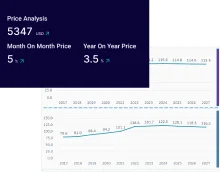
Analyze pricing patterns with comprehensive trend analyses.
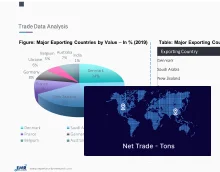
Analyse trade data for supply chain insights.
Leverage cost reports for smart savings
Elevate supply chain with collaboration
Contact Us for Further Information
Our specialized analysts will be available to answer all the pre-purchase and post-purchase queries regarding the report.
Our specialized analysts will be available to answer all the pre-purchase and post-purchase queries regarding the report.
Staying one step ahead of the market landscape with our in-depth research methods, integrating advanced analytics to drive precise and tangible outcomes.
Our expert analyst team offers a significant advantage over competitors, with extensive market insights into the latest trends, putting you strategically ahead.
We deliver a simplified yet extensive report, comprising in-depth industry insights and analytics tailored to your industry requirements.
We are happy to help you navigate through the services we offer and solve your queries.
Contact us