Consumer Insights
Uncover trends and behaviors shaping consumer choices today
Procurement Insights
Optimize your sourcing strategy with key market data
Industry Stats
Stay ahead with the latest trends and market analysis.
Compound Annual Growth Rate
13.6%
Value in AUD billion
2026-2035
|
AUD 12.7 Billion New Clean Energy Investment 2024 (Record) |
~60 GW Total Installed Renewable Capacity 2025 |
|
43.7% NEM Renewable Generation Share 2025 |
82% by 2030 Legislated Renewable Energy Target (NEM) |
Quick Answer
The Australia renewable energy market covers investment, generation, and deployment of electricity from solar, wind, hydro, and battery energy storage across the National Electricity Market (NEM) and WA's South West Interconnected System (SWIS). In 2024, new investment in clean energy reached a record AUD 12.7 billion per the Clean Energy Council. By end-2025, total installed renewable capacity reached ~60 GW (28.3 GW rooftop solar, 23 GW grid-scale wind and solar, 7 GW hydro). Renewables accounted for 43.7 per cent of NEM generation in 2025, with Q4 2025 recording 51 per cent for the first time. The market is supported by the Capacity Investment Scheme (40 GW target by July 2025), the AUD 20 billion Rewiring the Nation transmission programme, and the legislated 82 per cent renewable target for 2030. The renewable energy market is projected to reach AUD 45.53 billion in annual investment by 2035 at a 13.6 per cent CAGR.
Late in 2025, something happened in Australia's electricity grid that engineers and policymakers had been pencilling in for years but weren't entirely sure would land on schedule. Renewable sources delivered more than half of all power flowing through the NEM across the December quarter. Not in a single record-breaking hour, not on a calm autumn Sunday, but across a full three-month period. Ten years ago, renewables were handling ~14.6 per cent of east coast electricity. Getting from there to here wasn't the result of any one policy or project: it was rooftop solar spreading quietly across four million homes and businesses, wind and solar farms going up at scale, and a wave of grid-connected batteries only now starting to show what it can actually do.
The Clean Energy Regulator puts new renewable capacity added to the NEM at close to 7 GW for 2025, coming off a record 7.5 GW in 2024. Renewables covered 43.7 per cent of NEM generation across all of 2025, up from 39 per cent the year before. Total renewable output across the NEM and SWIS hit 106,656 GWh. A record 59.7 million Large-scale Generation Certificates were created, up 8.2 million on 2024. Each LGC represents real accredited generation in the Australia renewable energy market, so that jump matters.
Three things are doing the heavy lifting shaping where the renewable energy market heads. First is the federal Capacity Investment Scheme, expanded in July 2025 to a 40 GW target and expected to underpin ~AUD 73 billion in electricity sector investment between now and 2027. It works by providing revenue underwriting, unlocking financing for projects that would otherwise struggle in an environment where high renewable penetration keeps wholesale prices down. Second is Rewiring the Nation, the AUD 20 billion transmission programme financing 4,581 km of new powerlines. Third is batteries: the 1.9 GW and 4.9 GWh of utility-scale storage commissioned in 2025 alone exceeded everything built across the eight years before combined. The pipeline has grown from 3 GW in 2022 to 26 GW by end-2025.
| Metric | Value |
| New Clean Energy Investment 2024 | AUD 12.7 Billion (Record) |
| Projected Renewable Energy Market Investment 2035 (13.6% CAGR) | AUD 45.53 Billion |
| CAGR 2026 to 2035 | 13.6% |
| New Clean Energy Investment Q4 2025 | AUD 3.5 Billion |
| CIS-Supported Investment 2024 to 2027 | ~AUD 73 Billion |
| Rewiring the Nation Programme | AUD 20 Billion |
| CEFC Total Capital Allocation 2025 | AUD 32.5 Billion |
| AEMO ODP Investment PV to 2050 | AUD 128 Billion |
| Consumer Cost Savings from ODP | AUD 22 Billion |
| NEM Renewable Share 2025 | 43.7% |
| NEM Renewable Share Q4 2025 | 51% (First Time) |
| New Renewable Capacity Added 2025 | ~7 GW |
| Total Installed Renewable Capacity 2025 | ~60 GW |
| Grid-Scale Renewable Capacity 2025 | 23 GW Wind + Solar |
| Rooftop Solar Installed Capacity 2025 | 28.3 GW |
| Grid-Scale Battery Pipeline 2025 | 26 GW (from 3 GW in 2022) |
| AEMO ISP Grid-Scale Target 2030 | 58 GW Wind + Solar |
| AEMO ISP Grid-Scale Target 2050 | 120 GW Wind + Solar |
| Government 2030 NEM Target | 82% Renewable Electricity |
The NEM Has Crossed the 50% Renewable Threshold and Is Not Going Back
The 51 per cent Q4 2025 figure isn't a one-off. It reflects the cumulative effect of 28.3 GW of rooftop solar, 23 GW of grid-scale wind and solar, and the battery pipeline finally coming online at scale. The Australia renewable energy market now has the installed capacity and development pipeline to push the annual NEM share toward the legislated 82 per cent by 2030 target. The question isn't whether it happens: it's at what cost, how the transmission buildout keeps pace, and how coal retirements are sequenced. The grid has fundamentally changed character from a coal-and-gas baseload system to a renewables-plus-storage system.
The Capacity Investment Scheme and Rewiring the Nation Are the Policy Backbone
The 40 GW CIS target, expanded in July 2025, is underpinning ~AUD 73 billion in renewable energy market investment through 2027. Revenue underwriting is the mechanism: guaranteed floor prices for generation that would otherwise struggle to finance in a market where renewables push wholesale prices down. The AUD 20 billion Rewiring the Nation programme funds the 4,581 km of transmission AEMO's ISP says the grid needs before generation targets become physically achievable. Together, these two programmes represent the most significant federal intervention in the electricity sector since the original Renewable Energy Target was legislated.
Storage Deployment Has Moved From Pilot to Structural
The 1.9 GW and 4.9 GWh of utility-scale batteries commissioned in 2025 exceeded the combined deployment of the eight prior years. The development pipeline has grown from 3 GW in 2022 to 26 GW by end-2025: nearly nine-fold in three years. Residential batteries: 183,245 in H2 2025 alone, more than the four previous years combined. The Cheaper Home Batteries Programme expanded from AUD 2.3 billion to AUD 7.2 billion in December 2025 after 163,000 installations in the first five months. Storage is no longer the marginal technology in the renewable energy market: it's the structural enabler of high renewable penetration.
Key Insight
The Australia renewable energy market's transition from ~14.6 per cent renewables in the east coast grid a decade ago to 51 per cent in Q4 2025 has been faster than most serious analysts projected. The next decade's challenge is different: not whether renewables scale (they will), but whether transmission, storage, and gas firming scale quickly enough to make 82 per cent by 2030 actually achievable without reliability compromises. The AEMO Draft 2026 ISP's AUD 128 billion optimal development path is the roadmap. Whether the build happens on that schedule is the key variable.
Q4 2025: 51 Per Cent Renewable NEM and 2.1 GW Commissioned
Q4 2025 was the single biggest quarter for renewable commissioning in Australia's history. 2.1 GW of wind and solar were commissioned in the quarter alone (a record), plus 1 GW of utility-scale batteries. NEM renewable share hit 51 per cent for the first three-month period ever. Battery discharge volumes grew 198 per cent year-on-year. AUD 3.5 billion in new financial commitments were signed in the quarter. The Clean Energy Regulator's Q4 2025 QCMR confirmed these figures independently of AEMO's Quarterly Energy Dynamics.
AEMO Draft 2026 Integrated System Plan, December 2025
Released 10 December 2025 for stakeholder consultation, the Draft 2026 ISP maps the optimal development path for the NEM through 2050. It calls for 120 GW of grid-scale wind and solar, 32 GW of grid-scale batteries, 12 GW of pumped hydro, and 14 GW of flexible gas. Total investment: AUD 128 billion in present value. Projected consumer savings from avoided system costs: AUD 22 billion. The ISP is updated biennially and is the authoritative planning document for NEM infrastructure investment in the renewable energy market.
Cheaper Home Batteries Programme Expansion, December 2025
The Cheaper Home Batteries Programme, launched 1 July 2025 with a 30 per cent upfront discount, was expanded from AUD 2.3 billion to AUD 7.2 billion in December 2025 after 163,000 batteries were installed in the first five months alone. Total H2 2025 residential battery installations reached 183,245, more than the four previous years combined. The programme has demonstrably pulled forward residential battery deployment and is reshaping the distributed energy resource profile of the Australia renewable energy market.
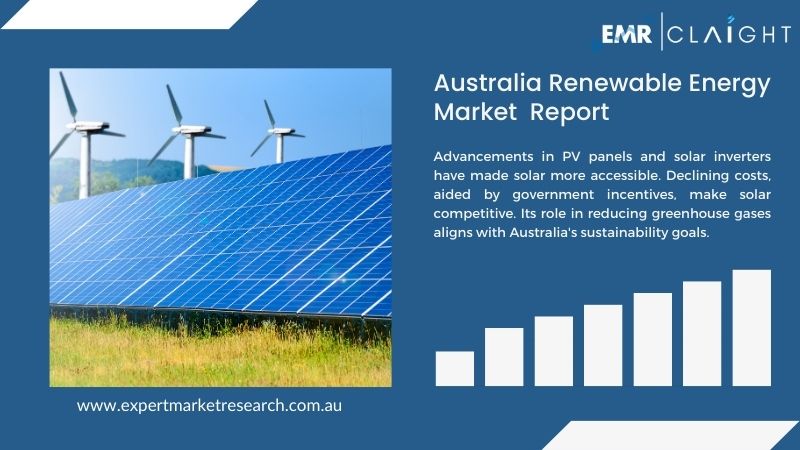
Market Breakup by Technology
Market Breakup by Region
The Australia renewable energy market has a diverse competitive landscape spanning global renewable developers, Australian gentailers, superannuation-backed infrastructure investors, and specialist storage and transmission players. The scale of the pipeline and the CIS underwriting has attracted unprecedented institutional capital.
AGL Energy
Australia's largest electricity generator and retailer, transitioning from a coal-heavy fleet to renewables. Major investments in Liddell and Loy Yang replacement capacity. Operates the Torrens Island and Silverton Wind Farm portfolios. Key player in the coal-to-renewables transition in the renewable energy market.
Origin Energy
Now owned by Brookfield and EIG following privatisation. Major retail and generation position. Eraring coal plant retirement (Australia's largest) reshaping the NSW generation mix. Committed to renewables build-out alongside the coal exit.
Squadron Energy
Andrew Forrest-owned developer of utility-scale wind, solar, and storage. Acquired CWP Renewables. Rapidly growing portfolio of operational and pipeline assets across NSW, Victoria, and Queensland. One of the most active domestic developers.
Iberdrola Australia
Global renewable developer formerly operating as Infigen Energy. Strong wind portfolio and growing solar and battery footprint. Active participant in CIS tenders.
Neoen Australia
French-owned global renewable developer with a major Australian presence. Operates the Hornsdale Power Reserve (Tesla Big Battery) in SA: Australia's iconic grid-scale storage project. Broad portfolio of wind, solar, and battery assets.
Other significant players include EnergyAustralia, Snowy Hydro (pumped hydro and generation), Stanwell (QLD state-owned), CS Energy (QLD), Meridian Energy Australia, Acciona Energy, ENGIE, Tilt Renewables, Lightsource bp, and Edify Energy (storage specialist). Superannuation-backed investment vehicles including IFM Investors, AustralianSuper, and QIC hold significant stakes across renewable and transmission infrastructure.


Upto 15% Off
AUD
$2749 $2499
$3849 $3499
$4949 $4499
$6049 $5499


*While we strive to always give you current and accurate information, the numbers depicted on the website are indicative and may differ from the actual numbers in the main report. At Expert Market Research, we aim to bring you the latest insights and trends in the market. Using our analyses and forecasts, stakeholders can understand the market dynamics, navigate challenges, and capitalize on opportunities to make data-driven strategic decisions.*
New clean energy investment reached a record AUD 12.7 billion in 2024 per the Clean Energy Council. Total installed renewable capacity reached ~60 GW by end-2025. Projected to grow to AUD 45.53 billion in annual investment by 2035 at a 13.6 per cent CAGR.
82 per cent renewable electricity generation in the NEM by 2030, legislated. Backed by the Capacity Investment Scheme (40 GW target, expanded July 2025) and the AUD 20 billion Rewiring the Nation transmission programme.
A federal revenue underwriting scheme providing guaranteed floor prices for renewable generation and storage, expanded in July 2025 to a 40 GW target. Expected to underpin ~AUD 73 billion in electricity sector investment between 2024 and 2027.
Q4 2025 was the single biggest quarter for renewable commissioning in Australia's history. 2.1 GW of wind and solar plus 1 GW of utility-scale batteries were commissioned. NEM renewable share hit 51 per cent for the first three-month period ever. Battery discharge grew 198 per cent year-on-year.
Released 10 December 2025, the Draft 2026 ISP maps the optimal development path for the NEM through 2050: 120 GW of grid-scale wind and solar, 32 GW of grid-scale batteries, 12 GW of pumped hydro, and 14 GW of flexible gas. Total investment AUD 128 billion in present value; projected consumer savings AUD 22 billion.
Major players include AGL Energy, Origin Energy (Brookfield-EIG owned), Squadron Energy (Forrest), Iberdrola Australia, Neoen (Hornsdale Power Reserve), EnergyAustralia, Snowy Hydro, Stanwell, CS Energy, Acciona, ENGIE, and Tilt Renewables. Superannuation funds including IFM Investors, AustralianSuper, and QIC hold significant infrastructure stakes.
The market is broken down into New South Wales, Victoria, Queensland, Australian Capital Territory, Western Australia, and others.
Explore our key highlights of the report and gain a concise overview of key findings, trends, and actionable insights that will empower your strategic decisions.
| Report Features | Details |
| Base Year | 2025 |
| Historical Period | 2019-2025 |
| Forecast Period | 2026-2035 |
| Scope of the Report |
Historical and Forecast Trends, Industry Drivers and Constraints, Historical and Forecast Market Analysis by Segment:
|
| Breakup by Technology Type |
|
| Breakup by End User |
|
| Breakup by Grid Connection |
|
| Breakup by Region |
|
| Market Dynamics |
|
| Competitive Landscape |
|
| Companies Covered |
|
Datasheet
AUD 2,749
AUD 2,499
tax inclusive*
Single User License
AUD 3,849
AUD 3,499
tax inclusive*
Five User License
AUD 4,949
AUD 4,499
tax inclusive*
Corporate License
AUD 6,049
AUD 5,499
tax inclusive*
*Please note that the prices mentioned below are starting prices for each bundle type. Kindly contact our team for further details.*
Flash Bundle
Small Business Bundle
Growth Bundle
Enterprise Bundle
*Please note that the prices mentioned below are starting prices for each bundle type. Kindly contact our team for further details.*
Flash Bundle
Number of Reports: 3
20%
tax inclusive*
Small Business Bundle
Number of Reports: 5
25%
tax inclusive*
Growth Bundle
Number of Reports: 8
30%
tax inclusive*
Enterprise Bundle
Number of Reports: 10
35%
tax inclusive*
How To Order

Select License Type
Choose the right license for your needs and access rights.

Click on ‘Buy Now’
Add the report to your cart with one click and proceed to register.

Select Mode of Payment
Choose a payment option for a secure checkout. You will be redirected accordingly.
Strategic Solutions for Informed Decision-Making
Stay upgraded and grab opportunities by strategic insights
Stay informed and aware for a Market Leverage
Analyze pricing patterns with comprehensive trend analyses.
Analyse trade data for supply chain insights.
Leverage cost reports for smart savings
Elevate supply chain with collaboration
Contact Us for Further Information
Our specialized analysts will be available to answer all the pre-purchase and post-purchase queries regarding the report.
Our specialized analysts will be available to answer all the pre-purchase and post-purchase queries regarding the report.
Staying one step ahead of the market landscape with our in-depth research methods, integrating advanced analytics to drive precise and tangible outcomes.
Our expert analyst team offers a significant advantage over competitors, with extensive market insights into the latest trends, putting you strategically ahead.
We deliver a simplified yet extensive report, comprising in-depth industry insights and analytics tailored to your industry requirements.
We are happy to help you navigate through the services we offer and solve your queries.
Contact us