Consumer Insights
Uncover trends and behaviors shaping consumer choices today
Procurement Insights
Optimize your sourcing strategy with key market data
Industry Stats
Stay ahead with the latest trends and market analysis.
Market players are increasingly focused on acquiring regional LPG assets to improve their scale, enlarge depot networks, and make last-mile service more efficient. The consolidation trend got a boost when WesCEF announced the sale of its LPG distribution business to Supagas in May 2024. This move changed supply dynamics in Western Australia propane market and the Northern Territory by transferring large customer and depot networks to a single, rapidl y growing operator.
The effect was significantly felt after the sale of the Kleenheat LPG distribution was completed in December 2024, thus allowing Supagas to fully integrate operations, rebrand distribution points, and invest in fleet alignment and customer systems through the deployment of the funds.
These consecutive deals highlight how consolidation is becoming the main leverage for growth, and integrated distributors are taking the scale they need to delivery efficiency, to better procurement terms, and to expand their Australia Propane market scope.
Compound Annual Growth Rate
1.3%
Value in KMT
2026-2035
|
Australia Propane Market Report Summary |
Description |
Value |
|
Base Year |
KMT |
2025 |
|
Historical Period |
KMT |
2019-2025 |
|
Forecast Period |
KMT |
2026-2035 |
|
Market Size 2025 |
KMT |
909.81 |
|
Market Size 2035 |
KMT |
1035.25 |
|
CAGR 2019-2025 |
Percentage |
XX% |
|
CAGR 2026-2035 |
Percentage |
1.30% |
|
CAGR 2026-2035 - Market by Region |
Western Australia |
1.5% |
|
CAGR 2026-2035 - Market by Region |
Victoria |
1.3% |
|
CAGR 2026-2035 - Market by Application |
Transportation |
1.7% |
|
2025 Market Share by Region |
Queensland |
20.5% |
June 2025
The Australian Pipelines & Gas Association (APGA) welcomed NGERS reforms that credit emissions reductions from certified renewable gases such as biomethane. This regulatory support is expected to encourage investment in carbon-neutral gas infrastructure, subtly enhancing the overall LPG market by promoting sustainable solutions and long-term supply reliability.
July 2025
Supagas, part of Nippon Sanso Holdings Corporation, completed the acquisition of Coregas Pty Ltd, expanding its industrial gas and LPG operations across Australia and New Zealand. This strategic move strengthens supply networks and enhances service coverage and indirectly supports Australia propane market by improving distribution efficiency and accessibility.
March 2025
Gas Energy Australia (GEA) praised the AUD 250 million government commitment under the “Future Made in Australia” program to boost low-carbon fuels, including bioLPG. By enabling large-scale renewable LPG projects, this funding indirectly supports market expansion and adoption of cleaner propane solutions, reinforcing confidence among suppliers and consumers.
November 2023
Gas Energy Australia (GEA) urged the federal government to recognize LPG as a “renewable super gas,” noting that net-zero bioLPG could become commercially available by 2025–26. This initiative helps stimulate market confidence and encourages sustainable investment, subtly fostering long-term growth opportunities for the domestic propane industry.
Strengthening supply security via strategic storage
The Australia propane market is witnessing steady growth as the energy sector increasingly focuses on building a more reliable system. As a result, downstream companies are investing in large storage facilities to protect against supply disruptions. Mobil Oil Australia took the lead, for instance, when it announced a refurbishment plan of its Melbourne terminal In November 2023 to add nearly 150 million litres of petrol and diesel capacity by mid-2025. The expansion does signal the fuel suppliers' move to energize the infrastructure proactively, thus, enabling them to perform logistics with ease and also be in a position to support the national fuel security schedule of the long run.
Sustaining upstream gas via compression projects
Upstream figures are turning towards feasible technical solution to fall pressures in reservoirs of offshore gas fields which, in turn, is influencing the development of the Australia propane market. Re-investing in compression infrastructure has become the critical lever for feedstock continuity for LPG. In October 2024, Esso Australia celebrated the completion of the Kipper Compression Project, the compression part on the West Tuna platform to maintain natural gas production was the major task. Not only that, but this project by fixing the gas supply from the Gippsland Basin is also backing the downstream LPG production, and the industrial and commercial users' supply guarantee is being done this way.
Gas reallocation to domestic market
A policy-regulated market is directing a lot more gas to the Australian domestic market, thus giving the supply side in the Australia propane market a boost. In March 2025, the Albanese Government and APLNG signed a domestic supply deal under the Gas Code of Conduct that would secure up to 10 PJ per year through 2029. Such a commitment provides downstream LPG players with a greater degree of certainty regarding their upstream feedstock, which in turn drives prices down and promotes long-term contracts.
Consolidation through strategic acquisitions
Distributors of LPG are on a single path to consolidation that leads them to have more control over logistics and supply chains, which is boosting the growth of the Australia propane market. Elgas declared the intention of purchasing Rivet Energy, Australia's major LPG tanker fleet operator, and furthermore, announced in September 2023 that it would acquire Rivet Energy, Australia's LPG tank fleet leader, including its depots, vehicles, and staff, in one lot. All through this transaction, Elgas internalizes transport and distribution capacity, thus solidifying the national network, improving delivery efficiency, and making supply more secure for bulk as well as retail LPG customers by meeting their different needs.
Regulatory support via the gas market code
The government policies play a direct role in sustaining domestic gas supply especially through the Gas Market Code. The facility in Walloons (part of Shell's QGC business) was able in June 2024 to sign the commitment to supply an extra 40 PJ to the Australian east coast market from 2024 through 2027 under a condition of the Code. Such a regulatory shelter serves as a guarantee for downstream LPG distributors in supply ensuring they are less exposed to risks and more open to enthusiastic participation e.g., infra-sector development investment.
The EMR’s report titled “Australia Propane Market Report and Forecast 2026-2035” offers a detailed analysis of the market based on the following segments:
Market Breakup by Application
Key Insights: The propane market supports the industrial, commercial, residential, transportation, and other sectors, primarily using LPG. LPG supports a wide range of applications in Australia, from industrial and commercial process heating to residential cooking and hot water in regional and off-grid areas. Transportation demand mainly comes from forklifts and niche fleets, while agriculture and remote power generation form additional use cases. A major shift occurred in May 2024, when Supagas acquired Kleenheat’s LPG distribution business, strengthening its national delivery network. This consolidation highlights expanding geographic reach and improving supply stability across key LPG end-use markets, which is fueling the revenue in the Australia propane market
Market Breakup by Region
Key Insights: New South Wales accounts for a significant share of the Australia propane market as players are enhancing supply security by the development of a major LNG import terminal at Port Kembla to help plug the gas shortfalls that are looming on the east coast; in Victoria, the focus is shifting to decarbonisation with the government consulting on a transition to net-zero bio-LPG from 2025-26, thus keeping LPG use going in homes and commercial kitchens. Queensland, on the other hand, is witnessing investment in gas production with the plans to increase coal seam gas capacity in the Surat Basin to be able to cater to both domestic and industrial demand. Western Australia as well as other states are still depending on LPG infrastructure for the regions and the off-grid users, which is compelling the distributors to modernize delivery networks in the Australia propane market.
By application, industrial sector registers remarkable growth
Industrial users are turning to renewable LPG (bioLPG) as a way to achieve decarbonisation. BioLPG made from HVO (hydrotreated vegetable oil) is a drop-in fuel and therefore, according to Gas Energy Australia, it can start to replace the conventional LPG from 2025-26 without any changes in the cylinders or infrastructure. This transition, which is mostly good news for the regional industries and agricultural enterprises, such as the production of tomatoes in greenhouses, where LPG is still a major source of energy, is attracting a lot of attention in the Australia propane market as well. When companies are thinking of how to reduce their emissions in the long term, industrial players are changing their procurement strategies to include these low-carbon options.
Propane is still the main source of energy in the residential locations, which is the major factor fueling the Australia propane market growth, particularly through regional and off-grid households that use LPG for cooking, heating, and hot water. With the growing need for sustainability, industry stakeholders are taking steps to provide cleaner alternatives that can meet long-term residential demand. According to Gas Energy Australia, in 2024, net-zero bioLPG may quickly be available for commercial supply, thus marking a significant change in the direction of household energy with low carbon emissions. Such a move gives strength to the idea that propane can still be useful while at the same time it is compatible with future climate objectives.
|
CAGR 2026-2035 - Market by |
Region |
|
Western Australia |
1.5% |
|
Victoria |
1.3% |
|
New South Wales |
XX% |
|
Queensland |
XX% |
|
Australian Capital Territory |
XX% |
|
Others |
XX% |
By region, Western Australia registers remarkable growth
Western Australia's propane industry is dependent on less local processing and distribution for small and heavy consumers of the gas. Clough has elevated the capacity of Wesfarmers' Kwinana LPG plant in October 2025 through a major upgrade. This upgrade involved the installation of a new gas train and a liquids extraction facility capable of recovering LPG from 120 TJ/day of natural gas at more than 97% efficiency. The expansion of the supply network in the region is a welcome development for the users in both remote and urban areas of WA who can receive their LPG supply uninterrupted.
Queensland's contributes significantly to the Australia propane market revenue, mainly dependent on the upstream gas production, which is the primary source of LPG for the industrial, commercial, and residential sectors. The government greenlighted the plan by Senex Energy to drill over 120 new wells in the Surat Basin in June 2024. The project is expected to produce 60 PJ of gas by the end of 2025. This endeavor provides the basis for a strong feedstock supply, thus enabling increased production of the LPG downstream market and infusion of energy for the continued growth of the Queensland markets that are dependent on energy.
Major Australia propane market players are aggressively vying to expand their capacities and carry out infrastructure renovations while deepening their regional penetration to satisfy the increasing industrial and residential demands. To ensure supply reliability, companies are investing in new storage terminals, expanding cylinder distribution networks, and upgrading processing plants. Besides this, the companies are also strengthening their national coverage and supporting long-term growth in key regional markets through strategic acquisitions and partnerships that help them enhance logistics.
To keep up with the competitive landscape of the Australia propane market, propane companies are also turning to renewable LPG, striving for better operational efficiency and using technology for supply chain optimization. Some of the efforts are pilot projects for bioLPG, advanced delivery monitoring systems, and digital tracking of cylinder inventory. By integrating sustainability measures with infrastructure and service enhancements, leading propane companies intend to sustain their market shares, strengthen their presence and be able to comply with both regulatory and consumer demands in all the industrial, commercial, and residential segments.
Saudi Arabian Oil Company (Saudi Aramco)
Saudi Aramco, which is a single integrated energy and chemical company of the highest order in the world, was founded in 1933 and is based in Dhahran, Saudi Arabia. With its unmatched scale and efficiency, the company is involved in exploration, production, refining, and distribution of petroleum and gas to the global markets.
BP PLC.
BP PLC, a leading global energy company that focuses on oil, gas, and renewable energy solutions, was founded in 1909 and is based in London, United Kingdom. The company operates in more than 70 countries and has a wide range of products and services that go from upstream exploration to downstream fuel distribution and sustainable energy initiatives.
ConocoPhillips Company
ConocoPhillips, an international major in oil and gas exploration and production, was founded in 1875 and is headquartered in Houston, Texas, United States of America. The company is a multipronged operator on several markets across continents including the Australia propane market, producing crude oil, natural gas, and natural gas liquids. At the same time, the company adheres to environmental standards and commits itself to operational efficiency.
Eni S.p.A
Eni S.p.A is a worldwide oil and gas company with diversified upstream and downstream operations. Established in 1953 and located in Rome, Italy, the company is open to the exploration, production, refining, and the renewable energy markets and does business with the customers of Europe, Africa, and Asia.
Other players in the market includes A Nippon Sanso Holdings Corporation, PJSC Gazprom, and others.
Explore the latest trends shaping the Australia Propane Market 2026-2035 with our in-depth report. Gain strategic insights, future forecasts, and key market developments that can help you stay competitive. Download a free sample report or contact our team for customized consultation on Australia propane market trends 2026.


Upto 15% Off
AUD
$2749 $2499
$3849 $3499
$4949 $4499
$6049 $5499


*While we strive to always give you current and accurate information, the numbers depicted on the website are indicative and may differ from the actual numbers in the main report. At Expert Market Research, we aim to bring you the latest insights and trends in the market. Using our analyses and forecasts, stakeholders can understand the market dynamics, navigate challenges, and capitalize on opportunities to make data-driven strategic decisions.*
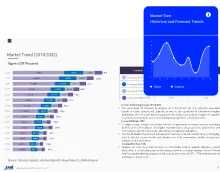
In 2025, the Australia propane market reached an approximate volume of 909.81 KMT.
The market is projected to grow at a CAGR of 1.30% between 2026 and 2035.
The key players in the market include Saudi Arabian Oil Company (Saudi Aramco), BP PLC, ConocoPhillips Company, Eni S.p.A, A Nippon Sanso Holdings Corporation, PJSC Gazprom, and others.
Key strategies driving the market include capacity expansion, infrastructure upgrades, strategic acquisitions, partnerships, adoption of renewable LPG, and technology-driven supply chain optimization.
Key challenges that the Australia propane market face include supply chain disruptions, fluctuating natural gas prices, stringent environmental regulations, competition from alternative fuels, and high infrastructure investment costs.
Explore our key highlights of the report and gain a concise overview of key findings, trends, and actionable insights that will empower your strategic decisions.
| REPORT FEATURES | DETAILS |
| Base Year | 2025 |
| Historical Period | 2019-2025 |
| Forecast Period | 2026-2035 |
| Scope of the Report |
Historical and Forecast Trends, Industry Drivers and Constraints, Historical and Forecast Market Analysis by Segment:
|
| Breakup by Application |
|
| Breakup by Region |
|
| Market Dynamics |
|
| Competitive Landscape |
|
| Companies Covered |
|
Datasheet
AUD 2,749
AUD 2,499
tax inclusive*
Single User License
AUD 3,849
AUD 3,499
tax inclusive*
Five User License
AUD 4,949
AUD 4,499
tax inclusive*
Corporate License
AUD 6,049
AUD 5,499
tax inclusive*
*Please note that the prices mentioned below are starting prices for each bundle type. Kindly contact our team for further details.*
Flash Bundle
Small Business Bundle
Growth Bundle
Enterprise Bundle
*Please note that the prices mentioned below are starting prices for each bundle type. Kindly contact our team for further details.*
Flash Bundle
Number of Reports: 3
20%
tax inclusive*
Small Business Bundle
Number of Reports: 5
25%
tax inclusive*
Growth Bundle
Number of Reports: 8
30%
tax inclusive*
Enterprise Bundle
Number of Reports: 10
35%
tax inclusive*
How To Order

Select License Type
Choose the right license for your needs and access rights.

Click on ‘Buy Now’
Add the report to your cart with one click and proceed to register.

Select Mode of Payment
Choose a payment option for a secure checkout. You will be redirected accordingly.
Strategic Solutions for Informed Decision-Making
Stay upgraded and grab opportunities by strategic insights
Stay informed and aware for a Market Leverage
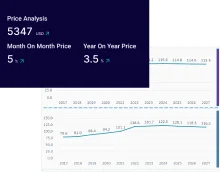
Analyze pricing patterns with comprehensive trend analyses.
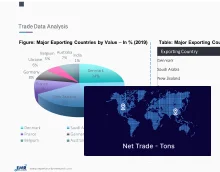
Analyse trade data for supply chain insights.
Leverage cost reports for smart savings
Elevate supply chain with collaboration
Contact Us for Further Information
Our specialized analysts will be available to answer all the pre-purchase and post-purchase queries regarding the report.
Our specialized analysts will be available to answer all the pre-purchase and post-purchase queries regarding the report.
Staying one step ahead of the market landscape with our in-depth research methods, integrating advanced analytics to drive precise and tangible outcomes.
Our expert analyst team offers a significant advantage over competitors, with extensive market insights into the latest trends, putting you strategically ahead.
We deliver a simplified yet extensive report, comprising in-depth industry insights and analytics tailored to your industry requirements.
We are happy to help you navigate through the services we offer and solve your queries.
Contact us