Consumer Insights
Uncover trends and behaviors shaping consumer choices today
Procurement Insights
Optimize your sourcing strategy with key market data
Industry Stats
Stay ahead with the latest trends and market analysis.
The Australia plastic packaging market covers finished rigid and flexible packs made from polymers, including bottles, jars, tubs, trays, cups, films and pouches, sold to food, beverage, healthcare and personal care brands. Converters shape resin by extrusion, moulding and thermoforming, and print or laminate the result for filling lines. Unlike the resin supply chain, this market is measured by the value of converted packs delivered to brand owners.
In 2025, the market is valued at AUD 3810.00 million in 2025 and is forecast to grow at a CAGR of 2.30%, reaching AUD 4782.79 million by 2035. Growth is driven by fresh food and beverage filling demand, recycled content such as Pact's rFresh100 HDPE resin approved by the US FDA in June 2025, and converter investment such as Flexopack doubling Queensland capacity in July 2026.
Compound Annual Growth Rate
2.3%
Value in AUD million
2026-2035
The Australia plastic packaging market is growing slowly but changing in structure. Converters are investing in printing, barrier film and moulding capacity, while recyclers, brand owners and governments debate how much recycled content and producer responsibility the sector should carry.
Three forces are shaping the market: policy, with a proposed federal levy and recycled content mandate discussed in March 2026; capacity, as recycling plants ran at about half of capacity in July 2026; and ownership, with Pro-Pac sold to Knoxcorp in January 2026.
In January 2026 Knoxcorp agreed to buy Pro-Pac's Australian business, in June 2026 Filton Packaging installed an eight-colour flexographic press, and in July 2026 Flexopack opened a Queensland facility with doubled production capacity.
The market is expanding at a measured pace as converters balance recycled content demands, resin costs and customer filling needs. Rigid packs hold the largest share through bottles, jars and tubs, while flexible formats gain from fresh produce, snacks and barrier film applications. Polyethylene remains the main material, and extrusion and moulding capacity continues to be added. New South Wales leads regional demand, and the Australia Capital Territory grows quickest from a small base. Reform delays and uneven recycling economics remain the main constraints on faster growth.
| Metric | Value |
| Market Size 2025 | AUD 3810.00 million |
| Projected Market Size 2035 | AUD 4782.79 million |
| CAGR 2026 to 2035 | 2.30% |
| Fastest-Growing End Use | Healthcare Technology: 3.6% CAGR |
| Fastest-Growing Product | Pouches: 3.1% CAGR |
| Largest Revenue Segment 2025 | Rigid |
| Dominant Region | New South Wales |
| Highest CAGR by Region | Australia Capital Territory: 3.4% |
| Plastic packaging used in Australia each year (Australian Council of Recycling, July 2026) | 1.3 million tonnes |
Steady Growth Anchored in Food and Healthcare
Revenue is on course to rise by about a quarter across the decade, from AUD 3,810.00 million in 2025 to AUD 4,790.00 million in 2035 at a 2.3% CAGR. Food filling demand, recycled content progress and converter investment in 2026 support that path.
Rigid Packs Lead While Flexible Formats Invest
Rigid packaging holds the largest share and grows at an estimated 2.4% CAGR through 2035. Pouches grow at an estimated 3.1%, helped by Filton's June 2026 press investment and Flexopack's July 2026 capacity expansion.
Consolidation and Reform Reshape Competition
Pro-Pac's administration in October 2025 and sale to Knoxcorp in January 2026 changed the supplier base, while recycling plants at about 50% utilisation in July 2026 show how much depends on national packaging rules.
| Report Summary | Unit | Value |
| Base Year | AUD million | 2025 |
| Historical Period | AUD million | 2019 to 2025 |
| Forecast Period | AUD million | 2026 to 2035 |
| Market Size 2025 | AUD million | 3810.00 |
| Market Size 2035 | AUD million | 4782.79 |
| CAGR 2026 to 2035 | Percentage | 2.30 % |
| CAGR by Product: Pouches | Percentage | 3.1 % |
| CAGR by Technology: Injection Molding | Percentage | 3.2 % |
| CAGR by End Use: Healthcare Technology | Percentage | 3.6 % |
| CAGR by Region: Australia Capital Territory | Percentage | 3.4 % |
| Plastic Packaging Collected for Recycling (July 2026) | Percentage | 19 |
| Domestic Plastic Reprocessing Capacity (July 2026) | Tonnes | 320,000 |
| Market Share by Region 2025 | New South Wales | Dominant Share |
The trajectory reflects gradual structural change rather than a surge. Rigid packs carry the largest share, flexible formats and barrier films add momentum, and healthcare packaging grows fastest, while polyethylene stays the base material. New South Wales leads regional demand, and the Australia Capital Territory grows quickest. Growth depends on how quickly recycled content rules and recycling capacity align.
The Australia plastic packaging market is being reshaped by underused recycling capacity, flexographic printing investment, levy and recycled content proposals, and energy saving moulding technology.
July 2026 - Recycling Plants Run at Half Capacity Without National Packaging Rules
June 2026 - Eight-Colour Flexographic Presses Raise Quality for Fresh Produce Packs
March 2026 - Levy and Recycled Content Proposals Shape Converter Investment Plans
December 2025 - Electric Injection Moulding Cuts Energy Use in Tube and Cap Production
Underused recycling plants, flexographic printing investment, levy proposals and electric moulding show growth is shaped by policy and technology rather than volume alone. Converters that invest early in recyclable formats and efficient equipment are best placed, and the market remains central to Australian food and consumer supply chains.
Recent developments, presented from the most recent, show Flexopack expanding in Queensland, Pro-Pac moving to new ownership after administration, and industry bodies pressing for soft plastics rules.
July 2026 - Flexopack Doubles Capacity at New Queensland Manufacturing Facility
January 2026 - Knoxcorp Agrees to Buy Pro-Pac Australian Business
October 2025 - Pro-Pac Packaging Group Enters Voluntary Administration
August 2025 - Industry Bodies Urge Minister to Mandate Soft Plastics Responsibility
From the August 2025 call for soft plastics rules to Flexopack's July 2026 expansion, recent events show a supplier base consolidating while capacity is added in barrier and printed film. Pro-Pac's administration in October 2025 and sale in January 2026 confirm that scale, balance sheet strength and reform clarity now drive competitive position.
The Expert Market Research’s report on the Australia Plastic Packaging Market offers a detailed analysis of the market based on the following segments.
Market Breakup by Packaging Type
Rigid leads, in our estimate, because bottles, jars and tubs serve food, beverage and pharmaceutical filling lines, and grows at an estimated 2.4% CAGR through 2035, with Pact's rFresh100 recycled HDPE resin for milk bottles gaining US FDA approval in June 2025. Flexible grows at 2.2% as converters invest in printing and barrier film, including Filton's eight-colour flexographic press in June 2026 and Flexopack's doubled Queensland capacity in July 2026.
Market Breakup by Material Type
Polyethylene (PE) leads, in our estimate, as films, bottles and tubs rely on it, with recycled HDPE for milk bottles approved in June 2025. Ethylene Vinyl Alcohol (EVOH) grows fastest at an estimated 3.4% CAGR through 2035, as barrier layers protect meat and dairy films such as those Flexopack scaled in July 2026. Bi-oriented Polypropylene (BOPP) and Cast Polypropylene (CPP) serve snack wraps, labels and laminates, Polyvinyl Chloride (PVC) serves clear rigid packs, and Others cover PET and polystyrene.
Market Breakup by Product
Bottles and Jars lead, in our estimate, as Pact's rFresh100 resin, approved in June 2025, targets milk, juice, sauce and personal care containers. Pouches grow fastest at an estimated 3.1% CAGR through 2035, with Filton investing in a new press for wicket and side-seal bags in June 2026. Tubs serve dairy, spreads and ready meals, while Cups, Bowls and Trays serve takeaway, desserts and fresh food. Others cover caps, closures, handles and sachets.
Market Breakup by Technology
Extrusion leads, in our estimate, because it makes the films and sheet behind flexible and thermoformed packs, as Flexopack doubled barrier film capacity in July 2026. Blow Molding supplies bottles such as recycled HDPE milk bottles approved in June 2025. Injection Molding grows fastest at an estimated 3.2% CAGR through 2035, after Impact installed four electric machines in December 2025. Thermoforming makes trays and cups, and Others cover rotational and compression moulding.
Market Breakup by End Use
Food leads, in our estimate, as fresh produce and meat packs drive orders, with Filton's June 2026 press and Flexopack's July 2026 plant aimed at these customers. Healthcare Technology grows fastest at an estimated 3.6% CAGR through 2035 on pharmaceutical and device packaging. Cosmetics and Personal Care uses tubes and caps, such as those from Impact's December 2025 moulding line. Beverage uses PET and HDPE bottles, and Others cover industrial and agricultural packs.
Market Breakup by Region
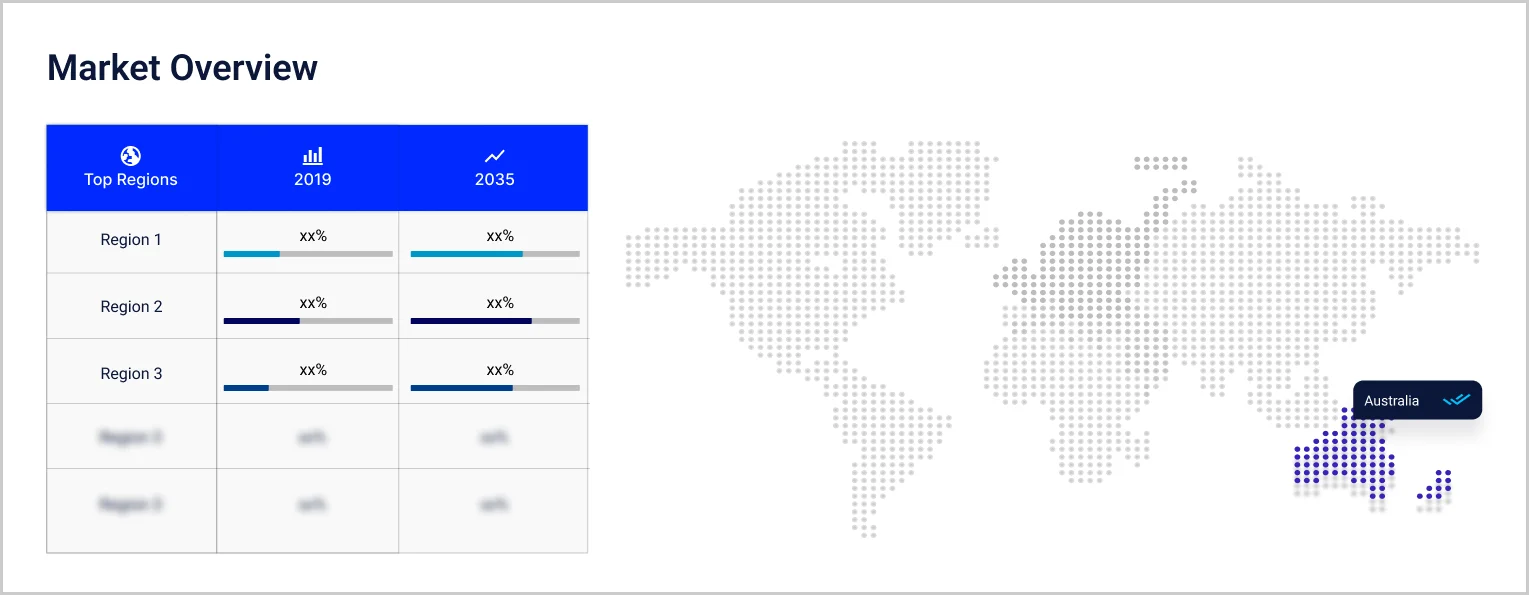
New South Wales dominates, in our estimate, as home to Impact's Smithfield moulding site, and grows at an estimated 2.2% CAGR through 2035. Victoria grows at 2.2%, as Pro-Pac's Melbourne base changed hands in January 2026. Queensland grows at 2.6% with Flexopack's July 2026 plant. The Australia Capital Territory grows fastest at 3.4% from a small base, and Western Australia at 3.0%. Rest of Australia grows at 1.9%, covering South Australia, Tasmania and the Northern Territory, where Pope Packaging, which also makes plastic bags, invested A$50 million at Woodville in October 2026.
| CAGR 2026 to 2035, Market by Region | Growth Rate |
| New South Wales | 2.2 % |
| Victoria | 2.2 % |
| Queensland | 2.6 % |
| Australia Capital Territory | 3.4 % |
| Western Australia | 3.0 % |
| Others (Rest of Australia) | 1.9 % |
Competition combines diversified packaging groups, flexible film converters, moulding specialists and regional suppliers. Entry barriers include press and moulding capital, resin purchasing, food contact approvals, recycled content supply, customer qualification and filling line integration.
Orora Packaging Australia Pty Ltd.
Orora Packaging Australia Pty Ltd. carries the Orora name in Australia, and Orora is headquartered in Melbourne after being created in 2013 when Amcor demerged its Australasian and distribution business. Its offer spans glass bottles, beverage cans, corrugated boxes, cartons and multi-wall paper bags. In February 2026 Orora reported half year revenue up 9.7% to A$1.13 billion, and in August 2026 full year sales of A$2.23 billion. Its differentiators are scale, customer relationships and distribution reach.
Filton Packaging
Filton Packaging is an Australian flexible packaging converter making wicket bags, side-seal bags, contour sleeves and films, with a focus on fresh produce, and a well established position in contour sleeves for herbs and flowers. On 25 June 2026 it reported the purchase of an eight-colour Bobst flexographic press, together with upgrades to pre-press, plate mounting, inspection and wash-up systems. Its differentiators are print quality, produce packaging expertise, and a focused product range.
Fine Pack Pty Ltd.
Fine Pack Pty Ltd. is an Australian proprietary company in the plastic packaging supply base. Detailed public information on its ownership, plant locations and recent projects is limited, and its role is best understood as a regional supplier of packs to local brand owners and wholesalers.
Gravure Packaging Limited
Gravure Packaging Limited is a flexible packaging company with a production plant in Petone, Wellington, New Zealand. Shrink sleeves are a large part of its business, supported by a partnership with French shrink sleeve specialist Sleever International. It extended into Australia by acquiring Sydney-based Australian Packaging in 2015, which supplies food, fast moving consumer goods and airline customers and keeps its trading name. Its differentiators are shrink sleeve technology and a trans-Tasman service model.
Other players operating in the Australia plastic packaging market include Pro-Pac Group Pty Limited, A&M Packaging, Caspak Products Pty Ltd., Visy Industries Australia Pty Ltd., Cospak Pty Ltd., and Plasmo Pty. Ltd., alongside regional and niche converters supplying rigid and flexible plastic packs across Australia.
Competition rests on printing quality, barrier performance, moulding capacity and balance sheet strength. Filton and Flexopack are investing in flexible and barrier formats, while Pro-Pac's passage to Knoxcorp in January 2026 shows how ownership resets can reshape the supplier set. Orora's scale and Gravure Packaging's shrink sleeve skills show the range of strategies competing for brand owners.


Upto 15% Off
AUD
$2749 $2499
$3849 $3499
$4949 $4499
$6049 $5499


*While we strive to always give you current and accurate information, the numbers depicted on the website are indicative and may differ from the actual numbers in the main report. At Expert Market Research, we aim to bring you the latest insights and trends in the market. Using our analyses and forecasts, stakeholders can understand the market dynamics, navigate challenges, and capitalize on opportunities to make data-driven strategic decisions.*
The Australia plastic packaging market is valued at AUD 3810.00 million in 2025, supported by fresh food and beverage filling demand, recycled HDPE progress and converter investment, with New South Wales as the largest region.
The market is forecast to reach AUD 4782.79 million by 2035, growing at a CAGR of 2.30 % over the 2026 to 2035 period, driven by recycled content progress, flexible and barrier film investment and moulding upgrades.
Healthcare Technology records the highest CAGR at an estimated 3.6% through 2035, supported by pharmaceutical and device packaging, while Pouches lead products at an estimated 3.1%.
New South Wales dominates, as it has the largest population and converter base, and grows at an estimated 2.2% CAGR. The Australia Capital Territory is the fastest-growing region at an estimated 3.4%, followed by Western Australia at 3.0%.
Key players include Orora Packaging Australia Pty Ltd., Filton Packaging, Fine Pack Pty Ltd., Gravure Packaging Limited, Pro-Pac Group Pty Limited, A&M Packaging, Caspak Products Pty Ltd., Visy Industries Australia Pty Ltd., Cospak Pty Ltd., Plasmo Pty. Ltd.
The Australian Council of Recycling said in July 2026 that Australia uses over 1.3 million tonnes of plastic packaging a year, with 19% collected for recycling and reprocessing plants running at about 50% of 320,000 tonnes of capacity.
Pro-Pac Packaging Group entered voluntary administration in October 2025, and in January 2026 Knoxcorp agreed to buy its Australian business through Consolidated Packaging Australia, excluding the Perfection Packaging business in Dandenong.
Explore our key highlights of the report and gain a concise overview of key findings, trends, and actionable insights that will empower your strategic decisions.
| Report Features | Details |
| Base Year | 2025 |
| Historical Period | 2019-2025 |
| Forecast Period | 2026-2035 |
| Scope of the Report |
Historical and Forecast Trends, Industry Drivers and Constraints, Historical and Forecast Market Analysis by Segment:
|
| Breakup by Packing Type |
|
| Breakup by Material Type |
|
| Breakup by Product |
|
| Breakup by Technology |
|
| Breakup by End Use |
|
| Breakup by Region |
|
| Market Dynamics |
|
| Competitive Landscape |
|
| Companies Covered |
|
Datasheet
AUD 2,749
AUD 2,499
tax inclusive*
Single User License
AUD 3,849
AUD 3,499
tax inclusive*
Five User License
AUD 4,949
AUD 4,499
tax inclusive*
Corporate License
AUD 6,049
AUD 5,499
tax inclusive*
*Please note that the prices mentioned below are starting prices for each bundle type. Kindly contact our team for further details.*
Flash Bundle
Small Business Bundle
Growth Bundle
Enterprise Bundle
*Please note that the prices mentioned below are starting prices for each bundle type. Kindly contact our team for further details.*
Flash Bundle
Number of Reports: 3
20%
tax inclusive*
Small Business Bundle
Number of Reports: 5
25%
tax inclusive*
Growth Bundle
Number of Reports: 8
30%
tax inclusive*
Enterprise Bundle
Number of Reports: 10
35%
tax inclusive*
How To Order

Select License Type
Choose the right license for your needs and access rights.

Click on ‘Buy Now’
Add the report to your cart with one click and proceed to register.

Select Mode of Payment
Choose a payment option for a secure checkout. You will be redirected accordingly.
Strategic Solutions for Informed Decision-Making
Stay upgraded and grab opportunities by strategic insights
Stay informed and aware for a Market Leverage
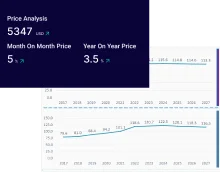
Analyze pricing patterns with comprehensive trend analyses.
Analyse trade data for supply chain insights.
Leverage cost reports for smart savings
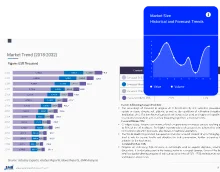
Elevate supply chain with collaboration
Contact Us for Further Information
Our specialized analysts will be available to answer all the pre-purchase and post-purchase queries regarding the report.
Our specialized analysts will be available to answer all the pre-purchase and post-purchase queries regarding the report.
Staying one step ahead of the market landscape with our in-depth research methods, integrating advanced analytics to drive precise and tangible outcomes.
Our expert analyst team offers a significant advantage over competitors, with extensive market insights into the latest trends, putting you strategically ahead.
We deliver a simplified yet extensive report, comprising in-depth industry insights and analytics tailored to your industry requirements.
We are happy to help you navigate through the services we offer and solve your queries.
Contact us