Consumer Insights
Uncover trends and behaviors shaping consumer choices today
Procurement Insights
Optimize your sourcing strategy with key market data
Industry Stats
Stay ahead with the latest trends and market analysis.
Surging consumer sensitivity toward digestive health and ingredient transparency is pushing food brands to rethink grain formulations. In May 2022, Good Food Partners (GFP) launched a range of low gluten oat porridges, for Australians avoiding gluten for a variety of reasons. The product targets manufacturers reformulating SKUs to meet fiber density claims without altering taste or texture. This launch aligns with a wider industry push toward clean-label carbohydrate management. Packaged food manufacturers increasingly replace synthetic bulking agents with cereal-derived fibers, accelerating the overall Australia oat fiber market value.
Milling companies and ingredient blenders are investing in finer particle processing and enzymatic treatment to improve dispersibility, which is critical for ready-to-drink nutrition and powdered meal replacements. Smoother oat fiber allows brands to raise inclusion levels without affecting taste or texture. For example, Thanh An Co., Ltd. offers Oatta Oat Milk in a convenient ready-to-drink package, redefining the Australia oat fiber market trends and dynamics. Players are also engaging in long-term contracts with domestic oat growers to secure supply chain consistency. Export-focused food processors prefer traceable Australian-grown oats to support origin labeling.
Compound Annual Growth Rate
4.3%
Value in KMT
2026-2035
|
Australia Oat Fiber Market Report Summary |
Description |
Value |
|
Base Year |
KMT |
2025 |
|
Historical Period |
KMT |
2019-2025 |
|
Forecast Period |
KMT |
2026-2035 |
|
Market Size 2025 |
KMT |
497.08 |
|
Market Size 2035 |
KMT |
757.30 |
|
CAGR 2019-2025 |
Percentage |
XX% |
|
CAGR 2026-2035 |
Percentage |
4.30% |
|
CAGR 2026-2035 - Market by Region |
Western Australia |
4.9% |
|
CAGR 2026-2035 - Market by Region |
Victoria |
4.6% |
|
CAGR 2026-2035 - Market by Packaging |
Pouches |
5.5% |
|
CAGR 2026-2035 - Market by End User |
Food and Beverage |
5.2% |
|
2025 Market Share by Region |
Western Australia |
37.2% |
November 2025 – Yumi’s Organic Overnight Oats Launch in Australia
Yumi’s Organic Overnight Oats made its debut in Australia, with a starter pack that features a reusable glass jar along with shelf-stable packets of assorted flavors like Blueberry Vanilla and Apple Cinnamon. The launch highlights rising demand for fiber-rich oat formulations, reinforcing oat fiber use in convenient, low-sugar breakfast products.
June 2025 – Country Delight Enters Plant-Based Oats Beverage Segment
Country Delight revealed the introduction of its completely new lactose-free Oats Beverage, signifying its entry into the swiftly expanding plant-based drink market. This move signals expanding oat processing volumes for beverages, indirectly lifting demand for oat-derived ingredients like oat fiber used to manage mouthfeel and nutritional positioning in drinks.
June 2025 – Satake Corporation and Real Oats Exclusivity Agreement
SATAKE announced that Satake Corporation and My PlantCo's Real Oats have established exclusivity agreements that serve as a crucial foundation for the development and commercialization of new oat-based rice, noodle, and pasta products, providing more nutritious staple foods made from sustainable grains to customers. This Australia oat fiber market development accelerates oat-based staple foods, creating new downstream opportunities for oat fiber inclusion in noodles, pasta, and rice alternatives.
May 2025 – Food and Beverage Accelerator (FaBA) Oat Commercialization Initiative
Australia’s Food and Beverage Accelerator (FaBA) launched a AUD 5.6 million initiative to boost oat consumption by commercializing products such as oat rice, noodles, and pasta. FaBA’s program strengthens industrial oat utilization in Australia, supporting long-term demand for functional ingredients like oat fiber as new oat-based food categories scale commercially.
Product-Format Innovation
Australian R&D is pushing oats into new formats such as rice, pasta, noodles, and textured meal bases, that create fresh demand for oat fiber as a functional ingredient. Real Oats and the University of Queensland’s AUD 5.6 million program aim to commercialize oat rice and pasta, showing how product innovation drives ingredient uptake. In May 2025, West Australian start-up Real Oats announced plans to roll out its range of oat-based rice, pasta and noodles to supermarket shelves, impacting the overall demand in the Australia oat fiber market. Food manufacturers see oat fiber as a way to enhance mouthfeel and fiber density without changing label claims. Exporters value Australian oats for processing quality, which helps suppliers pitch oat fiber to global nutrition brands.
Clean-Label Fiber Claims and Regulatory Framing
Brands pursuing “high fiber” and “good source” claims rely on clear nutrition panel rules and FSANZ guidance. Australian labeling standards require fiber disclosure when claimants label their product, so ingredient suppliers package oat fiber with specification sheets and NIP-ready data. This Australia oat fiber market trend reduces buyer risk for CPG formulators who need compliant claim substantiation. In October 2025, Tetra Pak tapped APAC plant-based trends to shape drinks and packaging, with the launch of barista oat drinks, fiber-rich soy, and functional carton formats.
Processing and Functionalization Upgrades
Suppliers are investing in advanced milling, enzymatic modification, and extrusion to make oat fiber more dispersible and neutral in taste. These techniques increase soluble fiber and improve mouthfeel, which is critical for RTD nutrition and powdered meal products. In April 2025, Minor Figures, a notable player in the plant-based beverage sector, launched Hyper Oat, a new range of oat drinks aimed at redefining consumer expectations within the functional beverage market. Companies that offer finely milled, low-dust oat fiber command higher margins because they reduce reformulation effort for buyers, creating new Australia oat fiber market opportunities.
Domestic Supply Partnerships and Industry Programs
State and industry initiatives, for example, the Processed Oat Partnership and DPIRD extension activities, announced in January 2023, are strengthening Australia’s processed-oat capacity. These programs help millers and ingredient blenders secure consistent milling oats, and support investment in downstream fiber extraction lines. In July 2024, GRDC launched a new wave of R&D investments to position Australian growers to capture a greater market share. For suppliers, linking contracts to local grower programs reduces variability and promotes “Australian-grown” origin claims, which many brands use in procurement tenders, widening the Australia oat fiber market scope.
Clinical, Resistant-Starch Blends and Regulated Channels
Demand for digestive health fibers is expanding oat fiber use into clinical nutrition and aged care channels. Hybrid blends, including oat fiber combined with resistant starch, help formulators balance tolerance, glycemic response, and texture in medical nutrition powders, accelerating the Australia oat fiber market growth. Suppliers positioning oat fiber blends with clinical trial partners or validated RS data are projected to retain long-term contracts with hospitals, nutrition companies, and premium meal-service operators.
The EMR’s report titled “Australia Oat Fiber Market Report and Forecast 2026-2035” offers a detailed analysis of the market based on the following segments:
Market Breakup by Nature
Key Insight: Natural oat fiber supports scale manufacturing, margin protection, and formulation stability. Organic oat fiber attracts brands prioritizing certification strength and consumer trust. Food producers select between these two categories, based on product positioning rather than nutrition performance alone, boosting the Australia oat fiber market growth. Procurement decisions weigh supply reliability against storytelling value. Manufacturers prioritize both of these channels to diversify portfolios and manage channel exposure.
Market Breakup by Packaging
Key Insight: As per the Australia oat fiber market report, paper bags serve bulk buyers focused on efficiency, storage, and cost control. Pouches support flexibility, experimentation, and emerging brands in the market. Jars continue to be niche, as these are mostly used where contamination risk or premium presentation matters. Suppliers adjust packaging strategies to reach multiple buyer categories. Each format signals how suppliers intend to serve different procurement behaviors.
Market Breakup by End User
Key Insight: Food and beverage drives consistent volume through frequent reformulation. Pet food accelerates growth through premium positioning and functional claims. Other users adopt oat fiber selectively for niche applications. Each segment values different supplier capabilities. Some prioritize scale and reliability, boosting the Australia oat fiber market expansion. Others prioritize functionality and collaboration. Suppliers that tailor technical support and contract structures gain stronger footholds.
Market Breakup by Region
Key Insight: Regional segmentation considered in the market report reflects infrastructure and buyer concentration. Western Australia anchors majority of the market share through its scalability and export readiness. The Australian Capital Territory accelerates growth through institutional demand, while New South Wales and Victoria support diversified manufacturing bases. Queensland benefits from food processing expansion. Suppliers adapt strategies by region as some of them prioritize logistics efficiency, while others focus on compliance-driven buyers. Regional dynamics in the Australia oat fiber market influence contract design, delivery models, and customer engagement depth.
Natural oat fiber dominates the market due to formulation flexibility and stable procurement economics
Natural oat fiber holds the dominant position in the market because it fits seamlessly into mainstream food reformulation without disrupting cost models. Food manufacturers prefer natural grades since they allow higher inclusion levels while keeping ingredient decks simple. This category supports bakery, cereals, and nutrition powders where texture control matters more than certification status. For example, in November 2024, Potina launched banana oat milks that contain three main ingredients, including water, oats and banana pulp, alongside fiber and fortification sources of calcium and vitamins D and B12.
The organic category is expanding its share in the Australia oat fiber market as premium food brands refine their clean-label claims. Certification allows companies to justify higher shelf prices and premium positioning in health-focused retail channels. Organic grades are favored in baby food, clinical nutrition, and niche wellness products where buyer scrutiny is intense. In July 2022, brekki, a ready-to-eat oats brand known for its nutritious and flavorful offerings, announced the launch of two exciting new organic flavors such as Lemon and Choco Coconut. Manufacturers accept higher input costs because organic labeling reduces marketing friction. Ingredient suppliers respond by strengthening chain-of-custody documentation and grower partnerships.
By packaging, paper bags lead the market due to bulk handling efficiency
Paper bags dominate the market because they suit industrial-scale handling and warehouse workflows. Large food processors prefer multi-layer paper sacks for pallet stability and moisture control. These packs integrate smoothly into automated filling systems. Ingredient suppliers favor paper bags for reduced unit costs and simplified labeling. For instance, Woolworths offers its products to customers with locally made paper bags, manufactured by Detpak, in South Australia and the Northern Territory. Moreover, buyers associate paper with recyclability and lower environmental impact.
Pouches are experiencing major growth in the Australia oat fiber market as ingredient suppliers target smaller manufacturers and specialty brands. This format works well for trial batches, pilot production, and short runs. Resealable features reduce waste and improve shelf management. Pouches also support ecommerce distribution and direct brand-to-brand shipping. For oat fiber suppliers, pouches enable flexible minimum order quantities.
Food and beverage industry secures the dominant share of the market due to reformulation pressure
Food and beverage manufacturers account for the majority of the oat fiber demand due to continuous reformulation cycles. Brands adjust recipes to improve fiber content without sacrificing taste. Oat fiber supports bakery, cereals, snacks, and nutrition drinks. Buyers value its neutral taste profile and processing tolerance. Product launches here occur frequently, creating repeat demand in the Australia oat fiber market.
Pet food emerges to be the fastest-growing end-use category as owners demand functional nutrition for animals. Manufacturers use oat fiber to support digestion and weight management claims. Premium pet brands mirror human food trends, and ingredient transparency now matters for pet parents. Oat fiber aligns well with pet food requirements due to gentle fiber action and grain familiarity. Suppliers tailor grind size and hydration behavior for pet food formulations
|
CAGR 2026-2035 - Market by |
Region |
|
Western Australia |
4.9% |
|
Victoria |
4.6% |
|
New South Wales |
XX% |
|
Queensland |
XX% |
|
Australian Capital Territory |
XX% |
|
Others |
XX% |
Western Australia dominates the market due to processing infrastructure and export alignment
The Western Australia oat fiber market leads due to its strong grain processing base and export orientation. Ingredient suppliers benefit from proximity to oat-growing regions and port accessibility. This reduces logistics complexity and supports consistent supply. Food processors in the region operate on scale and that favors bulk oat fiber sourcing. Export-focused manufacturers also prefer Western Australia for origin positioning.
The Australian Capital Territory represents the fastest-growing regional market due to concentrated institutional demand. Government-linked food programs, healthcare kitchens, and specialty suppliers influence procurement patterns. Buyers emphasize nutrition compliance and clean ingredient profiles, and oat fiber fits these requirements well.
The market remains moderately consolidated, shaped by ingredient specialists rather than branded consumer players. Competition centers on processing precision, application support, and supply reliability. Leading Australia oat fiber market players are investing in finer milling, controlled particle sizing, and hydration performance to win bakery, nutrition, and pet food contracts. Opportunities lie in customized fiber grades designed for specific uses, such as low-carb bread, clinical powders, or premium pet formulations. Buyers increasingly value technical collaboration, and this creates space for suppliers that can support reformulation and compliance needs.
Another focus area for Australia oat fiber companies is origin assurance, as processors prefer traceable oat inputs aligned with clean-label positioning. Export-ready customers also seek consistency that supports regional labeling. Smaller but fast-growing demand contributors, including institutional foodservice and regulated nutrition channels, offer opportunities for differentiation.
Grain Millers, Inc.
Grain Millers, Inc. was established in 1975 and is headquartered in Eden Prairie, Minnesota, United States. The company supplies oat-based ingredients globally, including oat fiber for bakery, cereal, and nutrition products. In Australia, Grain Millers focuses on consistent fiber functionality and large-scale supply reliability. Its strength lies in processing control and application testing.
CFF GmbH & Co. KG
Founded in 1977 and is headquartered in Germany, CFF GmbH & Co. KG specializes in dietary fibers with tailored particle profiles. In the Australia oat fiber industry, CFF positions itself through customized fiber solutions for bakery and nutrition blends. Its offering appeals to manufacturers seeking functional precision rather than commodity supply. The firm emphasizes formulation support and controlled performance across moisture-sensitive applications.
Dalby Mølle A/S
Dalby Mølle A/S, established in 1951 and headquartered in Denmark, United States, focuses on oat milling and fiber extraction with strong traceability. In Australia, Dalby Mølle caters to buyers prioritizing clean-label sourcing and consistent oat quality. Its oat fiber is used in cereals, bakery mixes, and functional foods. The company leverages its milling heritage to deliver stable fiber performance.
Swedish Oat Fiber AB
Swedish Oat Fiber AB was founded in 1989 and is headquartered in Bua, Sweden. The company is known for high-purity oat fiber grades with neutral taste and texture. In Australia, it serves nutrition brands and premium food manufacturers requiring refined fiber performance. Its focus remains on low-impact processing and technical customization. The company supports higher inclusion rates without formulation instability.
Other key players in the market include J. Rettenmaier & Söhne GmbH & Co. KG, and Urban Platter, among others.
Explore the latest trends shaping the Australia oat fiber market 2026-2035 with our in-depth report. Gain strategic insights, future forecasts, and key market developments that can help you stay competitive. Download your free sample report today and drive informed decisions in the market.


Upto 15% Off
AUD
$2749 $2499
$3849 $3499
$4949 $4499
$6049 $5499


*While we strive to always give you current and accurate information, the numbers depicted on the website are indicative and may differ from the actual numbers in the main report. At Expert Market Research, we aim to bring you the latest insights and trends in the market. Using our analyses and forecasts, stakeholders can understand the market dynamics, navigate challenges, and capitalize on opportunities to make data-driven strategic decisions.*
In 2025, the Australia oat fiber market reached an approximate volume of 497.08 KMT.
The market is projected to grow at a CAGR of 4.30% between 2026 and 2035.
The key players in the market include Grain Millers, Inc., CFF GmbH & Co. KG, Dalby Mølle A/S, Swedish Oat Fiber AB, J. Rettenmaier & Söhne GmbH & Co. KG, Urban Platter, among others.
Key strategies driving the market include investing in application labs, building long-term grower partnerships, tailoring fiber grades by end use, strengthening compliance documentation, and expanding flexible packaging options to reach emerging buyers.
Managing raw material consistency, balancing cost pressures, meeting formulation demands, ensuring regulatory compliance, and supporting technical reformulation without slowing customer product timelines remain persistent challenges for oat fiber suppliers.
Explore our key highlights of the report and gain a concise overview of key findings, trends, and actionable insights that will empower your strategic decisions.
| REPORT FEATURES | DETAILS |
| Base Year | 2025 |
| Historical Period | 2019-2025 |
| Forecast Period | 2026-2035 |
| Scope of the Report |
Historical and Forecast Trends, Industry Drivers and Constraints, Historical and Forecast Market Analysis by Segment:
|
| Breakup by Nature |
|
| Breakup by Packaging |
|
| Breakup by End User |
|
| Breakup by Region |
|
| Market Dynamics |
|
| Competitive Landscape |
|
| Companies Covered |
|
Datasheet
AUD 2,749
AUD 2,499
tax inclusive*
Single User License
AUD 3,849
AUD 3,499
tax inclusive*
Five User License
AUD 4,949
AUD 4,499
tax inclusive*
Corporate License
AUD 6,049
AUD 5,499
tax inclusive*
*Please note that the prices mentioned below are starting prices for each bundle type. Kindly contact our team for further details.*
Flash Bundle
Small Business Bundle
Growth Bundle
Enterprise Bundle
*Please note that the prices mentioned below are starting prices for each bundle type. Kindly contact our team for further details.*
Flash Bundle
Number of Reports: 3
20%
tax inclusive*
Small Business Bundle
Number of Reports: 5
25%
tax inclusive*
Growth Bundle
Number of Reports: 8
30%
tax inclusive*
Enterprise Bundle
Number of Reports: 10
35%
tax inclusive*
How To Order

Select License Type
Choose the right license for your needs and access rights.

Click on ‘Buy Now’
Add the report to your cart with one click and proceed to register.

Select Mode of Payment
Choose a payment option for a secure checkout. You will be redirected accordingly.
Strategic Solutions for Informed Decision-Making
Stay upgraded and grab opportunities by strategic insights
Stay informed and aware for a Market Leverage
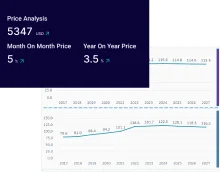
Analyze pricing patterns with comprehensive trend analyses.
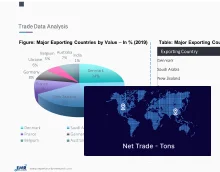
Analyse trade data for supply chain insights.
Leverage cost reports for smart savings
Elevate supply chain with collaboration

Contact Us for Further Information
Our specialized analysts will be available to answer all the pre-purchase and post-purchase queries regarding the report.
Our specialized analysts will be available to answer all the pre-purchase and post-purchase queries regarding the report.
Staying one step ahead of the market landscape with our in-depth research methods, integrating advanced analytics to drive precise and tangible outcomes.
Our expert analyst team offers a significant advantage over competitors, with extensive market insights into the latest trends, putting you strategically ahead.
We deliver a simplified yet extensive report, comprising in-depth industry insights and analytics tailored to your industry requirements.
We are happy to help you navigate through the services we offer and solve your queries.
Contact us