Consumer Insights
Uncover trends and behaviors shaping consumer choices today
Procurement Insights
Optimize your sourcing strategy with key market data
Industry Stats
Stay ahead with the latest trends and market analysis.
Compound Annual Growth Rate
4%
Value in AUD billion
2026-2035
|
AUD 385 Billion Resources & Energy Exports FY 2024-2025 |
~14% of GDP Mining Industry Contribution to GDP 2024 |
|
299, 200 Mining Industry Employees (August 2025) |
432 Projects Major Resource Projects Under Development |
Quick Answer
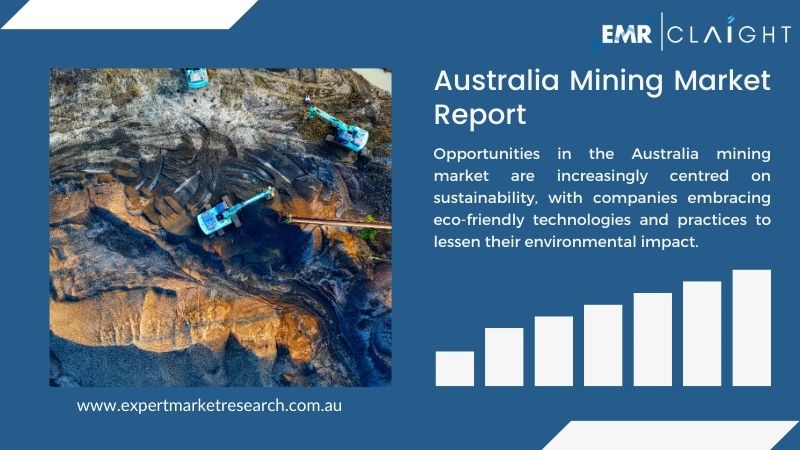
The Australia mining market encompasses the extraction, processing, and export of metallic and energy minerals: iron ore, coal, LNG, gold, lithium, copper, aluminium, alumina, bauxite, nickel, zinc, and critical minerals. Resources and energy export earnings reached AUD 385 billion in FY 2024-2025, representing ~two-thirds of total merchandise exports and ~14 per cent of GDP. The mining industry directly employs 299,200 people (Jobs and Skills Australia, August 2025) and supports 1.1 million jobs across the supply chain. Iron ore at AUD 116 billion leads, with gold rising rapidly (forecast AUD 69 billion in FY 2025-2026), overtaking LNG as second-largest earner. Critical minerals exports forecast to grow from AUD 11 billion to AUD 14 billion by FY 2026-2027. The mining industry is projected to reach AUD 569.88 billion in export value by 2035 at a 4.0 per cent CAGR.
Mining underpins Australia's trade balance in a way no other sector comes close to matching. Resources and energy export earnings came in at AUD 385 billion in FY 2024-2025: roughly two-thirds of everything Australia sells abroad. The Australia mining market sits at ~14 per cent of GDP, directly employs just under 300,000 people, and supports ~1.1 million jobs when you count the equipment, technology, and services businesses that wrap around the mines and LNG facilities. Pay is well above the national median at AUD 2,649 per week for full-time employees in August 2025, which is partly why mining jobs remain attractive despite the FIFO lifestyle.
Australia's position in global commodity markets is worth stating plainly. Largest iron ore exporter in the world at ~37 per cent of global output. Largest lithium producer at ~40 per cent of global supply. Major player in gold, metallurgical and thermal coal, LNG, copper, nickel, zinc, bauxite, alumina, and manganese. Export volumes across most of these commodities are holding steady or growing through 2025-2027, even as prices ease from post-pandemic highs. The energy transition is quietly rewiring the demand mix: critical minerals exports are forecast to grow from AUD 11 billion in FY 2024-2025 to AUD 14 billion by FY 2026-2027, faster than almost anything else in the mining industry.
At October 2025, REMP 2025 counted 432 major resource and energy projects in active development, up from 407 a year earlier. 21 were completed during 2025 worth AUD 11 billion combined, and 72 new projects were added. AUD 62 billion in committed projects represents a solid and deliverable pipeline. The number edged back from AUD 65 billion the prior year, reflecting completions rolling off the list and some owners sitting on their hands while watching where global uncertainty lands. Healthy, in other words, but not booming.
| Metric | Value |
| Resources and Energy Export Earnings FY 2024-2025 | AUD 385 Billion |
| Resources and Energy Forecast FY 2025-2026 | AUD 383 Billion |
| Resources and Energy Forecast FY 2026-2027 | AUD 374 Billion |
| Projected Mining Industry Value 2035 (4% CAGR) | AUD 569.88 Billion |
| Resources and Energy as % of Merchandise Exports | ~67% |
| Mining Sector Contribution to GDP 2024 | ~14% |
| Direct Mining Employment (August 2025) | 299,200 Workers |
| Total Sector Employment Including Supply Chain | 1.1 Million |
| Median Weekly Pay, Full-Time Mining | AUD 2,649 |
| Women in Mining Workforce | 20% |
| Iron Ore Export Earnings FY 2024-2025 | AUD 116 Billion |
| Iron Ore Forecast FY 2026-2027 | AUD 107 Billion |
| LNG Export Earnings FY 2024-2025 | AUD 65 Billion |
| LNG Forecast FY 2026-2027 | AUD 47 Billion |
| Gold Forecast FY 2025-2026 | AUD 69 Billion (2nd Largest) |
| Gold Forecast FY 2026-2027 | AUD 74 Billion |
| Metallurgical Coal Earnings FY 2024-2025 | AUD 39 Billion |
| Copper Earnings Forecast FY 2026-2027 | AUD 17.6 Billion |
| Lithium Earnings Forecast FY 2026-2027 | AUD 6.8 Billion |
| Critical Minerals Forecast FY 2026-2027 | AUD 14 Billion |
| REMP 2025: Major Projects Under Development | 432 (October 2025) |
The Commodity Mix Is Rotating Beneath Stable Headline Exports
The Australia mining industry's AUD 385 billion in export earnings is holding broadly stable at the headline level, but the composition is shifting meaningfully. Iron ore's share is declining as prices soften and new African supply arrives. LNG's peak earnings phase is behind it. Gold is about to overtake LNG as second-largest export. Copper is setting price records and Australian volumes are growing into it. Critical minerals are the fastest-growing category, backed by AUD 7 billion in production tax credits. The mining industry that exists in 2035 will look structurally different from the 2020 version: less iron-ore-dependent, more diversified across transition-critical commodities.
432 Major Projects Under Development Represent a Credible Deliverable Pipeline
REMP 2025 identifies 432 major resource and energy projects in active development, up from 407 a year earlier. 72 new projects added, 21 completed. AUD 62 billion in committed projects. The pipeline is healthy but cautious: the committed investment number edged back from AUD 65 billion as some owners wait on global conditions. Critical minerals account for a quarter of projects at every stage, reflecting where the federal government is actively deploying the Critical Minerals Facility, CMPTI, and Future Made in Australia funding.
Geopolitics Is Now a Commercial Variable in Critical Minerals
An Australia-US rare earths deal signed in November 2025 is expected to attract USD 2 billion in new investment within six months. The October 2025 US-Australia Critical Minerals Framework opened a USD 8.5 billion bilateral pipeline. The Strategic Reserve legislation authorised Export Finance Australia to physically stockpile minerals. These moves reflect Western governments treating Chinese processing dominance as a security problem, and Australia is positioned as the preferred alternative. For Australian critical minerals producers, this creates durable price premiums for material that can certify origin and processing outside Chinese supply chains.
Key Insight
The Australia mining industry's transition from iron-ore and LNG dependence toward a more diversified commodity mix, with gold ascendant and critical minerals accelerating, is happening whether or not commodity prices cooperate in the short run. The AUD 7 billion Critical Minerals Production Tax Incentive, the US-Australia Framework (USD 8.5 billion), and the Strategic Reserve legislation collectively represent the most serious federal intervention in the sector's structure since the 1970s. Whether these policies convert to commercial-scale processing and value-add will be the mining industry's defining story of the 2026-2035 decade.
OCE Resources and Energy Quarterly December 2025
The December 2025 REQ from the Office of the Chief Economist is the authoritative short-term commodity forecast for the Australia mining industry. It confirms AUD 385 billion in FY 2024-2025 export earnings, forecasts AUD 383 billion in FY 2025-2026, and AUD 374 billion in FY 2026-2027. Gold is forecast to overtake LNG as second-largest export in FY 2025-2026. Critical minerals rise from AUD 11 billion to AUD 14 billion. The REQ is published quarterly and is the single most consulted forecast document in the sector.
Resources and Energy Major Projects 2025 Report, October 2025
REMP 2025, released alongside the December 2025 REQ, identified 432 major resource and energy projects under development at 31 October 2025, up from 407 a year earlier. 21 completed in 2025 worth AUD 11 billion combined; 72 new projects added. Committed investment sits at AUD 62 billion, down from AUD 65 billion. Critical minerals account for a quarter of projects at every stage. The REMP is the definitive project pipeline tracker for the Australia mining industry.
US-Australia Critical Minerals Framework and Rare Earths Deal, October-November 2025
The October 2025 Framework for Securing of Supply opened a USD 8.5 billion bilateral investment pipeline. A specific Australia-US rare earths deal signed in November 2025 is expected to attract USD 2 billion in new investment within six months. November 2025 also saw Strategic Reserve legislation giving Export Finance Australia the power to physically stockpile key minerals: a policy move that would have seemed unthinkable a decade ago.
Market Breakup by Commodity
Market Breakup by State
The Australia mining market has a clear competitive structure: a small number of large integrated majors dominating iron ore, LNG, and bulk commodities, and a large cohort of mid-cap and junior explorers concentrated in gold, lithium, and critical minerals. Chinese strategic investment holds significant stakes across lithium and some critical minerals.
BHP Group Limited
Largest ASX company by market cap. Pilbara iron ore operations supply ~20 per cent of global seaborne iron ore. Copper portfolio at Olympic Dam (SA), Escondida (Chile), and the WA copper project is the longer-term growth lever. Met coal operations in Queensland.
Rio Tinto Limited
Runs what's widely regarded as the world's most efficient iron ore system in the Pilbara. Major aluminium producer through Weipa (bauxite) and Gove. The Simandou iron ore project in Guinea is worth watching as potential structural new supply competition for Chinese steel mill demand.
Fortescue Metals Group
Third-largest iron ore exporter. Serious investor in green energy through Fortescue Future Industries: green hydrogen and green iron from WA. The energy transition investments are real but economics at scale remain unproven.
Woodside Energy Group
Australia's largest independent oil and gas producer. Primary operator on the North West Shelf and Pluto LNG in WA. The 2022 merger with BHP's petroleum assets added scale and international reach. LNG is a top-three Australia mining industry export by value.
Newmont (post-Newcrest acquisition)
Following the November 2023 acquisition of Newcrest Mining, Newmont operates the largest gold portfolio in Australia including Cadia (NSW), Tanami (NT), Telfer (WA), and Boddington (WA). The dominant gold producer by volume, supplying the surge in gold export earnings to AUD 69 billion forecast in FY 2025-2026.
Other significant players include Glencore (coal, copper, zinc), Anglo American, Whitehaven Coal, South32 (aluminium, manganese), Pilbara Minerals and Mineral Resources (lithium), Lynas Rare Earths, Iluka Resources, Santos, and a broad base of ASX-listed junior and mid-cap explorers across critical minerals.


Upto 15% Off
AUD
$2749 $2499
$3849 $3499
$4949 $4499
$6049 $5499


*While we strive to always give you current and accurate information, the numbers depicted on the website are indicative and may differ from the actual numbers in the main report. At Expert Market Research, we aim to bring you the latest insights and trends in the market. Using our analyses and forecasts, stakeholders can understand the market dynamics, navigate challenges, and capitalize on opportunities to make data-driven strategic decisions.*
Resources and energy export earnings were AUD 385 billion in FY 2024-2025, representing ~two-thirds of total merchandise exports and ~14 per cent of GDP. Projected to reach AUD 569.88 billion by 2035 at a 4.0 per cent CAGR.
Iron ore (AUD 116 billion) leads, followed by LNG (AUD 65 billion) and gold (forecast to overtake LNG in FY 2025-2026 at AUD 69 billion). Metallurgical coal, aluminium/alumina/bauxite, copper, lithium, and critical minerals complete the mining industry's top commodities.
299,200 workers directly employed as at August 2025 per Jobs and Skills Australia, supporting ~1.1 million jobs across equipment, technology, and services. Median weekly pay is AUD 2,649 for full-time mining employees. 20 per cent of the workforce is women.
The REQ is the Australia mining industry's authoritative quarterly commodity forecast, published by the Office of the Chief Economist within the Department of Industry, Science and Resources. The December 2025 edition forecasts export earnings of AUD 383 billion in FY 2025-2026 and AUD 374 billion in FY 2026-2027.
A combination of record gold prices (above USD 4,360/oz in October 2025), volume growth (Australian output heading toward 360 tonnes/year by 2027), and strong central bank demand. Gold exploration attracted 34 per cent of all Australian mineral exploration spend in FY 2024-2025: the industry voting with its drill rigs.
Critical minerals include rare earths, antimony, cobalt, manganese, graphite, lithium, and copper: minerals essential to clean energy, defence, and advanced manufacturing supply chains. Forecast to grow from AUD 11 billion to AUD 14 billion by FY 2026-2027, backed by the AUD 7 billion Critical Minerals Production Tax Incentive and the US-Australia Framework.
Explore our key highlights of the report and gain a concise overview of key findings, trends, and actionable insights that will empower your strategic decisions.
| Report Features | Details |
| Base Year | 2025 |
| Historical Period | 2019-2025 |
| Forecast Period | 2026-2035 |
| Scope of the Report |
Historical and Forecast Trends, Industry Drivers and Constraints, Historical and Forecast Market Analysis by Segment:
|
| Breakup by Commodity |
|
| Breakup by Mining Method |
|
| Breakup by End-Use |
|
| Breakup by Region |
|
| Market Dynamics |
|
| Competitive Landscape |
|
| Companies Covered |
|
Datasheet
AUD 2,749
AUD 2,499
tax inclusive*
Single User License
AUD 3,849
AUD 3,499
tax inclusive*
Five User License
AUD 4,949
AUD 4,499
tax inclusive*
Corporate License
AUD 6,049
AUD 5,499
tax inclusive*
*Please note that the prices mentioned below are starting prices for each bundle type. Kindly contact our team for further details.*
Flash Bundle
Small Business Bundle
Growth Bundle
Enterprise Bundle
*Please note that the prices mentioned below are starting prices for each bundle type. Kindly contact our team for further details.*
Flash Bundle
Number of Reports: 3
20%
tax inclusive*
Small Business Bundle
Number of Reports: 5
25%
tax inclusive*
Growth Bundle
Number of Reports: 8
30%
tax inclusive*
Enterprise Bundle
Number of Reports: 10
35%
tax inclusive*
How To Order

Select License Type
Choose the right license for your needs and access rights.

Click on ‘Buy Now’
Add the report to your cart with one click and proceed to register.

Select Mode of Payment
Choose a payment option for a secure checkout. You will be redirected accordingly.
Strategic Solutions for Informed Decision-Making
Stay upgraded and grab opportunities by strategic insights
Stay informed and aware for a Market Leverage
Analyze pricing patterns with comprehensive trend analyses.
Analyse trade data for supply chain insights.
Leverage cost reports for smart savings
Elevate supply chain with collaboration
Contact Us for Further Information
Our specialized analysts will be available to answer all the pre-purchase and post-purchase queries regarding the report.
Our specialized analysts will be available to answer all the pre-purchase and post-purchase queries regarding the report.
Staying one step ahead of the market landscape with our in-depth research methods, integrating advanced analytics to drive precise and tangible outcomes.
Our expert analyst team offers a significant advantage over competitors, with extensive market insights into the latest trends, putting you strategically ahead.
We deliver a simplified yet extensive report, comprising in-depth industry insights and analytics tailored to your industry requirements.
We are happy to help you navigate through the services we offer and solve your queries.
Contact us