Consumer Insights
Uncover trends and behaviors shaping consumer choices today
Procurement Insights
Optimize your sourcing strategy with key market data
Industry Stats
Stay ahead with the latest trends and market analysis.
With the rise of e-commerce, the Australia kids bicycle market penetration is increasing, yet physical stores continue to remain highly relevant, as parents prefer to physically check children’s bicycles for proper fit and receive personalized safety guidance before making a purchase. Companies are placing helmets, knee guards, and assembly services together in higher-margin packages thereby considerably enhancing the sale of these products.
According to the Australian Bureau of Statistics, 36% 0f Australians aged 0–14 participate in sport or physical recreation annually, reinforcing the addressable youth base for entry and mid-tier bicycles. Retailers are leveraging this participation rate to promote structured upgrade pathways instead of one-time purchases, boosting the Australia kids bicycle market value. In August 2023, AusCycling unveiled AusBike, a nationally backed learn-to-ride program teaching kids aged 5–12 core cycling skills to boost confidence and reverse the decline in active school travel.
The Australia kids bicycle market is further evolving from price-driven mass retail to experience-led specialty retail. Various brands are now creating lighter frames and are using disc brakes for better safety. In November 2025, Frog Bikes introduced the all-new Frog MTB 62 and 69 kids’ mountain bike range, featuring trail-ready geometry and lightweight designs for ages 8–12 riding off-road confidently. For freight business uncertainties across parts of Asia Pacific, importers are also changing their sourcing strategies. Mid-sized distributors are increasingly giving up multi-brand trading to becoming exclusive brand partners only, which in effect helps them to have better control over pricing and aftersales margins.
Compound Annual Growth Rate
6.5%
Value in AUD million
2026-2035
|
Australia Kids Bicycle Market Report Summary |
Description |
Value |
|
Base Year |
AUD million |
2025 |
|
Historical Period |
AUD million |
2019-2025 |
|
Forecast Period |
AUD million |
2026-2035 |
|
Market Size 2025 |
AUD million |
123.30 |
|
Market Size 2035 |
AUD million |
231.45 |
|
CAGR 2019-2025 |
Percentage |
XX% |
|
CAGR 2026-2035 |
Percentage |
6.50% |
|
CAGR 2026-2035 - Market by Region |
Australian Capital Territory |
7.3% |
|
CAGR 2026-2035 - Market by Region |
Western Australia |
7.0% |
|
CAGR 2026-2035 - Market by Product |
Battery Operated |
7.2% |
|
CAGR 2026-2035 - Market by Type |
Mountain Bikes |
7.4% |
|
2025 Market Share by Region |
New South Wales |
31.1% |
January 2026 – Honda Filed Patent for Low-Cost Electric Motorcycle Platform
Honda revealed a patent outlining a simplified, cost-efficient electric motorcycle architecture designed to reduce battery and chassis production complexity. Developments like this signal opportunities for component suppliers to localize battery assembly, reduce drivetrain costs, and target entry-level electric mobility segments with scalable platforms.
December 2025 – Ducati Expanded High-Performance Bicycle Portfolio
Ducati introduced a new premium bicycle range in Australia, strengthening its high-performance cycling presence beyond motorcycles into enthusiast-grade pedal segments. Such developments in the Australia kids bicycle market encourage specialty retailers and component brands to collaborate on co-branded performance accessories, leveraging aspirational branding to capture premium cycling consumers.
July 2025 – Zoomo Launched Australia’s First Purpose-Built E-Bike
Zoomo unveiled a purpose-built commercial delivery e-bike engineered for extended battery life and integrated telematics tracking. Fleet operators and software providers can capitalize by offering battery analytics, leasing models, and last-mile optimization services tailored to commercial micromobility demand.
August 2023 – CFMOTO Introduced CX Electric Fun Bike Range
CFMOTO launched the CX electric fun bike lineup, targeting youth riders with lightweight frames and entry-level electric mobility features. Accessory manufacturers and training academies can capitalize on this trend in the Australia kids bicycle market and develop safety gear packages and structured riding programs to support early adoption of youth electric mobility products.
Performance-Led Lightweight Engineering
Manufacturers are reducing overall bike weight to improve control and safety for young riders. Market positioning of some brands like ByK Bikes are being built around ultra-light alloy frames that are specially engineered for children's body proportions. These models, unlike scaled, down adult bikes, use narrower Q-factors and optimized crank lengths, boosting demand in the Australia kids bicycle market. This engineering shift is improving ride confidence and lowering fatigue. Suppliers that can offer sub-10kg bikes in the 20-inch segment are capturing stronger retailer interest. Margins are higher in these SKUs compared to basic steel-frame imports. In January 2026, SRAM expanded its Red AXS crank arm lineup with 150mm and 155mm lengths, bringing pro-inspired fit options to consumers.
Safety Innovation and Compliance Alignment
Safety has become a design differentiator rather than a regulatory checkbox. The Australian Competition and Consumer Commission mandates compliance with bicycle safety standards, pushing brands to adopt improved braking systems and reflectivity features. Retailers are expanding private-label kids bikes with enhanced braking calibration and sealed chain guards. Disc brakes are gradually entering premium segments, particularly 24-inch and above, accelerating the Australia kids bicycle market penetration. Parents are showing preference for enclosed drivetrain systems to reduce injury risks. In December 2025, Mate Bike teamed with Directed to debut its complete e-bike portfolio across Australia.
Retail Consolidation and Experiential Store Formats
Specialty chains are consolidating independent retailers to build scale advantages. Firms like 99 Bikes continue expanding franchise-backed outlets, offering in-store servicing workshops and structured kids riding clinics. This experiential retail approach increases accessory attachment rates. Stores are allocating dedicated junior zones with interactive displays for early brand imprinting. Service subscriptions and maintenance packages are becoming embedded revenue streams, improving lifetime value per customer, opening up new Australia kids bicycle market opportunities. In July 2025, Giant and Liv launched updated kids’ road bike models, featuring lighter frames and age-specific geometry to improve performance and ride confidence.
Growth of Balance Bikes and Early Skill Development
Balance bikes are gaining ground in the 5-8 age segment. Brands such as Globber are marketing no-pedal platforms that accelerate coordination development. Early adoption shortens the training wheel phase and increases upgrade frequency into 16-inch and 20-inch categories. Childcare centers are increasingly incorporating balance bikes into outdoor learning modules. This trend in the Australia kids bicycle industry aligns with the country’s emphasis on early childhood physical development frameworks. Distributors that secure institutional supply contracts are seeing predictable bulk orders. The commercial opportunity lies in transitioning balance bike users into branded pedal bikes within the same portfolio ecosystem. In September 2025, Orbea introduced the EMX, its inaugural children’s electric bike, blending manageable power with kid-focused geometry for safer riding experiences.
Sustainable Materials and Local Assembly Initiatives
One of the ways in which sustainability is making its way into purchase decisions is through local government and school tender processes. Various suppliers plan to make some of their products locally to cut down on the level of freight emission they are exposed to. Companies like Reid Cycles are concentrating on frame construction durability to prolong product life cycles. Discussions on recyclable packaging and fewer consumer plastic wraps in deliveries are becoming increasingly noticeable, reshaping the Australia kids bicycle market dynamics. In October 2023, Zero Motorcycles resumed official e-bike showroom distribution in Australia, strengthening its electric two-wheeler presence and aftermarket support.
The EMR’s report titled “Australia Kids Bicycle Market Report and Forecast 2026-2035” offers a detailed analysis of the market based on the following segments:
Market Breakup by Product
Key Insight: Conventional bikes lead the Australia kids bicycle market growth due to pricing flexibility, established servicing networks, and smoother distribution logistics. Battery operated variants attract urban premium buyers seeking differentiated recreational formats. Conventional models anchor volume stability, while battery operated units signal innovation and margin expansion. In November 2025, Sherco Australia introduced the EB12 Factory Edition electric balance bike, combining e-assistance with early skill development for young riders. Retailers are balancing dependable turnover from pedal-driven bikes with selective experimentation in electric-assisted categories to capture greater market shares and diversify their portfolio.
Market Breakup by Type
Key Insight: Mountain bikes continue to boost the overall Australia kids bicycle market revenue because of durability and terrain adaptability. Hybrid bikes are expanding their shares in the market through urban estates due to comfort and multi-use flexibility. Road bikes remain niche performance options, cargo bikes cater to specialty recreational demand, and other formats serve limited lifestyle segments. Retailers align inventory with terrain types and age progression pathways.
Market Breakup by Distribution Channel
Key Insight: Supermarkets and hypermarkets drive entry-level volume through price accessibility. Online channels accelerate premium and specification-driven purchases. Convenience stores play marginal roles, while specialty outlets within the “others” category remain critical for fitting services and aftersales support. Channel strategy for Australia kids bicycle market players, depends on pricing tier and customer experience expectations.
Market Breakup by Region
Key Insight: While the Western Australia kids bicycle market holds structural dominance, Victoria is building momentum through infrastructure-led adoption. New South Wales maintains steady metro-driven sales. Queensland benefits from lifestyle recreation and the Australian Capital Territory supports organized cycling programs. Other regions contribute stable, moderate volumes aligned with access to safe riding environments.
By product, conventional bikes dominate the market due to affordability and wider retail penetration
Conventional kids bicycles currently command the largest retailer shelf space as they address mainstream price sensitivity while offering stable margins for specialty chains. Brands such as Reid Cycles and 99 Bikes prioritize alloy-frame conventional models in 16-inch and 20-inch categories as these represent first-purchase cycles. Parents prefer pedal-driven systems for skill development and durability. Conventional units also face fewer battery compliance concerns, making logistics simpler for distributors. Service workshops are structured around conventional drivetrain repairs, which supports aftersales revenue. In May 2023, Spawn Cycles launched purpose-built kids’ mountain bikes locally, featuring kid-specific geometry and durable components for trail-focused youth riding.
Battery operated kids bicycles are emerging as the fastest growing segment across the Australia kids bicycle market scope. These have become widely popular among premium urban clusters, particularly in controlled residential communities. Select retailers are piloting compact e-assist variants targeting older children transitioning toward teenage cycling formats. Parents see battery-assisted bikes as recreational devices rather than commuting tools. The higher price positioning in this segment allows stronger per-unit margins. However, supply chain complexity and compliance oversight remain operational considerations. Importers are testing limited volumes to gauge acceptance. The segment is comparatively niche, yet it signals long-term portfolio diversification beyond traditional pedal-powered formats.
By type, mountain bikes command greater market shares due to terrain versatility
Mountain bikes continue to retain their dominance across the Australia kids bicycle market dynamics because the country’s suburban layouts often include parks, gravel paths, and uneven terrain. Youth-focused hardtail models are preferred for their durability and broader tire grip. For example, ByK Bikes engineers geometry suited for off-road stability, which resonates with parents prioritizing safety and control. Retailers highlight suspension forks and reinforced frames in mid-range SKUs. Mountain variants also transition smoothly into teenage cycling segments, creating brand continuity. Schools organizing outdoor activity programs often recommend mountain-style bikes for adaptability. In July 2023, Patrol Mountain launched the performance-oriented 541 and 571XS kids’ mountain bikes, engineered for advanced trail handling and aggressive junior riding.
As per the Australia kids bicycle market report, hybrid bicycles are becoming widely popular with families in urban estates where there are mainly paved cycling tracks. Such models combine comfortable upright riding with moderate tire grip, thus they have become attractive to leisure cyclists. Retail stores are marketing hybrids as elevator purchases from basic mountain bikes. The lighter frame of the bike makes it possible for the rider to go on longer recreational trips without getting tired. Importers are increasing hybrid SKUs in 24-inch segments, targeting older children. The appeal lies in multi-purpose usage rather than extreme performance.
By distribution channel, supermarkets & hypermarkets capture a substantial share of the market due to volume sales
Large-format retail chains continue to capture impulse and seasonal purchases, particularly during holiday cycles. Mass merchants prioritize competitively priced kids bicycles positioned near sporting goods aisles. These outlets also attract first-time buyers focused on affordability rather than advanced specifications. However, assembly quality perception often limits premium segment penetration. Retailers leverage promotional bundles to increase turnover. Supply contracts are often centralized, giving distributors predictable volume orders.
Online distribution mode is also rapidly expanding its share in the Australia kids bicycle market as brands strengthen direct-to-consumer logistics. Specialty retailers offer home delivery with optional assembly add-ons. For example, Bicycle Superstore offers a wide range of kids' bikes, boy's bikes and girls' bikes from major brands such as Malvern Star, Giant, Liv and more. Digital platforms are making it easier for parents to compare frame weight, braking systems, and safety features before making a decision. Returns remain operationally demanding, yet online channels allow better inventory planning and more flexible pricing strategies.
|
CAGR 2026-2035 - Market by |
Region |
|
Australian Capital Territory |
7.3% |
|
Western Australia |
7.0% |
|
New South Wales |
XX% |
|
Victoria |
XX% |
|
Queensland |
XX% |
|
Others |
XX% |
Western Australia clocks in the leading market position due to expanding suburban communities
The western region continues to lead kids bicycle demand in Australia, largely driven by its wide suburban spread and strong outdoor culture. Families across Perth’s residential belts see cycling as a regular recreational activity rather than an occasional hobby. Retailers note consistent movement in mid-range mountain bikes, especially in wheel sizes suited for primary school age groups. Well-maintained parklands and connected cycling paths are encouraging early riding habits. From a distribution standpoint, concentrated urban clusters make logistics smoother. Retail partnerships in the region are becoming more stable, supported by predictable seasonal demand and repeat upgrade cycles.
Victoria is showing faster acceleration, particularly through Melbourne’s family-focused suburbs. Local councils are actively promoting active transport and community cycling engagement. Retailers are adjusting stock toward structured school-linked riding needs, thus contributing to the Australia kids bicycle market revenue. Hybrid models are gaining traction due to expanding paved track networks. Specialty chains are also seeing higher demand for advanced braking systems and lightweight frames. In June 2025, ROCKBROS launched its first Southern Hemisphere retail outlet in Melbourne, expanding direct-to-consumer presence and showcasing global cycling gear locally.
The market is becoming more competitive, mainly shaped by product precision rather than volume dumping. Leading Australia kids bicycle market players are directing their attention to lightweight engineering, junior-specific geometry, and early rider progression systems. Companies are switching their investments from scaling down adult components to scaled-down drivetrain technology. Safety calibration, brake reach optimization, and shorter crank arms are the main focus areas for development.
Australia kids bicycle companies are getting in line with specialty chains for fitting programs and trade-in cycles. Electric junior bikes are selectively making their appearance in metro clusters. Premium players are safeguarding their margins through performance branding, whereas mid-tier manufacturers are stressing durability and value engineering. The opportunity is in skill-based segmentation, school cycling programs, and structured upgrades.
Giant Bicycles
Giant Bicycles was founded in 1972, and its main office is in Taichung, Taiwan. The company has a strong distribution network through specialty retailers in Australia. Giant designs road and mountain bikes for kids using ALUXX-grade aluminum frames that are scaled for children. Instead of miniaturizing adult platforms, Giant comes up with shorter crank lengths and optimized frame stiffness.
Trek Bicycle Corporation
Trek Bicycle Corporation is a company that was established in the year 1976. Its headquarters are located in Waterloo, Wisconsin, United States. Trek is a brand that mainly caters to the needs of kids with its focus on mountain bikes that can withstand various terrains besides hybrid bike formats that fit the suburban terrains of Australia.
SCOTT Sports SA
SCOTT Sports SA was founded in 1958, and its headquarters are located in Givisiez, Switzerland. SCOTT addresses the needs of high-performing families who want race-inspired junior bikes. Its youth mountain bike collection features miniaturized suspension systems and race-worthy frame geometry.
GT Bicycles
GT Bicycles is a company that was established in 1972, and it is located in Santa Ana, California, United States of America. Its kids product lineup offers reinforced frames and agile geometry designed for quick handling. This design approach supports skatepark riding and dirt-track use rather than only neighborhood cycling. GT maintains strong credibility among young riders who are influenced by BMX culture.
Other key players in the market include MERIDA BIKES, Neo Bicycles, and Cruzee Bikes Australia, among others.
Explore the latest trends shaping the Australia kids bicycle market 2026-2035 with our in-depth report. Gain strategic insights, future forecasts, and key market developments that can help you stay competitive. Download a free sample report or contact our team for customized consultation on Australia kids bicycle market trends 2026.


Upto 15% Off
AUD
$2749 $2499
$3849 $3499
$4949 $4499
$6049 $5499


*While we strive to always give you current and accurate information, the numbers depicted on the website are indicative and may differ from the actual numbers in the main report. At Expert Market Research, we aim to bring you the latest insights and trends in the market. Using our analyses and forecasts, stakeholders can understand the market dynamics, navigate challenges, and capitalize on opportunities to make data-driven strategic decisions.*
In 2025, the Australia kids bicycle market reached an approximate value of AUD 123.30 million.
The market is projected to grow at a CAGR of 6.50% between 2026 and 2035.
The key players in the market include Giant Bicycles, Trek Bicycle Corporation, SCOTT Sports SA, GT Bicycles, MERIDA BIKES, Neo Bicycles, and Cruzee Bikes Australia, among others.
Investing in lightweight product innovation, expanding trade-in ecosystems, strengthening school partnerships, enhancing aftersales servicing models, and building digital-first retail engagement strategies.
Rising import costs, supply chain delays, pricing pressure from mass retailers, and compliance requirements are tightening margins for specialty-focused kids bicycle manufacturers.
Explore our key highlights of the report and gain a concise overview of key findings, trends, and actionable insights that will empower your strategic decisions.
| REPORT FEATURES | DETAILS |
| Base Year | 2025 |
| Historical Period | 2019-2025 |
| Forecast Period | 2026-2035 |
| Scope of the Report |
Historical and Forecast Trends, Industry Drivers and Constraints, Historical and Forecast Market Analysis by Segment:
|
| Breakup by Product |
|
| Breakup by Type |
|
| Breakup by Distribution Channel |
|
| Breakup by Region |
|
| Market Dynamics |
|
| Competitive Landscape |
|
| Companies Covered |
|
Datasheet
AUD 2,749
AUD 2,499
tax inclusive*
Single User License
AUD 3,849
AUD 3,499
tax inclusive*
Five User License
AUD 4,949
AUD 4,499
tax inclusive*
Corporate License
AUD 6,049
AUD 5,499
tax inclusive*
*Please note that the prices mentioned below are starting prices for each bundle type. Kindly contact our team for further details.*
Flash Bundle
Small Business Bundle
Growth Bundle
Enterprise Bundle
*Please note that the prices mentioned below are starting prices for each bundle type. Kindly contact our team for further details.*
Flash Bundle
Number of Reports: 3
20%
tax inclusive*
Small Business Bundle
Number of Reports: 5
25%
tax inclusive*
Growth Bundle
Number of Reports: 8
30%
tax inclusive*
Enterprise Bundle
Number of Reports: 10
35%
tax inclusive*
How To Order

Select License Type
Choose the right license for your needs and access rights.

Click on ‘Buy Now’
Add the report to your cart with one click and proceed to register.

Select Mode of Payment
Choose a payment option for a secure checkout. You will be redirected accordingly.
Strategic Solutions for Informed Decision-Making
Stay upgraded and grab opportunities by strategic insights
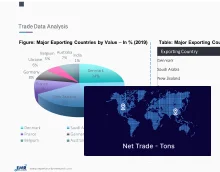
Stay informed and aware for a Market Leverage
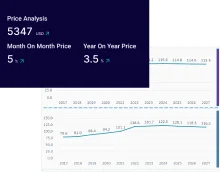
Analyze pricing patterns with comprehensive trend analyses.
Analyse trade data for supply chain insights.
Leverage cost reports for smart savings
Elevate supply chain with collaboration
Contact Us for Further Information
Our specialized analysts will be available to answer all the pre-purchase and post-purchase queries regarding the report.
Our specialized analysts will be available to answer all the pre-purchase and post-purchase queries regarding the report.
Staying one step ahead of the market landscape with our in-depth research methods, integrating advanced analytics to drive precise and tangible outcomes.
Our expert analyst team offers a significant advantage over competitors, with extensive market insights into the latest trends, putting you strategically ahead.
We deliver a simplified yet extensive report, comprising in-depth industry insights and analytics tailored to your industry requirements.
We are happy to help you navigate through the services we offer and solve your queries.
Contact us