Consumer Insights
Uncover trends and behaviors shaping consumer choices today
Procurement Insights
Optimize your sourcing strategy with key market data
Industry Stats
Stay ahead with the latest trends and market analysis.
The expansion of the Australia industrial ethanol market is significantly driven by increased demand for low-carbon and renewable fuel alternatives, and as a result, ethanol is the most common industrial feedstock utilized outside of regular blending. At the same time, the advancement of conversion technologies, such as alcohol-to-jet procedures and industrial-level optimization of the ethanol production process, enables various companies to diversify product portfolios while increasing efficiency.
Industrial ethanol is no longer just a traditional solvent and blending feedstock. It has emerged as a key feedstock for alcohol-to-jet technologies, which will help achieve long-term decarbonization and energy transition goals. This transition is aided by collaboration among fuel technology providers, project developers, and aviation stakeholders, which reduces execution risk, secures future demand, and accelerates project commercialization. These partnership-based development methods increase ethanol's industrial value while also stabilizing the need for renewable fuel infrastructure on a wide scale.
For instance, in March 2023, Jet Zero Australia collaborated with Qantas, Airbus, and LanzaJet to advance an SAF plant in Queensland based on ethanol. This has been further carried on in February 2024, when LanzaJet and Jet Zero Australia entered into a licensing and engineering contract to develop the first commercial-scale ethanol-to-SAF facility in Australia.
Compound Annual Growth Rate
11.5%
Value in AUD billion
2026-2035
|
Australia Industrial Ethanol Market Report Summary |
Description |
Value |
|
Base Year |
AUD billion |
2025 |
|
Historical Period |
AUD billion |
2019-2025 |
|
Forecast Period |
AUD billion |
2026-2035 |
|
Market Size 2025 |
AUD billion |
3.06 |
|
Market Size 2035 |
AUD billion |
9.09 |
|
CAGR 2019-2025 |
Percentage |
XX% |
|
CAGR 2026-2035 |
Percentage |
11.50% |
|
CAGR 2026-2035 - Market by Region |
Australian Capital Territory |
12.8% |
|
CAGR 2026-2035 - Market by Raw Material |
Bio-Based |
12.6% |
|
CAGR 2026-2035 - Market by Application |
Cosmetics and Perosnal Care |
13.2% |
|
2025 Market Share by Region |
New South Wales |
47.2% |
November 2025 - Queensland Sugar Beet Bioethanol trials launched
Sky Renewables collaborated with the farmers of central Queensland to pilot the production of sugar beets as a bioethanol feedstock, which would diversify the supply of raw materials and increase the integration of agriculture into renewable fuel supply chains. This initiative supports the Australia industrial ethanol market development by expanding the supply of feedstock and making it attractive to invest in regional production of biofuels.
February 2025 - ARENA invested USD 10.4 million in SAF projects, including licella feasibility
ARENA (Australian Renewable Energy Agency) invested USD 10.4 million at maximum in two SAF projects, among them, a feasibility study on manufacturing renewable fuel by converting sugar mill residues at Licella. This is in support of the Queensland ethanol industrial chain of value that increases its production capacities and enlarges the low carbon fuel technologies.
September 2024 - Governments back USD 36.8 million Townsville SAF project development
The Queensland and Australian governments have made an announcement of a USD 36.8 million partnership to help a Townsville SAF manufacturing plant to convert ethanol into low-carbon jet fuel. This funding increases the demand for ethanol in the market and improves the capacity of renewable fuels by allowing investment in industrial-scale conversion and value chains.
March 2024 - MicroBioGen Launched Innova® Delta for Enhanced Ethanol Production
MicroBioGen and Novonesis introduced the Innova 7 delta, the new non-GM yeast product that provides a higher ethanol yield and fermentation performance to local manufacturers. The technology facilitates an improvement in operations, lessens bottlenecks in production, and improves industrial ethanol competitiveness in the overall chemical and renewable industries of Australia.
Foreign Strategic Investment Strengthening Ethanol Value Chains
The growth of the Australia industrial ethanol market is picking up momentum with foreign strategic investments, which are investing massive capital, technical capability, and international market accessibility into the ethanol-related projects. The upstream and downstream integration is strengthened as international energy and fuel firms are looking at Australia as a scalable facility to produce low-carbon fuels based on ethanol. The trend will improve the bankability of the project and accelerate capacity building in industrial ethanol applications. For instance, in April 2024, Idemitsu Kosan invested in Jet Zero Australia to aid the production of SAF ethanol-based under Project Ulysses.
Advancing Commercial Readiness Through FEED and Engineering Contracts
The integration of feasibility into front-end engineering design is a critical phase in the expansion of industrial ethanol demands, as plans get closer to final investment decisions and development. FEED contracts reduce technical uncertainty, confirm economic processes, and communicate a message of long-term purpose from developers and partners. This boosts confidence across the ethanol supply chain and Australia industrial ethanol market value, including feedstock suppliers and technology licensors. In April 2025, Jet Zero Australia signed FEED contracts with Technip Energies to bring its ethanol-to-SAF plant closer to commercial operation.
Policy and Funding Support Accelerating Ethanol-Based Fuel Projects
Targeted government support is having a catalytic effect on speeding up ethanol-related projects in sectors by lowering financial risk and encouraging early commercialization, which is boosting income in Australia industrial ethanol market. Public finance options encourage private sector involvement and align ethanol use with national decarbonization targets. These measures accelerate infrastructure development and stabilize demand for industrial ethanol. In September 2024, ARENA funded Jet Zero's ethanol-to-SAF project in Townsville, which aims to scale up ethanol conversion technology.
Capital Raising and Equity Participation by Aviation Stakeholders
Increased equity contributions by the aviation and industrial sectors is an indication of increasing confidence in the ethanol-based fuel options and long-term viability of demand. Capital inflows also allow the project developers to enhance engineering, obtain the technology licences, and reinforce the ethanol procurement policy. This is a trend which is strengthening the use of ethanol as a strategic input to industries and not as a transition fuel. In March 2024, Airbus, Qantas and Idemitsu Kosan contributed AUD 29 million to Jet Zero Australia to hasten the growth of its ethanol-to-SAF platform.
Large-Scale National Investment into Sustainable Fuel Infrastructure
Investments in sustainable fuel infrastructure at the national level are creating long-term demand anchor points for boosting growth in the Australia industrial ethanol market by producing low-carbon liquid fuels domestically. Such investments will strengthen the supply chain and position ethanol at the heart of future fuel systems. LanzaJet openly expressed its support for the Australian Government's AUD 1.1 billion investment in sustainable fuels in September 2025, stating that it will expand ethanol-to-SAF technologies across the country.
The EMR’s report titled “Australia Industrial Ethanol Market Report and Forecast 2026-2035” offers a detailed analysis of the market based on the following segments:
Market Breakup by Raw Material
Key Insights: In terms of raw material, Australia industrial ethanol market scope comprises synthetic ethanol and bio-based raw materials, which support a variety of downstream applications. While bio-based molasses and grain ethanol can be utilized in renewable fuels, personal care, and food and beverage markets, synthetic ethanol production ensures high-quality feedstock for printing inks, adhesives, pharmaceuticals, and industrial cleaners. In order to meet the demands of the diverse industrial market, producers like Wilmar Sugar are expanding their renewable goods and logistics while offering tailored ethanol blends for use in industrial solvents, beverages, and pharmaceutical uses.
Market Breakup by Application
Key Insights: The Australia industrial ethanol market serves a wide range of applications, including adhesives, personal care and cosmetics, household and commercial cleaning, agriculture, printing, food and drink, pharmaceuticals, paints and coatings, and many more. As a result, the market is expanding across several industries. The leading companies in the sector include Wilmar BioEthanol, which is used in cleaners, coatings, and printing, and Manildra Group, which produces premium food-grade and medicinal ethanol, which supports the spirits, sanitizer, and flavor industries. Programs for sustainability and ongoing improvement ensure product quality and regulatory compliance across all final applications.
Market Breakup by Region
Key Insights: Regionally, the demand in the Australia industrial ethanol market is influenced by the dynamics of the regions in New South Wales, Victoria, Queensland, the Australian Capital Territory, and Western Australia, among others. The presence of large manufacturing facilities and logistics networks in New South Wales. Victoria's manufacturing and chemical sectors encourage the use of industrial ethanol. Meanwhile, Queensland's sugar ethanol biorefinery caters to both industrial and renewable markets. Initiatives and alliances, such as the proposed Ethanol to Jet renewable fuel facility in Charters Towers, supported by Virgin Australia and Qatar Airways, are attracting investment and bolstering regional supply chains.
By Raw Material, Bio‑Based Ethanol Innovation Supported by Pilot Plant Advances
The bio-based category is gaining traction in Australia industrial ethanol market, with innovative pilot and demonstration facilities improving production efficiency and increasing feedstock alternatives. These programs help to close the research-to-business gap, increase bioethanol competitiveness with synthetic routes, and accommodate new industrial uses. Indicatively, the Ethtec Cellulosic Ethanol Pilot Plant, which is now under construction in New South Wales, is a cost-effective initiative for manufacturing ethanol from lignocellulosic biomass, increasing the potential for industrial supply.
Synthetic ethanol is picking up pace in the Australia industrial ethanol market as a reagent of high purity to be used for industrial purposes such as chemicals, coatings, and adhesives. Cargill or Manildra Group sells 96-99% ethanol in solvents, coatings, and industrial synthesis, while also providing high-quality ethanol grades for industries and pharmacology. Process automation and quality control help to maintain consistent, high-quality manufacturing that fulfills tight criteria. These initiatives benefit sectors that prioritize dependability and performance, in addition to growing bio-ethanol capacity.
By applications, agricultural applications expand with biofuel integration
The use of ethanol in agriculture accounts for a significant share of the Australia industrial ethanol market, with biofuel projects combining farm-based feedstock systems to develop upstream value chains that benefit not only farmers but also ethanol processors. Agricultural output is linked to ethanol conversion to boost crop value and support rural economies. One example is Virgin Australia and Qatar Airways' collaboration with Renewable Developments Australia to build an Ethanol to Jet (EtJ) plant in Charters Towers, Queensland, that will convert locally grown sugarcane ethanol into sustainable aviation fuel, highlighting ethanol's agri-linkage.
The food and beverage industry contributes considerably to the Australia industrial ethanol market revenue, attributed to the increasing demand for high-grade ethanol as a flavoring ingredient, extract, and fermentation constituent. Companies such as Wilmar Sugar Pty Ltd. supply food-grade ethanol to produce demand spirits, drinks, and flavor formulations, while other companies, such as United Petroleum Pty Ltd., use it to create industrial beverages and food. Additionally, increasing investments in distillation and purification standards ensures a high level of safety and quality while also broadening the footprint of ethanol use in Victoria's growing industrial and manufacturing businesses.
|
CAGR 2026-2035 - Market by |
Region |
|
Australian Capital Territory |
12.8% |
|
New South Wales |
XX% |
|
Victoria |
XX% |
|
Queensland |
XX% |
|
Western Australia |
XX% |
|
Others |
XX% |
By region, Victoria’s industrial expansion supports ethanol application growth
Victoria's manufacturing, chemical, and industrial processing industries prioritize low-carbon inputs, positioning it as a strategic business hub for the Australia industrial ethanol market. Investing in logistics infrastructure, proximity to large industrial markets, and regional production capabilities can increase the adoption of ethanol-based products. These developments highlight Victoria's pivotal position in domestic ethanol demand, which is dominated by domestic and foreign manufacturers such as Manildra Group, as well as international companies seeking secure distribution and scalable industrial activity.
Meanwhile, the Australia industrial ethanol market is seeing increased demand due to diversification of agricultural feedstocks, increasing capacity, and upstream integration initiatives. Projects like these use sugarcane waste as feedstock and contribute to the region's renewable fuel uses. In March 2023, Qantas and Airbus partnered to invest in Jet Zero Australia's Queensland biofuel refinery. The project aims to convert agricultural byproducts into up to 100 ML of sustainable aviation fuel per year, highlighting ethanol's growing role in high-value industrial pathways.
Technology integration and progressive capacity building are major strategies that Australia industrial ethanol market players are increasingly focusing on to enhance market positioning. Businesses are investing in superior conversion technologies, optimization of feedstock utilization, and the capacity to match production with the new low-carbon fuel needs. Projects are being de-risked through strategic partnerships with engineering companies and technology licensors, and project efficiency and scalability are becoming a reality to allow market entrants to transform ethanol from a commodity input into a value-added industrial feedstock.
Industrial ethanol companies in Australia are also using partnership- and investment-based techniques to accelerate commercialization and win long-term demand. JVs in aviation, energy, and infrastructure contribute to offtake lock-in while also improving access to financing and global experience. Companies are collaborating with politicians and local stakeholders to align projects with national decarbonization targets, ensure regulatory protection, and develop infrastructure for long-term growth of the Australia industrial ethanol market.
Cargill, Incorporated
Cargill, Incorporated, is an international business involving agribusiness and industrial ingredients, headquartered in Minneapolis, United States of America, and established in 1865, that provides ethanol, bio-based products, and food-grade solutions. It boasts a diversified portfolio serving the fuel, industrial, and food industries, and it has a high presence in Australia and the Asia-Pacific region.
Manildra Group
Manildra Group is a vertically integrated agribusiness established in 1952 and based in New South Wales, Australia, that produces ethanol, starch derivatives, and bio-industrial products. The company operates both domestic and export markets, and it has a reputation of quality, sustainability, and innovation in biofuels and industrial uses.
United Petroleum Pty Ltd.
United Petroleum Pty Ltd. is a prominent company operating in the Australia industrial ethanol market that was established in 1993 and is headquartered in South Australia and operates as a major retailer of fuels and energy (most of its operations are in South Australia). The company has a presence in Australia, where it deals with the provision of sustainable energy and strategic networks of fuel distribution.
Wilmar Sugar Pty Ltd.
In Australia, one of the most industrial products is ethanol derived from sugarcane, and Wilmar Sugar Pty Ltd. is one of the major producers of sugar and bioenergy, located in Queensland, Australia, and was established in 1999. The company has large-scale agricultural activities and downstream processing that promote fuel ethanol and industrial ethanol.
Other players in the market include Park Pty Ltd., ADM, Recochem Corporation, Nowra Chemicals Pty Ltd., and AIM Group Pty Ltd., among others.
Explore the latest trends shaping the Australia Industrial Ethanol Market 2026-2035 with our in-depth report. Gain strategic insights, future forecasts, and key market developments that can help you stay competitive. Download a free sample report or contact our team for customized consultation on Australia industrial ethanol market trends 2026.


Upto 15% Off
AUD
$2749 $2499
$3849 $3499
$4949 $4499
$6049 $5499


*While we strive to always give you current and accurate information, the numbers depicted on the website are indicative and may differ from the actual numbers in the main report. At Expert Market Research, we aim to bring you the latest insights and trends in the market. Using our analyses and forecasts, stakeholders can understand the market dynamics, navigate challenges, and capitalize on opportunities to make data-driven strategic decisions.*
In 2025, the Australia industrial ethanol market reached an approximate value of AUD 3.06 billion.
The market is projected to grow at a CAGR of 11.50% between 2026 and 2035.
The key players in the market include Cargill, Incorporated, Manildra Group, Wilmar Sugar Pty Ltd., United Petroleum Pty Ltd., Park Pty Ltd., ADM, Recochem Corporation., Nowra Chemicals Pty Ltd., AIM Group Pty Ltd., among others.
Key strategies driving the market include adoption of ethanol-to-SAF technologies, strategic partnerships with aviation and industrial players, investment in advanced production and conversion facilities, government-backed funding support, and expansion of feedstock supply chains to ensure sustainable growth.
Major challenges in the market include feedstock supply volatility, high capital and operational costs, regulatory and environmental compliance hurdles, competition from imported ethanol and alternative fuels, and limited large-scale infrastructure for renewable fuel production.
Explore our key highlights of the report and gain a concise overview of key findings, trends, and actionable insights that will empower your strategic decisions.
| REPORT FEATURES | DETAILS |
| Base Year | 2025 |
| Historical Period | 2019-2025 |
| Forecast Period | 2026-2035 |
| Scope of the Report |
Historical and Forecast Trends, Industry Drivers and Constraints, Historical and Forecast Market Analysis by Segment:
|
| Breakup by Raw Material |
|
| Breakup by Application |
|
| Breakup by Region |
|
| Market Dynamics |
|
| Competitive Landscape |
|
| Companies Covered |
|
Datasheet
AUD 2,749
AUD 2,499
tax inclusive*
Single User License
AUD 3,849
AUD 3,499
tax inclusive*
Five User License
AUD 4,949
AUD 4,499
tax inclusive*
Corporate License
AUD 6,049
AUD 5,499
tax inclusive*
*Please note that the prices mentioned below are starting prices for each bundle type. Kindly contact our team for further details.*
Flash Bundle
Small Business Bundle
Growth Bundle
Enterprise Bundle
*Please note that the prices mentioned below are starting prices for each bundle type. Kindly contact our team for further details.*
Flash Bundle
Number of Reports: 3
20%
tax inclusive*
Small Business Bundle
Number of Reports: 5
25%
tax inclusive*
Growth Bundle
Number of Reports: 8
30%
tax inclusive*
Enterprise Bundle
Number of Reports: 10
35%
tax inclusive*
How To Order

Select License Type
Choose the right license for your needs and access rights.

Click on ‘Buy Now’
Add the report to your cart with one click and proceed to register.

Select Mode of Payment
Choose a payment option for a secure checkout. You will be redirected accordingly.
Strategic Solutions for Informed Decision-Making
Stay upgraded and grab opportunities by strategic insights
Stay informed and aware for a Market Leverage
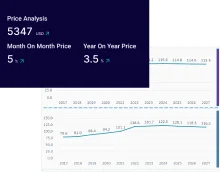
Analyze pricing patterns with comprehensive trend analyses.
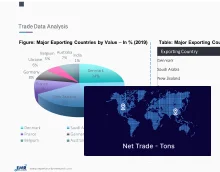
Analyse trade data for supply chain insights.
Leverage cost reports for smart savings

Elevate supply chain with collaboration
Contact Us for Further Information
Our specialized analysts will be available to answer all the pre-purchase and post-purchase queries regarding the report.
Our specialized analysts will be available to answer all the pre-purchase and post-purchase queries regarding the report.
Staying one step ahead of the market landscape with our in-depth research methods, integrating advanced analytics to drive precise and tangible outcomes.
Our expert analyst team offers a significant advantage over competitors, with extensive market insights into the latest trends, putting you strategically ahead.
We deliver a simplified yet extensive report, comprising in-depth industry insights and analytics tailored to your industry requirements.
We are happy to help you navigate through the services we offer and solve your queries.
Contact us