Consumer Insights
Uncover trends and behaviors shaping consumer choices today
Procurement Insights
Optimize your sourcing strategy with key market data
Industry Stats
Stay ahead with the latest trends and market analysis.
One key trend noticed in the Australia graphite market is the growing interest from the defense and aerospace industries in using graphite for lightweight composite components, creating niche, high-margin demand. Another trend is the rapid expansion of renewable energy storage facilities across the Asia Pacific region, driving battery material procurement contracts. This momentum strengthens long-term offtake negotiations and pricing power for Australian graphite producers in global supply chains.
Companies are positioning Australian sourced graphite as a strategic input for lithium-ion batteries. According to the Australian Trade and Investment Commission, Australia holds some of the world’s largest critical mineral reserves, including substantial graphite deposits, reinforcing its global battery material relevance. In June 2025, Syrah Resources restarted natural graphite operations at Balama mine after maintenance, preparing for increased output and global shipments. This Australia graphite market trend is moving graphite from bulk mineral exports toward value added processing pathways.
The market is increasingly defined by battery grade purification and spherical graphite capability rather than raw concentrate sales. Developers are investing in micronizing and purification technologies to meet electric vehicle anode specifications, accelerating the Australia graphite market value. End users are demanding tighter carbon purity thresholds and controlled particle size distribution. Mining companies are responding by entering technology partnerships instead of relying purely on extraction economics. In November 2025, Northern Graphite and Rain Carbon received funding to develop sustainable battery anode materials, transforming graphite by-products into high-performance battery-grade materials.
Compound Annual Growth Rate
7%
Value in AUD million
2026-2035
|
Australia Graphite Market Report Summary |
Description |
Value |
|
Base Year |
AUD million |
2025 |
|
Historical Period |
AUD million |
2019-2025 |
|
Forecast Period |
AUD million |
2026-2035 |
|
Market Size 2025 |
AUD million |
482.97 |
|
Market Size 2035 |
AUD million |
950.08 |
|
CAGR 2019-2025 |
Percentage |
XX% |
|
CAGR 2026-2035 |
Percentage |
7.00% |
|
CAGR 2026-2035 - Market by Region |
Australian Capital Territory |
7.8% |
|
CAGR 2026-2035 - Market by Region |
Western Australia |
7.4% |
|
CAGR 2026-2035 - Market by Product |
Sythetic |
7.6% |
|
CAGR 2026-2035 - Market by Applictaion |
Batteries |
7.9% |
|
2025 Market Share by Region |
Western Australia |
30.6% |
September 2025 – Novonix Sold Mt Dromedary Graphite Project for AUD 2 Million
Novonix divested its Mt Dromedary natural graphite project, sharpening capital focus on synthetic anode materials and downstream battery technologies. Such trends in the Australia graphite market enable emerging explorers to acquire advanced-stage graphite projects at lower entry costs.
July 2025 – Graphinex Opened Australia’s First Integrated Battery Anode Hub
Graphinex launched a fully integrated battery anode hub, combining mining, processing, and anode production within a unified Australian supply chain. Integrated hubs create demand for purification technology providers, micronizing specialists, and equipment manufacturers supporting vertically aligned anode production.
February 2025 – CSIRO Awarded Graphite R&D Grants to SMEs
CSIRO distributed new graphite research grants to accelerate SME-led battery material innovation and commercialisation across Australia’s clean energy sector. Funding programs encourage graphite producers to collaborate with startups developing advanced coatings, capitalizing on such developments in the Australia graphite market.
November 2024 – AUD 45 Million Grant Secured for Collie Micronizing Facility
Australian government awarded AUD 45 million to support the construction of a graphite micronizing facility in Collie, strengthening downstream processing capacity. Government-backed processing facilities open opportunities for exporters to shift from raw concentrate sales toward value-added micronized and battery-grade graphite products.
Battery Anode Material Processing Expansion
Australian graphite producers are focusing on mining output and anode ready material processing. Some companies are testing purification plants that can reach a battery-grade carbon purity level of more than 99.95%, accelerating the Australia graphite market value. The Australian Government Department of Industry, Science and Resources has made graphite a critical mineral, which allows access to financing and strategic project support. This decision is helping to bring together miners and battery technology companies through joint ventures. Developers are studying thermal and chemical purification methods to meet global EV standards. In February 2026, Idemitsu, Graphinex, Marubeni and NSC agreed to develop a Japan–Australia natural graphite-to-anode materials supply chain for EV batteries.
Downstream Spherical Graphite Commercialization
The market is witnessing strong focus on spherical graphite micronization facilities within Australia. Companies are investing in shaping and coating technologies to transform flake graphite into battery anode materials. This process significantly enhances energy density performance. Instead of exporting raw concentrate, firms are modeling integrated production flows, redefining the entire Australia graphite market dynamics. Several studies are focusing on the feasibility of modular processing plants near mining sites to reduce logistics costs. Localizing such facilities is being encouraged by policy support in the form of critical mineral roadmaps. In July 2025, Renascor Resources achieved high-grade graphite concentrate production at its Siviour project, positioning Australia for ex-China supply growth.
Strategic Offtake Agreements with EV Supply Chains
Graphite developers are in discussions with electric vehicle and battery cell manufacturers to secure long-term offtake agreements. Such contracts are crucial for obtaining financing for the projects. Australian miners are using the combination of stable mining regulations and ESG compliance standards as their differentiating factor over riskier jurisdictions. Environmental reporting transparency is evolving as a procurement criterion across the Australia graphite market scope. Businesses are performing lifecycle carbon assessments to enhance their trustworthiness. In September 2024, Renascor finalized commissioning trials at its Australian battery-grade graphite facility, demonstrating scalable, high-purity anode production for EV supply chains.
Government Backed Critical Mineral Investment Programs
The Australian government has intensified funding programs supporting critical mineral processing. In February 2026, Australia published its 2026 Critical Minerals Prospectus, showcasing 78 investment-ready projects across mining and midstream processing, including graphite development opportunities. Grants and concessional financing are reducing early-stage project risk for graphite developers. Streamlined permitting pathways are helping feasibility timelines move faster than in previous cycles. State governments are also investing in infrastructure upgrades near mineral corridors. This policy environment is improving investor confidence. Companies are using public funding leverage to attract private equity participation. The Australia graphite market trend is to build integrated mining and processing ecosystems rather than isolated extraction projects.
Advanced Graphite Applications Beyond Batteries
Beyond lithium-ion batteries, companies are exploring graphite use in fuel cells, thermal management systems, and advanced composites, accelerating the overall Australia graphite market expansion. Research collaborations with universities are focusing on graphene derivatives and high conductivity applications. Aerospace manufacturers are evaluating graphite reinforced components for weight reduction strategies. These niche applications offer higher margins compared to bulk anode materials. In January 2026, Siltrax’s fuel cell stack earned TÜV certification, accelerating global deployment of hydrogen power solutions across transport and stationary applications.
The EMR’s report titled “Australia Graphite Market Report and Forecast 2026-2035” offers a detailed analysis of the market based on the following segments:
Market Breakup by Product
Key Insight: Natural graphite leads the Australia graphite market growth because of domestic reserves and compatibility with battery anode production. Synthetic graphite is quickly gaining momentum due to high purity requirements in advanced batteries and aerospace components. In October 2025, Novonix supplied synthetic graphite samples to a major carbon processor, advancing testing for high-performance battery anode applications and supply validation. Natural grades serve large scale processing and export channels. Synthetic grades address precision driven applications where performance consistency outweighs cost concerns. Together, both segments illustrate how Australia is balancing mineral extraction strength with technology focused material development.
Market Breakup by Application
Key Insight: Refractories account for the dominant share of the Australia graphite market due to consistent demand from steel and high temperature industries. Batteries are expanding their shares rapidly with electric vehicles and storage adoption. Foundries and friction products rely on graphite for heat and wear resistance. Lubricants use graphite for its layered structure and low friction properties. Recarburizing supports metallurgical carbon adjustment processes. Other niche uses, including specialty coatings, add incremental value. Application diversity provides resilience while battery growth is reshaping long term investment focus.
Market Breakup by Region
Key Insight: The Western Australia graphite market leads through resource scale and export readiness. Queensland is expanding with processing ambitions and industrial integration. New South Wales and Victoria contribute through manufacturing and research demand. The Australian Capital Territory supports policy and regulatory coordination. Other regions provide localized industrial consumption. Regional dynamics reflect a balance between mining strength in the west and processing driven opportunities in the east, shaping a more distributed graphite value chain across Australia.
By grade, natural graphite accounts for the dominant share of the market due to abundant reserves and battery demand
Natural graphite holds the dominant share across the Australia graphite market scope due to the country’s strong mineral base and large flake deposits. Mining companies are prioritizing flake quality improvement and impurity reduction at the beneficiation stage. Producers such as Syrah Resources Limited are aligning extraction output with downstream anode processing requirements rather than selling standard concentrates. This approach allows better pricing leverage. Battery manufacturers prefer large flake material for spherical processing, which supports natural graphite uptake. Export markets across Asia are also familiar with Australian flake specifications. The segment benefits from resource scale, lower production cost compared to synthetic, and growing integration with battery grade purification strategies. In April 2024, Novonix and Lithium Energy agreed to merge their natural graphite assets, planning a combined public listing to scale supply and investment appeal.
Synthetic graphite emerges to be the fastest growing grade as battery and specialty industrial users demand ultra-high purity carbon structures. Unlike mined graphite, synthetic variants offer consistent particle size and controlled performance characteristics. Australian energy storage developers are evaluating synthetic blends to enhance anode life cycles. Though production costs are higher, the material appeals to premium battery and aerospace applications. Import substitution strategies are also encouraging localized processing feasibility studies.
By application, refractories capture the largest share in the market supported by steel industry demand
Refractories remain the dominant application due to steady steel production and high temperature industrial processes. Graphite is widely used in refractory bricks and linings because of its thermal resistance and conductivity. Australian steel and metal processing plants rely on consistent graphite supply for furnace stability. Producers are tailoring flake size distribution to meet refractory manufacturers’ performance standards. This application values durability and heat tolerance over extreme purity. Long term supply relationships are common, ensuring predictable offtake volumes.
Batteries represent the fastest growing application, contributing to the Australia graphite market revenue, as lithium-ion manufacturing and energy storage projects accelerate. Graphite is a core anode component, making supply security critical. Australian developers are targeting spherical graphite production to serve electric vehicle and stationary storage markets. Processing upgrades are being aligned with global battery chemistry standards. Unlike refractories, battery grade material requires high carbon purity and precise particle shaping. This shift is encouraging miners to invest in purification facilities instead of exporting raw concentrate. In July 2025, Graphinex officially opened the nation’s first fully integrated battery anode hub, advancing domestic graphite processing and EV material supply-chain development.
|
CAGR 2026-2035 - Market by |
Region |
|
Australian Capital Territory |
7.8% |
|
Western Australia |
7.4% |
|
New South Wales |
XX% |
|
Victoria |
XX% |
|
Queensland |
XX% |
|
Others |
XX% |
Western Australia clocks in the leading market position backed by mining infrastructure strength
The western region dominates the Australia graphite market due to established mining infrastructure and export capacity. The region hosts significant mineral resources and benefits from port connectivity to Asian markets. Mining operators are integrating beneficiation upgrades to enhance concentrate quality before shipment. Proximity to energy projects also supports potential downstream processing hubs. Western Australia’s regulatory clarity and resource expertise attract investment into graphite exploration and feasibility programs. The state’s ecosystem favors large-scale extraction aligned with export strategies. In April 2024, Western Australia awarded AUD 6.5 million to develop Australia’s first downstream graphite processing facility in Collie, boosting local value-add capacity.
Queensland is emerging as the fastest growing regional graphite market in Australia due to increasing interest in processing and downstream development. Industrial corridors around Brisbane are being considered for purification and spherical graphite facilities. The region’s energy and manufacturing base supports value added processing rather than pure extraction. Investors are assessing modular refining concepts to serve battery clients more directly. Queensland’s strategic location on the eastern seaboard provides logistical advantages for domestic distribution.
The market is becoming more strategy driven and less volume driven. Australia graphite companies are designing vertically integrated models that include micronizing, purification, and coated spherical graphite trials. A clear area of focus is battery grade processing capability. Developers are investing in pilot plants to prove 99.95% carbon purity benchmarks before securing offtake agreements. Producers are publishing lifecycle carbon data to appeal to electric vehicle supply chains.
Opportunities are emerging in modular downstream facilities located near mining sites. This reduces transport cost and improves feedstock control. Australia graphite market players are targeting joint ventures with battery material processors rather than operating in isolation. Government-backed critical mineral programs are lowering early-stage funding pressure. The competitive edge will belong to companies that can combine resource scale, purification technology, and documented sustainability compliance in one coherent value proposition.
Mineral Commodities Ltd
Established in 1970 and headquartered in Western Australia, Mineral Commodities Ltd focuses on mineral sands and battery minerals including graphite development initiatives. The company is exploring vertically integrated processing routes to move beyond concentrate exports. It is assessing downstream purification options aligned with lithium-ion anode demand. Its strategy revolves around securing strategic partnerships with battery material groups.
Sarytogan Graphite Limited
Founded in 2022 and headquartered in Perth, Australia, Sarytogan Graphite Limited concentrates on high grade graphite resources and downstream processing evaluation. The company has reported strong carbon purity potential suitable for battery grade refinement. Its development plans include purification test work and spherical graphite assessments.
Graphite Australia
Established in 2018 and based in Australia, Graphite Australia targets exploration and early-stage development of graphite deposits suited for energy storage applications. The company is evaluating processing technologies that enhance concentrate consistency for downstream shaping. By prioritizing quality control from the exploration stage, Graphite Australia is attempting to reduce later stage purification cost pressures.
INTERNATIONAL GRAPHITE LTD
Founded in 2018 and headquartered in Western Australia, INTERNATIONAL GRAPHITE LTD is pursuing a mine to market strategy that combines mining with downstream graphite processing. The company is developing plans for micronizing and purification facilities within Australia. By establishing domestic processing capability, it is aiming to capture more margin locally.
Other key players in the market include Sovereign Metals Limited, Syrah Resources Limited, Talga Group, Renascor Resources, and Quantum Graphite Limited, among others.
Explore the latest trends shaping the Australia graphite market 2026-2035 with our in-depth report. Gain strategic insights, future forecasts, and key market developments that can help you stay competitive. Download a free sample report or contact our team for customized consultation on Australia graphite market trends 2026.


Upto 15% Off
AUD
$2749 $2499
$3849 $3499
$4949 $4499
$6049 $5499


*While we strive to always give you current and accurate information, the numbers depicted on the website are indicative and may differ from the actual numbers in the main report. At Expert Market Research, we aim to bring you the latest insights and trends in the market. Using our analyses and forecasts, stakeholders can understand the market dynamics, navigate challenges, and capitalize on opportunities to make data-driven strategic decisions.*
In 2025, the Australia graphite market reached an approximate value of AUD 482.97 million.
The market is projected to grow at a CAGR of 7.00% between 2026 and 2035.
The key players in the market include Mineral Commodities Ltd, Sarytogan Graphite Limited, Graphite Australia, INTERNATIONAL GRAPHITE LTD, Sovereign Metals Limited, Syrah Resources Limited, Talga Group, Renascor Resources, and Quantum Graphite Limited, among others.
Key strategies driving the market include Investing in pilot purification plants, forming battery supply partnerships, strengthening ESG disclosures, optimizing beneficiation efficiency, and advancing modular downstream infrastructure are improving long term competitiveness.
Securing downstream processing funding, achieving battery grade purity at scale, managing environmental compliance approvals, and competing with established Asian refiners remain significant operational and financial pressures for developers.
Explore our key highlights of the report and gain a concise overview of key findings, trends, and actionable insights that will empower your strategic decisions.
| REPORT FEATURES | DETAILS |
| Base Year | 2025 |
| Historical Period | 2019-2025 |
| Forecast Period | 2026-2035 |
| Scope of the Report |
Historical and Forecast Trends, Industry Drivers and Constraints, Historical and Forecast Market Analysis by Segment:
|
| Breakup by Product |
|
| Breakup by Application |
|
| Breakup by Region |
|
| Market Dynamics |
|
| Competitive Landscape |
|
| Companies Covered |
|
Datasheet
AUD 2,749
AUD 2,499
tax inclusive*
Single User License
AUD 3,849
AUD 3,499
tax inclusive*
Five User License
AUD 4,949
AUD 4,499
tax inclusive*
Corporate License
AUD 6,049
AUD 5,499
tax inclusive*
*Please note that the prices mentioned below are starting prices for each bundle type. Kindly contact our team for further details.*
Flash Bundle
Small Business Bundle
Growth Bundle
Enterprise Bundle
*Please note that the prices mentioned below are starting prices for each bundle type. Kindly contact our team for further details.*
Flash Bundle
Number of Reports: 3
20%
tax inclusive*
Small Business Bundle
Number of Reports: 5
25%
tax inclusive*
Growth Bundle
Number of Reports: 8
30%
tax inclusive*
Enterprise Bundle
Number of Reports: 10
35%
tax inclusive*
How To Order

Select License Type
Choose the right license for your needs and access rights.

Click on ‘Buy Now’
Add the report to your cart with one click and proceed to register.

Select Mode of Payment
Choose a payment option for a secure checkout. You will be redirected accordingly.
Strategic Solutions for Informed Decision-Making
Stay upgraded and grab opportunities by strategic insights
Stay informed and aware for a Market Leverage
Analyze pricing patterns with comprehensive trend analyses.
Analyse trade data for supply chain insights.
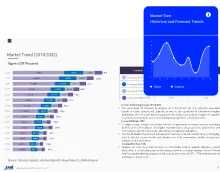
Leverage cost reports for smart savings
Elevate supply chain with collaboration
Contact Us for Further Information
Our specialized analysts will be available to answer all the pre-purchase and post-purchase queries regarding the report.
Our specialized analysts will be available to answer all the pre-purchase and post-purchase queries regarding the report.
Staying one step ahead of the market landscape with our in-depth research methods, integrating advanced analytics to drive precise and tangible outcomes.
Our expert analyst team offers a significant advantage over competitors, with extensive market insights into the latest trends, putting you strategically ahead.
We deliver a simplified yet extensive report, comprising in-depth industry insights and analytics tailored to your industry requirements.
We are happy to help you navigate through the services we offer and solve your queries.
Contact us