Consumer Insights
Uncover trends and behaviors shaping consumer choices today
Procurement Insights
Optimize your sourcing strategy with key market data
Industry Stats
Stay ahead with the latest trends and market analysis.
The Australia enterprise AI market covers software, platforms, infrastructure and services that organisations buy to apply machine learning, predictive analytics, generative AI, language and vision models inside their operations. It spans machine learning platforms, AI embedded in ERP and CRM suites, MLOps tooling, industry solutions and the consulting and integration work needed to put them into production.
In 2025, the market is valued at AUD 6.20 billion in 2025 and is forecast to grow at a CAGR of 22.00%, reaching AUD 45.29 billion by 2035. Growth is driven by hyperscaler spending commitments of AUD 20 billion from Amazon Web Services and AUD 25 billion from Microsoft, a National AI Plan released in December 2025 and the rise of agentic software across banks, retailers and telecommunications groups.
Compound Annual Growth Rate
22%
Value in AUD billion
2026-2035
The Australia enterprise AI market is moving from pilots to production. Large banks, retailers and telecommunications groups now run AI inside core workflows, while smaller firms are adopting through the software they already use, so the market extends well beyond generative chatbots into predictive and machine learning work.
Three forces are shaping demand: heavy infrastructure spending by global cloud providers, with local data centre capacity being built in Sydney and Melbourne; uneven adoption, as the Australian Bureau of Statistics found about 35% of large businesses using AI against roughly 11% of small and micro firms; and a shift from assistants to agents that act on enterprise data.
In December 2025 the federal government released its National AI Plan with AUD 29.9 million for an AI Safety Institute, and in April 2026 Microsoft committed AUD 25 billion over three years. In June 2026 Woolworths announced an agentic version of its Olive assistant.
Spending is moving from experimentation towards production systems that handle customer service, fraud detection, forecasting and software delivery. Software and platforms lead in value, while services remain essential for integration and change management. Generative AI and large language models advance fastest, though machine learning and predictive analytics still carry the largest installed workloads. Financial services leads by industry, and government and public sector demand grows quickest as agencies adopt shared platforms. New South Wales remains the largest region because of its head offices and data centre clusters, while Victoria expands quickest on new cloud capacity and a deep technology workforce. Sovereign hosting, safety rules and agent governance point to durable structural demand rather than a short experimentation cycle.
| Metric | Value |
| Market Size 2025 | AUD 6.20 billion |
| Projected Market Size 2035 | AUD 45.29 billion |
| CAGR 2026 to 2035 | 22.00% |
| Fastest-Growing Technology | Generative AI and Large Language Models: 29.0% CAGR |
| Fastest-Growing Industry | Government and Public Sector: 26.5% CAGR |
| Largest Revenue Segment 2025 | Software and Platforms |
| Dominant Region | New South Wales |
| Highest CAGR by Region | Victoria: 23.8% |
| Businesses using AI, ABS June 2026 release | About 12% |
Infrastructure Build-Out Underpins Enterprise Demand
Revenue is on course to expand more than sevenfold, from AUD 6.20 billion in 2025 to AUD 45.29 billion in 2035 at a 22.0% CAGR. Amazon Web Services committed AUD 20 billion and Microsoft AUD 25 billion, giving enterprises local compute for sensitive workloads.
Generative and Government Use Cases Lead Growth
Machine learning keeps the largest base, but Generative AI and Large Language Models grow at an estimated 29.0% CAGR and Government and Public Sector at an estimated 26.5% CAGR through 2035. The National AI Plan of December 2025 backs a secure GovAI platform for agencies.
Agentic Deployments Reach Mainstream Brands
Large employers now put agents in front of customers and staff, and vendors are building the orchestration, security and data layers behind them. Adoption among smaller firms is still lagging, which leaves room for embedded AI.
| Report Summary | Unit | Value |
| Base Year | AUD billion | 2025 |
| Historical Period | AUD billion | 2019 to 2025 |
| Forecast Period | AUD billion | 2026 to 2035 |
| Market Size 2025 | AUD billion | 6.20 |
| Market Size 2035 | AUD billion | 45.29 |
| CAGR 2026 to 2035 | Percentage | 22.00 % |
| CAGR by Technology: Generative AI and Large Language Models | Percentage | 29.0 % |
| CAGR by Industry: Government and Public Sector | Percentage | 26.5 % |
| CAGR by Component: AI Infrastructure and Compute | Percentage | 26.0 % |
| CAGR by Region: Victoria | Percentage | 23.8 % |
| Businesses Using AI, ABS June 2026 Release | Percentage | 12 |
| Large Businesses Using AI, ABS June 2026 Release | Percentage | 35 |
| Market Share by Region 2025 | New South Wales | Dominant Share |
Production deployments are replacing pilots as banks, retailers and agencies buy platforms and services. New South Wales leads, while Victoria grows fastest on new cloud capacity.
The Australia enterprise AI market is being reshaped by official adoption data, agentic assistants at major retailers, platform vendors opening data to agents and record cloud investment.
June 2026 - Australian Bureau of Statistics Reports About 12% of Businesses Using AI
June 2026 - Woolworths Upgrades Olive to an Agentic Shopping Assistant
May 2026 - Atlassian Opens Teamwork Graph to Outside AI Agents
April 2026 - Microsoft Commits AUD 25 Billion to Australian AI and Cloud
Official adoption data, agentic assistants at large retailers, open agent access to enterprise data and heavy cloud investment are the main structural forces, while uneven adoption remains the main constraint.
Recent developments, presented from the most recent, show sovereign AI infrastructure plans, a national policy framework, creative software moving to AI-first design and bank partnerships with model developers.
December 2025 - NEXTDC Signs Memorandum with OpenAI for Sydney AI Campus
December 2025 - Federal Government Releases the National AI Plan
October 2025 - Canva Unveils Creative Operating System with Design Model
August 2025 - Commonwealth Bank Signs Multi-Year Partnership with OpenAI
Sovereign compute plans, a national policy framework and bank partnerships with model developers show buyers moving towards governed, large-scale deployment through the forecast period.
The Expert Market Research’s report on the Australia Enterprise AI Market offers a detailed analysis of the market based on the following segments.
Market Breakup by Component
Software and Platforms lead on value, in our estimate, covering machine learning platforms, MLOps tools and AI embedded in ERP and CRM suites, such as Atlassian's Rovo with more than 14 million assisted actions in a month by May 2026. AI Services cover consulting, integration and managed operations, as in the Telstra and Accenture data and AI joint venture finalised in February 2025. AI Infrastructure and Compute grows fastest at an estimated 26.0% CAGR through 2035, supported by Microsoft's AUD 25 billion commitment of April 2026 and NEXTDC's December 2025 memorandum with OpenAI. Others include edge devices and data labelling.
Market Breakup by Technology
Machine Learning and Predictive Analytics lead in value, in our estimate, because forecasting, fraud scoring and demand planning are the oldest production workloads. Generative AI and Large Language Models grow fastest at an estimated 29.0% CAGR through 2035, as Commonwealth Bank's August 2025 partnership with OpenAI shows. Natural Language Processing and Conversational AI follows with assistants such as Woolworths' Olive, upgraded in June 2026. Computer Vision serves inspection, safety and retail analytics. Others include speech, robotics and recommendation systems.
Market Breakup by End-Use Industry
Banking, Financial Services and Insurance lead, in our estimate, with the Australian Bureau of Statistics showing financial and insurance firms at 24% adoption in June 2026. Government and Public Sector grows fastest at an estimated 26.5% CAGR through 2035, backed by the GovAI platform in the December 2025 National AI Plan. Retail and Consumer Goods is moving to agents, as Woolworths shows. Telecommunications, Media and Technology had the highest adoption at 38%. Mining, Energy and Utilities apply predictive maintenance and planning models. Others include healthcare, education and logistics.
Market Breakup by Region
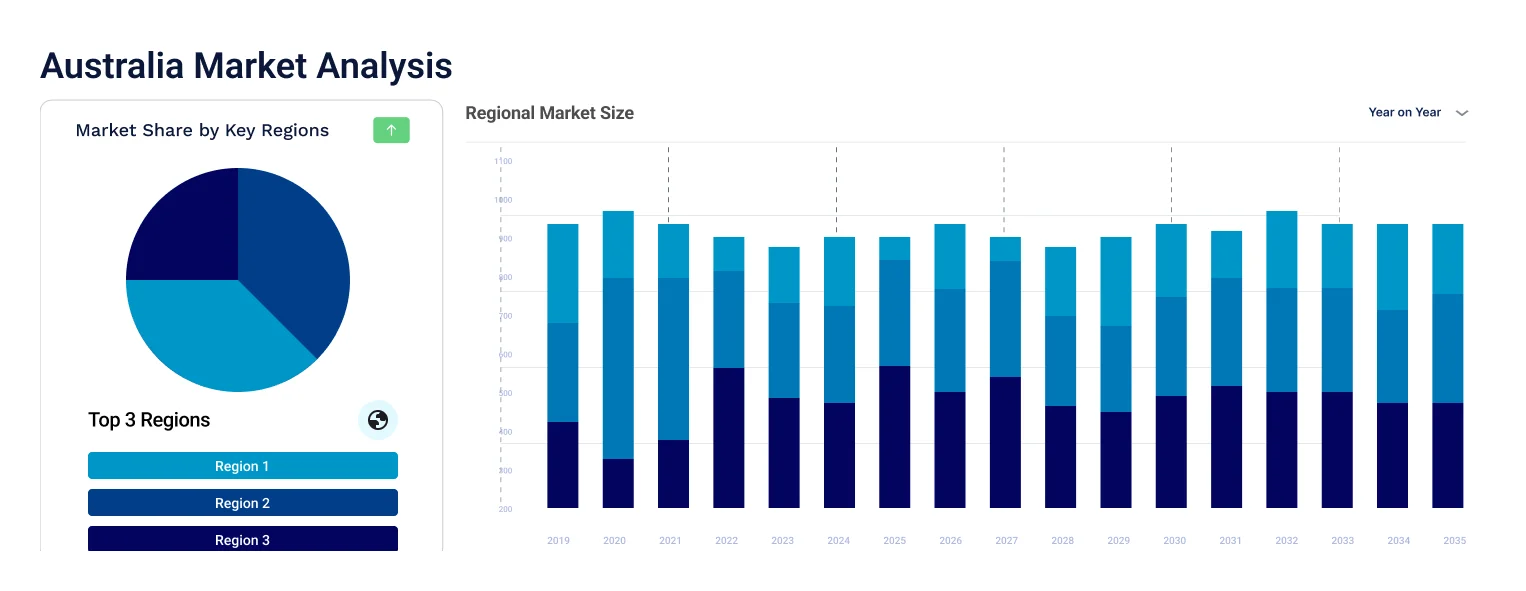
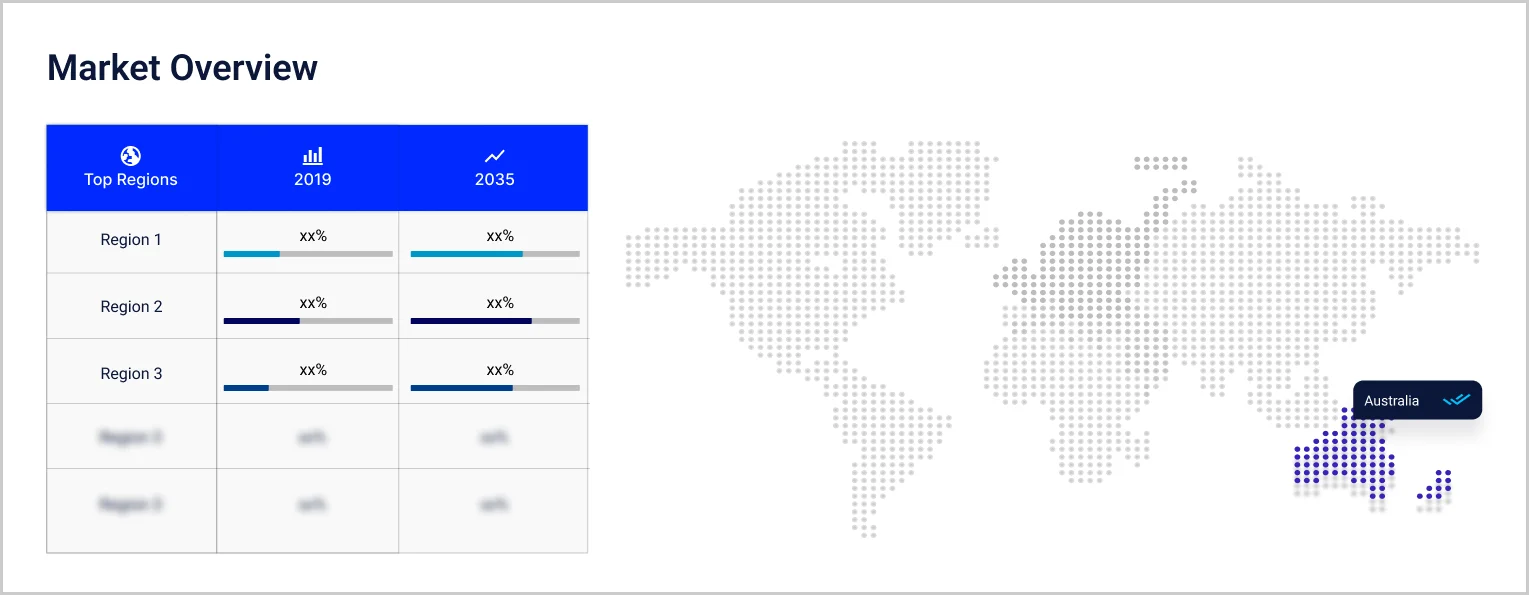
New South Wales dominates, in our estimate, as Sydney hosts Atlassian, Commonwealth Bank, Canva and NEXTDC's Eastern Creek AI campus planned for 2027, and it grows at an estimated 21.2% CAGR through 2035 from a large base. Victoria is the fastest-growing region at an estimated 23.8%, helped by Melbourne cloud capacity in Amazon Web Services' AUD 20 billion plan and Telstra's data and AI teams. Queensland grows at 22.6% on renewable-backed data centre projects. Western Australia grows at 23.1% on resource-sector analytics, and Rest of Australia at 21.9%.
| CAGR 2026 to 2035, Market by Region | Growth Rate |
| New South Wales | 21.2 % |
| Victoria | 23.8 % |
| Queensland | 22.6 % |
| Western Australia | 23.1 % |
| Rest of Australia (incl. South Australia, Tasmania, the Australian Capital Territory and the Northern Territory) | 21.9 % |
Competition combines global hyperscalers, enterprise software suites, systems integrators and large local adopters that build their own capability. Barriers include compute access, data residency, model governance, partner ecosystems and the skills needed to move projects from pilot to production.
Microsoft
Microsoft, headquartered in Redmond, Washington, sells Azure AI services, Copilot and Fabric to Australian enterprises and government. On 23 April 2026 it committed AUD 25 billion over three years to Australian AI and cloud capacity, cyber security and skills, backed by a memorandum of understanding with the government. It also plans to train 3 million Australians in AI skills by 2028 and widen its cyber partnership with the Australian Signals Directorate.
Amazon Web Services
Amazon Web Services, headquartered in Seattle, Washington, offers cloud infrastructure, Bedrock and SageMaker to Australian enterprises. On 14 June 2025 Amazon announced AUD 20 billion of investment from 2025 to 2029 to expand data centres in Sydney and Melbourne, supported by three new solar farms in Victoria and Queensland. The programme includes the AWS Generative AI Accelerator and AWS AI Launchpad for start-ups and customers.
Google Cloud
Google Cloud, part of Alphabet and based in Mountain View, California, sells Vertex AI, Gemini models and the Gemini Enterprise agent platform. Google launched Gemini Enterprise in October 2025, with Macquarie Bank deploying it to all staff. In June 2026 Woolworths announced that its upgraded Olive shopping assistant runs on Gemini Enterprise, extending Google Cloud into agentic retail use in Australia.
Atlassian
Atlassian, headquartered in Sydney, sells Jira, Confluence and the Rovo AI platform for enterprise teamwork. At Team '26 on 6 May 2026 it opened Teamwork Graph, holding more than 150 billion connections, to outside agents, and reported more than 14 million Rovo-assisted actions in a month. It also said more than 90% of enterprise cloud customers use Rovo, which shows how quickly AI is becoming embedded in workflow software.
Other players operating in the Australia enterprise AI market include IBM, Accenture, Telstra, Salesforce, and Canva, alongside Australian system integrators, data and analytics specialists, start-ups and in-house teams at banks, retailers, miners and agencies building and deploying models across Australia.
Competition rests on compute access, data residency, partner ecosystems and proven production deployments rather than model quality alone, while embedded AI in familiar software shapes buying decisions.


Upto 20% Off
AUD


*While we strive to always give you current and accurate information, the numbers depicted on the website are indicative and may differ from the actual numbers in the main report. At Expert Market Research, we aim to bring you the latest insights and trends in the market. Using our analyses and forecasts, stakeholders can understand the market dynamics, navigate challenges, and capitalize on opportunities to make data-driven strategic decisions.*
The Australia enterprise AI market is valued at AUD 6.20 billion in 2025, supported by hyperscaler data centre investment, a national policy framework and the spread of agentic software, with New South Wales as the largest region.
The market is forecast to reach AUD 45.29 billion by 2035, growing at a CAGR of 22.00 % over the 2026 to 2035 period, driven by cloud investment, sovereign hosting needs, government platforms and the shift from pilots to production deployments in large enterprises.
Generative AI and Large Language Models record the highest CAGR at an estimated 29.0% through 2035, as banks, retailers and software vendors move from assistants to agents.
New South Wales dominates, as Sydney hosts major company headquarters and AI data centre projects. Victoria is the fastest-growing region at an estimated 23.8% CAGR, helped by new Melbourne cloud capacity.
Key players include Microsoft, Amazon Web Services, Google Cloud, Atlassian, IBM, Accenture, Telstra, Salesforce, and Canva.
The National AI Plan is the federal government's strategy, released on 2 December 2025. It funds an AI Safety Institute with AUD 29.9 million and provides for a secure GovAI platform and data centre investment.
The Australian Bureau of Statistics reported in June 2026 that about 12% of businesses used AI. Use was about 35% among large businesses and 22% among medium businesses.
Explore our key highlights of the report and gain a concise overview of key findings, trends, and actionable insights that will empower your strategic decisions.
| REPORT FEATURES | DETAILS |
| Base Year | 2025 |
| Historical Period | 2019-2025 |
| Forecast Period | 2026-2035 |
| Scope of the Report |
Historical and Forecast Trends, Industry Drivers and Constraints, Historical and Forecast Market Analysis by Segment:
|
| Breakup by Component |
|
| Breakup by Technology |
|
| Breakup by End-Use Industry |
|
| Breakup by Region |
|
| Market Dynamics |
|
| Competitive Landscape |
|
| Companies Covered |
|
Datasheet
AUD 2,749
AUD 2,499
tax inclusive*
Single User License
AUD 3,849
AUD 3,499
tax inclusive*
Five User License
AUD 4,949
AUD 4,499
tax inclusive*
Corporate License
AUD 6,049
AUD 5,499
tax inclusive*
*Please note that the prices mentioned below are starting prices for each bundle type. Kindly contact our team for further details.*
Flash Bundle
Small Business Bundle
Growth Bundle
Enterprise Bundle
*Please note that the prices mentioned below are starting prices for each bundle type. Kindly contact our team for further details.*
Flash Bundle
Number of Reports: 3
20%
tax inclusive*
Small Business Bundle
Number of Reports: 5
25%
tax inclusive*
Growth Bundle
Number of Reports: 8
30%
tax inclusive*
Enterprise Bundle
Number of Reports: 10
35%
tax inclusive*
How To Order

Select License Type
Choose the right license for your needs and access rights.

Click on ‘Buy Now’
Add the report to your cart with one click and proceed to register.

Select Mode of Payment
Choose a payment option for a secure checkout. You will be redirected accordingly.
Strategic Solutions for Informed Decision-Making
Stay upgraded and grab opportunities by strategic insights
Stay informed and aware for a Market Leverage
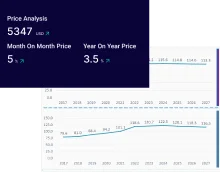
Analyze pricing patterns with comprehensive trend analyses.
Analyse trade data for supply chain insights.
Leverage cost reports for smart savings
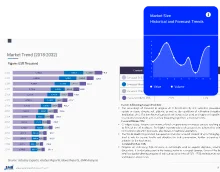
Elevate supply chain with collaboration
Contact Us for Further Information
Our specialized analysts will be available to answer all the pre-purchase and post-purchase queries regarding the report.
Our specialized analysts will be available to answer all the pre-purchase and post-purchase queries regarding the report.
Staying one step ahead of the market landscape with our in-depth research methods, integrating advanced analytics to drive precise and tangible outcomes.
Our expert analyst team offers a significant advantage over competitors, with extensive market insights into the latest trends, putting you strategically ahead.
We deliver a simplified yet extensive report, comprising in-depth industry insights and analytics tailored to your industry requirements.
We are happy to help you navigate through the services we offer and solve your queries.
Contact us