Consumer Insights
Uncover trends and behaviors shaping consumer choices today
Procurement Insights
Optimize your sourcing strategy with key market data
Industry Stats
Stay ahead with the latest trends and market analysis.
Automation upgrades at Australian ports and intermodal terminals are resulting in greater number of encoder installations on ship-to-shore cranes, yard cranes, and automated guided vehicles. Operators are focusing on highly accurate motion feedback as a key enabler for unmanned operations and meeting output targets. At the same time, the requirement of more stringent functional safety audits are redefining the Australia encoder market dynamics. To satisfy compliance and long-term maintenance accountability along the supply chains, OEMs are specifying that the encoders have certified redundant outputs, higher SIL ratings, and fully traceable testing documentation.
The market is increasingly shaped by localized product engineering rather than imported standard units. In February 2025, Baumer Australia expanded its heavy-duty encoder assembly line in Melbourne to support mining and bulk material handling clients. According to the Australia encoder market analysis, unplanned downtime linked to sensor and feedback component faults accounts for nearly USD 50 billion every year, with individual facilities losing 3–5% of their annual production capacity as a direct consequence of equipment failures. This has pushed OEMs to demand encoders tested for dust ingress, shock endurance, and temperature drift under Australian field conditions.
Manufacturers are now prioritizing ruggedized absolute encoders with redundant feedback channels for conveyor systems, stackers, and reclaimers. Product development efforts increasingly focus on extended Mean Time Between Failure rather than resolution upgrades alone. For example, in October 202t5, FLUX GmbH announced the release of the IND-MAX-100 Marine Grade inductive angle encoder. Several suppliers are also offering site-specific firmware tuning, allowing encoders to adapt signal output based on motor load behavior, boosting the Australia encoder market value. This level of customization is now becoming part of mining EPC procurement discussions.
Compound Annual Growth Rate
7.7%
Value in AUD million
2026-2035
|
Australia Encoder Market Report Summary |
Description |
Value |
|
Base Year |
AUD million |
2025 |
|
Historical Period |
AUD million |
2019-2025 |
|
Forecast Period |
AUD million |
2026-2035 |
|
Market Size 2025 |
AUD million |
66.56 |
|
Market Size 2035 |
AUD million |
139.76 |
|
CAGR 2019-2025 |
Percentage |
XX% |
|
CAGR 2026-2035 |
Percentage |
7.70% |
|
CAGR 2026-2035 - Market by Region |
Australian Capital Territory |
8.7% |
|
CAGR 2026-2035 - Market by Type |
Linear Encoder |
8.5% |
|
CAGR 2026-2035 - Market by Size |
Absolute |
8.2% |
|
2025 Market Share by Region |
Victoria |
25.3% |
January 2026 – Melexis Unveiled 22-bit High-Resolution Inductive Encoder
Melexis revealed a 22-bit high-resolution inductive encoder which is especially manufactured for tough industrial motion control and robotics which require precise non-contact position feedback applications. Hence, local suppliers can use this Australia encoder market opportunity to supply ports and mining automation with inductive encoders that are resistant to dust, vibration, and electromagnetic interference.
December 2025 – FAULHABER Released IERF3 L Incremental Encoder
Faulhaber launched the IERF3 L incremental encoder suitable for micro drives, offering higher precision, low noise, and stable performance over time in automation processes. Encoder manufacturers may benefit from targeting AGV and crane OEMs that require compact, high-precision feedback systems for space-constrained automation retrofits.
July 2024 – Allegro DVT Launched Real-Time VVCH266 Encoder IP
Allegro DVT launched the first real-time VVCH266 encoder IP, enabling hardware-based video compression for low-latency automotive vision systems and ADAS. Depending on this trend, companies can adapt real-time encoder IPs for smart surveillance and autonomous inspection systems used across transport infrastructure and logistics hubs.
July 2023 – Sinusoid Introduced RPE4 Absolute Analog Rotary Encoder
Sinusoid unveiled the RPE4 absolute rotary encoder leveraging 420 mA output for industrial feedback and safety, critical positioning in harsh environments. Such developments in the Australia encoder market encourage suppliers to help in conducting safety audits by providing analog absolute encoders.
Mining-Grade Encoder Engineering Focus
Mining continues to influence encoder design priorities more than any other sector in Australia. Major suppliers are shifting R&D budgets toward shock-resistant housings, sealed bearings, and vibration-tolerant signal processing. This is linked to automation upgrades across iron ore, coal, and lithium operations. Encoders are now expected to survive continuous operation in abrasive environments without recalibration. Vendors offering site validation trials are gaining preference. This Australia encoder market trend favors suppliers that engineer products locally rather than rebranding global catalog models. For example, NextOre launched OG3, a sensor system for underground copper miners in March 2025.
Encoder Integration with Safety-Rated Automation
Functional safety compliance is reshaping encoder specifications across industrial machinery. Australian manufacturers are increasingly required to meet SIL and PL standards during audits. Encoder vendors are responding with dual-channel absolute encoders compatible with safety PLCs. These products support safe speed monitoring and emergency stop verification, reshaping the entire Australia encoder market dynamics. Food processing and packaging plants are driving this shift due to tighter compliance checks. Encoder suppliers able to provide documentation, diagnostics logs, and traceable testing are being shortlisted. In September 2025, Encoder Products Company (EPC) announced a strategic technology partnership with TWK-ELEKTRONIK GmbH to bring SIL2/SIL3 safety-rated encoders to the market.
Expansion of Encoder Use in Automated Warehousing
Warehouse automation is becoming a steady demand source for encoders in Australia. Large-scale grocery distributors and cold chain operators are expanding automated storage and retrieval systems. For example, Element Logic acquired Safer Storage Systems, a leading Australian provider of warehouse storage and automation solutions in December 2025. Encoders are critical for lift positioning, shuttle movement, and conveyor synchronization. Suppliers are launching compact magnetic encoders optimized for high cycle counts and minimal maintenance. In November 2024, Melexis launched MLX90382 magnetic encoder for high-speed precision. Vendors are adapting products to operate reliably in low-temperature environments, boosting the overall Australia encoder market value.
Local Manufacturing and Shorter Supply Chains
Supply chain disruptions revealed the risks of heavily depending on imported encoders which have long lead times. Australian OEMs are putting more emphasis on local availability and technical support. Some encoder manufacturers are opening up local assembly and calibration centers in areas where they are selling their products. This way, they can quickly customize the product and offer warranty services. Buyers are increasingly considering how close a supplier is when making a purchase. This trend is deepening the ties between encoder suppliers and system integrators. It is also changing the competitive landscape in the Australia encoder market. In January 2026, Aerotech Inc announced the launch of its AGV-CPO CORE Performance 2-Axis Laser Scan Head, expanding its manufacturing-focused product line for laser micromachining applications.
Digital Diagnostics and Predictive Maintenance Features
Encoder development is moving beyond position feedback into diagnostics and health monitoring. Vendors are embedding temperature tracking, signal quality alerts, and usage counters. These features support predictive maintenance strategies in continuous operations. Mining and logistics operators value early fault detection to avoid shutdowns. Australian asset management frameworks increasingly emphasize condition monitoring. Suppliers integrating digital diagnostics with industrial networks are gaining traction, creating new Australia encoder market opportunities. In September 2025, VCTI released a first-of-its-kind open-source AI model designed specifically for the optical communications and photonics industries.
The EMR’s report titled “Australia Encoder Market Report and Forecast 2026-2035” offers a detailed analysis of the market based on the following segments:
Market Breakup by Type
Key Insight: Rotary encoders continue to lead the Australia encoder market growth due to their durability and retrofit suitability across installed industrial equipment. Linear encoders are expanding steadily as precision automation projects increase. For example, the FORTiS-S linear encoder is the standard-sized encoder, available with measuring lengths from 140 mm to 4240 mm. Rotary designs benefit from mechanical familiarity and predictable performance. Linear solutions gain ground where accuracy and space efficiency matter. Both segments reflect a market split between brownfield optimization and greenfield automation.
Market Breakup by Size
Key Insight: Incremental encoders continue to sustain their dominance in the Australia encoder market due to compatibility and ease of replacement. Absolute encoders are gaining popularity where restart accuracy and safety assurance are priorities. Incremental solutions suit legacy environments, while absolute designs support modern automation strategies. The balance between cost control and operational risk is shaping buyer decisions across encoder size categories.
Market Breakup by Technology
Key Insight: As per the Australia encoder market report, magnetic encoders lead the demand growth due to durability in harsh conditions. Optical encoders grow where precision and cleanliness exist. Inductive solutions serve niche applications requiring contactless stability. Technology choice reflects environment and performance preferences. Suppliers tailoring designs to operating conditions gain trust among buyers.
Market Breakup by End User
Key Insight: Industrial applications remain the foundation of overall encoder sales. Healthcare and life sciences are growing their Australia encoder market share at a faster rate as labs and medical device manufacturers begin to automate motion control and diagnostic applications. Automotive, food processing, power generation, and electronics offer steady incremental sales. Each industry has its own set of priorities. For example, industrial customers value reliability and availability, while healthcare customers require precision and traceability. Vendors who can adapt their encoder offerings to these different needs will drive adoption.
Market Breakup by Region
Key Insight: Regional demand in the Australia encoder market reflects industrial concentration and automation maturity. Western Australia dominates through mining-driven replacement cycles and uptime-focused procurement. New South Wales and Victoria support steady demand from manufacturing, logistics, and infrastructure automation. Queensland contributes through port operations, energy assets, and material handling systems. The Australian Capital Territory is expanding its shares through research, defense, and smart automation projects. Encoder suppliers performing well regionally are aligning products with operating conditions, support expectations, and project complexity.
By type, rotary encoders dominate the market due to rugged performance in continuous industrial motion applications
Rotary encoders remain the most widely deployed encoder type across Australia due to their compatibility with rotating equipment already installed in mines, ports, and processing plants. OEMs prefer rotary designs because they integrate easily with motors, gearboxes, and conveyor drives without mechanical redesign. Product development is focused on sealed housings, reinforced bearings, and vibration filtering. Several suppliers are offering rotary encoders pre-qualified for shock endurance to reduce commissioning time. For example, in November 2024, FLUX GmbH announced the launch of a new 150mm size variant to its GMI Rotary Encoder product range.
Linear encoders are gaining traction within the Australia encoder market dynamics as manufacturers adopt precision positioning in automated storage, machining, and inspection systems. Growth is driven by gantry automation, robotic palletizing, and vertical lift modules where direct linear feedback improves accuracy. Suppliers are launching slim-profile linear encoders designed for compact machine frames. Product focus has shifted toward easier alignment and contamination resistance. End users value faster installation and reduced calibration effort.
By size, incremental encoders account for the largest share of the market due to cost efficiency and legacy system compatibility
Incremental encoders dominate Australian installations because they align with existing control architectures. Many plants operate PLCs and drives designed around incremental feedback. Suppliers are refining incremental encoders with improved noise immunity and higher pulse stability. Buyers appreciate simplified commissioning and lower integration risk. Incremental encoders also support faster fault diagnosis for maintenance teams. In September 2025, Encoder Products Company (EPC) announced the launch of the LP1 Accu-LaserPro, a breakthrough non-contact encoder designed for various industrial applications.
Absolute encoders, with their ability to retain position data after power loss is increasingly valued in safety-critical applications, thereby contributing to the Australia encoder market revenue. Product development emphasizes multi-turn capability and redundant output channels. Suppliers are targeting conveyors, cranes, and automated lifts where restart accuracy matters. Absolute encoders reduce homing cycles, saving time during restarts. Buyers see them as risk-reduction tools rather than precision upgrades. Growth in this category reflects operational priorities shifting toward reliability and restarting assurance across automated systems.
By technology, magnetic encoders register a substantial share of the market due to tolerance against dust vibration moisture conditions
Magnetic encoders largely contribute to the Australia encoder market value because they tolerate harsh conditions better than optical alternatives. Mining, ports, and bulk handling environments expose sensors to dust, vibration, and moisture. Magnetic technology handles these challenges with minimal signal degradation. Suppliers are improving magnetic field stability and temperature compensation. Product launches focus on sealed designs rather than optical clarity. Magnetic encoders also support compact form factors, and their resilience aligns with Australian operating environments, reinforcing dominance across heavy-duty applications.
Optical encoders are expanding their application in controlled environments such as packaging, electronics assembly, and precision machining. Growth is tied to automation lines requiring higher resolution feedback. Suppliers are addressing contamination sensitivity through improved sealing and modular housings. Optical encoders are paired with predictive diagnostics to monitor signal quality. Buyers adopt them where cleanliness and enclosure integrity can be maintained. For example, Hohner Automation offers SMRS64 and SMRS64S encoders, specifically designed for lift technology applications where space is limited.
Industrial end users dominate the market due to automation retrofits across mining manufacturing assets
Industrial users dominate encoder demand in Australia. Mining, manufacturing, ports, and logistics drive continuous replacement and upgrade cycles. Encoders are critical for motion control, safety, and uptime. Buyers prioritize reliability, documentation, and support, while product development aligns with ruggedization and diagnostics. Industrial users also influence customization requests, as their scale and asset intensity sustain demand stability. In November 2025, POSIC launched the miniature rotary absolute encoder kit AP9600C, which provides the absolute position in SSI format with a 22-bit resolution and a maximum speed up to 20’000 RPM.
Healthcare and life sciences are rapidly expanding their shares in the Australia encoder market due to automation in diagnostics and lab equipment. Precision motion has become essential for imaging, sample handling, and robotic systems. Suppliers are offering compact encoders with smooth signal output. Compliance documentation in this category is critical. Growth is driven by laboratory automation investments, while this segment values consistency and traceability.
|
CAGR 2026-2035 - Market by |
Region |
|
Australian Capital Territory |
8.7% |
|
New South Wales |
XX% |
|
Victoria |
XX% |
|
Queensland |
XX% |
|
Western Australia |
XX% |
|
Others |
XX% |
Western Australia leads the market due to mining automation density and bulk material handling
Currently, Western Australia, home to a number of large-scale mining and bulk material handling operations, boasts its dominance in the market. Encoders have become vital in the operations of conveyor systems, crushers, stackers, and autonomous equipment in the iron ore and lithium extraction industries. Local buyers value the durability of products more than specification upgrades. Choice of product is mainly influenced by the ability of the device to withstand dust, vibration, and thermal changes. Vendors vying for business in this area usually emphasize rugged designs that have been proven in the field and quicker parts replacement over a wide product range, accelerating the Australia encoder market expansion. In June 2025, Same Sky launched AMT25 SPI absolute encoders supporting 9 mm–15.875 mm shafts, offering ±0.2° accuracy, wide temperature range, and SPI communication for precision automation.
The encoder market in Australian Capital Territory represents rapid growth mainly because of its technology-driven infrastructure and research-led automation projects. There are laboratories, test facilities, defense-linked programs, and smart building systems that make up the sources of demand. These uses require precise motion feedback and stable signal output. Encoder suppliers are tailoring products for clean environments and controlled operating conditions. This region’s growth is supported by investments in robotics, instrumentation, and automation validation platforms. Unlike mining regions, demand here is project-based and specification-heavy. Suppliers with customization capability and strong documentation support are gaining traction. This region favors innovation-led encoder applications rather than volume-driven demand.
The market is defined by application specialization rather than scale competition. Leading Australia encoder market players are heavily investing in ruggedization, diagnostics, and local support capabilities. Product differentiation is progressively moving toward the aspects of reliability guarantees and lifecycle performance. There are opportunities in mining retrofits, warehouse automation, and safety-rated systems that companies can tap into.
The Australia encoder companies that are investing in regional engineering and offering faster customization are being widely favored. A competitive lever that is gaining ground in the market is the integration with digital maintenance platforms. The market is rewarding the vendors who comprehend the operational constraints. Companies that make their products align with the Australian conditions are constantly increasing their footprint in this competitive field.
Balluff Automation India Pvt. Ltd.
Established in 2019, headquartered in India, Balluff operates globally with strong encoder offerings. The company is committed to providing Australian automation projects with quality sensing and encoder products capable of withstanding tough environments. Besides this, the company also puts great focus on IO, Link integration, diagnostics, and industrial robustness, boosting the Australia encoder market growth.
Fortive
Founded in 2016 and headquartered in Everett, Washington, United States, Fortive operates through industrial technology brands. For the encoder market in Australia, it focuses on precision feedback and integrated automation solutions. Fortive supports Australian OEMs through high-reliability components.
HEIDENHAIN
Established in 1889 and headquartered in Traunreut, Germany, HEIDENHAIN is known for precision encoder technologies. In Australia, it serves advanced manufacturing and automation users. The company focuses on high-accuracy feedback systems. Its encoders support demanding motion control applications.
ifm electronic gmbh
Founded in 1969 and headquartered in Essen, Germany, ifm electronic offers sensors and encoders for industrial automation. In Australia, it targets mining and manufacturing users. The company emphasizes robust design and digital connectivity. ifm integrates encoders with condition monitoring systems.
Other key players in the market include Maxon, Mitutoyo Corporation, Pepperl+Fuchs SE, Pilz GmbH & Co. KG, and Renishaw plc., among others.
Explore the latest trends shaping the Australia encoder market 2026-2035 with our in-depth report. Gain strategic insights, future forecasts, and key market developments that can help you stay competitive. Download your free sample report today and drive informed decisions on the market.


Upto 15% Off
AUD
$2749 $2499
$3849 $3499
$4949 $4499
$6049 $5499


*While we strive to always give you current and accurate information, the numbers depicted on the website are indicative and may differ from the actual numbers in the main report. At Expert Market Research, we aim to bring you the latest insights and trends in the market. Using our analyses and forecasts, stakeholders can understand the market dynamics, navigate challenges, and capitalize on opportunities to make data-driven strategic decisions.*
In 2025, the Australia encoder market reached an approximate value of AUD 66.56 million.
The market is projected to grow at a CAGR of 7.70% between 2026 and 2035.
The key players in the market include Balluff Automation India Pvt. Ltd., Fortive, HEIDENHAIN, ifm electronic gmbh, Maxon, Mitutoyo Corporation, Pepperl+Fuchs SE, Pilz GmbH & Co. KG, and Renishaw plc., among others.
Manufacturers are strengthening local engineering, customizing encoders for harsh sites, integrating diagnostics, partnering with integrators, and aligning products with safety standards while supporting automation upgrades.
Harsh operating environments, long asset lifecycles, integration with legacy controls, limited local customization, and rising expectations for diagnostics and safety documentation continue challenging encoder suppliers.
Explore our key highlights of the report and gain a concise overview of key findings, trends, and actionable insights that will empower your strategic decisions.
| REPORT FEATURES | DETAILS |
| Base Year | 2025 |
| Historical Period | 2019-2025 |
| Forecast Period | 2026-2035 |
| Scope of the Report |
Historical and Forecast Trends, Industry Drivers and Constraints, Historical and Forecast Market Analysis by Segment:
|
| Breakup by Type |
|
| Breakup by Size |
|
| Breakup by Technology |
|
| Breakup by End User |
|
| Breakup by Region |
|
| Market Dynamics |
|
| Competitive Landscape |
|
| Companies Covered |
|
Datasheet
AUD 2,749
AUD 2,499
tax inclusive*
Single User License
AUD 3,849
AUD 3,499
tax inclusive*
Five User License
AUD 4,949
AUD 4,499
tax inclusive*
Corporate License
AUD 6,049
AUD 5,499
tax inclusive*
*Please note that the prices mentioned below are starting prices for each bundle type. Kindly contact our team for further details.*
Flash Bundle
Small Business Bundle
Growth Bundle
Enterprise Bundle
*Please note that the prices mentioned below are starting prices for each bundle type. Kindly contact our team for further details.*
Flash Bundle
Number of Reports: 3
20%
tax inclusive*
Small Business Bundle
Number of Reports: 5
25%
tax inclusive*
Growth Bundle
Number of Reports: 8
30%
tax inclusive*
Enterprise Bundle
Number of Reports: 10
35%
tax inclusive*
How To Order

Select License Type
Choose the right license for your needs and access rights.

Click on ‘Buy Now’
Add the report to your cart with one click and proceed to register.

Select Mode of Payment
Choose a payment option for a secure checkout. You will be redirected accordingly.
Strategic Solutions for Informed Decision-Making
Stay upgraded and grab opportunities by strategic insights
Stay informed and aware for a Market Leverage
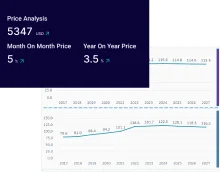
Analyze pricing patterns with comprehensive trend analyses.

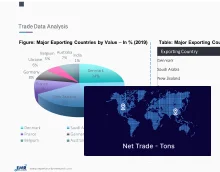
Analyse trade data for supply chain insights.
Leverage cost reports for smart savings
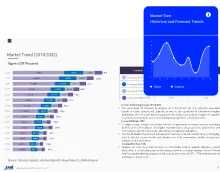
Elevate supply chain with collaboration
Contact Us for Further Information
Our specialized analysts will be available to answer all the pre-purchase and post-purchase queries regarding the report.
Our specialized analysts will be available to answer all the pre-purchase and post-purchase queries regarding the report.
Staying one step ahead of the market landscape with our in-depth research methods, integrating advanced analytics to drive precise and tangible outcomes.
Our expert analyst team offers a significant advantage over competitors, with extensive market insights into the latest trends, putting you strategically ahead.
We deliver a simplified yet extensive report, comprising in-depth industry insights and analytics tailored to your industry requirements.
We are happy to help you navigate through the services we offer and solve your queries.
Contact us