Consumer Insights
Uncover trends and behaviors shaping consumer choices today
Procurement Insights
Optimize your sourcing strategy with key market data
Industry Stats
Stay ahead with the latest trends and market analysis.
The Australia edge computing market covers edge servers, micro data centres, industrial gateways, edge software platforms and the integration and managed services used to process data close to where it is created, in mines, factories, ports, hospitals, shops, telecom sites and public infrastructure. Long distances, remote operations and sovereignty rules make local processing more valuable in Australia than in most countries.
In 2025, the market is valued at AUD 3058.76 million in 2025 and is forecast to grow at a CAGR of 15.20%, reaching AUD 12591.29 million by 2035. Growth is driven by the spread of private and standalone 5G, the need to run artificial intelligence inference near machines and cameras, and a national data centre build-out in which edge sites are now part of capital plans.
Compound Annual Growth Rate
15.2%
Value in AUD million
2026-2035
The Australia edge computing market is moving from pilots to funded programmes. Operators in mining, energy, rail and logistics want decisions made on site, while telecom carriers and data centre owners are building regional facilities and fibre routes that bring compute nearer to users.
Three forces are shaping the market: sovereign and disconnected cloud options that run on customer premises; private and standalone 5G networks that connect machines and sensors; and a power-constrained grid that rewards distributed, efficient sites over a few very large ones.
In March 2026 the federal government published expectations for data centre and AI infrastructure developers, covering energy, water, skills and local capability. In August 2026 NEXTDC reported edge builds at Geelong, Sunshine Coast and Darwin alongside record contracted demand.
The market is moving from standalone edge boxes towards integrated stacks that combine ruggedised servers, orchestration software and managed support. Hardware leads in value because every site needs servers, gateways and power and cooling, while software and managed services advance faster as buyers look for remote monitoring and lifecycle updates. Industrial automation and video analytics anchor demand, and mining, energy and utilities set the pace among industries. New South Wales remains the largest region, and Victoria grows quickest on new data centre capacity around Melbourne. Sovereign cloud on premises, private 5G and fibre routes built for AI traffic point to a durable infrastructure cycle rather than a short-lived hardware refresh.
| Metric | Value |
| Market Size 2025 | AUD 3058.76 million |
| Projected Market Size 2035 | AUD 12591.29 million |
| CAGR 2026 to 2035 | 15.20% |
| Fastest-Growing Component | Managed Services: 17.3% CAGR |
| Fastest-Growing Application | Industrial Automation and IoT: 18.1% CAGR |
| Largest Revenue Segment 2025 | Hardware |
| Dominant Region | New South Wales |
| Highest CAGR by Region | Victoria: 16.4% |
| NEXTDC contracted utilisation, June 2026 | 740.1 MW |
Remote Operations Make Local Processing Essential
Revenue is on course to more than quadruple across the decade, from AUD 3,058.76 million in 2025 to AUD 12,591.28 million in 2035 at a 15.2% CAGR. Mines, rail corridors and offshore gas sites cannot rely on distant cloud regions, so on-site compute is a design requirement rather than an option.
Services and Industrial Use Cases Lead Growth
Hardware holds the largest share, but Managed Services grows at an estimated 17.3% CAGR and Industrial Automation and IoT at an estimated 18.1% CAGR through 2035. BAI Communications said in July 2026 that private 5G is moving from trials to standard practice in mining, rail and energy.
Government Expectations Shape Site Planning
Canberra set out national interest, energy, water, skills and local capability expectations in March 2026, which favours smaller, efficient and regionally spread facilities that carry clean power and community benefits.
| Report Summary | Unit | Value |
| Base Year | AUD million | 2025 |
| Historical Period | AUD million | 2019 to 2025 |
| Forecast Period | AUD million | 2026 to 2035 |
| Market Size 2025 | AUD million | 3058.76 |
| Market Size 2035 | AUD million | 12591.29 |
| CAGR 2026 to 2035 | Percentage | 15.20 % |
| CAGR by Component: Managed Services | Percentage | 17.3 % |
| CAGR by Application: Industrial Automation and IoT | Percentage | 18.1 % |
| CAGR by End Use Industry: Mining, Energy and Utilities | Percentage | 17.6 % |
| CAGR by Region: Victoria | Percentage | 16.4 % |
| NEXTDC Contracted Utilisation June 2026 | Megawatts | 740.10 |
| Telstra Aura Fibre Laid August 2026 | Kilometres | 8,500 |
| Market Share by Region 2025 | New South Wales | Dominant Share |
Local processing is gaining ground as remote operations, sovereign cloud rules and artificial intelligence workloads outgrow distant cloud regions. New South Wales leads, and Victoria grows fastest.
The Australia edge computing market is being reshaped by regional data centre builds, private networks in heavy industry, sovereign cloud on premises and new national expectations for infrastructure developers.
August 2026 - NEXTDC Reports Edge Builds at Geelong, Sunshine Coast and Darwin
July 2026 - BAI Communications Says Private 5G Is Becoming Standard in Heavy Industry
April 2026 - Microsoft Scales Azure Local to Thousands of Servers in One Sovereign Environment
March 2026 - Federal Government Sets Expectations for Data Centre and AI Infrastructure
Regional data centre builds, private networks in heavy industry and sovereign cloud on premises are the main structural forces, while grid access and approvals remain the main risks to timing.
Recent developments, presented from the most recent, show a larger national build pipeline, edge hosting for emerging compute, carrier fibre for AI traffic and new capacity in Sydney.
October 2026 - Commonwealth Bank Lifts Estimate of Data Centre Investment Pipeline to A$260 Billion
September 2026 - Diraq and Equinix Install Australia's First Quantum Computer in a Commercial Data Centre
August 2026 - Telstra Reports Aura Fibre Progress and Accelerates 5G Standalone
December 2025 - Macquarie Data Centres Tops Out 47 MW Sydney Facility
A deeper national build pipeline, edge hosting for emerging compute, carrier fibre for AI traffic and new Sydney capacity show suppliers positioning for distributed, power-aware infrastructure.
The Expert Market Research’s report on the Australia Edge Computing Market offers a detailed analysis of the market based on the following segments.
Market Breakup by Component
Hardware leads on value, in our estimate, because every edge site needs servers, gateways, storage, power and cooling, and NEXTDC lifted built capacity by 38% to 287.9 MW in the year to June 2026. Software covers orchestration and security platforms, such as Microsoft's Azure Local, which Microsoft said in April 2026 can scale to thousands of servers. Professional Services cover design and integration for private 5G projects of the kind BAI Communications described in July 2026. Managed Services grow fastest at an estimated 17.3% CAGR through 2035, as buyers outsource monitoring and updates for remote sites.
Market Breakup by Application
Industrial Automation and IoT grows fastest at an estimated 18.1% CAGR through 2035, as mines, rail operators and energy companies run control and safety loops on site, supported by private 5G described in July 2026. Video Analytics and Security leads on value, in our estimate, on public safety, transport and campus camera estates. Telecom and 5G Network Services gains from Telstra's accelerated 5G standalone rollout announced in August 2026. Retail and Healthcare Analytics grows steadily on in-store and hospital data processing, helped by edge hosting in Equinix Sydney data centres.
Market Breakup by End Use Industry
Mining, Energy and Utilities grows fastest at an estimated 17.6% CAGR through 2035, because underground mines, heavy-haul rail and offshore gas sites are named targets for private 5G in July 2026. Telecommunications and IT leads on value, in our estimate, as NEXTDC, Telstra and Equinix invest in sites and fibre. Manufacturing and Logistics adopt vision inspection and warehouse automation steadily. Government and Healthcare respond to the March 2026 expectations, which stress sovereignty and local capability. Retail and Others cover shopping centres, venues and smaller commercial users.
Market Breakup by Region
New South Wales dominates, in our estimate, with Sydney's concentration of carriers, cloud on-ramps and enterprise buyers, including Macquarie Data Centres' 47 MW Macquarie Park facility topped out in December 2025, and it grows at an estimated 14.6% CAGR through 2035 from a large base. Victoria is the fastest-growing region at an estimated 16.4%, as NEXTDC acquired a Melbourne site planned for up to 1.2 GW. Western Australia grows at 15.8% on mining operations. Queensland grows at 15.5%, with NEXTDC's Sunshine Coast edge build. Rest of Australia grows at 15.0%, led by NEXTDC's Darwin edge expansion.
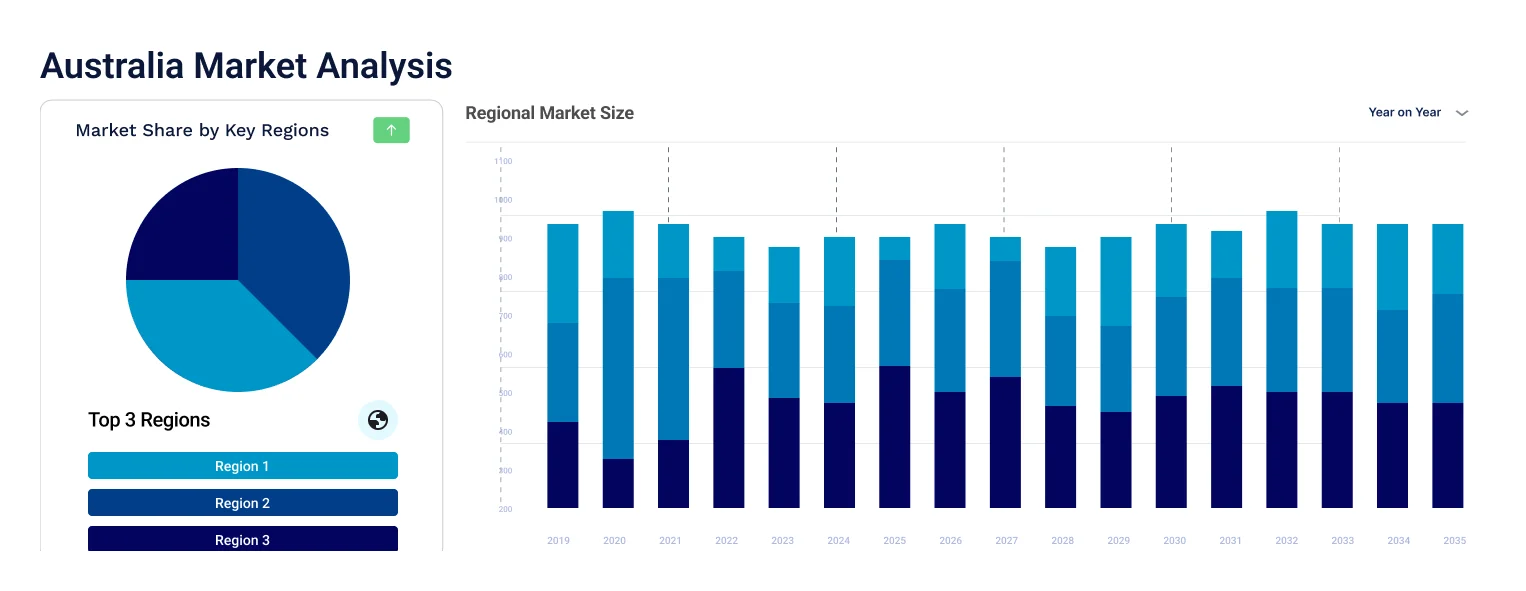
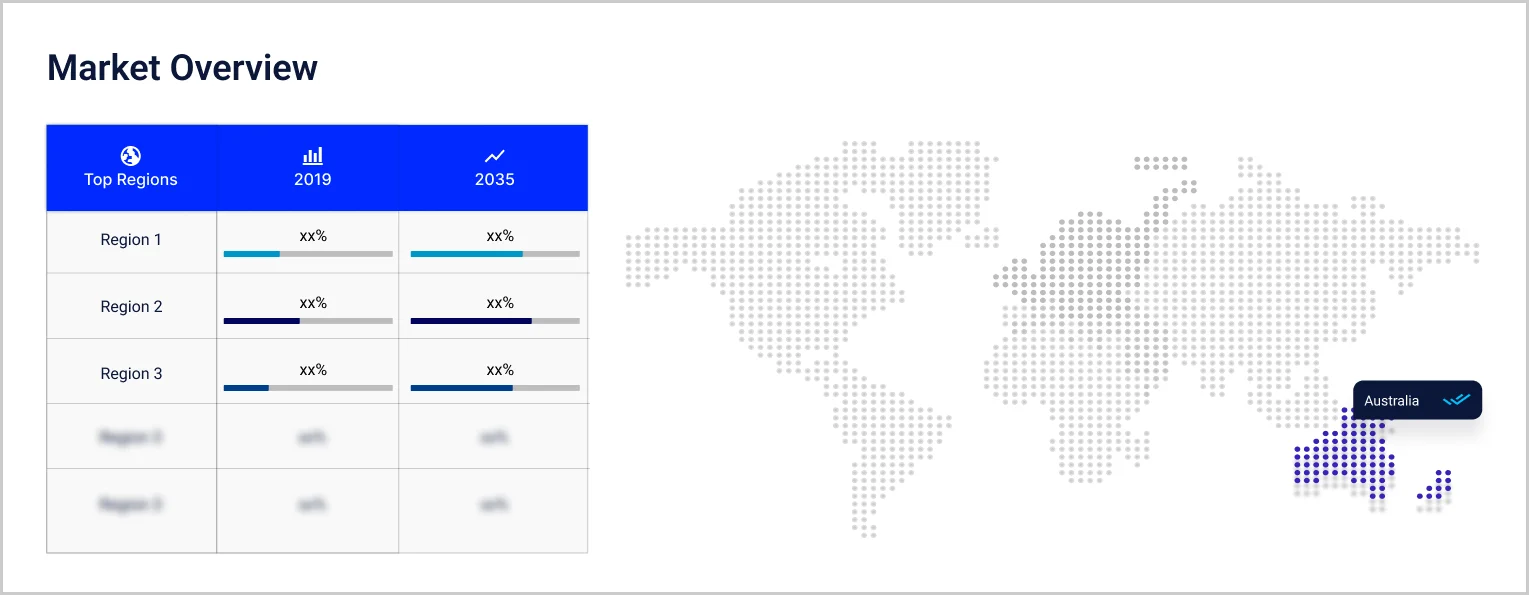
| CAGR 2026 to 2035, Market by Region | Growth Rate |
| New South Wales | 14.6 % |
| Victoria | 16.4 % |
| Queensland | 15.5 % |
| Western Australia | 15.8 % |
| Others (Rest of Australia) | 15.0 % |
Competition combines carriers, colocation and data centre operators, global cloud and server vendors, and power and cooling specialists. Entry barriers include site and power access, fibre reach, 5G spectrum, sovereignty credentials and the integration skills needed for remote industrial customers.
NEXTDC
NEXTDC, headquartered in Brisbane, owns and operates data centres across Australian capitals and is expanding edge facilities for cable landing stations. In its results of 27 August 2026 it reported pro forma contracted utilisation of 740.1 MW, built capacity of 287.9 MW and net revenue of A$405.0 million for the year to June 2026. Edge builds are under way at Geelong, Sunshine Coast and Darwin, and a Melbourne site was acquired for up to 1.2 GW.
Telstra
Telstra, headquartered in Melbourne, is Australia's largest carrier and sells mobile, fixed, enterprise and wholesale connectivity with growing infrastructure assets. In August 2026 it reported underlying EBITDAaL of A$8.3 billion and said more than 8,500 km of its 14,000 km Aura fibre network is laid. Google, AWS and Firmus have signed long-term contracts, and Telstra plans to accelerate 5G standalone to support lower latency AI applications.
Equinix
Equinix, headquartered in Redwood City, California, runs International Business Exchange data centres in Sydney, Melbourne, Perth and other Australian cities, with dense interconnection to cloud and network providers. On 1 September 2026 it announced with Diraq the installation of Australia's first quantum computer in a commercial data centre in Sydney. In July 2026 it appointed Jarrod Nink as Managing Director, Australia.
Microsoft
Microsoft, headquartered in Redmond, Washington, supplies edge and sovereign infrastructure through Azure Local, which runs on customer premises. On 27 April 2026 it said Azure Local can support thousands of servers in a single sovereign environment and operate in connected, intermittently connected or fully disconnected modes. Microsoft is also Telstra's foundational partner on the Aura network, reported in August 2026.
Other players operating in the Australia edge computing market include AirTrunk, Macquarie Data Centres, Optus, Dell Technologies, and Vertiv, alongside systems integrators, private network specialists, server and gateway distributors and managed service providers supplying edge compute to mines, factories, utilities, hospitals and public agencies across Australia.
Competition rests on site and power access, fibre reach, sovereignty credentials and integration skills for remote customers rather than hardware price alone, while cloud and carrier partnerships reshape positions.


Upto 15% Off
AUD
$2749 $2499
$3849 $3499
$4949 $4499
$6049 $5499


*While we strive to always give you current and accurate information, the numbers depicted on the website are indicative and may differ from the actual numbers in the main report. At Expert Market Research, we aim to bring you the latest insights and trends in the market. Using our analyses and forecasts, stakeholders can understand the market dynamics, navigate challenges, and capitalize on opportunities to make data-driven strategic decisions.*
The Australia edge computing market is valued at AUD 3058.76 million in 2025, supported by private 5G, sovereign cloud on premises, artificial intelligence inference near machines and regional data centre builds, with New South Wales as the largest region.
The market is forecast to reach AUD 12591.29 million by 2035, growing at a CAGR of 15.20 % over the 2026 to 2035 period, driven by remote industrial operations, carrier fibre and 5G investment, and a government framework that favours efficient and distributed infrastructure.
Managed Services records the highest CAGR at an estimated 17.3% through 2035, as operators of remote sites outsource monitoring, security and lifecycle updates for distributed edge infrastructure.
New South Wales dominates, as Sydney concentrates carriers, cloud on-ramps and enterprise buyers. Victoria is the fastest-growing region at an estimated 16.4% CAGR, helped by new Melbourne data centre capacity.
Key players include NEXTDC, Telstra, Equinix, Microsoft, AirTrunk, Macquarie Data Centres, Optus, Dell Technologies, and Vertiv.
Azure Local is Microsoft's platform for running cloud services on customer hardware at edge sites and data centres. On 27 April 2026 Microsoft said it supports connected, intermittently connected and fully disconnected operation.
On 23 March 2026 the government set expectations on national interest, energy transition, water use, skills and local capability, including favourable compute access for start-ups, researchers and small businesses.
Explore our key highlights of the report and gain a concise overview of key findings, trends, and actionable insights that will empower your strategic decisions.
| REPORT FEATURES | DETAILS |
| Base Year | 2025 |
| Historical Period | 2019-2025 |
| Forecast Period | 2026-2035 |
| Scope of the Report |
Historical and Forecast Trends, Industry Drivers and Constraints, Historical and Forecast Market Analysis by Segment:
|
| Breakup by Component |
|
| Breakup by Application |
|
| Breakup by End Use Industry |
|
| Breakup by Region |
|
| Market Dynamics |
|
| Competitive Landscape |
|
| Companies Covered |
|
Datasheet
AUD 2,749
AUD 2,499
tax inclusive*
Single User License
AUD 3,849
AUD 3,499
tax inclusive*
Five User License
AUD 4,949
AUD 4,499
tax inclusive*
Corporate License
AUD 6,049
AUD 5,499
tax inclusive*
*Please note that the prices mentioned below are starting prices for each bundle type. Kindly contact our team for further details.*
Flash Bundle
Small Business Bundle
Growth Bundle
Enterprise Bundle
*Please note that the prices mentioned below are starting prices for each bundle type. Kindly contact our team for further details.*
Flash Bundle
Number of Reports: 3
20%
tax inclusive*
Small Business Bundle
Number of Reports: 5
25%
tax inclusive*
Growth Bundle
Number of Reports: 8
30%
tax inclusive*
Enterprise Bundle
Number of Reports: 10
35%
tax inclusive*
How To Order

Select License Type
Choose the right license for your needs and access rights.

Click on ‘Buy Now’
Add the report to your cart with one click and proceed to register.

Select Mode of Payment
Choose a payment option for a secure checkout. You will be redirected accordingly.
Strategic Solutions for Informed Decision-Making
Stay upgraded and grab opportunities by strategic insights
Stay informed and aware for a Market Leverage
Analyze pricing patterns with comprehensive trend analyses.
Analyse trade data for supply chain insights.
Leverage cost reports for smart savings
Elevate supply chain with collaboration
Contact Us for Further Information
Our specialized analysts will be available to answer all the pre-purchase and post-purchase queries regarding the report.
Our specialized analysts will be available to answer all the pre-purchase and post-purchase queries regarding the report.
Staying one step ahead of the market landscape with our in-depth research methods, integrating advanced analytics to drive precise and tangible outcomes.
Our expert analyst team offers a significant advantage over competitors, with extensive market insights into the latest trends, putting you strategically ahead.
We deliver a simplified yet extensive report, comprising in-depth industry insights and analytics tailored to your industry requirements.
We are happy to help you navigate through the services we offer and solve your queries.
Contact us