Consumer Insights
Uncover trends and behaviors shaping consumer choices today
Procurement Insights
Optimize your sourcing strategy with key market data
Industry Stats
Stay ahead with the latest trends and market analysis.
The Australia digital twin market covers software platforms, professional services, reality capture and sensing, and cloud connectivity used to build live virtual replicas of physical assets, processes, networks and places. Operators in power, mining, transport, manufacturing and government use these replicas to monitor performance, test scenarios and plan maintenance before acting in the field. Australia suits the technology because of long linear networks, remote mine sites, bushfire and flood exposure, and a large pipeline of public infrastructure.
In 2025, the market is valued at AUD 910.51 million in 2025 and is forecast to grow at a CAGR of 16.50%, reaching AUD 4193.18 million by 2035. Growth is driven by an A$73.7 million Western Australian spatial twin contract awarded in October 2025, a grid-twin funding round of A$90 million in February 2026 and rising demand from utilities facing data centre load.
Compound Annual Growth Rate
16.5%
Value in AUD million
2026-2035
The Australia digital twin market is moving from pilots to funded, state-wide and network-wide programs. Governments are buying shared spatial platforms, utilities are modelling entire grids, and asset owners are asking contractors to hand over a working digital copy with every new build.
Three forces are shaping demand: pressure on electricity networks from electrification and data centres, which rewards physics-based grid models; public procurement of spatial twins for planning, approvals and emergency response; and the spread of reality capture, lidar and artificial intelligence, which lowers the cost of keeping a twin current.
In October 2025 the Western Australian government awarded Jacobs an A$73.7 million contract for its core spatial twin platform. In February 2026 Sydney-based Neara closed an A$90 million Series D at an A$1.1 billion valuation, and in April 2026 Western Power contracted Pointerra for a substation twin program.
The market is shifting from isolated asset models towards connected twins that join sensor feeds, engineering physics and artificial intelligence across whole networks and places. Professional services lead in value because owners still depend on integrators to build and tune twins, while software platforms advance fastest as utilities and agencies license shared environments. Asset twins remain the largest category, and spatial and environmental twins grow quickest as governments publish common data layers. Mining and resources is the largest user, and energy and utilities grows fastest on grid resilience and data centre demand. New South Wales remains the largest region, and Western Australia grows quickest on its state twin program and resource operations.
| Metric | Value |
| Market Size 2025 | AUD 910.51 million |
| Projected Market Size 2035 | AUD 4193.18 million |
| CAGR 2026 to 2035 | 16.50% |
| Fastest-Growing Component | Software and Platforms: 18.1% CAGR |
| Fastest-Growing Twin Type | Spatial and Environmental Twins: 20.2% CAGR |
| Largest Revenue Segment 2025 | Mining and Resources |
| Dominant Region | New South Wales |
| Highest CAGR by Region | Western Australia: 18.4% |
| Western Australia spatial twin contract, October 2025 | A$73.7 million |
Public Platforms Anchor Long-Term Demand
Revenue is on course to expand more than four-fold across the decade, from AUD 910.51 million in 2025 to AUD 4,193.20 million in 2035 at a 16.5% CAGR. Western Australia's ten-year A$140 million Spatial WA program, with Jacobs, Amristar and Terria as delivery partners, gives suppliers a multi-year anchor customer.
Software, Grid and Spatial Twins Lead Growth
Professional Services hold the largest component share, but Software and Platforms grows at an estimated 18.1% CAGR and Spatial and Environmental Twins at an estimated 20.2% CAGR through 2035. Energy and Utilities advances at an estimated 19.0% CAGR as Neara, Pointerra and network owners scale grid and substation models.
Data Centre Load Pulls Forward Grid Investment
Neara's co-founder said in February 2026 that demand from data centres brought the funding round forward, because grids worldwide are nearing their limits. Network owners are therefore buying twins to test connections, weather risk and maintenance priorities before committing capital.
| Report Summary | Unit | Value |
| Base Year | AUD million | 2025 |
| Historical Period | AUD million | 2019 to 2025 |
| Forecast Period | AUD million | 2026 to 2035 |
| Market Size 2025 | AUD million | 910.51 |
| Market Size 2035 | AUD million | 4193.18 |
| CAGR 2026 to 2035 | Percentage | 16.50 % |
| CAGR by Component: Software and Platforms | Percentage | 18.1 % |
| CAGR by Twin Type: Spatial and Environmental Twins | Percentage | 20.2 % |
| CAGR by End Use: Energy and Utilities | Percentage | 19.0 % |
| CAGR by Region: Western Australia | Percentage | 18.4 % |
| Spatial WA Total Program Budget | A$ Million | 140.00 |
| Neara Series D Round, February 2026 | A$ Million | 90.00 |
| Market Share by Region 2025 | New South Wales | Dominant Share |
Demand is shifting from pilots to funded network and state programs, led by utilities and government platforms. New South Wales leads, while Western Australia grows fastest.
The Australia digital twin market is being reshaped by state-wide spatial platforms, grid-scale modelling, reality capture contracts and a national agriculture twin.
April 2026 - Western Power Awards Pointerra a Substation Digital Twin Contract
March 2026 - Australasian Space Innovation Institute Unveils National Agriculture Twin
February 2026 - Neara Closes A$90 Million Series D at A$1.1 Billion Valuation
November 2025 - Spatial WA Moves Its Advanced Spatial Digital Twin Into Implementation
Funded state platforms, grid-scale modelling and routine reality capture are the main structural forces, while procurement timing and skills shortages remain the main risks to rollout pace.
Recent developments, presented from the most recent, show engineering recognition, a major systems design award, industrial software launches and a state-wide twin contract.
October 2026 - Bentley Names Two Australian Winners in Year in Infrastructure Awards
February 2026 - AECOM and WSP Win Sydney Metro West Line Wide Systems Design
January 2026 - Siemens Announces Digital Twin Composer With Nvidia
October 2025 - Western Australia Awards Jacobs A$73.7 Million Spatial Twin Contract
Large public contracts, grid-twin investment and awards for digital delivery show buyers moving to scaled programs, while global software launches widen the tools available to local operators.
The Expert Market Research’s report on the Australia Digital Twin Market offers a detailed analysis of the market based on the following segments.
Market Breakup by Component
Professional Services lead on value, in our estimate, because owners rely on integrators to build and tune twins, as seen in Jacobs' A$73.7 million Spatial WA award of October 2025. Software and Platforms grow fastest at an estimated 18.1% CAGR through 2035, supported by Neara's A$90 million raise of February 2026 and Siemens' Digital Twin Composer announced in January 2026. Reality Capture and Sensors gain from lidar-based substation twins, such as Pointerra's April 2026 Western Power contract. Cloud and Connectivity Services provide hosting and data links, with Spatial WA planning A$39.4 million for licences and hosting.
Market Breakup by Twin Type
Asset Twins lead in value, in our estimate, because substations, poles, bridges and mine equipment are the most common starting points, including the 50 substations in Western Power's April 2026 program. Process Twins serve plants and production lines, where Siemens' January 2026 launch targets simulation of factory upgrades. System Twins join networks or whole facilities, as in Neara's grid models and the Sydney Metro West systems design of February 2026. Spatial and Environmental Twins grow fastest at an estimated 20.2% CAGR through 2035, driven by Spatial WA and the national agriculture twin unveiled in March 2026.
Market Breakup by End Use
Mining and Resources lead in value, in our estimate, owing to remote, capital-heavy sites where simulation avoids costly downtime. Energy and Utilities grow fastest at an estimated 19.0% CAGR through 2035, as Neara's customers and Western Power expand grid and substation models. Infrastructure and Transport follows major projects such as the 24 km Sydney Metro West systems package and the Torrens to Darlington road, recognised by Bentley in October 2026. Manufacturing adopts process simulation tools. Government and Smart Cities rely on spatial platforms such as Spatial WA. Others include agriculture, defence estates and ports.
Market Breakup by Region
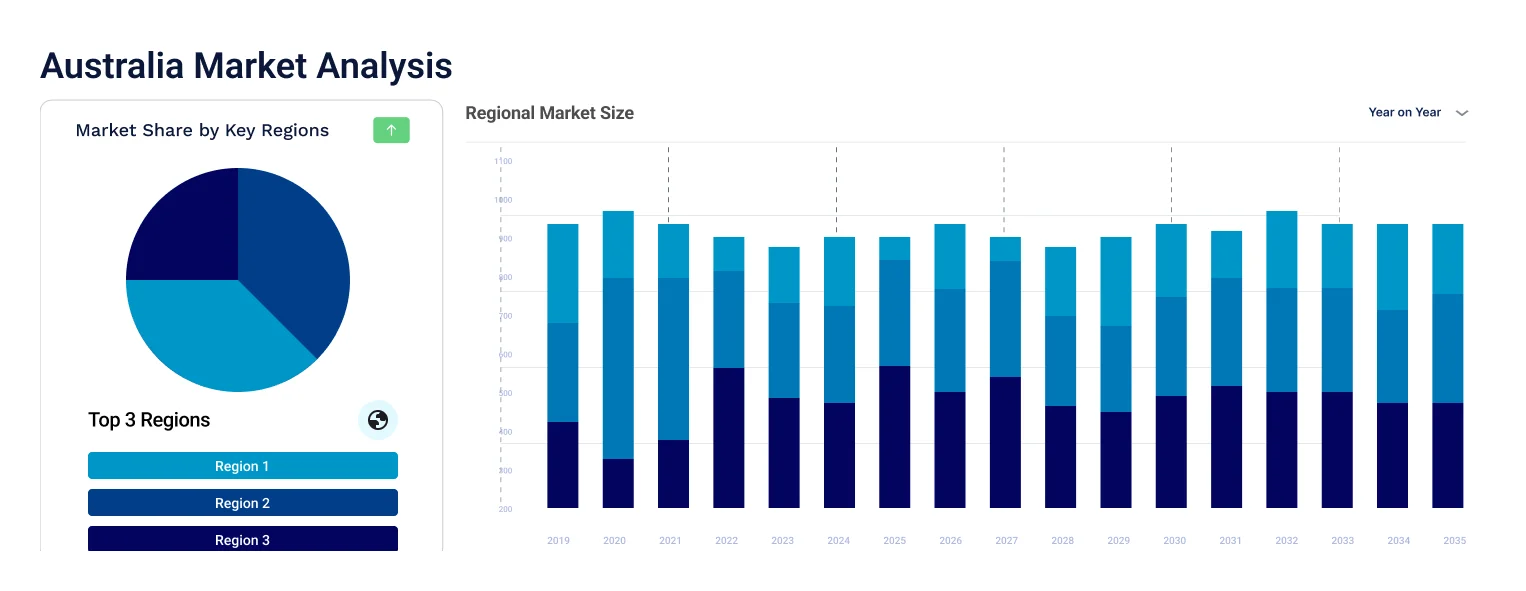
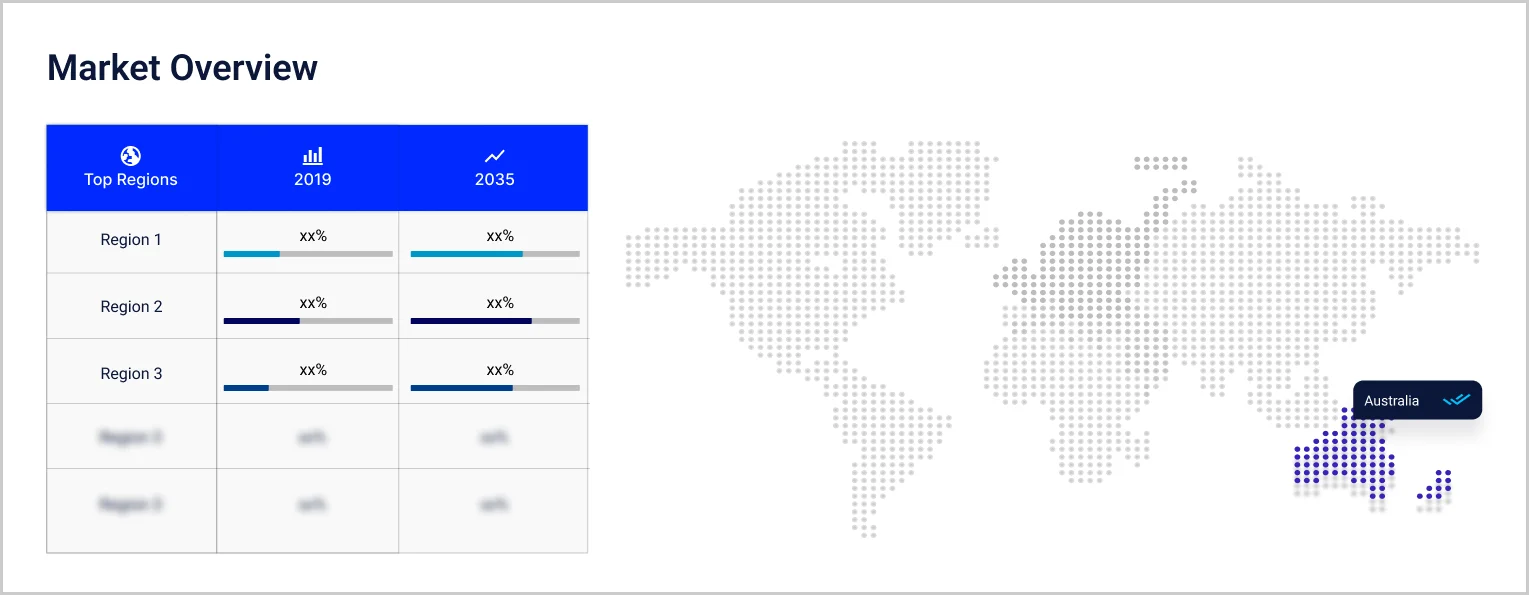
New South Wales dominates, in our estimate, as home to Sydney-based Neara, major metro and rail design work such as Sydney Metro West, and many corporate and engineering headquarters, and grows at an estimated 15.8% CAGR through 2035 from a large base. Western Australia is the fastest-growing region at an estimated 18.4%, on Spatial WA, Western Power's substation program and resource operations, in our estimate. Queensland grows at 16.7% on resource and infrastructure activity, and Victoria at 16.2% on rail and planning programs. Rest of Australia, covering South Australia, Tasmania and the territories, grows at 15.5%, with the Torrens to Darlington road recognised in October 2026.
| CAGR 2026 to 2035, Market by Region | Growth Rate |
| New South Wales | 15.8 % |
| Victoria | 16.2 % |
| Queensland | 16.7 % |
| Western Australia | 18.4 % |
| Others (Rest of Australia) | 15.5 % |
Competition combines Australian specialists, global engineering software groups and integrators that deliver twins for governments and asset owners. Entry barriers include engineering domain depth, access to asset and sensor data, security and sovereignty requirements, public tender track records and partnerships with utilities and contractors.
Neara
Neara, a Sydney-based company registered as LineSoft Pty Ltd, builds digital twins of power networks that combine sensor data, engineering physics and machine learning. In February 2026 it closed an A$90 million Series D led by Technology Crossover Ventures at an A$1.1 billion valuation. Customers include Essential Energy and Powercor Australia, and Austrade said in March 2026 that about 90% of Australian network utilities work with the company.
Pointerra
Pointerra Limited, a Perth-based ASX-listed company, sells the Pointerra3D platform that hosts digital twins built from lidar, photogrammetry and other reality data. In April 2026 Western Power awarded it a three-year contract worth at least A$413,442, starting with 50 transmission substations. Trade press noted a going-concern warning in its half-year results to December 2025, so delivery and funding remain risks.
Jacobs
Jacobs, a global engineering and technology services group headquartered in Dallas, Texas, won the Western Australian government's A$73.7 million contract in October 2025 for the core spatial digital twin platform under Spatial WA. Amristar and Terria are key subcontractors, and the program entered its implementation phase in November 2025. First use cases cover housing referrals, emergency planning and transport precinct planning.
Siemens
Siemens, headquartered in Munich, Germany, supplies industrial software for process and manufacturing twins through its Xcelerator portfolio and a local Digital Industries Software team. In January 2026 it said Digital Twin Composer would reach its marketplace in mid-2026, alongside an expanded Nvidia partnership. PepsiCo was named as an early user, which shows the tool is aimed at large operating sites.
Other players operating in the Australia digital twin market include Bentley Systems, Dassault Systemes, Hexagon, AVEVA, and Aurecon, alongside specialist spatial software firms, systems integrators, engineering consultancies, university research groups and cloud providers supplying twin platforms, data capture and analytics to utilities, miners, transport agencies and governments across Australia.
Competition rests on engineering depth, access to asset and sensor data, public tender records and sovereignty credentials rather than software features alone, while funding rounds and global launches reshape positions.


Upto 15% Off
AUD
$2749 $2499
$3849 $3499
$4949 $4499
$6049 $5499


*While we strive to always give you current and accurate information, the numbers depicted on the website are indicative and may differ from the actual numbers in the main report. At Expert Market Research, we aim to bring you the latest insights and trends in the market. Using our analyses and forecasts, stakeholders can understand the market dynamics, navigate challenges, and capitalize on opportunities to make data-driven strategic decisions.*
The Australia digital twin market is valued at AUD 910.51 million in 2025, supported by network and state-wide programs, grid pressure from electrification and data centres, wider use of reality capture and artificial intelligence, and public procurement of spatial platforms, with New South Wales as the largest region.
The market is forecast to reach AUD 4193.18 million by 2035, growing at a CAGR of 16.50 % over the 2026 to 2035 period, driven by utilities modelling whole grids, governments buying shared spatial platforms, owners requiring digital handover and the falling cost of keeping twins current.
Software and Platforms records the highest CAGR at an estimated 18.1% through 2035, as utilities and agencies license shared environments instead of commissioning one-off models.
New South Wales dominates, supported by Sydney-based specialists and major metro and rail design work. Western Australia is the fastest-growing region at an estimated 18.4% CAGR, helped by Spatial WA and resource operations.
Key players include Neara, Pointerra, Jacobs, Siemens, Bentley Systems, Dassault Systemes, Hexagon, AVEVA, and Aurecon.
Spatial WA is Western Australia's ten-year, A$140 million program, managed by Landgate, to build a state-wide spatial digital twin and a new cadastre. Jacobs won the A$73.7 million twin contract in October 2025.
A utility twin models poles, wires or substations in three dimensions with engineering physics, so owners can test weather risk, plan maintenance and assess new connections. Western Power chose Pointerra for substation twins in April 2026.
Explore our key highlights of the report and gain a concise overview of key findings, trends, and actionable insights that will empower your strategic decisions.
| REPORT FEATURES | DETAILS |
| Base Year | 2025 |
| Historical Period | 2019-2025 |
| Forecast Period | 2026-2035 |
| Scope of the Report |
Historical and Forecast Trends, Industry Drivers and Constraints, Historical and Forecast Market Analysis by Segment:
|
| Breakup by Component |
|
| Breakup by Twin Type |
|
| Breakup by End Use |
|
| Breakup by Region |
|
| Market Dynamics |
|
| Competitive Landscape |
|
| Companies Covered |
|
Datasheet
AUD 2,749
AUD 2,499
tax inclusive*
Single User License
AUD 3,849
AUD 3,499
tax inclusive*
Five User License
AUD 4,949
AUD 4,499
tax inclusive*
Corporate License
AUD 6,049
AUD 5,499
tax inclusive*
*Please note that the prices mentioned below are starting prices for each bundle type. Kindly contact our team for further details.*
Flash Bundle
Small Business Bundle
Growth Bundle
Enterprise Bundle
*Please note that the prices mentioned below are starting prices for each bundle type. Kindly contact our team for further details.*
Flash Bundle
Number of Reports: 3
20%
tax inclusive*
Small Business Bundle
Number of Reports: 5
25%
tax inclusive*
Growth Bundle
Number of Reports: 8
30%
tax inclusive*
Enterprise Bundle
Number of Reports: 10
35%
tax inclusive*
How To Order

Select License Type
Choose the right license for your needs and access rights.

Click on ‘Buy Now’
Add the report to your cart with one click and proceed to register.

Select Mode of Payment
Choose a payment option for a secure checkout. You will be redirected accordingly.
Strategic Solutions for Informed Decision-Making
Stay upgraded and grab opportunities by strategic insights
Stay informed and aware for a Market Leverage
Analyze pricing patterns with comprehensive trend analyses.
Analyse trade data for supply chain insights.
Leverage cost reports for smart savings
Elevate supply chain with collaboration
Contact Us for Further Information
Our specialized analysts will be available to answer all the pre-purchase and post-purchase queries regarding the report.
Our specialized analysts will be available to answer all the pre-purchase and post-purchase queries regarding the report.
Staying one step ahead of the market landscape with our in-depth research methods, integrating advanced analytics to drive precise and tangible outcomes.
Our expert analyst team offers a significant advantage over competitors, with extensive market insights into the latest trends, putting you strategically ahead.
We deliver a simplified yet extensive report, comprising in-depth industry insights and analytics tailored to your industry requirements.
We are happy to help you navigate through the services we offer and solve your queries.
Contact us