Consumer Insights
Uncover trends and behaviors shaping consumer choices today
Procurement Insights
Optimize your sourcing strategy with key market data
Industry Stats
Stay ahead with the latest trends and market analysis.
The Australia digital manufacturing market covers the technologies that design, simulate and produce products digitally, including digital twins, additive manufacturing, simulation and computer-aided design and manufacturing, and connected industrial IoT on the factory floor. It helps manufacturers shorten development cycles, customise production, reduce waste and build sovereign capability under the Future Made in Australia agenda, linking the digital design of a product directly to how it is made.
In 2025, the market is valued at AUD 3400.00 million in 2025 and is forecast to grow at a CAGR of 14.20%, reaching AUD 12827.44 million by 2035. Growth is driven by sovereign manufacturing goals, the maturing of metal additive manufacturing and the Future Made in Australia agenda.
Compound Annual Growth Rate
14.2%
Value in AUD million
2026-2035
The Australia digital manufacturing market is expanding as manufacturers digitise design and production to compete on high-value, customised and low-volume output rather than commodity scale. We estimate the market at AUD 3,400.00 million in 2025, spanning digital twins, additive manufacturing, simulation software and connected IoT. Demand is strongest in defence, aerospace, medical devices and space, where complex geometries, strict qualification and small production runs make digital design and additive production especially valuable. These sectors also carry the qualification and traceability requirements that digital workflows are well suited to satisfy, reinforcing early adoption.
Research capability is scaling to support the transition. A new Australian Research Council research hub launched to drive the country's digital manufacturing future, aligned with the Future Made in Australia agenda's focus on sovereign, smart and sustainable manufacturing. The hub brings researchers and industry together to build the Industry 4.0 skills, digital twin methods and additive processes that local manufacturers need to adopt digital methods at scale.
Additive manufacturing is a national strength. Australian firms such as Titomic, SPEE3D and AML3D are commercialising metal additive processes for defence and industry, while global software vendors supply the digital twin and simulation platforms that underpin digital production. Federal funds continue to back advanced capability, including AUD 75 million for Gilmour Space Technologies through the National Reconstruction Fund, part of a broader push to localise the design and manufacture of complex, high-value products. The same digital tools that enable this localisation also cut material waste and shorten supply chains, adding a sustainability and resilience dimension to the business case.
Revenue is rising as manufacturers adopt digital twins, additive production and simulation to lift value and sovereignty, while skills shortages, qualification requirements and capital constrain the pace. We expect growth to broaden from defence and space toward broader manufacturing as tools become more accessible and additive processes gain qualification over the forecast period, with software and additive growing faster than traditional tooling. Service bureaus and shared research facilities are expected to widen access for small and medium manufacturers that cannot justify owning additive machines outright, spreading digital production across the manufacturing base.
| Metric | Value |
| Market Size 2025 | AUD 3400.00 million |
| Projected Market Size 2035 | AUD 12827.44 million |
| CAGR 2026 to 2035 | 14.20% |
| Fastest-Growing Technology | Additive Manufacturing: 17.1% CAGR |
| Fastest-Growing Component | Software: 15.9% CAGR |
| Largest Revenue Segment 2025 | Software |
| Dominant Region | Victoria |
| Highest CAGR by Region | South Australia: 15.3% |
| Gilmour Space NRF Investment | AUD 75 million |
Sovereign Goals Anchor Demand
Demand is underpinned by national priorities in defence, space and medical manufacturing rather than general industrial activity. The drive for sovereign capability, backed by Future Made in Australia and National Reconstruction Fund investment, supports digital design and additive production even where broader manufacturing is flat, giving the market a resilient base through 2035 as governments and primes localise critical supply chains. Procurement rules that favour local content and the need to sustain complex capability onshore reinforce this demand independently of the wider manufacturing cycle.
Additive and Software Lead Growth
Software holds the largest share of spending today because design, simulation and digital twin platforms underpin every digital manufacturing project, but additive manufacturing grows fastest at an estimated 17.1% CAGR and software at an estimated 15.9%, as Australian metal additive firms scale qualified production and digital twin tools spread across design and engineering teams.
From Prototypes to Production
Value is shifting from prototyping toward qualified digital production at scale. Three priorities stand out:
| Report Summary | Unit | Value |
| Base Year | AUD million | 2025 |
| Historical Period | AUD million | 2019 to 2025 |
| Forecast Period | AUD million | 2026 to 2035 |
| Market Size 2025 | AUD million | 3400.00 |
| Market Size 2035 | AUD million | 12827.44 |
| CAGR 2026 to 2035 | Percentage | 14.20 % |
| CAGR by Technology: Additive Manufacturing | Percentage | 17.1 % |
| CAGR by Component: Software | Percentage | 15.9 % |
| CAGR by Industry: Aerospace and Defence | Percentage | 16.0 % |
| CAGR by Region: South Australia | Percentage | 15.3 % |
| Future Made in Australia Plan | AUD billion | 22.7 |
| National Reconstruction Fund | AUD billion | 15 |
| Market Share by Region 2025 | Victoria | Dominant Share |
Sovereign priorities, additive maturity and research capability support the market, while skills, qualification and capital keep adoption concentrated in high-value sectors in the near term. As qualification pathways mature and tools become cheaper, digital design and additive production are expected to spread into general manufacturing and localise more of the complex-part supply chain.
The Australia digital manufacturing market is being shaped by new research capability, additive momentum, federal funding and Industry 5.0 ambitions, presented here from the most recent.
June 2026 - Additive Manufacturing Positioned to Unlock Industry 5.0
April 2026 - New ARC Research Hub Launches for Digital Manufacturing
February 2026 - National Reconstruction Fund Backs Advanced Manufacturers
January 2026 - Future Made in Australia Prioritises Smart Manufacturing
Research capability, additive momentum and federal funding are the main forces, while skills and qualification keep adoption concentrated in high-value sectors in the near term.
Recent developments, presented from the most recent, show policy calls from industry, local additive milestones, supplier investment and workforce programs building digital skills.
August 2026 - Manufacturers Seek Procurement Certainty for Digital Investment
July 2026 - Australian Additive Firms Scale Defence Production
June 2026 - Bosch Opens AUD 17 Million Automation Centre in Victoria
March 2026 - Workforce Programs Build Digital Manufacturing Skills
Policy advocacy, additive scale-up and skills programs show that growth depends on turning sovereign ambition into qualified production capability on the ground.
The Expert Market Research’s report on the Australia Digital Manufacturing Market offers a detailed analysis of the market based on the following segments.
Market Breakup by Technology
Digital Twin and simulation lead on value, in our estimate, as software anchors digital design and process optimisation, while Additive Manufacturing grows fastest as Australian metal additive firms scale qualified production, Simulation and computer-aided design and manufacturing support product development, and Industrial IoT connects machines to digital models. Others covers virtual and augmented reality and generative design tools.
Market Breakup by Component
Software leads on value, in our estimate, through design, simulation and digital twin platforms that sit at the centre of digital manufacturing, while Services grow on integration, consulting and additive bureau work, and Hardware covers additive machines, sensors and workstations. Others includes data infrastructure and connectivity.
Market Breakup by Industry
Aerospace and Defence lead on value, in our estimate, as complex, low-volume and qualification-heavy production suits digital and additive methods, while Medical Devices grow fastest on patient-specific customisation, Automotive covers components and rapid prototyping, and Consumer Goods use digital design for speed to market. Others includes industrial equipment and the space sector.
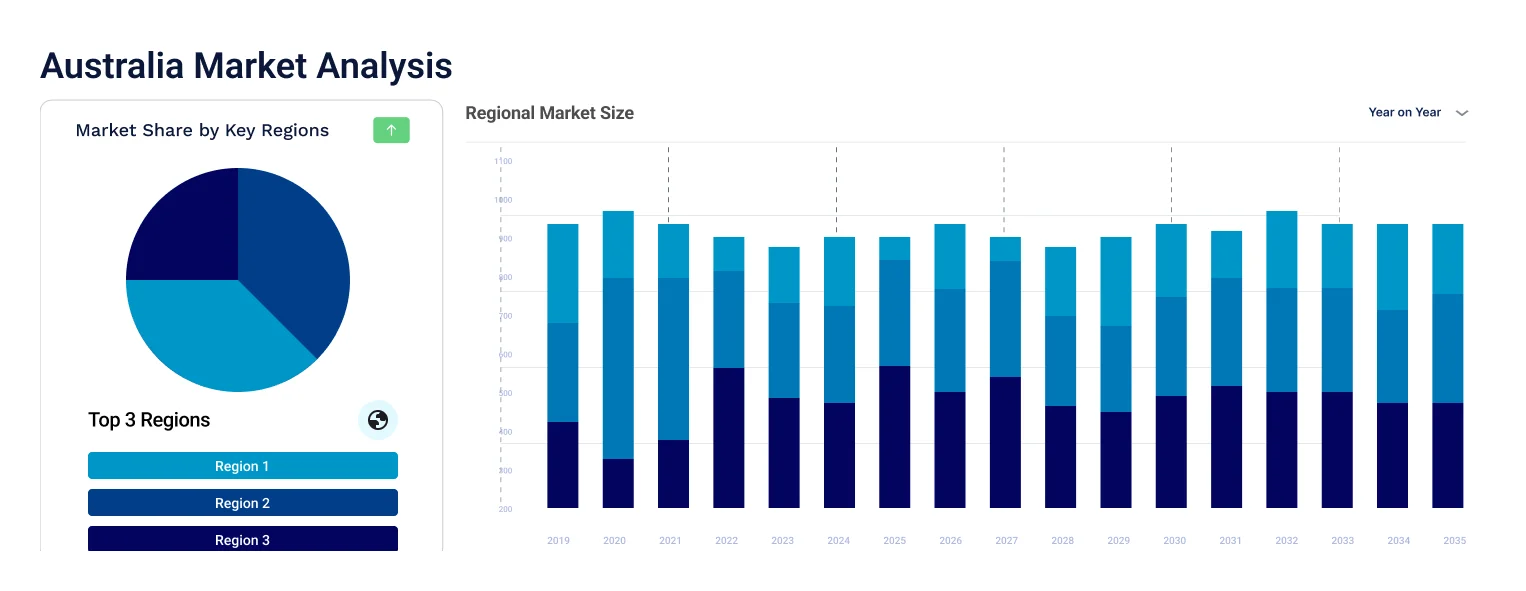
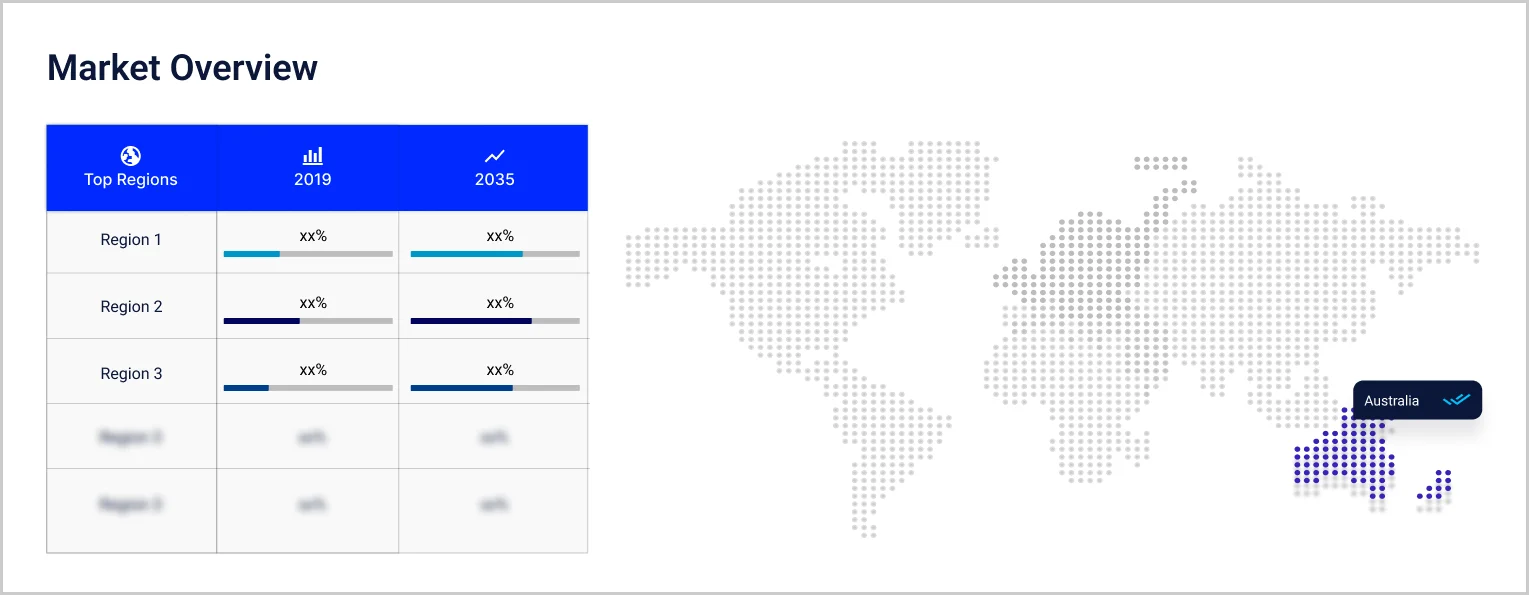
Market Breakup by Region
Victoria dominates, in our estimate, as Melbourne concentrates advanced manufacturing hubs and metal additive firms such as Titomic and SPEE3D. South Australia grows fastest on defence and space clusters in Adelaide, while New South Wales anchors software and medical devices. Others covers Western Australia, Queensland's regions and the remaining states.
| CAGR 2026 to 2035 | Growth Rate |
| Victoria | 14.5 % |
| New South Wales | 14.1 % |
| South Australia | 15.3 % |
| Queensland | 13.6 % |
| Others (Rest of Australia) | 13.0 % |
Competition combines global digital design and simulation vendors with local additive manufacturing specialists and service bureaus. Entry barriers include software depth, qualified and repeatable additive processes, capital for machines, and relationships with primes, hospitals and research bodies that validate the technology.
Siemens Digital Industries Software
Siemens Digital Industries Software, part of Siemens founded in 1847, supplies digital twin, simulation and product lifecycle management tools used across Australian manufacturing, linking product design to factory execution through its broader automation portfolio.
Dassault Systèmes
Dassault Systèmes, headquartered in Vélizy-Villacoublay, France and founded in 1981, provides 3D design, simulation and digital twin software, including its platform used by Australian aerospace, defence, medical and industrial firms for virtual product development.
Titomic
Titomic, headquartered in Melbourne, Victoria and founded in 2014, develops cold-spray metal additive manufacturing technology for defence, aerospace and industrial applications, enabling large-format metal parts and coatings produced from digital models, and through 2026 advanced qualified production for defence and industrial customers.
SPEE3D
SPEE3D, headquartered in Melbourne, Victoria and founded in 2015, builds high-speed cold-spray metal additive systems used by defence customers for rapid, deployable and field-based parts production, a capability central to sovereign manufacturing.
Other players operating in the Australia digital manufacturing market include PTC, Autodesk, AML3D, Amiga Engineering, Conflux Technology and Bosch, alongside research institutes and system integrators that support digital and additive adoption.
Competition rests on software depth, qualified additive processes and research links rather than hardware alone, which favours firms embedded in defence and space supply chains.


Upto 15% Off
AUD
$2749 $2499
$3849 $3499
$4949 $4499
$6049 $5499


*While we strive to always give you current and accurate information, the numbers depicted on the website are indicative and may differ from the actual numbers in the main report. At Expert Market Research, we aim to bring you the latest insights and trends in the market. Using our analyses and forecasts, stakeholders can understand the market dynamics, navigate challenges, and capitalize on opportunities to make data-driven strategic decisions.*
The Australia digital manufacturing market is valued at AUD 3400.00 million in 2025, in our estimate, across digital twins, additive manufacturing, simulation and IoT.
The market is forecast to reach AUD 12827.44 million by 2035, growing at a CAGR of 14.20% from 2026 to 2035.
Additive manufacturing is expected to record the highest CAGR, at an estimated 17.1%, as Australian metal additive firms scale qualified production.
Victoria dominates, in our estimate, as Melbourne concentrates advanced manufacturing and metal additive firms.
Key players include Siemens Digital Industries Software, Dassault Systèmes, Titomic, SPEE3D, PTC, Autodesk, AML3D, Amiga Engineering, Conflux Technology and Bosch.
Australian metal additive firms produce complex, low-volume parts for defence and industry directly from digital models, extending digital design into qualified production.
Sovereign capability goals in defence, space and medical manufacturing, backed by federal funding, are pulling digital design and additive production into local supply chains.
Explore our key highlights of the report and gain a concise overview of key findings, trends, and actionable insights that will empower your strategic decisions.
| REPORT FEATURES | DETAILS |
| Base Year | 2025 |
| Historical Period | 2019-2025 |
| Forecast Period | 2026-2035 |
| Scope of the Report |
Historical and Forecast Trends, Industry Drivers and Constraints, Historical and Forecast Market Analysis by Segment:
|
| Breakup by Technology |
|
| Breakup by Component |
|
| Breakup by Industry |
|
| Breakup by Region |
|
| Market Dynamics |
|
| Competitive Landscape |
|
| Companies Covered |
|
Datasheet
AUD 2,749
AUD 2,499
tax inclusive*
Single User License
AUD 3,849
AUD 3,499
tax inclusive*
Five User License
AUD 4,949
AUD 4,499
tax inclusive*
Corporate License
AUD 6,049
AUD 5,499
tax inclusive*
*Please note that the prices mentioned below are starting prices for each bundle type. Kindly contact our team for further details.*
Flash Bundle
Small Business Bundle
Growth Bundle
Enterprise Bundle
*Please note that the prices mentioned below are starting prices for each bundle type. Kindly contact our team for further details.*
Flash Bundle
Number of Reports: 3
20%
tax inclusive*
Small Business Bundle
Number of Reports: 5
25%
tax inclusive*
Growth Bundle
Number of Reports: 8
30%
tax inclusive*
Enterprise Bundle
Number of Reports: 10
35%
tax inclusive*
How To Order

Select License Type
Choose the right license for your needs and access rights.

Click on ‘Buy Now’
Add the report to your cart with one click and proceed to register.

Select Mode of Payment
Choose a payment option for a secure checkout. You will be redirected accordingly.
Strategic Solutions for Informed Decision-Making
Stay upgraded and grab opportunities by strategic insights
Stay informed and aware for a Market Leverage
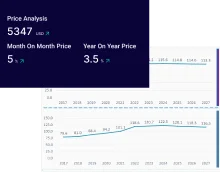
Analyze pricing patterns with comprehensive trend analyses.
Analyse trade data for supply chain insights.
Leverage cost reports for smart savings
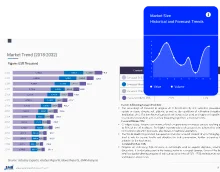
Elevate supply chain with collaboration
Contact Us for Further Information
Our specialized analysts will be available to answer all the pre-purchase and post-purchase queries regarding the report.
Our specialized analysts will be available to answer all the pre-purchase and post-purchase queries regarding the report.
Staying one step ahead of the market landscape with our in-depth research methods, integrating advanced analytics to drive precise and tangible outcomes.
Our expert analyst team offers a significant advantage over competitors, with extensive market insights into the latest trends, putting you strategically ahead.
We deliver a simplified yet extensive report, comprising in-depth industry insights and analytics tailored to your industry requirements.
We are happy to help you navigate through the services we offer and solve your queries.
Contact us