Consumer Insights
Uncover trends and behaviors shaping consumer choices today
Procurement Insights
Optimize your sourcing strategy with key market data
Industry Stats
Stay ahead with the latest trends and market analysis.
Coca-processed food exporters in Australia are using high-capacity container desiccants in order to reduce their condensation-related cargo claims. On the other hand, lithium-ion battery assembly projects that are associated with renewable storage programs are pushing the use of molecular sieves for ultra-low humidity environments. These sectors are urging suppliers that offer product differentiation through technical validation, regulatory compliance support, and personalized adsorption engineering rather than commodity pricing tactics, boosting the overall Australia desiccants market value.
For example, Airnov Healthcare Packaging, a provider of controlled atmosphere packaging, offers a new line of laser-marked sorbent and desiccant canisters without direct printing or labelling. This step was taken after a report about the rise in pharmaceutical exports from Australia. According to the Australia desiccants market analysis, pharmaceutical exports were valued at over USD 3 billion in 2023, indicating strong demand from overseas markets. Through tailoring adsorption performance to longer shipping cycles across Asia Pacific, companies are localizing their offering to compliance-driven manufacturers seeking validated moisture control solutions that meet TGA and PIC/S stability requirements.
Desiccants are no longer considered a passive packaging element in Australia. Pharmaceutical CDMOs in New South Wales and Victoria are specifying low-dust, pharma-grade silica gel, and molecular sieve variants that are compatible with robotic insertion systems. Suppliers are gearing up to provide humidity-calibrated products that would be responsive to Australia's diverse climate exposure. For example, in April 2025, Atlas Copco launched a new range of portable desiccant air dryers, setting a new benchmark in on-site air treatment for industries. Such a development in the Australia desiccants market points to a general industry emphasis on risk mitigation, where a packaging failure can lead to expensive recalls and regulatory attention.
Compound Annual Growth Rate
5.8%
Value in AUD million
2026-2035
|
Australia Desiccants Market Report Summary |
Description |
Value |
|
Base Year |
AUD million |
2025 |
|
Historical Period |
AUD million |
2019-2025 |
|
Forecast Period |
AUD million |
2026-2035 |
|
Market Size 2025 |
AUD million |
39.90 |
|
Market Size 2035 |
AUD million |
70.12 |
|
CAGR 2019-2025 |
Percentage |
XX% |
|
CAGR 2026-2035 |
Percentage |
5.80% |
|
CAGR 2026-2035 - Market by Region |
Australian Capital Territory |
6.5% |
|
CAGR 2026-2035 - Market by Region |
Western Australia |
6.3% |
|
CAGR 2026-2035 - Market by Type |
Molecular Sieves |
6.9% |
|
CAGR 2026-2035 - Market by Application |
Pharmaceuticals |
7.0% |
|
2025 Market Share by Region |
Western Australia |
17.2% |
December 2025 – ELGi Launched Modular CEP Compressed Air System
ELGi introduced a modular CEP compressed air system in Australia, enhancing energy efficiency, scalability, and optimized moisture management performance. Such developments signal Australia desiccants market opportunities for suppliers to integrate advanced air-drying and adsorption technologies into modular industrial compressed air ecosystems.
November 2025 – ACG Introduced DryPod Lamination-Based Desiccant Solution
ACG unveiled DryPod, a lamination-based desiccant cold-form packaging solution giving drug manufacturers greater moisture protection control and stability assurance. This creates opportunity for the Australia desiccants market players to co-develop integrated blister-compatible adsorption systems aligned with pharma automation and export compliance demands.
August 2024 – Li-S Energy Opened Lithium-Sulfur Battery Plant
Li-S Energy inaugurated a lithium-sulfur battery plant in Victoria, supported by government funding to strengthen domestic advanced battery manufacturing. Battery facility expansion opens avenues for molecular sieve and dry-room desiccant providers to secure long-term industrial moisture control supply contracts.
June 2023 – Clariant Launched Desi Pak ECO Bio-Based Packets
Clariant launched Desi Pak ECO, bio-based moisture-adsorbing packets designed to reduce packaging carbon footprint without compromising adsorption efficiency. Sustainable innovation encourages companies in the Australia desiccants market to develop compostable and ESG-aligned moisture control formats for pharmaceuticals and premium food exporters.
Pharmaceutical Manufacturing Expansion and Stability Compliance
The country’s pharmaceutical manufacturing companies are ramping up their solid-dose and biologics production capabilities to enhance their export competitiveness in the Australia desiccants market. As TGA audits become increasingly similar to global GMP standards, manufacturers are formalizing validated desiccant systems as part of their primary packaging specifications. In November 2025, Bry-Air launched the P80X advanced dehumidifier using MOF technology for pharmaceutical humidity control, enhancing precision drying and stability in sensitive drug manufacturing environments.
Advanced Moisture Control for Lithium-Ion Battery Assembly
Australia's plans to store renewable energy are creating a niche for large-scale industrial desiccant systems. The pilot lithium-ion battery assembly plants in Victoria and South Australia are using centralized dry-room dehumidification units with regenerative desiccant wheels. Being supported by the Australian Renewable Energy Agency-linked funding, these plants require adsorption systems capable of keeping dew points below critical moisture levels. Suppliers are offering ultra-durable molecular sieve products and maintenance-supported service models to secure long-term industrial contracts, reshaping the entire Australia desiccants market dynamics. The main focus is on the reliability of the performance because moisture contamination can affect the cell chemistry and production yields. In July 2025, Comau launched an advanced dry room lab enhancing ultra-low humidity environments critical for next-gen battery production and solid-state material testing.
Export-Focused Food and Nutraceutical Packaging Upgrades
Processed meat, dairy powders, and nutraceutical brands have been piling up investments in moisture control to secure their export shipments of products to distant markets. Exporters from Queensland are significantly increasing the level of protection for initial shipments by adopting large-format calcium chloride desiccant blankets, boosting demand in the Australia desiccants market. These blankets are aimed at lowering the amount of condensation during the journey by sea. Businesses are looking for fewer spoilage complaints and more robust distributor trust in markets of the Asian continent. In February 2023, Airnov showcased its latest desiccant closure system, enhancing integrated moisture protection within pharmaceutical packaging to improve drug stability and shelf life.
Sustainable and Compostable Desiccant Materials
Commitments to sustainability under Australia's National Packaging Targets are having an effect on procurement choices in the FMCG and healthcare divisions. Top moisture-control suppliers have come up with compostable sachet fabrics and recyclable canister formats in the past few years to align with brand ESG strategies. Pharmaceutical and high-end organic food manufacturers are opting for clay-based desiccants packed in plant-derived materials that are friendly to the environment and lower the packaging waste footprint, redefining the Australia desiccants market dynamics. Suppliers are aiming at differentiation by offering lifecycle assessments and carbon reporting support. For example, Levosil offers a line of completely compostable desiccant bags made with a 100% cellulose and bioplastic enclosure.
Smart Packaging and Traceability Integration
Digital traceability is rapidly becoming a key differentiator in tightly regulated supply chains. Australian contract packagers are running trials of humidity-monitoring blister pack systems that record exposure data during distribution cycles. Experts in desiccant materials are teaming up with packaging automation companies to integrate RFID tags and humidity sensors, broadening the Australia desiccants market scope. Since pharmaceutical and nutraceutical exporters are subject to stricter documentation requirements, smart moisture-control systems are now seen as a value-added feature. In March 2025, ProAmpac expanded its active and intelligent packaging lineup with advanced sustainable moisture-adsorbing solutions, enhancing protection while reducing environmental impact in packaged goods.
The EMR’s report titled “Australia Desiccants Market Report and Forecast 2026-2035” offers a detailed analysis of the market based on the following segments:
Market Breakup by Type
Key Insight: Silica gel continues to be the material of choice for pharmaceuticals and packaged products because of its familiarity and compatibility with automation, accelerating the Australia desiccants market growth. Clay desiccants are used in cost-effective food and consumer products, while molecular sieves are being adopted in high-precision industrial applications. Activated carbon is used for odor-sensitive packaging; calcium chloride leads in container-level moisture absorption in maritime shipping; and specialty blends are used for chemical and military applications.
Market Breakup by Application
Key Insight: As per the Australia desiccants market report, pharmaceuticals continue to hold the largest share of the industry mainly because of regulatory requirements and export stability criteria, whereas the electronics industry is rapidly growing as it protects high-value components. Food packaging mainly depends on the moisture absorption of the container to maintain the integrity of the export. The automotive sector incorporates desiccants in lighting systems and electronic modules, while logistics and shipping put considerable emphasis on condensation control. Textiles are stored in desiccant bags to prevent mildew. Aerospace tightly controls humidity to prevent material degradation. In cosmetics, the formula is protected from getting spoiled, and construction materials use moisture barriers for their longevity.
Market Breakup by Region
Key Insight: Western Australia is supported by export-driven industrial logistics, while Victoria’s advanced manufacturing ecosystem is rapidly driving demand for engineered solutions. New South Wales plays a pivotal role in pharmaceutical and nutraceutical production, strengthening demand for controlled infrastructure. Queensland is well positioned to lead container desiccant adoption, supported by its strong agri-food export base. The Australian Capital Territory reflects demand linked to research and defense-related applications, while other regions primarily support local food processing and storage requirements in line with their industrial capacity. Regional demand patterns in the Australia desiccants market are strongly influenced by the level of export, the degree of industrial sophistication, and the stringency of compliance requirements.
By type, silica gel accounts for the largest share of the market due to pharmaceutical stability demands
Silica gel has been the main procurement ingredient among pharmaceutical, nutraceutical, and diagnostic kit manufacturers, accelerating the Australia desiccants market value. The reason for this can be explained by its well-understood adsorption curve and the fact that it is widely accepted by regulators. Packaging engineers also opt for silica gel since it can be easily combined with high-speed bottle and blister lines without the creation of particulate contamination. Contract manufacturers in New South Wales are increasingly specifying indicating silica gel variants to enable visual moisture monitoring during export shipments. Suppliers are targeting extended-shelf-life products, particularly for Southeast Asian distribution routes where humidity exposure is prolonged. For example, Melag Group Australia supplies industrial packaging, hygiene, and moisture protection products tailored for medical, pharmaceutical, and export logistics sectors, emphasizing compliance and operational reliability.
Molecular sieves are being recognized as the fastest-growing sub-segment in the Australia desiccants market scope, primarily driven by the country’s lithium-ion battery assembly and specialty chemical processing projects. Unlike traditional desiccants, molecular sieves provide controlled pore size, this makes it possible to achieve the ultra-low humidity levels necessary to maintain battery cell performance and stability. Industrial plants in Victoria and South Australia are incorporating desiccant dry-room systems, where moisture levels must be kept under precise control.
Pharmaceutical applications lead the market owing to regulatory-driven moisture protection standards
Pharmaceutical applications make up the largest share in the Australia desiccants market revenue as drug manufacturers and contract packagers operate under strict TGA stability guidelines. Exposure to moisture is the main cause of vulnerability of tablet dissolution rates, capsule integrity, and biologic efficacy. Therefore, the integration of desiccants is a technical requirement instead of being a mere accessory. Besides that, producers are increasingly using automated insertion systems to embed desiccant canisters into HDPE bottles in order to decrease the risk of human handling. Delivering validation documentation, conducting extractables testing, and providing adsorption performance certifications are some of the requirements for suppliers from export-oriented CDMOs. In December 2025, Sanner announced plans to launch a tethered cap, enhancing user safety and integrated moisture control in pharmaceutical packaging systems.
On the other hand, the electronics sector is set for rapid development as Australia deploys the expansion of precision component assembly, renewable energy storage systems, and defense-grade electronics manufacturing. The production of printed circuit boards, sensors, and battery modules must be carefully managed for humidity during storage and transport to avoid corrosion and microfractures. Suppliers are bringing to the market static, neutral, low, dust desiccant packets that are specifically designed for electronics packaging environments. Industrial customers are thus focusing on molecular sieve blends that can maintain ultra-dry conditions in sealed enclosures.
|
CAGR 2026-2035 - Market by |
Region |
|
Australian Capital Territory |
6.5% |
|
Western Australia |
6.3% |
|
New South Wales |
XX% |
|
Victoria |
XX% |
|
Queensland |
XX% |
|
Others |
XX% |
Western Australia registers the leading position due to mining and export-linked industrial activity
The Western Australia desiccants market’ dominance is largely led by the region’s mining exports, bulk commodity shipping, and industrial processing operations. Equipment, mineral concentrates, and metal components shipped through major ports need container-level desiccant systems to protect against condensation during extended sea transit. Industrial suppliers are focusing on landing large-scale contracts for calcium chloride container desiccants and bulk adsorption systems for use in warehouses. Additionally, defense and energy projects across the region are specifying advanced moisture control solutions for sensitive equipment storage. In November 2024, Gilero expanded manufacturing facilities, boosting production capacity and service scope for CDMO clients.
Growth in the Victorian market is being supported by pharmaceutical clusters and renewable energy storage initiatives. CDMOs and research-driven biotech firms in Melbourne are equipping their packaging lines with technologies for inserting validated desiccants. At the same time, pilot lithium-ion battery manufacturing projects are demanding industrial desiccant dehumidification systems to keep production environments at ultra-low humidity levels. Suppliers are focusing on technical partnerships, offering adsorption modeling and compliance documentation to secure long-term industrial supply agreements.
International chemical companies and local moisture control experts are turning towards high-margin applications such as the validation of pharmaceutical packaging, lithium battery dry-room systems, and container-level condensation management for exports. Australia desiccants market players are investing in adsorption performance testing, automated insertion compatibility, and sustainable sachet materials that are in line with national packaging targets.
The market observes a distinct move towards service-backed offerings where suppliers provide humidity audits, regeneration support, and compliance documentation along with sachets. The industry for renewable energy storage, defense electronics, and biologics manufacturing, which require ultra-low humidity control, is opening up to new possibilities. Australia desiccant companies that manage to unite engineered adsorption solutions with traceability integration and materials that are compliant with ESG, are gaining stronger leverage in negotiations with industrial buyers. The market has been shifting from generic silica gel packets to a sector-tailored performance-certified moisture management system that identifies the specific risks of the sector.
BASF SE
Established in 1865 and headquartered in Ludwigshafen, Germany, BASF SE supports the Australia desiccants market through advanced adsorbent materials and specialty chemical solutions. The company leverages its global research network to supply molecular sieve technologies suited for industrial gas drying and high-precision environments. In Australia, BASF focuses on engineered solutions for energy storage, mining-related processing, and specialty manufacturing sectors.
Absortech Australia (Absortech Group)
Founded in 2007, Absortech Group operates in Australia through Absortech Australia, specializing in container desiccant and moisture damage prevention solutions. The company caters strongly to export-driven industries including agriculture, food processing, and mining equipment shipping. Absortech provides customized container desiccant systems designed for long-haul maritime transport under fluctuating humidity conditions.
Protection Experts Australia
Established in 2019 and headquartered in Melbourne, Australia, Protection Experts Australia focuses on protective packaging and moisture control for electronics, defense equipment, and industrial components. The company integrates desiccants with corrosion inhibitors and barrier films, offering tailored packaging systems for high-value goods.
Desicco Pty Ltd
Desicco Pty Ltd was established in 1996 and is headquartered in Sydney, Australia. The company specializes in silica gel, clay desiccants, and humidity indicator products tailored to pharmaceuticals, nutraceuticals, and food exporters. Desicco emphasizes automation-compatible canisters and food-grade certified sachets suited for high-speed packaging lines.
Other key players in the market include Mela Group, and Fromm Packaging Australia Pty Ltd, among others.
Explore the latest trends shaping the Australia desiccants market 2026-2035 with our in-depth report. Gain strategic insights, future forecasts, and key market developments that can help you stay competitive. Download a free sample report or contact our team for customized consultation on Australia desiccants market trends 2026.


Upto 15% Off
AUD
$2749 $2499
$3849 $3499
$4949 $4499
$6049 $5499


*While we strive to always give you current and accurate information, the numbers depicted on the website are indicative and may differ from the actual numbers in the main report. At Expert Market Research, we aim to bring you the latest insights and trends in the market. Using our analyses and forecasts, stakeholders can understand the market dynamics, navigate challenges, and capitalize on opportunities to make data-driven strategic decisions.*
In 2025, the Australia desiccants market reached an approximate value of AUD 39.90 million.
The market is projected to grow at a CAGR of 5.80% between 2026 and 2035.
The key players in the market include BASF SE, Absortech Australia (Absortech Group), Protection Experts Australia, Desicco Pty Ltd, Mela Group, and Fromm Packaging Australia Pty Ltd, among others.
Investing in engineered adsorption systems, forming technical partnerships, expanding sustainable product lines, integrating traceability solutions, and targeting renewable energy storage clients are strengthening competitive positioning.
Price sensitivity among bulk buyers, fluctuating raw material costs, regulatory compliance pressures, and the need for technical validation in high-precision industries challenge profitability and differentiation strategies.
Explore our key highlights of the report and gain a concise overview of key findings, trends, and actionable insights that will empower your strategic decisions.
| REPORT FEATURES | DETAILS |
| Base Year | 2025 |
| Historical Period | 2019-2025 |
| Forecast Period | 2026-2035 |
| Scope of the Report |
Historical and Forecast Trends, Industry Drivers and Constraints, Historical and Forecast Market Analysis by Segment:
|
| Breakup by Type |
|
| Breakup by Application |
|
| Breakup by Region |
|
| Market Dynamics |
|
| Competitive Landscape |
|
| Companies Covered |
|
Datasheet
AUD 2,749
AUD 2,499
tax inclusive*
Single User License
AUD 3,849
AUD 3,499
tax inclusive*
Five User License
AUD 4,949
AUD 4,499
tax inclusive*
Corporate License
AUD 6,049
AUD 5,499
tax inclusive*
*Please note that the prices mentioned below are starting prices for each bundle type. Kindly contact our team for further details.*
Flash Bundle
Small Business Bundle
Growth Bundle
Enterprise Bundle
*Please note that the prices mentioned below are starting prices for each bundle type. Kindly contact our team for further details.*
Flash Bundle
Number of Reports: 3
20%
tax inclusive*
Small Business Bundle
Number of Reports: 5
25%
tax inclusive*
Growth Bundle
Number of Reports: 8
30%
tax inclusive*
Enterprise Bundle
Number of Reports: 10
35%
tax inclusive*
How To Order

Select License Type
Choose the right license for your needs and access rights.

Click on ‘Buy Now’
Add the report to your cart with one click and proceed to register.

Select Mode of Payment
Choose a payment option for a secure checkout. You will be redirected accordingly.
Strategic Solutions for Informed Decision-Making
Stay upgraded and grab opportunities by strategic insights
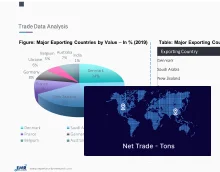
Stay informed and aware for a Market Leverage
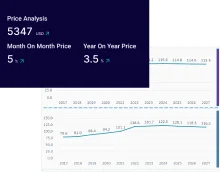
Analyze pricing patterns with comprehensive trend analyses.
Analyse trade data for supply chain insights.
Leverage cost reports for smart savings
Elevate supply chain with collaboration
Contact Us for Further Information
Our specialized analysts will be available to answer all the pre-purchase and post-purchase queries regarding the report.
Our specialized analysts will be available to answer all the pre-purchase and post-purchase queries regarding the report.
Staying one step ahead of the market landscape with our in-depth research methods, integrating advanced analytics to drive precise and tangible outcomes.
Our expert analyst team offers a significant advantage over competitors, with extensive market insights into the latest trends, putting you strategically ahead.
We deliver a simplified yet extensive report, comprising in-depth industry insights and analytics tailored to your industry requirements.
We are happy to help you navigate through the services we offer and solve your queries.
Contact us