Consumer Insights
Uncover trends and behaviors shaping consumer choices today
Procurement Insights
Optimize your sourcing strategy with key market data
Industry Stats
Stay ahead with the latest trends and market analysis.
The Australia data lake market covers the platforms, storage, processing engines and services used to hold large volumes of structured, semi-structured and unstructured data in open formats so that analytics and artificial intelligence teams can use it. Buyers include banks, insurers, telecommunications carriers, government agencies, health providers and retailers that are consolidating scattered data stores.
In 2025, the market is valued at AUD 1.10 billion in 2025 and is forecast to grow at a CAGR of 17.50%, reaching AUD 5.52 billion by 2035. Growth is driven by artificial intelligence projects that need large, well-organised data sets, the move from separate warehouses to lakehouse designs, heavy vendor investment in Australia, and pressure to cut duplicate data copies and storage costs.
Compound Annual Growth Rate
17.5%
Value in AUD billion
2026-2035
The Australia data lake market is moving from raw storage of unmanaged files towards governed lakehouse platforms that combine low-cost storage with query speed, access controls and machine learning tools. Open table formats, shared catalogs and natural-language access are widening the pool of staff who can use the data.
Three forces shape demand: the need for trusted data to train and ground artificial intelligence models, heavy investment by platform vendors in local teams and capacity, and a push to query data where it already sits instead of copying it. Buyers increasingly ask for open formats, cost controls and local data residency.
In May 2026 Databricks announced an investment of USD 300 million, about AUD 420 million, in Australia and New Zealand over three years, and in April 2026 Microsoft announced a AUD 25 billion Australian investment that expands local cloud capacity.
The market is shifting from raw file storage towards governed lakehouse platforms that join open storage, shared catalogs and artificial intelligence tooling, with managed services and real-time workloads growing fastest.
| Metric | Value |
| Market Size 2025 | AUD 1.10 billion |
| Projected Market Size 2035 | AUD 5.52 billion |
| CAGR 2026 to 2035 | 17.50% |
| Fastest-Growing Component | Data Lake Services: 19.0% CAGR |
| Fastest-Growing Application | Machine Learning and AI Workloads: 21.0% CAGR |
| Largest Revenue Segment 2025 | Banking, Financial Services and Insurance |
| Dominant Region | New South Wales |
| Highest CAGR by Region | Rest of Australia: 19.0% |
| Growth in Databricks Australia and New Zealand business, first quarter 2026 | More than 85% |
Artificial Intelligence Turns Storage Into Strategy
Revenue is on course to expand about fivefold, from AUD 1,100.00 million in 2025 to AUD 5,517.87 million in 2035 at a 17.5% CAGR. Models need large, well-governed data sets, so organisations are replacing scattered stores with shared lakehouse platforms.
Services and Machine Learning Workloads Lead Growth
Platform software holds the largest share, but Data Lake Services grow at an estimated 19.0% CAGR and Machine Learning and AI Workloads at an estimated 21.0%, as firms lack the staff to design, tune and govern lakehouse estates on their own.
Local Investment Raises Expectations
Vendor spending on local teams, offices and training lowers the barrier to adoption. Three practical priorities stand out for data leaders:
| Report Summary | Unit | Value |
| Base Year | AUD billion | 2025 |
| Historical Period | AUD billion | 2019 to 2025 |
| Forecast Period | AUD billion | 2026 to 2035 |
| Market Size 2025 | AUD billion | 1.10 |
| Market Size 2035 | AUD billion | 5.52 |
| CAGR 2026 to 2035 | Percentage | 17.50 % |
| CAGR by Component: Data Lake Services | Percentage | 19.0 % |
| CAGR by Application: Machine Learning and AI Workloads | Percentage | 21.0 % |
| CAGR by End User: Healthcare and Life Sciences | Percentage | 18.8 % |
| CAGR by Region: Rest of Australia | Percentage | 19.0 % |
| Databricks Planned Investment in Australia and New Zealand, 2026 | AUD Million | 420 |
| Learners to Be Trained Across the Region Over Five Years | Learners | 100,000 |
| Market Share by Region 2025 | New South Wales | Dominant Share |
AI demand, vendor investment and open lakehouse designs lift data lakes into core data infrastructure. New South Wales leads; the rest of Australia grows fastest.
The Australia data lake market is being reshaped by evidence of weak data practice, vendor investment, large cloud capacity build-out and public sector data programmes.
June 2026 - Study Finds Only a Quarter of Large Firms Have Structured Data Delivery Programmes
May 2026 - Databricks Announces AUD 420 Million Australia and New Zealand Investment
April 2026 - Microsoft Announces AUD 25 Billion Australian AI and Cloud Investment
March 2026 - Public Service Data Awards Highlight Better Data Sharing Between Departments
Weak data practice, vendor investment, local cloud capacity and public programmes are the main forces, while skills shortages and cloud bills limit adoption.
Recent developments, presented from the most recent, show multi-cloud query features, natural-language access to governed data, artificial intelligence platforms built on shared data and major vendor expansion.
July 2026 - Google Cloud Launches Borderless Lakehouse
June 2026 - Databricks Introduces Genie One as an AI Coworker
June 2026 - Thomson Reuters Builds an AI Data Platform on Snowflake
May 2026 - Databricks Commits to a New Sydney Headquarters and Training Programme
Multi-cloud query features, natural-language access and heavy local investment show buyers moving towards open, governed platforms that serve analysts, engineers and artificial intelligence teams from one copy of the data.
The Expert Market Research’s report on the Australia Data Lake Market offers a detailed analysis of the market based on the following segments.
Market Breakup by Component
Data Lake Platforms and Software lead on value, in our estimate, because consumption-based platform licences and compute are the largest line items in lakehouse programmes, as seen in the scale of Databricks' planned investment. Storage and Infrastructure remains significant because cloud object storage underpins every design.
Market Breakup by Application
Business Intelligence and Reporting lead in value, in our estimate, as most lakes first serve reporting needs, while Machine Learning and AI Workloads grow fastest as firms train and ground models on company data. Data Archiving and Compliance remains relevant for regulated sectors.
Market Breakup by End User
Banking, Financial Services and Insurance lead, in our estimate, because regulated institutions hold the largest data volumes and run the most advanced analytics programmes. Government and Public Sector follow as agencies share data across departments and use cloud platforms. Telecommunications and Technology follow, with carriers and software firms using lakes for network, usage and product data, and Healthcare and Life Sciences grow quickly as health services consolidate patient and research data.
Market Breakup by Region
New South Wales dominates, in our estimate, as Sydney hosts the largest concentration of banks, cloud regions and vendor offices, including the planned Databricks headquarters on George Street. Rest of Australia grows fastest as health services, councils and regional firms adopt shared platforms. Victoria and Queensland add demand from financial services and public bodies, while Western Australia adds demand from mining and energy operators.
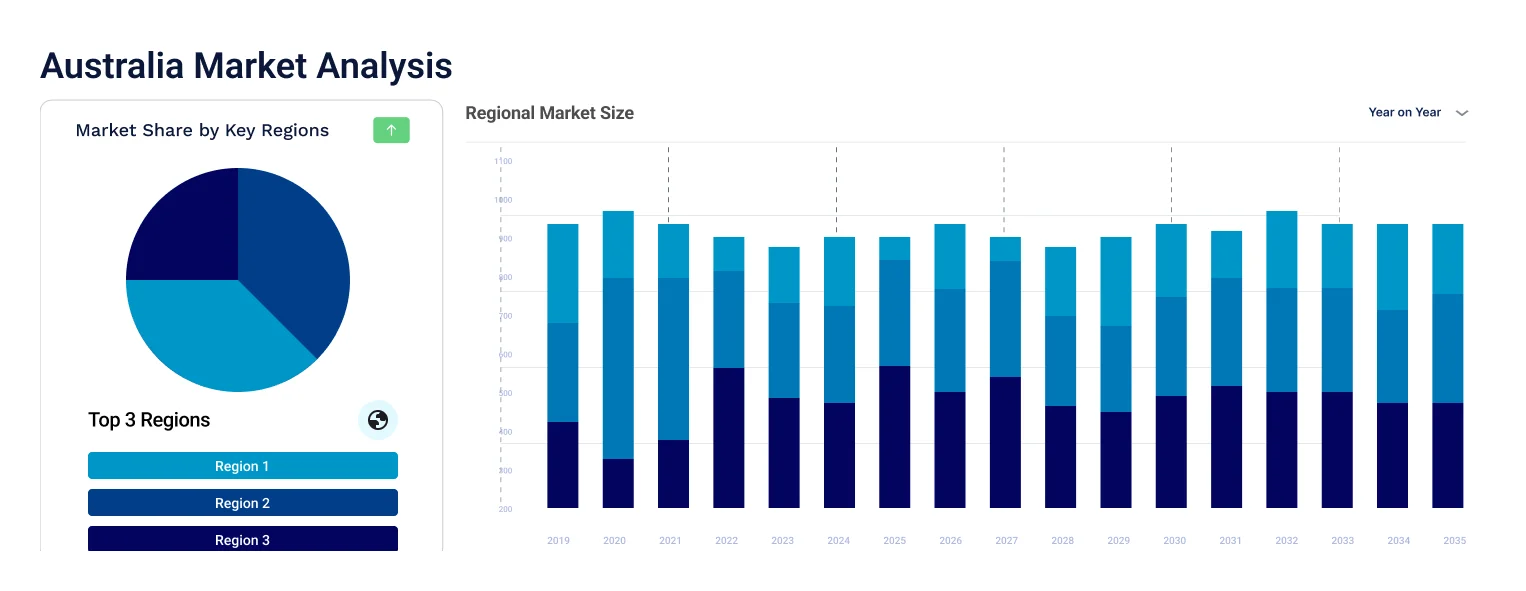
| CAGR 2026 to 2035, Market by Region | Growth Rate |
| New South Wales | 16.6 % |
| Victoria | 17.2 % |
| Queensland | 17.8 % |
| Western Australia | 18.2 % |
| Others (Rest of Australia) | 19.0 % |
Competition combines specialist lakehouse vendors, cloud providers, database companies and integrators. Entry barriers include scale of engineering, open-format support, security certifications and the local teams needed to support regulated customers.
Databricks
Databricks, headquartered in San Francisco, California, sells a data intelligence platform built on lakehouse architecture that joins storage, governance, analytics and artificial intelligence tools. In May 2026 it announced an investment of USD 300 million, about AUD 420 million, in Australia and New Zealand over three years, and customers there include Atlassian, National Australia Bank and Telstra. The company sells on consumption pricing, so spending grows with data volumes and users, and it relies on a growing network of local partners and integrators to deliver projects.
Snowflake
Snowflake, headquartered in Bozeman, Montana, offers a cloud data platform for warehousing, lakes, data sharing and artificial intelligence applications. It announced new product innovations for enterprise agentic applications in November 2025, and customers such as Thomson Reuters report faster workloads on its platform. Its platform separates storage from compute, which lets customers scale workloads independently, and its data sharing features suit groups that exchange data with partners and regulators.
Amazon Web Services
Amazon Web Services, headquartered in Seattle, Washington, provides object storage through Amazon S3, query services such as Athena, data governance through Lake Formation and machine learning tools through SageMaker. It operates cloud regions in Australia, which supports banks and agencies that need data to stay onshore. Many Australian enterprises run their first lakes on its storage because the services are mature, widely supported and priced by usage.
Microsoft
Microsoft, headquartered in Redmond, Washington, sells Microsoft Fabric with its OneLake storage layer, Azure data services and Power BI. In April 2026 it announced a AUD 25 billion Australian investment, and its tight links with Microsoft 365 make it a frequent choice for organisations that already use its tools. The company's strategy ties lake storage to its analytics, security and artificial intelligence tools, which reduces integration work for existing customers.
Other players operating in the Australia data lake market include Google Cloud, Cloudera, Dremio and Oracle, alongside regional consultancies, system integrators and cloud resellers that implement and support these platforms.
Competition rests on open-format support, cost control, artificial intelligence tooling and local delivery capacity rather than storage price alone, which favours platforms with strong partner ecosystems and onshore teams.


Upto 35% Off
AUD


*While we strive to always give you current and accurate information, the numbers depicted on the website are indicative and may differ from the actual numbers in the main report. At Expert Market Research, we aim to bring you the latest insights and trends in the market. Using our analyses and forecasts, stakeholders can understand the market dynamics, navigate challenges, and capitalize on opportunities to make data-driven strategic decisions.*
The Australia data lake market is valued at AUD 1.10 billion in 2025, supported by artificial intelligence projects, heavy vendor investment and the move from separate warehouses to lakehouse platforms, with New South Wales as the largest region.
The market is forecast to reach AUD 5.52 billion by 2035, growing at a CAGR of 17.50% from 2026 to 2035. Growth reflects demand for governed data for artificial intelligence, open formats and managed services.
Machine Learning and AI Workloads is expected to record the highest CAGR of the applications, at an estimated 21.0%, as organisations train and ground models on company data held in lakes.
New South Wales dominates, in our estimate, because Sydney hosts the largest concentration of banks, cloud regions and vendor offices. Rest of Australia records the highest regional growth.
Key players include Databricks, Snowflake, Amazon Web Services and Microsoft. Google Cloud, Cloudera, Dremio and Oracle also compete for enterprise data platform budgets.
Databricks said in May 2026 that its Australia and New Zealand business grew by more than 85% in the first quarter and announced AUD 420 million of investment. Demand from banks, telecommunications carriers and agencies supports the commitment.
A June 2026 study found that only a quarter of large organisations have a structured programme for delivering data on request. Skills shortages, governance gaps and cloud costs slow programmes that technology alone cannot fix.
Explore our key highlights of the report and gain a concise overview of key findings, trends, and actionable insights that will empower your strategic decisions.
| REPORT FEATURES | DETAILS |
| Base Year | 2025 |
| Historical Period | 2019-2025 |
| Forecast Period | 2026-2035 |
| Scope of the Report |
Historical and Forecast Trends, Industry Drivers and Constraints, Historical and Forecast Market Analysis by Segment:
|
| Breakup by Component |
|
| Breakup by Application |
|
| Breakup by End User |
|
| Breakup by Region |
|
| Market Dynamics |
|
| Competitive Landscape |
|
| Companies Covered |
|
Datasheet
AUD 2,749
AUD 2,499
tax inclusive*
Single User License
AUD 3,849
AUD 3,499
tax inclusive*
Five User License
AUD 4,949
AUD 4,499
tax inclusive*
Corporate License
AUD 6,049
AUD 5,499
tax inclusive*
*Please note that the prices mentioned below are starting prices for each bundle type. Kindly contact our team for further details.*
Flash Bundle
Small Business Bundle
Growth Bundle
Enterprise Bundle
*Please note that the prices mentioned below are starting prices for each bundle type. Kindly contact our team for further details.*
Flash Bundle
Number of Reports: 3
20%
tax inclusive*
Small Business Bundle
Number of Reports: 5
25%
tax inclusive*
Growth Bundle
Number of Reports: 8
30%
tax inclusive*
Enterprise Bundle
Number of Reports: 10
35%
tax inclusive*
How To Order

Select License Type
Choose the right license for your needs and access rights.

Click on ‘Buy Now’
Add the report to your cart with one click and proceed to register.

Select Mode of Payment
Choose a payment option for a secure checkout. You will be redirected accordingly.
Strategic Solutions for Informed Decision-Making
Stay upgraded and grab opportunities by strategic insights
Stay informed and aware for a Market Leverage
Analyze pricing patterns with comprehensive trend analyses.
Analyse trade data for supply chain insights.
Leverage cost reports for smart savings
Elevate supply chain with collaboration
Contact Us for Further Information
Our specialized analysts will be available to answer all the pre-purchase and post-purchase queries regarding the report.
Our specialized analysts will be available to answer all the pre-purchase and post-purchase queries regarding the report.
Staying one step ahead of the market landscape with our in-depth research methods, integrating advanced analytics to drive precise and tangible outcomes.
Our expert analyst team offers a significant advantage over competitors, with extensive market insights into the latest trends, putting you strategically ahead.
We deliver a simplified yet extensive report, comprising in-depth industry insights and analytics tailored to your industry requirements.
We are happy to help you navigate through the services we offer and solve your queries.
Contact us