Consumer Insights
Uncover trends and behaviors shaping consumer choices today
Procurement Insights
Optimize your sourcing strategy with key market data
Industry Stats
Stay ahead with the latest trends and market analysis.
As businesses expand their cloud analytics and AI workloads, manually handling metadata is becoming a very difficult task. As a result, the Australia data catalog market is witnessing a high demand for smart catalogs that can not only identify and classify data but also govern it. To be in line with this trend, data catalog vendors are repositioning their products as layers of autonomous data intelligence rather than just passive repositories.
This move is supported by the major product announcements from the top vendors. For instance, in March 2025, Alation introduced its Agentic Platform, which implements autonomous AI agents to delegate the tasks of data discovery, governance, and compliance to the execution of the workflow significantly without any human intervention in a large data estate. Additionally, Alation also launched Alation Data Quality in March 2025, an AI-native solution that automatically applies data quality rules by using contextual metadata. This directly solves enterprise trust gaps. These innovations have the potential to radically change data catalogs to be mission-critical platforms that facilitate the uptake of data-intensive Australian enterprises rapidly, further boosting the Australia data catalog market expansion.
Compound Annual Growth Rate
23.4%
Value in AUD million
2026-2035
|
Australia Data Catalog Market Report Summary |
Description |
Value |
|
Base Year |
AUD million |
2025 |
|
Historical Period |
AUD million |
2019-2025 |
|
Forecast Period |
AUD million |
2026-2035 |
|
Market Size 2025 |
AUD million |
52.85 |
|
Market Size 2035 |
AUD million |
432.71 |
|
CAGR 2019-2025 |
Percentage |
XX% |
|
CAGR 2026-2035 |
Percentage |
23.40% |
|
CAGR 2026-2035 - Market by Region |
Australian Capital Territory |
26.3% |
|
CAGR 2026-2035 - Market by Region |
Western Australia |
25.1% |
|
CAGR 2026-2035 - Market by Deployment |
Cloud |
25.8% |
|
CAGR 2026-2035 - Market by Enterprises |
SMEs |
25.4% |
|
2025 Market Share by Region |
New South Wales |
35.7% |
October 2025 - Oracle Database@Google Cloud Launched in Australia
Oracle and Google Cloud launched Oracle Database@Google Cloud in Australia, enabling businesses to operate Oracle Exadata services directly on Google Cloud infrastructure. With this multi-cloud capability, companies can move data, ensure interoperability, and run analytics workloads across different platforms. As Australian organizations continue to create increasingly complex hybrid data environments, the demand for sophisticated data catalog solutions also grows to maintain metadata visibility, governance, and efficient data discovery.
September 2025 - SAP Expanded Sovereign Cloud Capabilities in Australia
SAP enhanced its Sovereign Cloud capabilities in Australia to address data residency, security, and compliance requirements for the public sector and regulated industries. The adoption of cloud in these sectors has been accelerated by this expansion, resulting in increased demand for well-defined metadata governance structures. As the deployment of sovereign clouds has increased, the role of data catalog platforms in ensuring compliance in data discovery, lineage tracking, and access management has become critical, thereby facilitating continuous growth in the Australia data catalog market.
June 2025 - AWS Announced AUD 20 billion Data Center Investment in Australia
Amazon Web Services revealed an AUD 20 billion investment plan to extend its data center and cloud infrastructure footprint across Australia, with a timeline until 2029. This sizable investment is a major driver for the region's data processing capacity, AI adoption, and enterprise analytics activity. To keep up with the rising data volumes, organizations are turning to data catalog solutions to handle metadata, enhance data discoverability, and uphold governance in cloud-native environments.
July 2024 - Australian Government Data Catalogue Public Beta Launched
The Australian Government Data Catalogue public beta was launched, establishing a centralised portal for discovering datasets across government agencies. The initiative, by formalising metadata classification and discovery practices, is leading to the adoption of stronger data governance standards all over the country. The public, sector, led adoption of cataloging principles thus acts as a kind of "push" in the private sector for the "turn", the increased interest and investment in enterprise data catalog solutions across Australia.
Business-User–Focused Data Catalog Product Enhancements
Vendors operating in the Australia data catalog market landscape have been making concerted efforts to enhance their product designs in such a way that non, technical users can also easily access them and thus expand user base beyond data teams. By making data discovery and consumption easier, vendors are turning catalogs into enterprise-wide platforms rather than just tools for the niche of governance. One example of this is data.world's June 2025 launch of its Data Marketplace, a data-product-driven experience integrated into its catalog platform that allows business users to easily browse trusted datasets by domain and use case. Such usability-driven product innovations serve as great leverage for broader enterprise uptake of data catalog solutions.
Platform Partnerships Strengthening Integrated Data Governance Workflows
Strategic partnerships between data catalog providers and governance platforms are significantly contributing to the interoperability of enterprise data ecosystems, which is fueling the Australia data catalog market revenue. These integrations empower organizations to effectively coordinate metadata discovery with access control and compliance activities. In September 2025, Alation and Immuta made public their extended product integration that linked Alation's data catalog and marketplace features with Immuta's automated data access controls. This collaboration not only simplified the identification and use of data under governance but also solidified the role of catalog platforms as central layers of governance, thereby facilitating the adoption of regulated enterprises at a faster pace.
Cloud Data Platform Product Expansion Embedding Catalog Capabilities
Cloud data platform vendors are at the forefront of introducing improvements to their native catalog and governance features with the primary goal of supporting enterprise-scale analytics and AI workloads. These product enhancements have the effect of transforming data catalogs from being mere standalone tools to becoming embedded governance layers within cloud ecosystems. In June 2025, Databricks rolled out significant enhancements to Unity Catalog that made the system more robust in terms of lineage, discovery, auditing, and AI asset governance across data and machine learning workflows. Such ongoing product innovation in the serves to enhance catalog capabilities within cloud platforms, thereby opening up more opportunities in the Australia data catalog market for the adoption of such platforms among enterprises that are in the process of modernizing their data architectures.
Investment-Led Expansion of Local Metadata and Catalog Providers
Targeted investments in metadata and governance vendors are enabling product expansion and market penetration, particularly for regionally focused players. These investments enhance the development of catalog capabilities aligned with enterprise governance needs. In December 2025, Australian vendor Aristotle Metadata secured venture debt funding to scale its metadata governance platform and accelerate product development. Such funding, backed by expansion, strengthens the local data catalog ecosystem and supports broader adoption across Australian organizations managing complex data environments.
Government-Led Digital Data Infrastructure Accelerating Data Catalog Adoption
Government initiatives to centralize and modernize public sector data assets are strengthening the adoption in the Australia data catalog market. By improving data discoverability, standardization, and governance, these initiatives establish benchmarks for enterprise data management. This was exemplified in April 2025, when the Geological Survey of South Australia launched a new geoscience data catalogue under the SARIG platform, consolidating datasets into a single searchable portal. The use of standard metadata frameworks and enhanced interoperability highlights how structured data catalog systems support efficient research, regulatory compliance, and data-driven decision-making.
The EMR’s report titled “Australia Data Catalog Market Report and Forecast 2026-2035” offers a detailed analysis of the market based on the following segments:
Market Breakup by Deployment
Key Insights: Vendors like AWS through Glue Data Catalog are continuously evolving cloud-native, AI-enabled data catalog environments in the cloud deployment category of the Australia data catalog market. These environments are capable of automated metadata discovery and governance, which support analytics and AI workloads. For instance, in October 2025, Commvault launched Clumio for Apache Iceberg on AWS that provides Iceberg-aware, air-gapped backup and recovery in line with AWS Glue Data Catalog metadata. This makes data resilience, governance, and enterprise trust stronger, thus helping the adoption of cloud data catalogs indirectly. Informatica and IBM Watson Knowledge Catalog are still preferred for their on-premises solutions that prioritize strict local control and compliance.
Market Breakup by Enterprises
Key Insights: Large enterprises contribute substantially to the Australia data catalog market growth as they are at the forefront of implementing data catalogs from vendors like Collibra and Alation. They use integrated governance, AI-driven discovery, and compliance workflows across their global data estates. To cite an instance, Alation's Agentic Platform, introduced in March 2025, automates metadata and compliance task and it is capable of enterprise-scale data management. On the other hand, SMEs have been progressively opting for lightweight, affordable catalog solutions like Atlan and Qlik Catalog that can provide simplified deployment, intuitive user experiences, and scalable metadata discovery to facilitate digital transformation at smaller scales.
Market Breakup by End User
Key Insights: The Australia data catalog market caters to end-user such as healthcare, BFSI, manufacturing, retails, and others. Healthcare organizations worldwide have adopted catalog offerings from Informatica and IBM, which enable them to unify clinical and operational metadata in a secure way for analytics. BFSI sectors, on the other hand, use Collibras AI Governance features to renew compliance and risk reporting, whereas manufacturing and retail combine Qlik Catalog and AWS Glue Data Catalog to organize their diverse datasets for supply chain and customer analytics projects. Moreover, some sectors, such as tech and government, are buying scalable metadata platforms to support governance and real-time insights.
Market Breakup by Region
Key Insights: At a regional level, Australia data catalog market scope expands across News South Wales, Victoria, Queensland, Australian Capital Territory, and others. New South Wales and Victoria are home to many enterprises that have adopted catalog solutions like Alation AI-enhanced metadata platform, and Collabtras governance suite, resulting from their analytics and compliance requirements. Queensland and Western Australia are data catalog deployment areas focus on mining and resource analytics. The Australian Capital Territory and others have preferred hybrid solutions from AWS and Microsoft Azure Purview to facilitate public sector data initiatives and cross-agency governance, thereby indicating a widespread regional uptake.
By deployment, the cloud category shows significant uptake.
Cloud deployment adoption keeps increasing as organizations invest in data management platforms that are scalable, integrated, and support hybrid analytics and governance. To address enterprise requirements, vendors are upgrading cloud-native catalog solutions with automated discovery, metadata enrichment, and governance features. For instance, Oracle launched a new version of its OCI Data Catalog in October 2025, which accelerates automated metadata discovery and enrichment for cloud workloads, thus facilitating collaboration and data visibility across diverse enterprise systems. This, in turn, reaffirms the demand for cloud catalogs.
On-premises deployments continue to witness increasing uptake in the Australia data catalog market, by organizations that need to have strict control over their data and comply with regulations, especially in sectors dealing with sensitive or mission-critical systems. To enable these customers, vendors keep enhancing the metadata, search, and governance features by embedding them deeply within secure local environments. Cloudera, in August 2024, declared improvements in its metadata management capabilities, which involved integration of the Iceberg REST Catalog for unified governance, thereby making secure, on-premises metadata access possible with consistent policy enforcement across systems.
By enterprises, large enterprises show robust growth
Large enterprises are making massive investments into sophisticated data catalog solutions that aim to unify metadata, governance, and analytics across global and multi-cloud environments. Such organizations emphasize on platforms that have strong lineage, discovery, and governance capabilities to be able to support AI and compliance workloads. For instance, in November 2025, Informatica was acknowledged as a leader in the Gartner Metadata Management Solutions report, which substantiates the Intelligent Data Management Cloud's capabilities in metadata orchestration and governance as being very attractive to large enterprise deployments, thereby supporting the Australia data catalog market revenue.
Small and medium enterprises (SMEs) are progressively embracing more lightweight, affordable data catalog tools that facilitate metadata access and enhance business decision-making without the need for a substantial infrastructure. These solutions typically have no issue integrating with cloud data platforms and analytics tools, thus making entry easier for more users. A pertinent example is Secodas's June 2025 release of its Monitoring and Catalog Application on Snowflake Marketplace, which allows SMEs to monitor data quality and access metadata directly within Snowflake for improved governance.
By end-user, the BFSI sector contributes significantly to the market revenue.
Financial institutions across the BFSI sector accounts for a significant share of the Australia data catalog market, as they focus on data catalog adoption. Financial institutions position data catalogs as a key enabler to governance, risk reporting, and audit readiness across complex regulatory environments. To ensure compliance, providers are embedding AI and metadata orchestration to support secure, trusted data access. Teradata acquired Stemma Technologies, a cloud-native data catalog solution, in July 2023. As a result, the integration of its AI-enhanced discovery and governance capabilities into Teradata's analytics platform helps to strengthen metadata services for regulated BFSI use cases.
Manufacturing organizations are using data catalog platforms as a unifying tool for operational, supply chain, and production datasets, resulting in improved analytics and decision-making. Vendors are progressively enhancing catalog interoperability and metadata governance to deal with complex data landscapes, which is fueling demand in the Australia data catalog market. The launch of the Matias Unified Data Catalog at Snowflake Summit 2025 in June 2025 serves as an example. It offers integrated metadata, lineage, and governance directly within its modern data operations platform, thus enabling manufacturers to gain better data visibility and alleviate tool fragmentation.
By region, New South Wales holds significant market share
New South Wales is at the forefront of digital infrastructure and enterprise data initiatives, which is resulting in the widespread adoption of data catalog solutions across various industries. The region is reaping the benefits of massive cloud and AI investments that are elevating analytics and governance capabilities. As an illustration, OpenAI announced in December 2025 a $7 billion investment in a next-generation data center in Sydney's Eastern Creek that would enable high-performance computing for AI and analytics workloads. This, in turn, is facilitating enterprise metadata management and modern data catalog deployments.
Victoria is quickly becoming a digital transformation and enterprise data infrastructure hub, which has led to a surging demand in the Australia data catalog market. The state's investments in cloud, AI, and analytics-ready facilities are turning out to be the perfect attraction for businesses that are on the lookout for scalable and secure metadata solutions. A case in point is the announcement made by Amazon Web Services (AWS) in June 2025 regarding the AU$20 billion expansion of cloud and data center infrastructure in Melbourne. This development will allow enterprises to upgrade their metadata management, governance, and analytics capabilities, thereby enabling them to operate across multiple sectors.
|
CAGR 2026-2035 - Market by |
Region |
|
Australian Capital Territory |
26.3% |
|
Western Australia |
25.1% |
|
New South Wales |
XX% |
|
Victoria |
XX% |
|
Queensland |
XX% |
|
Others |
XX% |
The Australia data catalog market players are upgrading their product offerings by leveraging AI-driven innovations, cloud-native solutions, and advanced metadata management features. To this end, companies like Alation, Collibra, and Informatica are emphasizing the integration of governance, data quality, and discovery instruments to furnish end-to-end solutions. These solutions assist enterprises in streamlining analytics workflows, elevating data trust, and meeting regulatory requirements. Such tactics are resulting in the adoption of the market worldwide, Australia included.
Besides that, the leading companies in the data catalog market of Australia are taking various measures, such as seeking strategic partnerships, acquisitions, and regional expansions, to consolidate their position and meet the demands of enterprises. For instance, the collaboration between catalog and governance platforms facilitates compliance, automation, and data access. Product development and investment in localized services enable companies to support hybrid cloud environments, improve usability for business users, and provide AI-powered metadata capabilities. These activities help them maintain their competitive position in the expanding Australia data catalog market.
Alation, Inc.
Alation, Inc. is a significant supplier of enterprise data catalog and governance solutions, established in 2012 and head office located in Redwood City, California, United States of America. The company provides a full product portfolio that empowers organizations to uncover, comprehend, and have confidence in their data for analytics, AI, and business intelligence initiatives.
Collibra
Collibra, established in 2008 and located in Brussels, Belgium, is a data governance and catalog solution provider for enterprises globally. The company's product portfolio facilitates metadata management, data stewardship, and compliance, enabling organizations to have high-quality and reliable data.
Informatica Inc.
Informatica Inc. was established in 1993 and is based in Redwood City, California, United States of America. It is a global leader in cloud data management and enterprise data catalog solutions. The company's product portfolio consists of industry-leading instruments for data integration, quality, and governance, which are utilized by various industries worldwide.
Atlan Pte. Ltd.
Atlan, a startup established in 2017 and based in Singapore, offers modern data catalog and collaboration solutions that are cloud-native by design. The company's products empower teams to manage, discover, and govern data seamlessly across distributed systems and analytics platforms.
Other players in the market include BigID, QlikTech International AB, TIBCO Software (U.S.), Boomi Corporation, Okera, and Tableau Software, LLC., among others.
Explore the latest trends shaping the Australia Data Catalog Market 2026-2035 with our in-depth report. Gain strategic insights, future forecasts, and key market developments that can help you stay competitive. Download a free sample report or contact our team for customized consultation on Australia Data Catalog Market trends 2026.


Upto 15% Off
AUD
$2749 $2499
$3849 $3499
$4949 $4499
$6049 $5499


*While we strive to always give you current and accurate information, the numbers depicted on the website are indicative and may differ from the actual numbers in the main report. At Expert Market Research, we aim to bring you the latest insights and trends in the market. Using our analyses and forecasts, stakeholders can understand the market dynamics, navigate challenges, and capitalize on opportunities to make data-driven strategic decisions.*
In 2025, the Australia data catalog market reached an approximate value of AUD 52.85 million.
The market is projected to grow at a CAGR of 23.40% between 2026 and 2035.
The key players in the market include Alation, Inc., Collibra, Informatica Inc., Atlan Pte. Ltd., BigID, QlikTech International AB, TIBCO Software (United States), Boomi Corporation, Okera, Tableau Software, LLC., and other relevant players.
Key strategies driving the market include AI-driven automation of metadata discovery and governance, expansion of cloud-native and hybrid catalog platforms, integration with data quality and compliance tools, and partnerships with cloud and analytics providers. Vendors are also prioritising user-friendly interfaces and scalable solutions to support enterprise-wide adoption.
Major challenges that the market faces include complexity in integrating catalogs across hybrid and multi-cloud environments, data quality and standardisation issues, high implementation costs for smaller organisations, and skills gaps in metadata management. Additionally, evolving regulatory and data sovereignty requirements increase governance complexity.
Explore our key highlights of the report and gain a concise overview of key findings, trends, and actionable insights that will empower your strategic decisions.
| REPORT FEATURES | DETAILS |
| Base Year | 2025 |
| Historical Period | 2019-2025 |
| Forecast Period | 2026-2035 |
| Scope of the Report |
Historical and Forecast Trends, Industry Drivers and Constraints, Historical and Forecast Market Analysis by Segment:
|
| Breakup by Deployment |
|
| Breakup by Enterprises |
|
| Breakup by End User |
|
| Breakup by Region |
|
| Market Dynamics |
|
| Competitive Landscape |
|
| Companies Covered |
|
Datasheet
AUD 2,749
AUD 2,499
tax inclusive*
Single User License
AUD 3,849
AUD 3,499
tax inclusive*
Five User License
AUD 4,949
AUD 4,499
tax inclusive*
Corporate License
AUD 6,049
AUD 5,499
tax inclusive*
*Please note that the prices mentioned below are starting prices for each bundle type. Kindly contact our team for further details.*
Flash Bundle
Small Business Bundle
Growth Bundle
Enterprise Bundle
*Please note that the prices mentioned below are starting prices for each bundle type. Kindly contact our team for further details.*
Flash Bundle
Number of Reports: 3
20%
tax inclusive*
Small Business Bundle
Number of Reports: 5
25%
tax inclusive*
Growth Bundle
Number of Reports: 8
30%
tax inclusive*
Enterprise Bundle
Number of Reports: 10
35%
tax inclusive*
How To Order

Select License Type
Choose the right license for your needs and access rights.

Click on ‘Buy Now’
Add the report to your cart with one click and proceed to register.

Select Mode of Payment
Choose a payment option for a secure checkout. You will be redirected accordingly.
Strategic Solutions for Informed Decision-Making
Stay upgraded and grab opportunities by strategic insights
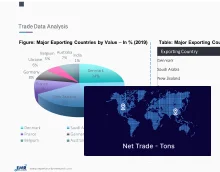
Stay informed and aware for a Market Leverage
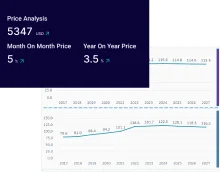
Analyze pricing patterns with comprehensive trend analyses.
Analyse trade data for supply chain insights.
Leverage cost reports for smart savings
Elevate supply chain with collaboration
Contact Us for Further Information
Our specialized analysts will be available to answer all the pre-purchase and post-purchase queries regarding the report.
Our specialized analysts will be available to answer all the pre-purchase and post-purchase queries regarding the report.
Staying one step ahead of the market landscape with our in-depth research methods, integrating advanced analytics to drive precise and tangible outcomes.
Our expert analyst team offers a significant advantage over competitors, with extensive market insights into the latest trends, putting you strategically ahead.
We deliver a simplified yet extensive report, comprising in-depth industry insights and analytics tailored to your industry requirements.
We are happy to help you navigate through the services we offer and solve your queries.
Contact us