Consumer Insights
Uncover trends and behaviors shaping consumer choices today
Procurement Insights
Optimize your sourcing strategy with key market data
Industry Stats
Stay ahead with the latest trends and market analysis.
Compound Annual Growth Rate
14%
Value in AUD billion
2026-2035
|
AUD 26.6 Billion Public Cloud Spending 2025 |
AUD 98.50 Billion Projected Australia Cloud Services Market Size 2035 |
|
14.0% CAGR Cloud Services Market Growth 2026 to 2035 |
AUD 25 Billion+ AWS + Microsoft Infrastructure 2025 to 2029 |
Quick Answer
The Australia cloud services market covers the delivery of computing infrastructure, software platforms, and application services over the internet, spanning Infrastructure as a Service (IaaS), Platform as a Service (PaaS), Software as a Service (SaaS), and Desktop as a Service (DaaS) across public, private, and hybrid deployment models. Gartner puts Australian public cloud end-user spending at AUD 26.6 billion in 2025, up 18.9 per cent from AUD 22.4 billion in 2024. SaaS is the largest segment at ~AUD 13 billion, followed by PaaS at AUD 8.0 billion and IaaS at AUD 5.6 billion, with IaaS growing the fastest at 24.2 per cent as AI workloads pull compute into cloud infrastructure. The cloud services market is projected to reach AUD 98.50 billion by 2035 at a 14.0 per cent CAGR, anchored by AUKUS-era hyperscaler buildout, a government sector still early in cloud migration, and continued enterprise AI adoption.
Australia's cloud services market has crossed a threshold. Year-on-year growth near 19 per cent is rare for a market of this scale, and for context: the cloud services market was worth around AUD 12.2 billion as recently as 2022, per an IDC whitepaper commissioned by Microsoft. It has more than doubled in three years, and isn't slowing down. Gartner surveyed 3,186 CIOs globally in 2025, including 109 from ANZ, and found 83 per cent of ANZ CIOs rank cloud platforms among their top technology investments, sitting just behind cybersecurity and data analytics.
Three forces are pushing the Australia cloud services market higher from here. First, the hyperscalers are placing their biggest bets on Australian infrastructure yet: AWS has committed AUD 20 billion in data centre investment between 2025 and 2029, and Microsoft has pledged AUD 5 billion to expand from 20 to 29 data centres across Sydney, Melbourne, and Canberra. That's AUD 25 billion of committed capital flowing into the physical backbone of the cloud services market. Second, the federal government is finally moving seriously on cloud adoption; only about 10 per cent of government IT spending currently goes to public cloud, which means there's an enormous runway for public sector migration. Third, AI is changing what cloud infrastructure is actually used for, making IaaS the fastest-growing segment as organisations race to provision compute capacity for AI workloads at scale.
| Metric | Value |
| Public Cloud End-User Spending 2025 | AUD 26.6 Billion |
| Projected Cloud Services Market Size 2035 (14.0% CAGR) | AUD 98.50 Billion |
| CAGR 2026 to 2035 | 14.0% |
| 2024 Public Cloud Spending | AUD 22.4 Billion |
| Year-on-Year Growth 2024 to 2025 | 18.9% |
| SaaS Spending 2025 | ~AUD 13 Billion |
| PaaS Spending 2025 | AUD 8.0 Billion |
| IaaS Spending 2025 | AUD 5.6 Billion |
| IaaS Growth Rate 2025 | 24.2% |
| ANZ CIOs Rating Cloud as Top Tech Investment 2025 | 83% |
| AWS Infrastructure Commitment 2025 to 2029 | AUD 20 Billion |
| Microsoft Infrastructure Commitment from 2023 | AUD 5 Billion |
A Cloud Services Market That Has Doubled in Three Years
AUD 26.6 billion in 2025. AUD 12.2 billion in 2022. Doubling in three years reflects a structural shift in how Australian organisations, from banks and supermarkets to federal agencies and hospitals, provision and pay for technology infrastructure. The move from capital expenditure on physical servers to operational expenditure on cloud services was always going to happen; it just happened faster than most projected. Every segment is in double-digit growth. The 14 per cent CAGR applied for 2026 to 2035 is deliberately conservative relative to the 18-19 per cent rates of 2024 and 2025; at 14 per cent, the arithmetic still gets to AUD 98.50 billion by 2035.
AWS and Microsoft Have Committed AUD 25 Billion to Australian Infrastructure
AUD 20 billion from AWS between 2025 and 2029. AUD 5 billion from Microsoft starting October 2023. That's AUD 25 billion from the two largest hyperscalers going into Australian data centre infrastructure, and it doesn't include Google Cloud, Oracle, or domestic operators like NEXTDC and Macquarie Technology Group. This isn't speculative capital: AWS has had a Sydney region operational since 2012 and Melbourne since 2023. Microsoft has data centres across all three major cities. The AUD 25 billion is additive expansion on top of infrastructure already carrying significant commercial load.
The Government Sector Is the Biggest Untapped Opportunity in the Cloud Services Market
Only about 10 per cent of Australian Government IT spending sits on public cloud. That figure, from Mandala Partners analysis prepared for the Tech Council of Australia, is probably the most consequential number in the Australia cloud services market right now. Mandala calculated replacing legacy government IT with cloud and AI-enabled platforms could generate AUD 1.4 billion per year in productivity gains over the next decade, alongside more than AUD 10 billion in infrastructure cost savings. Agencies could reduce IT budgets by up to 28 per cent. The DTA Cloud Policy effective July 2026 is the clearest signal that the government intends to move at scale.
Key Insight
The Australia cloud services market sits at an inflection point. Consumer and enterprise adoption is mature and growing fast. Government adoption is far behind at about 10 per cent. The hyperscalers are building for a market they expect to be several times larger than today. And AI is pulling more compute demand into cloud infrastructure than any near-term forecast fully captures. The 14 per cent CAGR used here is almost certainly conservative.
A few things are happening in the cloud services market simultaneously, and they're reinforcing each other. Infrastructure investment is creating capacity. Government policy is creating mandate. AI adoption is creating demand. And landmark deals are drawing institutional capital to Australian cloud infrastructure in a way that will keep investment flowing for years.
AWS Commits AUD 20 Billion to Australian Data Centres, June 2025
On 14 June 2025, Prime Minister Anthony Albanese stood alongside AWS CEO Matt Garman in Seattle to announce AUD 20 billion in Australian data centre investment between 2025 and 2029: the largest technology infrastructure commitment ever announced by an international company in Australia. This built on AWS's April 2023 pledge of AUD 13.2 billion, which included launching the Melbourne Region and Perth Local Zones. The June 2025 announcement added nearly AUD 7 billion, covering expanded data centres in Sydney and Melbourne plus three new solar farms in Victoria and Queensland. AWS has been in Australia since 2012 and became the cloud provider of choice for major banks, telcos, and the AUD 2 billion Top Secret Cloud.
Microsoft's AUD 5 Billion Buildout and February 2026 Whole-of-Government Arrangement
Microsoft's AUD 5 billion commitment from October 2023 was the most publicly prominent cloud investment announcement in Australian technology history at the time. Expanding from 20 to 29 data centre sites, partnering with TAFE NSW on a Data Centre Academy, and launching the Microsoft-ASD Cyber Shield covered infrastructure, skills, and national security simultaneously. The February 2026 five-year Volume Sourcing Arrangement with the DTA created a streamlined procurement path for Commonwealth agencies to access Azure, Microsoft 365, and Copilot under a pre-negotiated contract, deepening existing relationships rather than creating new ones.
The Blackstone AUD 24 Billion AirTrunk Acquisition Reset Data Centre Valuations
Blackstone and Canada Pension Plan Investment Board closed the acquisition of AirTrunk in December 2024 at an implied enterprise value of over AUD 24 billion: the largest data centre transaction globally, the largest Australian M&A deal of 2024, and Blackstone's largest Asia Pacific investment. AirTrunk was founded by Robin Khuda in 2015 and opened Australia's first hyperscale data centre in Sydney in 2017. Macquarie Asset Management took a majority stake in 2020 at ~AUD 3 billion; four years later Blackstone paid AUD 24 billion, roughly an eight-fold increase. At acquisition, AirTrunk had 800+ MW committed across 11 sites in Australia, Japan, Malaysia, Hong Kong, and Singapore, with land for more than 1 GW of future growth.
Market Breakup by Service Type
Market Breakup by Region
The Australia cloud services market is a hyperscaler oligopoly at the infrastructure layer. AWS, Microsoft Azure, and Google Cloud own the vast majority of IaaS and PaaS spending. SaaS is more fragmented, but Microsoft dominates through Microsoft 365's near-universal adoption in enterprise and government. Domestic players compete primarily in the data centre, managed cloud, and sovereign cloud segments, and some of them are very large.
Amazon Web Services
The market's dominant infrastructure provider, with the deepest government relationships of any hyperscaler in Australia. Operating here since 2012; over 140 Commonwealth, state, and territory agencies use its services for transport, health, education, and tax. The July 2024 ASD Top Secret Cloud deal locked in the most sensitive government workloads for a decade, and the June 2025 AUD 20 billion infrastructure commitment signals a long-term view on Australian cloud services market growth.
Microsoft Azure
Microsoft's AUD 5 billion commitment from October 2023 was the most publicly prominent cloud investment in Australian technology history. Expanding from 20 to 29 data centre sites, partnering with TAFE NSW, and launching the Microsoft-ASD Cyber Shield covered infrastructure, skills, and national security. The February 2026 DTA Volume Sourcing Arrangement streamlines Commonwealth procurement.
Google Cloud
Operates a Sydney region and has a growing presence across enterprise verticals and education. Vertex AI and Gemini are increasingly relevant as Australian organisations move from infrastructure procurement to AI workload deployment. Google hasn't made a single infrastructure announcement comparable to AWS or Microsoft, but has been building its customer base steadily.
NEXTDC
Australia's largest listed independent data centre operator, with 17 facilities across Sydney, Melbourne, Brisbane, Perth, and Canberra, plus Asia and NZ expansion. By late November 2025, contracted utilisation grew 29 per cent to 316 MW, with a forward order book up 53 per cent to 205 MW. A new OpenAI contract sits at the headline of that order book. NEXTDC lifted FY 2025-2026 capital spending guidance by AUD 400 million and committed AUD 2 billion to its M4 Melbourne facility.
AirTrunk (Blackstone)
Now owned by Blackstone and CPP Investments following the AUD 24 billion acquisition closing in December 2024, AirTrunk is the largest hyperscale data centre operator in Asia Pacific. The SYD1 campus in Sydney holds 130+ MW. Across 11 sites in Australia, Japan, Malaysia, Hong Kong, and Singapore, the company has 800+ MW of committed capacity and land for 1+ GW of future growth.
Macquarie Technology Group
Operates sovereign Australian data centres through Macquarie Data Centres, serving 42 per cent of the Australian Government, three of the four hyperscalers, and major financial services customers from Sydney and Canberra campuses. 200+ NV1 security-cleared engineers and Australian Government certification for sensitive workloads. The IC3 SuperWest facility in Macquarie Park targets Phase 1 completion in September 2026 following AUD 350 million investment.
Other key players include Salesforce, Oracle Cloud, IBM Cloud, SAP, ServiceNow, Broadcom (VMware), Adobe, Datacom, Fujitsu Australia, Telstra Enterprise, and DXC Technology.


Upto 15% Off
AUD
$2749 $2499
$3849 $3499
$4949 $4499
$6049 $5499


*While we strive to always give you current and accurate information, the numbers depicted on the website are indicative and may differ from the actual numbers in the main report. At Expert Market Research, we aim to bring you the latest insights and trends in the market. Using our analyses and forecasts, stakeholders can understand the market dynamics, navigate challenges, and capitalize on opportunities to make data-driven strategic decisions.*
Gartner puts Australian public cloud end-user spending at AUD 26.6 billion in 2025, up 18.9 per cent from AUD 22.4 billion in 2024.
The cloud services market is projected to reach AUD 98.50 billion by 2035 at a 14.0 per cent CAGR. Key upside risks are faster-than-expected government cloud adoption (currently only about 10 per cent of government IT is on public cloud) and AI workload growth pulling IaaS higher than modelled.
IaaS grew 24.2 per cent in 2025, outpacing SaaS (15.5 per cent) and the overall cloud services market (18.9 per cent), primarily because AI workloads are compute-intensive and organisations are provisioning compute through hyperscaler IaaS rather than building on-premise. Training and running AI models requires GPU infrastructure at scale that AWS, Azure, and Google Cloud are provisioning in their Australian regions.
The Australian Government's Whole-of-Government Cloud Policy, published by the Digital Transformation Agency, takes effect from 1 July 2026. It establishes mandatory requirements for how Commonwealth agencies identify, measure, and manage cloud expenditure, and sets expectations for workforce capability and security governance.
Blackstone and CPP Investments acquired AirTrunk in December 2024 for over AUD 24 billion, the largest data centre transaction ever globally and the largest M&A deal in Australia in 2024.
AWS leads infrastructure (Sydney and Melbourne regions, ASD Top Secret Cloud, AUD 20 billion 2025-2029 commitment), followed by Microsoft Azure (AUD 5 billion, 29 data centre sites) and Google Cloud. At the data centre layer: NEXTDC, AirTrunk (Blackstone), and Macquarie Technology Group. SaaS is led by Microsoft, Salesforce, Oracle, SAP, and ServiceNow.
Explore our key highlights of the report and gain a concise overview of key findings, trends, and actionable insights that will empower your strategic decisions.
| REPORT FEATURES | DETAILS |
| Base Year | 2025 |
| Historical Period | 2019-2025 |
| Forecast Period | 2026-2035 |
| Scope of the Report |
Historical and Forecast Trends, Industry Drivers and Constraints, Historical and Forecast Market Analysis by Segment:
|
| Breakup by Service Type |
|
| Breakup by Deployment Model |
|
| Breakup by End-User Industry |
|
| Breakup by Region |
|
| Market Dynamics |
|
| Competitive Landscape |
|
| Companies Covered |
|
Datasheet
AUD 2,749
AUD 2,499
tax inclusive*
Single User License
AUD 3,849
AUD 3,499
tax inclusive*
Five User License
AUD 4,949
AUD 4,499
tax inclusive*
Corporate License
AUD 6,049
AUD 5,499
tax inclusive*
*Please note that the prices mentioned below are starting prices for each bundle type. Kindly contact our team for further details.*
Flash Bundle
Small Business Bundle
Growth Bundle
Enterprise Bundle
*Please note that the prices mentioned below are starting prices for each bundle type. Kindly contact our team for further details.*
Flash Bundle
Number of Reports: 3
20%
tax inclusive*
Small Business Bundle
Number of Reports: 5
25%
tax inclusive*
Growth Bundle
Number of Reports: 8
30%
tax inclusive*
Enterprise Bundle
Number of Reports: 10
35%
tax inclusive*
How To Order

Select License Type
Choose the right license for your needs and access rights.

Click on ‘Buy Now’
Add the report to your cart with one click and proceed to register.

Select Mode of Payment
Choose a payment option for a secure checkout. You will be redirected accordingly.
Strategic Solutions for Informed Decision-Making
Stay upgraded and grab opportunities by strategic insights
Stay informed and aware for a Market Leverage
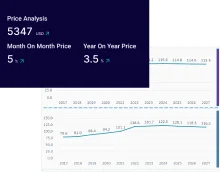
Analyze pricing patterns with comprehensive trend analyses.
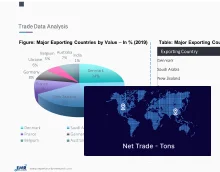
Analyse trade data for supply chain insights.
Leverage cost reports for smart savings
Elevate supply chain with collaboration
Contact Us for Further Information
Our specialized analysts will be available to answer all the pre-purchase and post-purchase queries regarding the report.
Our specialized analysts will be available to answer all the pre-purchase and post-purchase queries regarding the report.
Staying one step ahead of the market landscape with our in-depth research methods, integrating advanced analytics to drive precise and tangible outcomes.
Our expert analyst team offers a significant advantage over competitors, with extensive market insights into the latest trends, putting you strategically ahead.
We deliver a simplified yet extensive report, comprising in-depth industry insights and analytics tailored to your industry requirements.
We are happy to help you navigate through the services we offer and solve your queries.
Contact us