Consumer Insights
Uncover trends and behaviors shaping consumer choices today
Procurement Insights
Optimize your sourcing strategy with key market data
Industry Stats
Stay ahead with the latest trends and market analysis.
The ceramics and sanitaryware manufacturing sector is upgrading production capacity to meet growing construction demand across Asia Pacific export markets. High brightness kaolin from the country fits well into these manufacturing lines as it reduces impurities during firing, thereby accelerating the Australia clay market value. Moreover, specialty fillers used in paints, coatings, and polymer compounds are gaining traction as industries pursue lighter materials and improved durability.
Producers in the Australia clay market are focusing more on product engineering rather than extracting large volumes of raw materials. One example of this trend is when Andromeda Metals Ltd took a step forward in the development of its Great White Project in South Australia in June 2025. Further, test programs by the company showed that the clay could be used in advanced battery separator coatings and specialty ceramics. Technical validation on this level is significant for B2B buyers as it indicates that suppliers are not only serving the traditional demand for bricks and tiles but are also catering to engineered industrial materials.
Meanwhile, manufacturers and mineral developers are also transforming how clay is processed and supplied. Industrial users like ceramics manufacturers, refractories producers, and specialty coatings firms are increasingly demanding controlled particle size, high brightness, and stable mineral composition, reshaping the entire Australia clay market dynamics. Companies like Imerys and Sibelco are broadening their range of engineered clay solutions for ceramics and coatings that require strict mineral specifications. These solutions help manufacture tiles, sanitaryware, and high-performance fillers used in paints and plastics. In December 2025, Australia launched a strategy to expand domestic rare earth processing, strengthening critical mineral supply chains and reducing global reliance on China.
Compound Annual Growth Rate
5.5%
Value in AUD million
2026-2035
|
Australia Clay Market Report Summary |
Description |
Value |
|
Base Year |
AUD million |
2025 |
|
Historical Period |
AUD million |
2019-2025 |
|
Forecast Period |
AUD million |
2026-2035 |
|
Market Size 2025 |
AUD million |
796.23 |
|
Market Size 2035 |
AUD million |
1360.08 |
|
CAGR 2019-2025 |
Percentage |
XX% |
|
CAGR 2026-2035 |
Percentage |
5.50% |
|
CAGR 2026-2035 - Market by Region |
Australian Capital Territory |
6.2% |
|
CAGR 2026-2035 - Market by Region |
Western Australia |
5.9% |
|
CAGR 2026-2035 - Market by End Use |
Non-Ceramic |
6.0% |
|
CAGR 2026-2035 - Market by Application |
Adhesives and Sealants |
6.6% |
|
2025 Market Share by Region |
Western Australia |
17.1% |
February 2026 – Boral Launched Calcined Clay Concrete Solution
Boral Limited launched calcined clay concrete to reduce clinker use and emissions while maintaining strength and durability in infrastructure applications. Developments like this signal Australia clay market opportunities for processors to supply low-carbon raw materials and partner with cement innovators targeting sustainable construction.
January 2026 – Birdon Secured Contract for Next-Generation Amphibious Vehicles
Birdon Group secured a contract to deliver advanced amphibious vehicles for Australia’s defense forces, strengthening local manufacturing capabilities. Such developments create opportunities for clay and mineral suppliers supporting coatings, ceramics, and advanced material components used in specialized defense manufacturing.
October 2025 – Green360 Achieved Independent Verification for Eco Clay
Green360 Technologies verified its Eco Clay technology, converting industrial waste into sustainable clay materials for construction and environmental remediation applications. Such a progress highlights opportunities for companies to develop recycled clay products and circular material solutions aligned with Australia’s sustainability and waste-reduction initiatives.
July 2025 – Victory Metals Advanced High-Grade Rare Earth Production
Victory Metals Limited progressed high-grade MREO production studies, reinforcing Australia’s role in critical mineral supply chains supporting advanced manufacturing. Such initiatives create opportunities for clay and mineral exploration firms to collaborate in resource development supporting high-tech and energy transition industries, accelerating the Australia clay market value.
High Purity Halloysite Development for Advanced Materials
Due to halloysite's role in speciality applications, the Australian clay exploration sector is shifting its focus towards halloysite rich deposits. During 2024, Andromeda Metals Ltd kept on progressing the pilot scale processing of halloysite kaolin products intended to be used for lithium battery separators and catalyst supports. On the other hand, in September 2024, ASX junior miners targeted kaolin deposits to produce high-purity alumina, recognizing rising global demand from electronics, LEDs, and battery industries. Halloysite nanotubes provide thermal stability and controlled porosity that enhance separator coatings in lithium batteries, boosting demand in the Australia clay market. Battery manufacturers looking for mineral additives that improve safety performance have led to an increase in research collaborations between Australian mining developers and materials labs.
Expansion of Processed Kaolin Supply for Ceramic Manufacturing
Australia continues to be a major source of refined kaolin for ceramic producers in Asia. High-grade deposits in South Australia and Western Australia are leading to investments in beneficiation plants that remove iron contamination and improve whiteness. Firms like Sibelco are upgrading their processing facilities that supply kaolin used in sanitaryware and tile manufacturing, driving the Australia clay market penetration. Ceramic producers prefer Australian clay because stable mineralogy improves firing consistency in kilns. In June 2025, Australian researchers developed a method converting low-grade illite and kaolin clay into high-performance cement substitute, enabling stronger, lower-carbon concrete production.
Clay Minerals as Sustainable Fillers in Polymer Compounds
Industrial polymer manufacturers are increasingly resorting to kaolin and clay-based fillers to enhance durability and cut down on the weight of the material, accelerating the Australia clay market growth. Producers of specialty minerals are initiating developments of surface-treated clay grades specifically designed for plastic reinforcement and coatings. Companies like Imerys are focusing on engineered mineral solutions that can enhance the rigidity and thermal resistance of polymers without significantly increasing the production cost. These types of products are beneficial to the automotive and packaging sectors in meeting their sustainability goals since the use of mineral fillers lowers the reliance on petroleum-based materials. In August 2025, Critica Limited confirmed its Jupiter project in Western Australia as Australia’s largest clay-hosted magnet rare earth oxide resource, strengthening strategic supply potential.
Government Support for Critical Mineral Processing
The Australian government has shifted its policy focus more towards downstream mineral processing. Initiatives associated with the Australian Critical Minerals Strategy aim at encouraging the local processing of mineral resources rather than the export of unprocessed ore. Although clay is not normally considered among battery metals, the halloysite deposits that are linked with kaolin projects have garnered interest because of their potential application in energy storage materials. This Australia clay market trend has led several mining companies to plan processing plants that will turn raw clay into specialty materials. In November 2025, Surge Battery Metals advanced its proposed joint venture with Evolution Mining to develop the Nevada North Lithium Project, strengthening lithium clay resource development.
Innovation in Clay Processing and Beneficiation Technologies
The advancements in processing technology are turning into a key factor of competition in the Australia clay market. Most of the companies are investing in systems of hydrocyclone separation, magnetic removal of impurities, and utilization of advanced drying techniques which result in an increase of clay brightness and particle uniformity. As a matter of fact, pilot plants associated with the Great White project have revealed improved beneficiation steps resulting in a higher concentration of halloysite and a lower level of iron. Such developments enable clay manufacturers to serve those industries which have strict requirements with regard to mineral purity. In March 2026, Victory Metals reported flotation breakthrough improving rare earth recovery at North Stanmore project, strengthening development prospects for Western Australia resources.
The EMR’s report titled “Australia Clay Market Report and Forecast 2026-2035” offers a detailed analysis of the market based on the following segments:
Market Breakup by End Use
Key Insight: As per the Australia clay market report, ceramic producers continue to be the largest end users, as pieces of bathroom equipment, floor tiles, and technical ceramics need stable mineral plasticity and brightness. On the other hand, non-ceramic users such as polymer manufacturers, paint and coating formulators, and industrial compounders, who are incorporating clay minerals into their advanced formulations, are boosting market growth at a significant pace. In May 2024, McLaren Minerals outlined a 700 million–1.2-billion-ton kaolin exploration target at its Pink Bark project in Western Australia.
Market Breakup by Application
Key Insight: Clay applications in Australia span several industrial sectors. Sanitaryware manufacturing remains the primary category because clay minerals deliver plasticity and whiteness required for ceramic fixtures. Both tableware and bricks continue to use clay as their main component because of the material's durability and its ability to withstand high heat during kiln firing. The makers of adhesives, sealants, plastics, and rubber are turning to highly processed clay fillers to increase the strength of their products and to make their formulations more stable, accelerating demand in the Australia clay market. Meanwhile, fertilizer manufacturers are also using clay minerals to help with soil conditioning and to keep the fertilizer granules from breaking up.
Market Breakup by Region
Key Insight: The regional dynamics in the Australia clay market reflect both geological factors and variations in industrial demand. The reason Western Australia dominates is that it has huge natural resources and mining infrastructure that enables clay extraction and export operations. Queensland is gaining traction as new exploratory projects are targeting kaolin resources for advanced materials production. New South Wales and Victoria are experiencing constant demand coming from ceramics and building material manufacturing that are their source of production. The Australian Capital Territory represents a niche market, powered by its proximity to the construction supply chains.
By end use, the ceramic segment accounts for the dominant share of the market due to strong sanitaryware production demand
Ceramic manufacturing retains its relevance as the main end use within the Australia clay market dynamics. Tile producers, sanitaryware factories, and technical ceramics suppliers are becoming more dependent on refined kaolin and ball clay to obtain high firing stability and surface smoothness. Export-oriented ceramic companies are demanding an uncompromising mineral composition as even slight variations can kiln performance. Suppliers such as Sibelco provide processed kaolin grade sanitaryware and porcelain application. Australian clay provides brightness and plasticity that are suitable for glazing and casting processes. Moreover, in April 2025, engineers at James Cook University partnered with Lockheed Martin to test 3D-printed bendable ceramic for high-temperature aerospace applications.
Non-ceramic applications are gaining ground as manufacturers start to look at clay minerals for industrial formulations. Polymer compounders and coatings producers are frequently testing kaolin-based fillers to make products more durable and at the same time reduce costs of production. The change is obvious among manufacturers of paints, sealants, and specialty plastics that are used for infrastructure development. Industrial mineral suppliers like Imerys are introducing treated kaolin grades that are suitable for polymer reinforcement and coatings stability. These materials allow manufacturers to produce items that resist wear and tear while still being lightweight.
Sanitary ware applications lead the market growth supported by strong construction demand
Sanitary ware products like basins, toilets, and wash units dominate the Australia clay market scope as they need ceramic materials which do not lose their strength even after being subjected to high temperatures during firing. Producers are relying on the mixtures of kaolin and ball clay in order to obtain the sleek surface which is one of the features of modern sanitaryware. Firms like Sibelco are providing refined kaolin that is especially suitable for casting slip formulations used in sanitary ceramic industries. On the other hand, in December 2025, GROHE launched the Essence Ceramics collection featuring wall-hung toilets and ultra-slim washbasins, strengthening integrated sanitaryware solutions for modern bathrooms.
Clay minerals are gradually becoming useful additives in plastic and rubber formulations, driving growth in the Australia clay market. Kaolin fillers improve tensile strength and help stabilize polymer structures exposed to heat and sunlight. Industrial compounders producing infrastructure plastics and automotive components are increasingly testing clay-based fillers. Mineral solution providers including Imerys offer engineered kaolin designed specifically for polymer reinforcement and surface treatment applications. These materials can enhance stiffness while reducing overall resin consumption. Australian clay processors are also studying surface modification techniques to make mineral particles more compatible with polymer matrices. This technical progress allows clay minerals to enter markets traditionally dominated by synthetic fillers.
|
CAGR 2026-2035 - Market by |
Region |
|
Australian Capital Territory |
6.2% |
|
Western Australia |
5.9% |
|
New South Wales |
XX% |
|
Victoria |
XX% |
|
Queensland |
XX% |
|
Others |
XX% |
Western Australia registers the largest share of the market due to strong clay reserves
The Western Australia clay market clocks in the dominant position in the national clay supply chain because the region contains several large mineral deposits suitable for industrial processing. Mining companies have explored kaolin and halloysite resources across the state due to their potential in ceramics and advanced materials. Firms like FYI Resources Ltd are refining high purity kaolin products intended for ceramics and high-performance materials. The region’s mining infrastructure also supports mineral processing and export operations. In March 2023, Mamba Exploration Limited confirmed wide clay-hosted rare earth mineralization at its Hyden project after drilling intersected significant TREO grades across multiple shallow holes.
Queensland is emerging as a growing regional hub for clay processing and specialty mineral development. Exploration companies have been assessing kaolin resources in several inland districts where mineral quality appears suitable for ceramics and industrial fillers, propelling the Australia clay market expansion. Companies such as Altech Batteries Ltd are examining deposits of kaolin to use as feedstock for high purity alumina and other advanced material applications. Local governments are on the side of mining investments as well through resource development initiatives that encourage downstream processing.
Competition among major Australia clay market players continues to evolve as the main emphasis is shifting gradually from bulk volumetric extraction of minerals towards targeted beneficiation of the mineral. Major players are increasingly refining kaolin and halloysite to higher purity levels that render them suitable for use in ceramics, battery components, polymer fillers, and specialty coatings.
Australia clay companies that are investing in beneficiation plants, impurity removal equipment, as well as particle size engineering are securing substantial industrial contracts. Diversifying applications through collaboration with research institutions and industrial manufacturers has become common among clay suppliers seeking advanced mineral formulations. They are currently researching with the help of existing halloysite-rich deposits the possible applications of battery separator coatings, catalyst supports, and polymer reinforcement materials.
Imerys S.A.
Imerys, founded in the year 1880, with its main office in Paris, France, is a global supplier of mineral based solutions for ceramics, coatings and polymer industries. The company is one of the leading manufacturers of processed kaolin grades that are used in the production of sanitaryware and industrial fillers.
Modkha Marine Sdn Bhd
Established in 2016 and with its headquarters in Malaysia, Modkha Marine Sdn Bhd is engaged in the trading of mineral and supply of industrial raw materials including clay products. The company collaborates with local mining companies and processing partners to source mineral raw materials that are used in the manufacturing of ceramics and construction products across the Asia Pacific region supply networks.
Stephan Schmidt Group
Since 1947, Stephan Schmidt Group has been a family business and its main office is located in Germany. Stephan Schmidt Group is one of the leading suppliers of high-quality clay deposits and refined mineral products used in ceramics manufacturing. The company focuses on developing clay blends that preserve firing stability and surface consistency.
Sibelco
Established in 1872 and headquartered in Antwerp, Belgium, Sibelco produces industrial minerals used in ceramics, glass, and construction materials. The company supplies refined kaolin grades for sanitaryware and tile manufacturing. It also develops processed clay materials designed for coatings, polymer fillers, and specialized industrial formulations.
Other key players in the market include Jaichand Lal Daga Group, Old Hickory Clay Company, Gujarat Mineral Development Corporation Ltd, MOTA Ceramic Solutions, and Associated Soapstone Distribution Company Pvt. Ltd., among others.
Explore the latest trends shaping the Australia clay market 2026-2035 with our in-depth report. Gain strategic insights, future forecasts, and key market developments that can help you stay competitive. Download a free sample report or contact our team for customized consultation on Australia clay market trends 2026.


Upto 15% Off
AUD
$2749 $2499
$3849 $3499
$4949 $4499
$6049 $5499


*While we strive to always give you current and accurate information, the numbers depicted on the website are indicative and may differ from the actual numbers in the main report. At Expert Market Research, we aim to bring you the latest insights and trends in the market. Using our analyses and forecasts, stakeholders can understand the market dynamics, navigate challenges, and capitalize on opportunities to make data-driven strategic decisions.*
In 2025, the Australia clay market reached an approximate value of AUD 796.23 million.
The market is projected to grow at a CAGR of 5.50% between 2026 and 2035.
The key players in the market include Imerys S.A., Modkha Marine Sdn Bhd, Stephan Schmidt Group, Sibelco, Jaichand Lal Daga Group, Old Hickory Clay Company, Gujarat Mineral Development Corporation Ltd, MOTA Ceramic Solutions, and Associated Soapstone Distribution Company Pvt. Ltd., among others.
Clay producers face challenges linked to processing costs, mineral purity control, and environmental approvals for mining projects while maintaining consistent supply quality required by ceramics manufacturers and industrial buyers.
Investing in beneficiation technology, developing engineered clay grades, forming partnerships with advanced material companies, strengthening export logistics, and expanding pilot processing facilities to supply higher value industrial mineral products.
Explore our key highlights of the report and gain a concise overview of key findings, trends, and actionable insights that will empower your strategic decisions.
| REPORT FEATURES | DETAILS |
| Base Year | 2025 |
| Historical Period | 2019-2025 |
| Forecast Period | 2026-2035 |
| Scope of the Report |
Historical and Forecast Trends, Industry Drivers and Constraints, Historical and Forecast Market Analysis by Segment:
|
| Breakup by End Use |
|
| Breakup by Application |
|
| Breakup by Region |
|
| Market Dynamics |
|
| Competitive Landscape |
|
| Companies Covered |
|
Datasheet
AUD 2,749
AUD 2,499
tax inclusive*
Single User License
AUD 3,849
AUD 3,499
tax inclusive*
Five User License
AUD 4,949
AUD 4,499
tax inclusive*
Corporate License
AUD 6,049
AUD 5,499
tax inclusive*
*Please note that the prices mentioned below are starting prices for each bundle type. Kindly contact our team for further details.*
Flash Bundle
Small Business Bundle
Growth Bundle
Enterprise Bundle
*Please note that the prices mentioned below are starting prices for each bundle type. Kindly contact our team for further details.*
Flash Bundle
Number of Reports: 3
20%
tax inclusive*
Small Business Bundle
Number of Reports: 5
25%
tax inclusive*
Growth Bundle
Number of Reports: 8
30%
tax inclusive*
Enterprise Bundle
Number of Reports: 10
35%
tax inclusive*
How To Order

Select License Type
Choose the right license for your needs and access rights.

Click on ‘Buy Now’
Add the report to your cart with one click and proceed to register.

Select Mode of Payment
Choose a payment option for a secure checkout. You will be redirected accordingly.
Strategic Solutions for Informed Decision-Making
Stay upgraded and grab opportunities by strategic insights
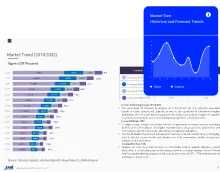
Stay informed and aware for a Market Leverage
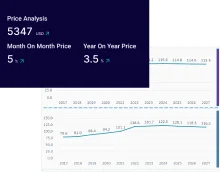
Analyze pricing patterns with comprehensive trend analyses.

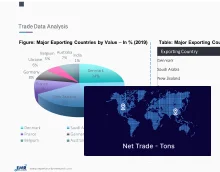
Analyse trade data for supply chain insights.
Leverage cost reports for smart savings
Elevate supply chain with collaboration
Contact Us for Further Information
Our specialized analysts will be available to answer all the pre-purchase and post-purchase queries regarding the report.
Our specialized analysts will be available to answer all the pre-purchase and post-purchase queries regarding the report.
Staying one step ahead of the market landscape with our in-depth research methods, integrating advanced analytics to drive precise and tangible outcomes.
Our expert analyst team offers a significant advantage over competitors, with extensive market insights into the latest trends, putting you strategically ahead.
We deliver a simplified yet extensive report, comprising in-depth industry insights and analytics tailored to your industry requirements.
We are happy to help you navigate through the services we offer and solve your queries.
Contact us