Consumer Insights
Uncover trends and behaviors shaping consumer choices today
Procurement Insights
Optimize your sourcing strategy with key market data
Industry Stats
Stay ahead with the latest trends and market analysis.
The mining industry in Australia is experiencing an increase in regulatory and environmental pressure to mitigate the emission of greenhouse gases, especially methane, which is a strong factor in climate change. In a bid to meet national and state-level emission limits, mining operators have surged the demand in the Australia catalyst market landscape adapting to the use of innovative and effective catalytic solutions that can purify methane in the ventilation air and process streams. The emission abatement push is also promoting research and development of the next-generation catalysts, facilitating pilot projects and scalable solutions, which align with both the operational efficiency and sustainability goals.
Mining companies are also working with technology partners and research agencies to speed up innovation and enhance domestic capabilities, as well as commercialize catalytic technologies that fit the country’s conditions, thereby boosting the Australia catalyst market landscape expansion. For instance, in March 2025, Mining3 and Low Emission Technology Australia (LETA) collaborated with the GmbH to develop the catalytic oxidation of methane technologies under the CATCH4 program, which showed that there are effective solutions to the abatement of Australian coal mine ventilation systems.
Compound Annual Growth Rate
6.5%
Value in AUD million
2026-2035
|
Australia Catalyst Market Report Summary |
Description |
Value |
|
Base Year |
AUD million |
2025 |
|
Historical Period |
AUD million |
2019-2025 |
|
Forecast Period |
AUD million |
2026-2035 |
|
Market Size 2025 |
AUD million |
976.50 |
|
Market Size 2035 |
AUD million |
1833.02 |
|
CAGR 2019-2025 |
Percentage |
XX% |
|
CAGR 2026-2035 |
Percentage |
6.50% |
|
CAGR 2026-2035 - Market by Region |
Australian Capital Territory |
7.2% |
|
CAGR 2026-2035 - Market by Region |
Western Australia |
6.9% |
|
CAGR 2026-2035 - Market by Raw Material |
Chemical Compounds |
7.1% |
|
CAGR 2026-2035 - Market by Product |
Heterogenous |
7.0% |
|
2025 Market Share by Region |
New South Wales |
30.6% |
February 2026- UNSW Developed Copper-Cobalt Catalyst to Convert CO₂ into Urea
Researchers at the University of New South Wales developed a copper-cobalt catalyst that converted carbon dioxide and nitrogen pollutants into urea using renewable electricity. This innovation supported Australia’s push for cleaner fertilizer production, reduced imports and emissions, and created opportunities for domestic chemical manufacturing.
February 2026- Covalent Lithium Refinery Advanced its Catalyst Applications
Australia’s Covalent lithium refinery in Western Australia expanded its 50,000-tonne lithium hydroxide capacity, utilizing sulfuric acid roasting and chemical conversion processes. The facility’s integrated mine-to-refinery operations enhanced extraction efficiency and product purity, showcasing advanced catalyst applications that support downstream chemical processing and contribute to growth in the Australia catalyst market.
September 2025 - Monash Developed Cobalt-Iron Catalyst for Zinc-Air Batteries
Monash University researchers in Victoria engineered a cobalt-iron catalyst that boosts zinc-air battery efficiency and stability. Enhancing oxygen reaction kinetics, the innovation supports scalable energy storage and transport applications, driving growth in the catalyst market in Australia and advancing the development of sustainable, high-performance chemical materials.
July 2025 - Mitsubishi Chemical Invested in Licella Holdings
Mitsubishi Chemical invested in Australian Licella Holdings to scale its Cat-HTR catalytic technology, which converted waste plastics and biomass into oils and sustainable fuels. This partnership accelerated commercial deployment, showing how strategic investments and technology adoption supported advancement in Australia catalyst market and renewable chemical sector.
National Research & Development Catalytic Innovation
The state of research and development in Australia is leading to the emergence of superior emission reduction and industrial performance catalysts. Pilot programs and industry partnerships make sure that solutions are custom-made to local conditions of operations and create acceptance in the mining, refining, and chemical industries. The combination of academic creativity and industrial know-how enhances the home catalyst ecosystem. As an example, in October 2024, CSIRO ran VAMMIT catalytic methane destruction experiments that showed successful methane mitigation at Australian coal locations.
Sustainable Aviation Fuel Catalysts
Sustainable aviation fuel (SAF) and biofuel plans by Australia require the application of catalytic technologies to transform biomass into low-carbon fuels. The pilot-to-commercial deployment is faster with government support and private investments promoting the use of hydrothermal and hydroprocessing catalysts. This trend opens up the advanced solution of catalysis to meet the national emission targets. For example, in March 2025, Licella was awarded AUD 8 million of an ARENA grant to develop the SAF biorefinery feasibility in Queensland using Cat HTR technology.
Engineering & Commercialization Progress
The current phase of the Australia catalyst market reflects a shift from feasibility assessments toward detailed engineering and large-scale commercial implementation. Technology providers and contractor partnerships facilitate speedy implementation and guarantee efficiency and compliance. Formatted engineering courses prove the performance of catalysts in actual practice, facilitating their use in energy, chemical, and refining industries. For example, in July 2025, Licella developed Project Swift engineering in Queensland, progressing towards commercial applications of Cat-HTR technology in fuels to be used sustainably.
Catalytic Hydrogen Production and Decarbonisation
Australia's hydrogen strategy, combined with its decarbonization targets, is resulting in increased catalyst demand in Australia that are used in producing hydrogen. Catalysts help to make processes such as electrolysis, pyrolysis, and biomass conversion more efficient, thereby enabling the production of low-carbon hydrogen. Development through government grants and pilot programs is facilitating the emergence of hydrogen as one of the main market segments for clean energy catalytic applications. For instance, 1414 Degrees was given an AEA grant of AUD 492,526 in July 2025 to work on a catalyst for its SiPHyR hydrogen reactor, which is a step toward low-carbon hydrogen production.
Advanced Research & Development in Sustainable Chemical Catalysts
Australian research institutes are at the forefront of catalytic technology inventions for the Australia catalyst market, which will make chemical production greener, easier, and more efficient. New catalysts are enabling decentralized, low-energy processes in a wide range of areas, including mining, water treatment, and chemicals. A notable example is the March 2025 development by UNSW researchers, who introduced a NiTe₂–Pd catalyst capable of producing hydrogen peroxide under ambient conditions with high selectivity and efficiency. This way, they managed to reduce both waste and energy consumption.
The EMR’s report titled “Australia Catalyst Market Report and Forecast 2026-2035” offers a detailed analysis of the market based on the following segments:
Market Breakup by Raw Material
Key Insights: The Australia catalyst market scope comprises raw material, which incorporates chemical compounds in the form of peroxides, acids, and amines; metals that involve precious metals, base metals, and zeolites; as well as other composite materials. Increased demand for performance-driven catalysts in refining and specialty chemicals facilitates growth. Players such as Evonik Industries AG and Clariant AG are developing amine-based and zeolite catalyst solutions but are also working on precious metal recovery to enhance sustainability and supply resilience.
Market Breakup by Type
Key Insights: The Australia catalyst market features heterogeneous and homogeneous catalysts, with heterogeneous systems used in petroleum refining and environmental use because of ease of separation and durability. In chemical synthesis, the use of homogeneous catalysts has been progressively used to achieve better control of the reactions. Other firms like Albemarle Corporation and Evonik Industries AG are expanding their heterogeneous portfolios and coming up with homogeneous solutions for specialty chemicals to aid process efficiency and increase conversion yields through all the Australian industrial systems.
Market Breakup by Process
Key Insights: The Australia catalyst market report considers several processes including recycling, regeneration, and rejuvenation. The market embodies an increasing trend towards lifecycle management and cost optimization. Recycling and regeneration are being preferred as industries seek to increase catalyst life and minimize the use of virgin raw materials, while rejuvenation helps recover performance. Regeneration services are being reinforced by suppliers like Clariant AG, and the refiners and chemical producers as these are able to reduce operational costs without compromising sustainability goals by using circular catalyst management strategies.
Market Breakup by Application
Key Insights: The Australia catalyst market caters to applications such as chemical synthesis, petroleum refining, polymers and petrochemicals, and environmental segments, and each has different demand trends. Refining and polymers stabilize the consumption volumes, whereas environmental catalysts come into force under the pressure of stricter emission standards. Exxon Mobil Corporation continues to develop refining catalysts, and Dow Inc. develops catalyst-enabled processing of polymers, showing the way the key players are building application-specific portfolios throughout the industrial value chain of Australia.
Market Breakup by Region
Key Insights: In the Australian catalyst market, demand differs by region, such as New South Wales, Victoria, Queensland, the Australian Capital Territory, and Western Australia, driven by concentrated mining, refining, and chemical manufacturing activities. Markets in Western Australia and Queensland experience robust resource and processing activity, and New South Wales and Victoria dominate specialty chemical consumption. In order to enhance responsiveness, companies are setting up regional technical hubs and supply centers. Localized operations are backed by strategic investments by players such as Albemarle Corporation to enhance service coverage throughout the country.
By raw material, chemical compounds show significant growth driven by demand for high-purity, and sustainable catalytic solutions
The chemical compounds segment is witnessing steady growth in the Australia catalyst market with the need for high-purity reagents and sustainable and efficient production processes. Advanced catalysts provide better efficiency of the reaction, lower energy use, and better product yields on peroxides, acids, and amines. For example, in the green ammonia project by H2U, Australia, the AmoMax-Casale catalyst of Clariant is used, which shows how new compounds serve to drive the chemical production and market growth.
Increasing requirements for high-quality metal feedstock in the chemical process are causing expansion in the chemical compounds segment, with industries demanding high-purity materials to use in catalysis and synthesis. Companies pursue acquisitions to enhance supply chain security, minimize reliance on imports, and achieve greater production stability and cost optimization. For example, in February 2026, Catalyst Metals Limited reinforced its control in the Bryah Basin, enhancing the availability of domestic metal in industries.
By type, heterogeneous catalysts are picking up pace owing to high stability, reusability, and enhanced multi-phase reaction efficiency
Heterogeneous catalysts are in high demand in the Australia catalyst market, for their strength, reusability, and multi-phase reaction capability in the petroleum refining, chemical synthesis, and polymer manufacturing processes, which have prompted the growth of heterogeneous catalysts. Firms are investing in sophisticated formulations to enhance performance in harsh operating conditions in terms of activity and selectivity. BASF is broadening the applications of 3D-printed catalyst networks to enhance mass transfer, Honeywell UOP is developing renewable fuel hydro-processing catalysts, and Clariant is developing polymerization systems free of heavy metals to help achieve sustainable chemical production.
The homogeneous type is picking up momentum within the Australia catalyst market dynamics and is rapidly increasing in popularity because it is precise, controls kinetics, and is highly selective, especially with fine chemical synthesis and specialty polymer uses. They enhance the quality of products and lower the by-products. Evonik Industries is working on selective depolymerization catalysts in circular processes of polymers, while BASF is working on AI-optimized homogeneous systems in specialty chemicals, and Johnson Matthey is working on platinum-based and palladium-based homogeneous catalysts to transform high-value chemical reactions.
By process, recycling shows strong growth owing to the increasing adoption of advanced chemical and plastic recycling technologies
The recycling sector has been registering a high growth rate as industries embrace more advanced recycling techniques for plastic and chemicals. Samsara Eco, Qenos, and Plastic Energy are the first to adopt AI-based sorting, enzyme-assisted sorting, and chemical recycling solutions. Such endeavours indicate a tendency toward better-quality recycled feedstocks, regulatory adherence, and the adoption of the circular economy.
Catalyst regeneration is one of the key trends in the Australia catalyst market and broader chemical reuse practices. Companies such as Axens, BASF, and Johnson Matthey are investing in thermal, chemical, and electrochemical processes of regeneration in order to recover used catalysts and chemicals. This shows signs of an industry-wide shift to better recovery rates, cost reduction, and provision of sustainable feedstocks to fuel market expansion and help in achieving environmental and circular economy objectives.
By application, chemical synthesis is showing robust growth owing to increasing adoption of high-performance catalysts
The Australia catalyst market is experiencing high-growth potential with catalysts that increase efficiency and selectivity in producing chemical intermediates, thus enabling a more sustainable mode of production of industrial intermediates. In March 2025, scientists at the ARC Centre of Excellence in Carbon Science and Innovation developed a NiTePd catalyst that can generate hydrogen peroxide at room temperature from water and oxygen, thus a more direct, greener, and scalable method.
The petroleum refining industry in Australia is also experiencing growth mainly driven by the catalysts that enable biofuel production, reaction optimization, and decarbonization. State-of-the-art hydro-processing and biomass upgrading catalysts give refineries the opportunity to convert renewable feedstock, reduce emissions, and increase output. Shell Catalysts & Technologies and Licella teamed up in September 2024 to produce low-carbon fuels in Queensland.
|
CAGR 2026-2035 - Market by |
Region |
|
Australian Capital Territory |
7.2% |
|
Western Australia |
6.9% |
|
New South Wales |
XX% |
|
Victoria |
XX% |
|
Queensland |
XX% |
|
Others |
XX% |
By region, Australia Capital Territory leads the market growth driven by advanced chemical processing and circular economy initiatives
The Australian Capital Territory is rapidly expanding its share in the Australia catalyst market due to an increasing demand for advanced chemical processing and green manufacturing. Major stakeholders such as Qenos, Plastic Energy, and Axens are developing innovative technologies in recycling and catalysts to facilitate local chemical manufacturing and, hence, align with national sustainability objectives. In the ACT, the focus of the programs is on processes and circular economy adoption, which is a factor in regional market growth.
Meanwhile, New South Wales holds a significant share of the Australia catalyst market and is emerging as a key hub for region-based circular economy solutions, supported by initiatives such as the 2025 National Packaging Targets. Samsara Eco, a subsidiary of KBR, is pioneering enzyme recycling at the Jerrabomberra 20,000-tonne plant, where mixed plastics are broken down into monomers for reuse. This project, which started in September 2025, showcases NSW's growing engagement in sustainable polymer production and the extensive use of catalysts.
Most of the Australia catalyst market players are consolidating their stance by investing in specific R&D, technology alliances, and pilot-to-commercial-scale upgrades in the fields of low-carbon fuels and emission control usage. Firms are becoming more concerned with sophisticated catalyst formulations, enhancing efficiency and compliance with the tightening environmental requirements. The enablement of the strategic partnership with energy suppliers, mining companies, and government agencies is also contributing to the rapid validation cycle and the de-risking of large-scale implementation.
Concurrently, Australia catalyst companies are also focusing on localized manufacturing capabilities, enlarging capacity, and application-specific customization in response to the various industrial needs. Government funding initiatives and sustainability-based investments further contribute to efforts and allow players to progress demonstration projects to commercial facilities. This has been a coordinated effort in innovation, partnership, and infrastructure building that has enhanced the maturity of the market and expanded the usage of catalysts in energy, mining, and chemical industries.
Albemarle Corporation
Albemarle Corporation is a multinational specialty chemicals producer that deals with lithium, bromine, and catalyst solutions in energy and industrial markets. Established in 1994, the company, headquartered in Richmond, Virginia, United States of America, is a leading processor of materials innovation in several rapidly growing applications.
Evonik Industries AG
Evonik Industries AG is a specialty chemicals company from Germany which is specialized in catalysts, additives, and advanced materials. Evonik, located at Essen, Germany, is a leading chemical company that focuses on sustainability, based innovation, and performance chemicals.
BASF SE
As a major player in the chemical industry, BASF SE offers a wide range of chemical products, including industrial catalysts and process solutions. Founded in 1865 with its head office in Ludwigshafen, Germany, BASF uses the integrated production network to facilitate manufacturing industries around the globe.
Clariant AG
Clariant AG focuses on environmentally friendly specialty chemicals, such as energy, chemical processing, and environmental catalysts. The company was founded in 1995 with its headquarters in Muttenz, Switzerland, and has been in the business of value-driven innovation in line with environmental performance.
Other key players in the market include Exxon Mobil Corporation, The Dow Chemical Company (Dow Inc.), Johnson Matthey PLC, and Catalyst Metals Ltd., among others.
Explore the latest trends shaping the Australia catalyst market 2026-2035 with our in-depth report. Gain strategic insights, future forecasts, and key market developments that can help you stay competitive. Download a free sample report or contact our team for customized consultation on Australia catalyst market trends 2026.


Upto 15% Off
AUD
$2749 $2499
$3849 $3499
$4949 $4499
$6049 $5499


*While we strive to always give you current and accurate information, the numbers depicted on the website are indicative and may differ from the actual numbers in the main report. At Expert Market Research, we aim to bring you the latest insights and trends in the market. Using our analyses and forecasts, stakeholders can understand the market dynamics, navigate challenges, and capitalize on opportunities to make data-driven strategic decisions.*
In 2025, the Australia catalyst market reached an approximate value of AUD 976.50 million.
The market is projected to grow at a CAGR of 6.50% between 2026 and 2035.
The key players in the market include Albemarle Corporation, Evonik Industries AG, BASF SE, Clariant AG, Exxon Mobil Corporation, The Dow Chemical Company (Dow Inc.), Johnson Matthey PLC, and Catalyst Metals Ltd, among others.
Key strategies driving the market include expanding low carbon fuel applications, forming technology partnerships, increasing research and development in advanced catalysts, scaling pilot projects, leveraging government clean energy funding, and targeting industrial decarbonization.
The key challenges that the Australia catalyst market players face include high scale up costs, long commercialization timelines, regulatory complexity, limited local manufacturing, raw material price volatility, and technical integration issues.
Explore our key highlights of the report and gain a concise overview of key findings, trends, and actionable insights that will empower your strategic decisions.
| REPORT FEATURES | DETAILS |
| Base Year | 2025 |
| Historical Period | 2019-2025 |
| Forecast Period | 2026-2035 |
| Scope of the Report |
Historical and Forecast Trends, Industry Drivers and Constraints, Historical and Forecast Market Analysis by Segment:
|
| Breakup by Raw Material |
|
| Breakup by Type |
|
| Breakup by Process |
|
| Breakup by Application |
|
| Breakup by Region |
|
| Market Dynamics |
|
| Competitive Landscape |
|
| Companies Covered |
|
Datasheet
AUD 2,749
AUD 2,499
tax inclusive*
Single User License
AUD 3,849
AUD 3,499
tax inclusive*
Five User License
AUD 4,949
AUD 4,499
tax inclusive*
Corporate License
AUD 6,049
AUD 5,499
tax inclusive*
*Please note that the prices mentioned below are starting prices for each bundle type. Kindly contact our team for further details.*
Flash Bundle
Small Business Bundle
Growth Bundle
Enterprise Bundle
*Please note that the prices mentioned below are starting prices for each bundle type. Kindly contact our team for further details.*
Flash Bundle
Number of Reports: 3
20%
tax inclusive*
Small Business Bundle
Number of Reports: 5
25%
tax inclusive*
Growth Bundle
Number of Reports: 8
30%
tax inclusive*
Enterprise Bundle
Number of Reports: 10
35%
tax inclusive*
How To Order

Select License Type
Choose the right license for your needs and access rights.

Click on ‘Buy Now’
Add the report to your cart with one click and proceed to register.

Select Mode of Payment
Choose a payment option for a secure checkout. You will be redirected accordingly.
Strategic Solutions for Informed Decision-Making
Stay upgraded and grab opportunities by strategic insights
Stay informed and aware for a Market Leverage
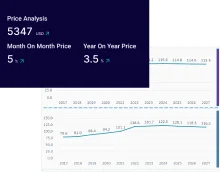
Analyze pricing patterns with comprehensive trend analyses.
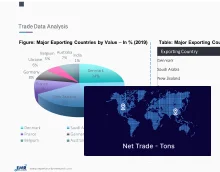
Analyse trade data for supply chain insights.
Leverage cost reports for smart savings
Elevate supply chain with collaboration
Contact Us for Further Information
Our specialized analysts will be available to answer all the pre-purchase and post-purchase queries regarding the report.
Our specialized analysts will be available to answer all the pre-purchase and post-purchase queries regarding the report.
Staying one step ahead of the market landscape with our in-depth research methods, integrating advanced analytics to drive precise and tangible outcomes.
Our expert analyst team offers a significant advantage over competitors, with extensive market insights into the latest trends, putting you strategically ahead.
We deliver a simplified yet extensive report, comprising in-depth industry insights and analytics tailored to your industry requirements.
We are happy to help you navigate through the services we offer and solve your queries.
Contact us